Poaching in the Park

Written and Produced by Muriel Murch with WSM by my side.
Blackberry-bramble Harvest 2023

August slipped into autumn not bothering to wait for September while most of London went on holiday, leaving the city almost as subdued as Paris. Along the canal, three teenage ducklings are swimming alone as if their parents have regretted their final feathered fling in the water and are just too tired to raise one more brood this year. The ducklings look lost, paddling from one clump of weeds to another in the mindless way of adolescence. It is blackberry season and we are late for our semi-annual ‘Poaching in the Park’ moment. We go in the middle of the week – with less chance of being caught – though this little corner of Regent’s Park is now sorely neglected. There used to be a thriving small sports school here, a place to practice your tennis, golf, or cricket. But now the cricket practice nets have moved close to a central concrete hub with a cafe, overlooking the big open pitches that serve both cricket and football in often overlapping seasons. There is a small tennis club close to Queen Mary’s Rose Garden but the golf nets were removed altogether. Now the wilderness has taken over – as it should – and the blackberry brambles climb the Hawthorne shrubs and surround the adolescent oak trees. The King is in Scotland striding out on the moors for a good bit of fresh air, while the Prime Minister is back home in Yorkshire, maybe looking to see if the Green Peace ‘Stop Oil’ Delegation have left him any more notes on how to run the country. So we can pick and gather our bramble harvest which quickly became eight pots of jam. Six are stored away. One goes straight into our fridge and the other to Howard who – in years gone by – was one of the tennis coaches on the courts now covered with brambles. Howard lives close by and while closing into the other side of his eighties we often stop and chat. Howard is fond of the written word and from time to time pops a poem through our letter box. 
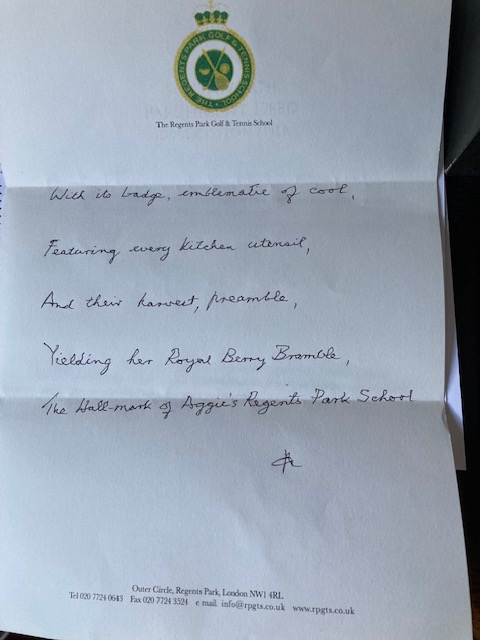
This week’s poem from Howard

The nightly news can barely be bothered with the wars that do not stop in the Sudan and Yemen. The Human Rights Watch write that Saudi border guards have been reported killing hundreds of Ethiopians trying to cross into Saudi Arabia from Yemen. And the war in Ukraine is not ending soon. The maps showing – in red, purple, and white – whose troops hold which cities and coastlines in Ukraine – are confusing and seem at odds with the reporting. If all that land – in red – is occupied by the Russians, how is Ukraine ‘making ground’? We see villages and cities bombed – and the long, low trenches slicing through fields and countryside appear no different than those dug for World War One – where Ukrainian soldiers crouch and fire, fire and smoke, and slog on. Summertime is wearing for soldiers and politicians alike. But there is a useful police mess-up from Manchester and a horrific tale of infanticide to keep us distracted from the wars and the Government debortle with the Biddy Stockholm barge. A few asylum seekers were being marched onto the barge two by two – when it was discovered – at least a week before reporting – and the marching on – that the barge water supply contained traces of the legionella disease bacteria long known to cause severe pneumonia and death. Time to pack their bags and march those foot-weary seekers of asylum and hope off again. 
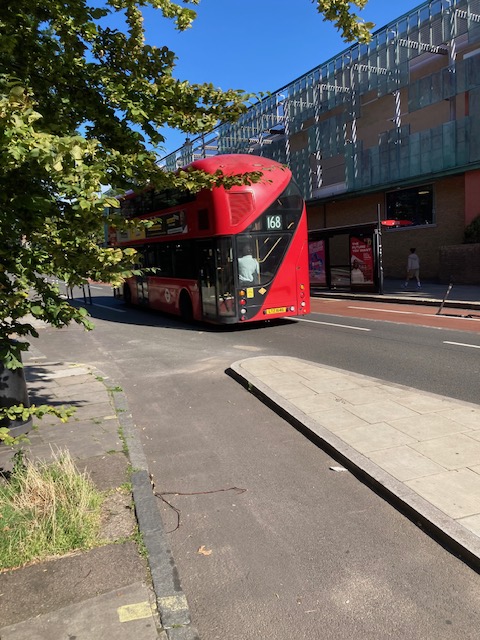
The 168 bus leaving Chalk Farm.

Sometimes I miss the small thud when the paper lady pops the Camden New Journal through the letterbox every Thursday morning. I glance through it, knowing there will not be not much I care to read but that sometimes, something will catch my eye. Last week – another August moment – there was no home delivery – so this week I made sure to read it. And there it was: a small column slipped into the side of a page. ‘RIP 168 – the bus stops here’. This route will be closed in September. ‘Oh No.’ How could they – who the heck is ‘they’ – let it happen. ‘They’ turns out to be Transport For London (TFL for short) and to whom we pay our bus and rail fares. They did a survey – even reporting that of three hundred respondents, only 18 agreed with the scheme to scrap the 168 bus route. And still, they went ahead. It is this kind of lock-jaw response that drives us all crazy. The government does it with their ‘there will be an inquiry’. It is – to put it mildly – upsetting.

Upsetting and inconvenient for people like me perhaps but downright devastating for people like Jim. Jim and I have been friends for twenty years and know much – and yet little – about each other. Jim is Jamaican, his wife was German and I often wondered what brought them together – if in those early years of their courtship, they both felt the chill of English disapproval. Jim was a Camden Garbage truck driver until he retired. His route brought the truck onto our street and he lives just two blocks away in a council flat. He had a Yorkshire Terrier dog, small, black and brown, and always keen, pulling Jim along as she raced up our street galloping towards the hill. Even at 17 – a serious senior for a little terrier – she was always ahead of Jim – until she wasn’t – and one day Jim quietly took her to the vet to say goodbye. Now he is alone, and as he gets older doesn’t go out and about so much. But we meet from time to time. ‘Ello darlin’ He calls to me, having long forgotten my name and it being too old a friendship to ask to be reminded. And we chat, about this, that, the other, and loneliness. A kiss is always welcome. The last time I saw Jim he was walking slowly with his cane, going to the bus stop for the aforementioned 168 bus on his way to The Royal Free Hospital in South End Green where the bus stops right outside of the hospital – in both directions. What will happen to Jim and so many others if TFL takes this moment of independence away? Each little cost-saving denial from them leads to a retreat and loss for us all. 

This has been A Letter From A. Broad written and read for you by Muriel Murch.

On the Moor

Written and produced by Muriel Murch with WSM by my side
Pictures posted online by Greenpeace UK on Thursday showed the protesters on top of the property while a banner read “RISHI SUNAK – OIL PROFITS OR OUR FUTURE?”

Rishi Sunak and his family have all gone on holiday leaving England and the remainder of the United Kingdom in tatters. So it was no surprise that when the five Greenpeace ‘Stop Oil’ activists knocked on the door of Sunak’s country home in North Yorkshire and nobody opened the door, they felt free to climb onto the rooftop of the grade II-listed manor house and drape oil-black fabric over it before posing with their ‘Stop Oil’ Banner in front of the house – protesting against the government’s decision to expand North Sea oil drilling. There is – naturally – to be an inquiry – as to how and why the Prime Minister’s house was left so unattended. Surely there was some surveillance in place. But as Sunak has begun to show his real colors – under the tiniest bit of pressure on a radio program (listeners take note) we have seen his business management underbelly and once more our hopes – why do we even have them? – are dashed. What is Rishi doing looking to lift the 20 mph speed limits in some small residential neighborhoods while issuing new licenses for North Sea Oil drilling? I’m remembering – not that long ago – when the new King very pointedly invited the new Prime Minister to speak at a reception the King was giving for world leaders gathering before a conference on climate change. Rishi popped over to the conference in a private jet to smile and show up. But now he reminds us that ‘you can take a horse to water but you can’t make him drink’. 

So it is with renewed respect we watch the Mayor of London Sadiq Khan, with his bushy eyebrows, sticking to his guns with the expansion of London’s low emission zone, saying tackling the climate emergency and air pollution are “bigger than party politics”. While those in parliament waffle and wave according to their party’s policies, Khan is staying true to his course. He is winning some and losing others. Hundreds of doctors have urged politicians to stand firm on initiatives to tackle air pollution, warning that they see its “devastating health consequences” in patients on a daily basis. Air pollution is the single largest environmental risk to public health, linked to between 28,000 and 36,000 UK deaths a year. Air pollution affects every one of us from before we are born into old age. I remember in 1966 looking into the chest of a young Mexican 16-year-old boy who had only been in the city for six weeks. His lungs were already pinpointed with black city pollution.

As I write, the Bibby Stockholm barge is receiving its first asylum seekers – refugees – today. There was a small stall – was this going to be a fire trap? But though Amnesty International calls the barge and its use a ‘Ministerial cruelty’, food will be served in the canteen tonight.

A combination of our 58th wedding anniversary, a small window of time, with the excuse to see a beloved old friend, and the long-anticipated search for Murches – dead more than alive – takes us to Devon and the northern end of Dartmoor.

The two-carriage train runs on old tracks – clickety clack, clickety clack – from Exeter-St. David to Okehampton, slowly rolling past the rows of not-yet-old oak trees marking the hedgerows separating pastures as some far-thinking farmers return to the old ways. The hedgerows are made of stone with some post and rail. There is little wire to be seen. The clouds are hanging low as if chasing the fields into the sea. There is no taxi stand at the Okehampton train station, but drivers swing in and out around train arrival times to see if they can hook a passenger and soon we are caught. But our man has only lived in these ‘ere parts for six years, “A second marriage,” he says, and driven for two which may explain the very long route that brought us through cow pastures – where he had to be reminded to close the gates – with a herd of fine healthy Devonshire cows, and the rubbish dumpster bins, to the back of the hotel for 27 pounds thank you very much. This one is not yet a local.

We are staying at the most elegant and expensive of hotels at Gidleigh Park which carries just the slightest breath of Fawlty Towers to remind us we are in England. After we check-in, there is time for a walk to the hamlet of Murchington. From the hotel, we dip into the woodlands of an ancient forest of Oak and Beech trees where the River Teign runs freely alongside of the path. This is the wilderness of fairies and Robin Hood.  We leave the forest for the lanes that are as narrow as I remember them and the bracken is mid-summer high allowing the brambles to twine over and around the long fronds while wild white yarrow and pale orange columbine wave gently where they can. The couch grass remains stubbornly growing and uneaten by the cattle or sheep in the pastures. It’s a good climb up the hill before going down into the dale and finding the old sign of Murchington where Beatrice posed forty years ago. The few cars that pass are careful enough to let us squeeze into the bracken and it isn’t until we crest the hill – before the final dale – that we meet another traveler on the road. She is short and quite round, walking in country clothes with a fine leather hat, and two poles. She is moving slowly and when we first pass her taking a talking break with a motorist  “Are we far from Murchington?” I ask, “Just down there. I live in Upper Murchington.” so we carry on. Murchington is now a hamlet having only a few houses with the church being decommissioned in 1975 and there is no central place of worship or community. Sometimes a hamlet is a small group of Kinsmen, no larger than an extended family or clan, though there are no Murches living in Murchington, nor could we find trace of any. On our return – there is not a lot to see in Murchington – our fellow traveler is now polling on the other side of the hill and we pause together. “I like your hat,” says Walter, and that is all it takes to learn about her two children, in Texas and Portugal, far away from this widowed mother who has just had double knee surgery and is walking alone along a country lane. 

Back at the hotel and we change for dinner. To dine here is an event and joining us are my oldest friend from Nursing school 60 years ago, Sally, and her daughter Emma who is a leading conservationist with her Dartmoor’s Daughter tours of Dartmoor. There are screams of delight and so much laughter when we see each other and the tears of joy would fall but that we are both – even at 80 – mindful of mascara. When dinner is served it behooves us to pay attention for the care, flavor, and presentation is exquisite, though a far cry from the gnawing on bones by the forest fire that could have been here mere centuries ago. 

Hand-tinted postcard of Murchington, c. 1910 showing Woodlands Farm and the Anglican chapel (with railings)

The next day is for searching for those long-dead Murches that we are pretty sure are lying about in the Church graveyard. But first, there is morning coffee – at a small cafe where the local artists gather- in the town of Chagford. The four tables that have been put together for us take up almost half of the cafe space. We are late – Richard – our taxi driver – knows his way about, but then there are cattle and ponies on the road and hellos to be shared. Immediately when we arrive fresh coffee is served and we split up – the conversation rushes deeply into the arts at one end of the table and conservation and humanity at the other. It’s a wonderful way to spend a Saturday morning – with people who care – reinforcing each other – encouraging by just showing up – before we wave our goodbyes and slip away into the day.

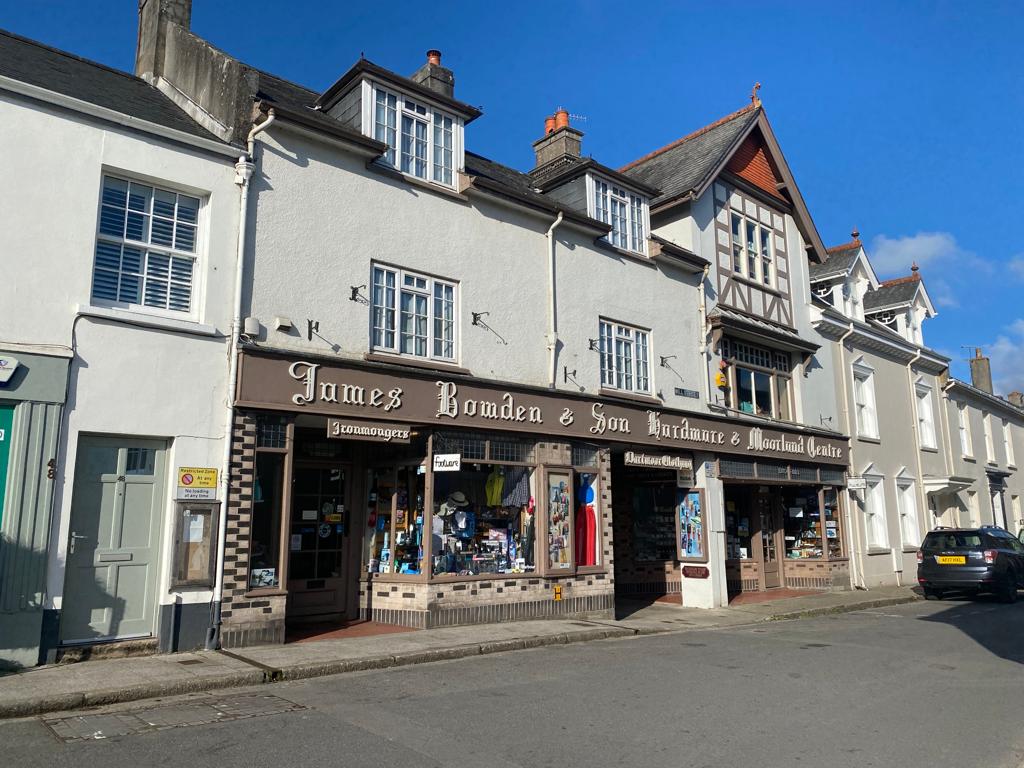
James Bowden & Son Hardware & Moorland Centre

It is beginning to rain – a soft rain – as Sally guides us to the hardware shop that sells everything you need at home and more enticingly has a museum room in the back. It is here that we find the first evidence of George Murch, wheelwright, who sold this shop to James Bowden in 1862. The little room that sells the boots would have been his first shop room. It is comforting to know that we both come from working stock a wheelwright and Slater, such names carry the trades of our forefathers. And more than one Murch married into the Perryman family from Stancombe, giving me full license to go ahead with cider making. As the soft rain gets stronger Sally leaves us at the Chagford churchyard of St Michael the Archangel where someone did what we all mean to do with our boxes of old photographs – gone through the graveyard and mapped out as to whom is buried where – it doesn’t take any time at all to find one of George’s sons, William but not George. William’s gravestone is still upright but leaning a bit as most in the ‘old’ graveyard are. We stand in the rain and think about those lives. The ones that came before us – not so very long ago – was William the one who stayed behind so that James could leave? Or was James always restless – the one who would venture out no matter what? He never named a son of his after his father. These are stories we may not know but only imagine.

On Sunday morning there is a knock on the door and our morning tea, toast, and flaking-everywhere croissant arrives. We are rested and ready to leave with Emma at 8.15 a.m. for a 9.30 start on our guided Wool Walk. After picking up Sally and a friend, Emma sets off at a roaring pace along those single-lane roads and we are soon out on the moor which stretches before us with heart-holding beauty. The sheep are grazing and resting beside the road along with small herds of cows and ponies. Low patches of late gorse hold tightly to the beginning blooms of heather. 

The walk is led by – I quote – qualified Hill and Moorland Leader, Emma Cunis aka Dartmoor’s Daughter, and Kristy Turner, Curator of the Dyeing on Dartmoor exhibition at the Museum of Dartmoor Life. Emma and Kristy give us a little introductory talk and we share our names and reasons for walking this Sunday morning. The walk is billed as ‘Easy’ and as we set off Emma acknowledges that we will be of different walking abilities: some fast, some in the middle, and some – a little slower. It doesn’t take long for me to realize I am among the latter- more than a little slower – and this sobers me as I miss the woman I used to be.

Old Friends and old Oaks photo by WSM

This morning Sally wrote “It came to me last night, we are a bit like ancient oak trees, a bit bent and gnarled, but the inner strength keeps us going. So from one Oak tree to another, take care of your roots and branches but wave your leaves merrily into the air whenever you get the chance.” This is friendship and sounds like good advice for us all.

This has been A Letter from A. Broad, written and read for you by Muriel Murch. 

Divas and Dingies

Divas and Dingies Recorded and produced by Muriel Murch with WSM by my side

The writer Milan Kundera has died at the age of 94. It is noted with a passing sentence or two in the papers, a mention on the evening news and a few more paragraphs in obituaries in England and Europe. Salman Rushdie took a quote from ‘The Book of Laughter and Forgetting’  “The struggle of man against power is the struggle of memory against forgetting.” And this is why there are novels, poems, songs and biographies of work and of people written – to hold onto what we know as true for as long as possible remembering the stepping stones that were laid down for our work and we provide for those that follow.

And as that came to mind, a seventeen-year-old granddaughter stepped through the cottage doors for a visit with her now ‘over 80’ grandparents and we had things to do. Two bus rides took us to the Victoria and Albert Museum and the exhibit of Divas. Headphones in place we were ushered down the darkened steps to Gallery 40, first into the world of opera with the costumes and cracked voice of Maria Callas. Moving from window to window for the first time I look on these early opera singers as brave and courageous women paving their own pathways for independence for singers and actresses to follow. Billie Holliday is shown in a photographic negative of her only performance at the Albert Hall in 1954. Between the flickering pictures of Theda Bara playing the first Cleopatra on film in 1917, we pass display cases showing those who were destroyed by the systems they tried to conquer: Marilyn Monroe, and Judy Garland are seen smiling bravely. Then comes Elizabeth Taylor playing the same queen Cleopatra in 1963 as she commands Mark Anthony to kneel before her. It’s beautiful stuff and when I emerge from the darkness – the exhibit continues upstairs – there are the brilliant costumes of Prince, Cher, Elton John and countless others. I can make it around the exhibit once before I get dizzy with all this courage displayed before me. As the granddaughter goes around and around I sit and think of these divas – of female and male inclinations – all pushing the boundaries of their times. Within this exhibit are the milestones that bring us from Marie Callas to Marian Anderson performing at the Lincoln Memorial in 1939, to the civil rights movement, through Cher, Elton John to the Beyoncé of today.

Theda Bara as Cleopatra in 1917 from the Diva Exhibit

We find our way to the old tea rooms with their tiled walls, porcelain columns and stained glass windows. There are far too many pastries and not enough small plates of good-for-you food but we slide a pot of tea and scones onto a tray and manage a tea-time moment to sit down and take in what we have seen and look about us – at old and young England with some European and Asian families who are also taking this moment to pause and refresh. I am caught seeing a young Japanese family sitting at a table close by, parents with a slightly older daughter and the younger brother who is having trouble with his broccoli. His father helps him out – spooning some strands of vegetable back into the boy’s mouth and scraping some away to his own plate. But it is the mother who is striking. She sits calmly, casually watchful as a lioness teaching her young cubs to eat for themselves. Her face is long and strictly angular, half of her black hair is pulled back and held roughly high on her head with a band. The angle of her jaw, the rise of her hair are ancient and familiar both.

Popen o Fuku Musume (“Young woman blowing a poppen glass”), which appears under both series titles of c. 1792–93

Since childhood, I have seen her on the pages of books of paintings of Japanese art and culture but here she is in the 21st century – utterly beautiful in her casual modern clothes. I wonder at this Japanese family so seemingly on vacation in England, visiting the week that the Oppenheimer film opens to worldwide audiences. What history are they reliving as they come here? 

Meanwhile, summer’s slow tides are ebbing and flowing with little wavelets rippling through our political history. Because of the obtuse behaviour on the one hand and downright disgraceful on another, three conservative members of Parliament have had to resign their seats in government and go back to oiling their lawnmowers in the countryside. Three countywide elections were held in one night. Uxbridge and South Ruislip did bring home another conservative with Steve Tuckwell. Keir Mather took a Labour seat in Selby and Ainsty while Somerset and Frome chose a woman, Sarah Dyke, for the Liberal Democrats, nice little wins for the Labour and Liberal Democratic parties each. It is small potatoes given what is going on in England and the world but they are potatoes. Desks will be shuffled, phones re-arranged, email accounts set up along with new websites – all promising to right what is wrong with this country – at the moment. And though those promises will hardly be fulfilled they could indeed change the way forward just enough to tack this listing boat of a country onto a kinder course.

And we so need this with the sight of the Bibby Stockholm barge anchored off of Portland Harbour in Dorset – though registered at Bridgetown Barbados. It is now refurbished to hold 506 single men who arrived in Kent seeking UK Asylum. The men are called asylum seekers – not refugees – and it is a reminder of when we were called registered aliens rather than immigrants, and that language is important. As well as the 506 asylum seekers there are 18 – trained to Military standards (whatever that means) security guards along with cooks and cleaners to a total staff of 60. It is a  floating prison for want of a better word – a ship to discourage sea-faring migrants from crossing to this small Island.

The Bibby Stockholm docked in the Portland Harbour awaiting 506 asylum seekers.

Whatever they say about it – and they try to say a lot – the idea of putting 506 young men in a boat with only 60 more to lend a helping hand providing essentials, may not have the same outcome as the owl and the pussycat who sailed out to sea – in a beautiful pea-green boat.

This has been A Letter From A. Broad. Written and read for you by Muriel Murch.
We Seek him Here … and then There

Written and Produced by Muriel Murch
Snack time at The Cottage

We seek him here we seek him there and the whereabouts of the Russian General Prigozhin who took a group of mercenary fighters towards Moscow and then back again, is reminiscent of Humpty Dumpty who took a big fall – as I remember – and all the king’s horses and all the king’s men couldn’t put Humpty together again. Prigozhin and his men may or may not be in Belarus. Only five days after the aborted march on Moscow, Prigozhin met with Putin at the Kremlin, and now the location of the mercenary soldiers has got a little murky. Alexander Lukashenko shrugs as he responds to a direct question about Prigozhin during a conversation with a few invited journalists – that reportedly lasted for four hours. “I’ve no idea where General Prigozhin is.” And when asked further about the mercenary soldiers he responded “Every country has them.” Though he may be lying on the first count he is probably right on the second. The newsreels from Belarus show farmland fields filled with rows of army tents flapping gently in the sunshine. Soldiers camping – I remember them on summer exercises in the fields when I was growing up five miles from Aldershot, a military town. But over twenty years ago I also remember crossing a mountain gravel road in Idaho where grown men were taking the lads out “camping” – with bows and arrows and rifles – almost hidden in a mountain-pass meadow. It is so easy – when you feel under threat – to believe you must defend yourself.

While searching for Prigozhin we also look about for Rishi Sunak who does not pop up on the telly quite as often as his two predecessors, Boris Johnson and Lizzy Truss. While the 75th birthday of our pride and joy, the National Health Service, is celebrated with cup-cakes for the working staff, the accompanying discussions on what to do about Britain’s Health care – “charge patients more and pay staff less” seem to be the Government’s only mantra. This is a greasy pole Sunak may fall from. If he isn’t careful and Keir Starmer is careful there could be a change of government in the not-too-distant future. But can such a steady hand with Starmer’s hectoring voice fix all that has been destroyed in the last 12 years? It’s a tall order.

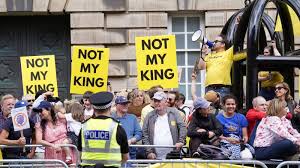
Not my King

The sun shone as King Charles drove along the Royal Mile from Holyrood House to St. Giles’ Cathedral with his queen and the Prince and Princess of Wales beside him. The crowds came out along the mile, mostly to welcome, wave and shout ‘God Save the King’ but some to show – with large yellow placards – that for them he is ‘Not my King’.

King Charles Touches the Scottish Crown

As a historic rule, Scotland does not care for kings though it’s a little more sympathetic to queens. The King kept it short and accepted the crown with a touch but not wearing it, along with a new sword, and the scepter. The ceremony ended with the familiar fly-pass of the Red Arrow fighter jets – always a crowd-pleaser. For the moment the Royal couple can go on holiday at Berkhall and Balmoral – the homes that his grandmother and mother loved the most. There they can rest a little as they reflect on the legacy he has been given and the job at hand. They may even manage a barbecue in the forests but that might be pushing history and memory a little bit too far. It’s a tough transition. King Charles knows he is a bridge slung between an old Great Britain and a floundering England and not everybody’s King. 

We are in the midst of the summer season with the Wimbledon Lawn Tennis World Championships fortnight. 2018 was the last year that England had any showing at all on the last week of competition. England’s men, Andy Murray, Cameron Norrie, and Liam Broady, and the single woman, Katie Boulter have been knocked out already and the country is embarrassed but maybe not enough. Somehow the play at Wimbledon symbolizes – for me – England’s place – not quite good enough to match the rest of the world. The fixture is of such importance and now with roof lighting – the show must go on – until 11 p.m. The  BBC ten o’clock news is at times pushed aside and the quick brush war between Israel and Palestine barely got two evenings. The Israeli forces did a quick in-and-out three-day attack, killing ten Palestinians in the Jenin refugee camp – job done from the Israeli point of view while the Palestine forces gather once again, vowing not to rest until they have reclaimed their land taken in 1948.

Somewhere in the world a battle is raging, people are being killed while others are trying to escape. Boatloads – some carrying unaccompanied children – are sent off and with luck arrive alive at the English shores in Kent. They are housed in detention centers where Robert Jenrick the Minister of Immigration has ordered the reception area pictures of Micky Mouse and Baloo from The Jungle Book to be painted over, to show something less welcoming. We know by now that we are less welcoming than Germany, Italy, and other European countries but is the painting over of Micky Mouse really helpful? 

Micky waves Hello in Kent

Naturally, the shadow immigration minister, Stephen Kinnock, condemned Mr. Jenrick’s order, saying it was a sign of a “chaotic government in crisis. Labour had a plan to end the dangerous crossings, defeat the criminal smuggler gangs, and end hotel use by clearing the asylum backlog.” Well, good luck with that.

Just as things seem quieter and we prepare to enjoy a week of family celebration, The Headlines of Murdock’s Sun Newspaper breaks another serious scandal coming directly from The BBC. Allegations made against an as yet unnamed TV presenter of – at the least – sexual improprieties are now being reported by the BBC as the mostly women presenters carefully chose their words. We watch to see who is not bringing you the ten o’clock news and like a game of Wordle, fill in the blanks by elimination. The country is hushed with a communal sense of betrayal. Though this week the mood beckons consideration of some serious falling-on-your-sword action by whoever ends up at the bottom row of this puzzle.

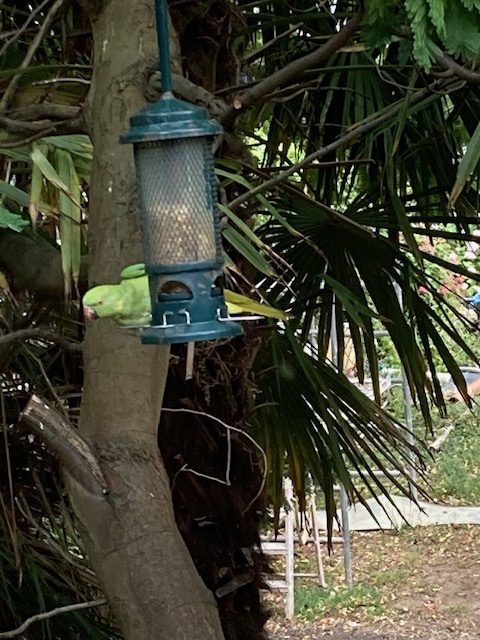
We refill the bird feeder that hangs from the Acacia tree over our little terrace. Along with the familiar families of birds – a small flock of Indian Ring Neck Parrots have found the feeder and have figured out how to work their way through the entire tube of food in a morning. It looks as if they aim to stay with us for a while.

This has been A Letter from A. Broad. Written and read for you by Muriel Murch.

Old Music

Old Music.

Recorded and Produced by Muriel Murch with WSM by my side.

The Government party-gate reports are in, and the votes on ‘did Boris Johnson break the rules the government set for us all?’ were cast. 354 ministers said yes, 7 puffed no while a few slippery ones went missing. It is too much all too foolish and for this moment I am closing my eyes and ears. 

Where can we retreat to? In May a visit to The Hague in the Netherlands took us to meet the Dutch artist Theo Jansen who in the 1990’s began – using PVC, bits of nylon robe and old cloth sails – to make creatures – huge toys collectively known as Strandbeests that when caught by the winds run along the beaches, sometimes galloping into the surf if Theo is not quick enough to catch them. Luckily the afternoon was very windy – as well as cold. Watching the play between Theo and our grandson David – the silent wonder of the boy child and the magician’s twinkle in Theo’s eyes it is clear that magic and bewitching sorcery remain a reality.

A Strandbeest takes off with David and Theo following. Photo by WSM

Our artist friend Carey Young has an exhibit in Oxford at the Modern Art Museum entitled Appearance. Carey has a steady and persistent eye on women and the law and the Modern Art Museum – built in a repurposed brewery – is where her show has been for over three months and I really want to see it. The Sunday train was full of students returning to university from a weekend in London. I look at those in our carriage and – catching them at this mid-point of leaving late adolescence and entering adulthood – I’m a little chilled. Are there world leaders, scientists, artists or teachers among them? They are young and we are old and so far I see absorption, self-interest and timidity. A girl sits on her case in the middle of the aisle and nobody can – or even tries to – get past her. She seems supremely unconcerned but maybe holding herself steady with a steel will. I wonder again why Boris Johnson bought his castle – the one with only three-quarters of a moat – here in the outskirts of Oxford.

All three of Young’s videos focus on women’s lives. The first – ‘The Vision Machine’ follows the preparation of lenses for the Sigma corporation in Japan. Though Young wants us to imagine a factory run and maybe owned by women – the grey black and white tones took my thoughts in the other direction. That the women were subservient to whomever owned the factory – and could never be free. Then Carey brings us fifteen British female judges who come to sit and look into the camera for minutes at a time. Where are they looking? At us, beyond? Do they become as reflective in front of the camera as we become to the screen? These images make me deeply conscious of the weight of appearances, on each of these robed women etched into beauty by their lives and work. It is a sobering piece of film that follows on her 2017 Palais de Justice, a key-hole look at Belgium female judges at work. I ponder their power and then their ordinariness. Surely they too go home to cook and care for families.

Two days later as dusk was claimed by night we arrived back at Victoria Station on the almost longest day of the year. Walking along the platform, we were still surrounded by those who have pilgrimaged to Lewes in Sussex and surrendered to the music of L’Elisir d’Amore at Glyndebourne. In Herman Hesse’s short story ‘Old Music’ 

I – Herman Hesse – left my desk, blew out the candle and closed the cottage door behind me. I walked through the woods to the edge of the forrest and caught a tram that took me to the heart of the city. Another short walk to the cathedral where Master Bach raised up his voice to God. And when it was over I returned back through the city to the forrest and home. 

Did Hesse then pick up his pen for the short story ‘Old Music’. Spurned on by the urge to escape the political clamor and noise of the city – our journey was in reverse. 

Glyndebourne Festival Opera began in 1934 only closing for the war years of 1941-1945. The festival is a fixture of the English summer season and for the first time we are going. Glyndebourne House sits in the countryside of East Sussex and those of us traveling by train watch the fading elderflowers give way to the blackberry bushes brimming with white blossoms pass by – heralding a fine harvest – if one can reach the vines. At Lewes Station the train is met by huge double-decker coaches that packs us and our picnics inside like well laid out sardines and swish us through the village. The villagers may grumble but are proud that their country estate has turned to art while providing jobs close to home.

The whole planning and preparation are new to us. My husband declines his old tuxedo opting for his black and brown assembly. But like all the women I opt for a gown – with bling. A friend has gathered six of us together and we lay our picnic contributions on the table for the English way of outdoor dining when the time is right. And the beginning of summer is right. Strawberries are blushing and the peaches softening. The traditional English picnic will find smoked salmon alongside of a bottle of good champagne in almost every hamper. There are other old favorites and a sausage roll or two can be seen. Our table is laid with the smoked salmon, bread and butter, a vegetarian quiche and a giant salad to be followed by fresh strawberries, a fruit salad and cream – with a touch more – there must have been a second bottle of Champagne – all of which disappears during the long interval. The gardens lead to an orchard, the lawns to the lake, meadows and farmland beyond. They are deeply Edwardian and remind my heart of my childhood home.

Tonights performance is of L’Elisir d’Amore by Gaetano Donizetti. ‘Composed in a hurry’ says a note. Well Donizetti composed everything in a hurry, knocking out over 70 operas plus other works before succumbing to the lover’s disease at the age of 51. L’Elisir d’Amore is that old story of love yearned for – thwarted and then after many plot twists and turns – requited – and we loved it.

L’Elisir d’Amore Cast – a moment

On Monday the government has gone to ground hiding behind a heart-wrenching headline accident, the cricket match and the shock- horror – of interest rates being raised – again. 

But our King is working. A book of portraits celebrating the arrival of the first of the Windrush generation in June of 1948 was quietly celebrated at Buckingham Palace. In the forward the King writes, “Thank you. … It is, I believe, crucially important that we should truly see and hear these pioneers who stepped off the Empire Windrush at Tilbury in June 1948” Many of their daughters became nurses and my bedside sisters where they remain forever in my heart. 

The Celebration of Windrush: Portraits of a Pioneering Generation.

This has been A Letter from A. Broad. Written and read for you by Muriel Murch.

Below the Fold

Written and Produced for you by Muriel Murch with WSM by my side

It came on Saturday – effectively immediately – Boris Johnson resigned from his parliamentary seat of Uxbridge and South Ruislip, a Greater London constituency inside of the M25 motorway for those who need to know. It was on the front page of the Financial Times Weekend Supplement but – below the fold. Michael Heseltine, the former deputy Prime Minister under Margaret Thatcher (keep your friends close but your enemies even closer) described the move as “a brilliant coup de théâtre – and – it is … totally unprincipled and dishonest.” It is worth remembering that in 2019 just before Johnson became Prime Minister, Max Hastings, Johnson’s former editor at the Daily Telegraph, reportedly said: “There is room for debate about whether he is a scoundrel or a mere rogue, but not much about his moral bankruptcy, rooted in a contempt for truth.”

While his counterpart in America – across the increasingly bigger pond – struts out on stage once more – our home-blown blond – who has handed Kelly Jo Dodge, his hairdresser, an MBE, has had enough for the moment. In a dance of betrayal about not getting popped upstairs to the Ermine chamber of which I have quite lost the plot, two further Conservative MPs have also resigned their seats: Nadine Dorries from Mid Bedfordshire, and Nigel Adams from North Yorkshire. So geographically, the Conservative holes to be plugged are fairly evenly spread in England’s ‘green and pleasant land.’

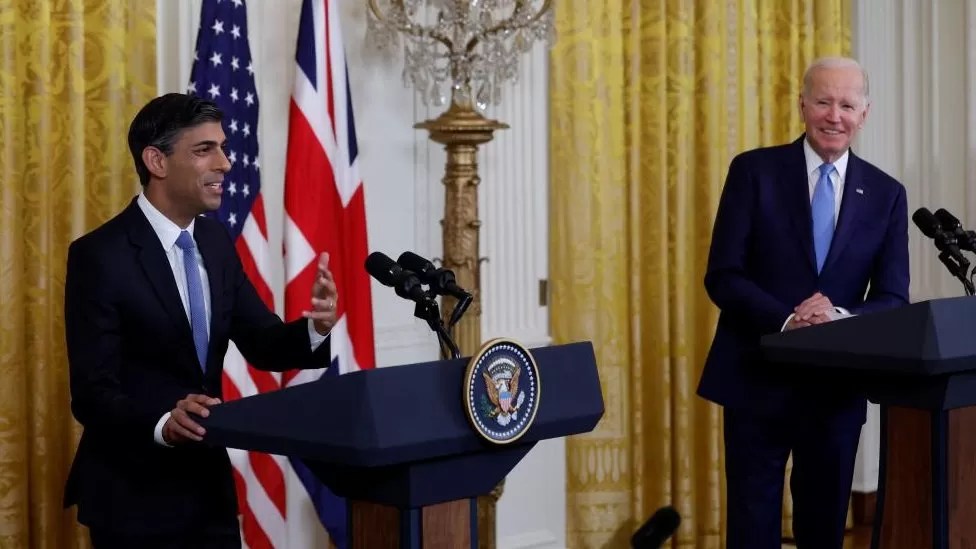
UK Prime Minister Rishi Sunak and US President Jo Biden had a nice chat

When Rishi Sunak arrived back from his spin around Washington with Uncle Jo Biden, the political and geothermal heat had risen. Politically he now has three seats to fill in by-elections. Luckily the arrest on Sunday of the past First Minister of Scotland, Nicola Sturgeon – pulled in for questioning on financial misconduct by the Scottish National Party – proved a timely diversion. Whether one is in favour of Scottish independence or not – and though I can see their point I’m rather fond of Scotland – Sturgeon proved herself a first-class politician, even as she saw her party’s cause chipped away beyond her grasp. Looking back at Scotland’s history, Sturgeon joins Gordon Brown and the late John Smith as ministers that carried some visible moral backbone.

During the week that was, Prince Harry’s got himself in a right pickle – showing up a day late and leaving a day early for his court case against the Mail newspaper – not making the judge a happy fellow – and though Prince Harry has a point about journalists seeking him out for fodder, he is out of his minor royal depth as to how to fix it. He has returned to California and journalists are all busy taking a good bite of the political backside of the British Parliament. And for that, we can be grateful. 

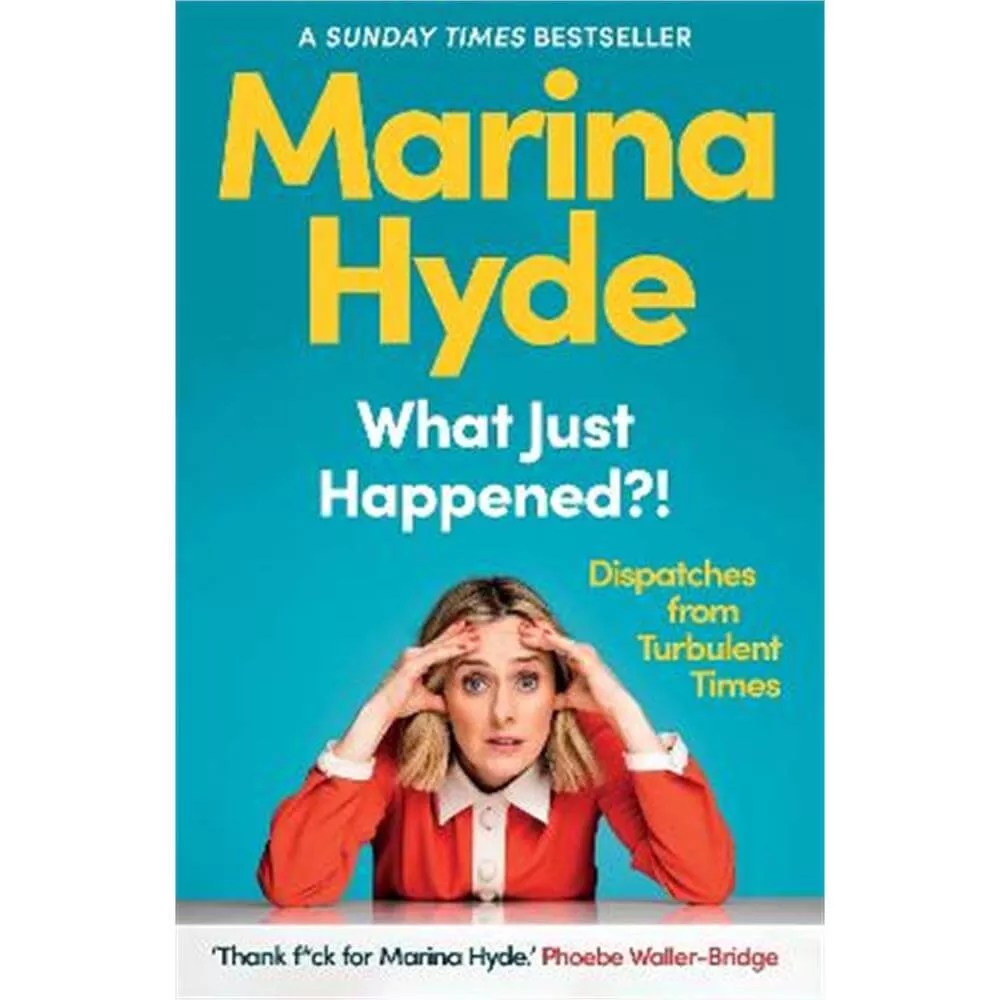
At the beginning of this month, there was an event on the other side of town. Cadogan Hall looks like an old church and is tucked away just off Sloane Square. It is where the Royal Philharmonic Orchestra calls home. Two high-profile journalists for The Guardian Newspaper, Marina Hyde and Jonathan Freedland, would be in conversation to celebrate Hyde’s book launch of ‘What Just Happened!?’ Walter had bought the book and tickets. He was determined to see them in person and to ask his question. The book is a big one – and sits prominently on our table. It is easy to dip in and out of with its short article-sized chapters.

Book Cover for What Just Happened by Marina Hyde

Marina Hyde now holds the lead position as “a thinking man’s crumpet”, an English expression first used in the 1960s to describe Joan Bakewell when she appeared on the BBC2 late-night discussion programs. There have been other crumpets of course, smart as well as beautiful actresses, news and semi-smart presenters, the chef, and author Nigella Lawson, Nicola Sturgeon could even be considered as such. The oldest crumpet of the moment is Kirsty Wark with – thank goodness – her own quirky style and smart mind – she still holds our attention as the senior co-hostess of Newsnight. But for now, Marina Hyde takes the pretty position with her political journalism and she definitely has my husband’s attention. He is not alone and on entering the bar to the hall we see many more left-leaning types – mostly of a certain age. There are young men out on a date, “Would you like to come and hear Marina Hyde – I’ve got tickets?” But I’m not sure Marina is really the come-on that they hope she will be. She could be just too intimidating. Us oldies look at her and remember – we too have been a bit of crumpet in our day and now just smile, seeing husbands getting frisky. The conversation on stage was good – Marina seemed a bit nervous which was comforting and when it ended Jonathan opened up to questions from the audience along with some on his iPad. My husband’s hand popped up and down until he was called and could ask his Brexit question. “ With the referendum being so important why was it not a super majority vote?” There was applause for the question but sadly no real new answer. Walter has met his third Russian as in “When three Russians tell you you are drunk you might want to lie down.” The sickening truth is that the then Prime Minister, David Cameron, was so confident of winning he saw no reason to make the vote more than a simple majority. His arrogance began the spin that has taken this country into a downward spiral of decay. 

The war in Ukraine goes on, and both the Ukrainians and Russians know and are admitting this is not going to end easily. God is apparently on both sides. We see Putin holding up his latest Icon in gold, while Volodymyr Zelinskiy posts videos of captured Ukrainian soldiers being swapped home. Nope, this is not going well – God may be just too busy with wars all over the world along with global warming and the terrible mess we are creating on our planet.

This evening I pass a young Asian man and an older English lady trying to move a crippled gentleman down the last steps of his house and into a wheelchair on the street. It is dusk. I don’t know where they are going but they look a bit unbalanced – the man’s feet are caught up and twisted together. I stop, put down my basket and rest my thigh against the wheelchair. From behind I lean over the man and say “This old nurse is going to put her arms under yours and bring you back into the chair” and lift him safely into his seat. Our heads are close and a sweet smile breaks over his uncleaned teeth. He turns closer to me. ‘Thank you” he says and our eyes smile a secret together. I pick up my basket and don’t look back as I walk on home. 

While I write, a small storm flicked a little lightning and a thunderclap, caressing us with the sweet smell of summer rain across our deck. It was not enough to soak the potted plants – only for the leaves to cup and drink. 

At the age of 86 the past Prime Minister of Italy, Silvio Berlusconi has died. His life set out the playboy playbook that so many politicians read. It will take more than a little light rain to wash away the pages of his legacy found amidst the dry crevasses of corruption and decay in Westminster today.

This has been A Letter From A. Broad. Written and read for you by Muriel Murch.

Back to Work

Written and read for you by MAM with WSM by my side

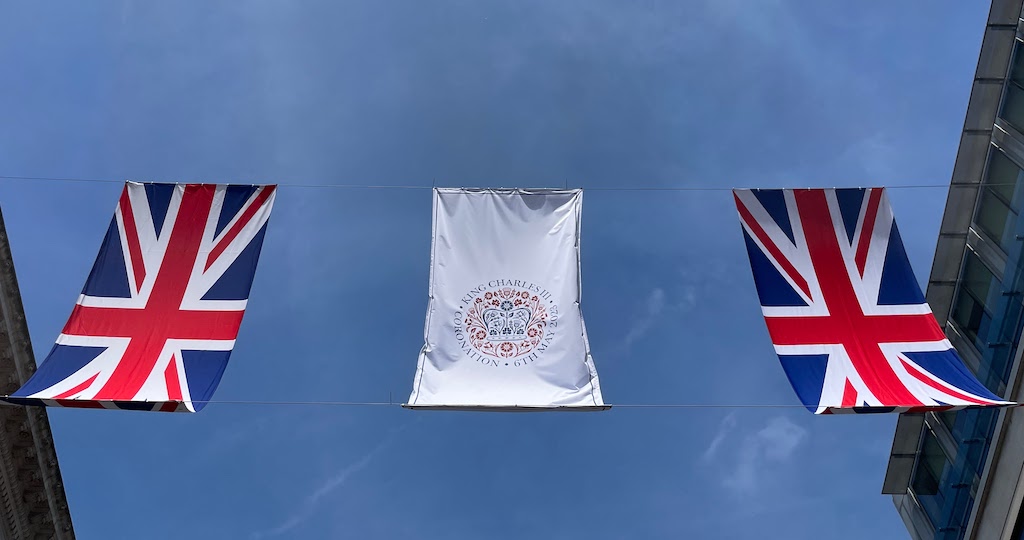
The coronation is over, the King and Queen have had their little rest and are now back working; the King shaking hands with ministers and world leaders, and reading those dispatch papers that keep him informed as to who is doing what- and where – while the Queen goes out and about visiting and spreading good cheer as she continues to learn who is doing what in this country. The flags are still flying over the London streets teasing the tourists out to take another picture or two.

King Charles III. Photo by Victoria Jones /PA

The roses are only just beginning to bloom and have not yet pushed spring into summer. The bluebells are fading and the air in London is rich with the attar of cowslips growing in the hedges around the parks and along the canals and rivers. Last week while, walking up alongside of Primrose Hill I saw two vans parked on the same side of the street – back to back with their boot hatches open facing one another. The two men – from street-savvy habit – look up, always conscious of who might be watching, and we catch each other’s eyes. I’m smiling at them and – like fourteen-year-old boys caught smoking at school – they sheepishly grin back. There is an exchange going on. The slightly younger man is holding a plastic fitting, something that could be used in plumbing or electrical works. He seems to have at least a box of them and is proudly showing them to the slightly older man. Both are in their forties and when they were babes such things would appear on the lot of the film studio at Elstree, ‘It fell off of a lorry’ was the phrase for such items. Here in town, lorries are too conspicuous in the city streets and an unmarked white van can disappear quickly into the traffic. The men know that I know – and that I remember such mischief – and am too old to do anything but go on my way. And with another grin exchanged that is what I do.

The newspapers are quieter, looking as they can for other news. Well, there are always wars, and though we have a hard time keeping up with the Ukrainian president as he moves from the front lines of his country’s war to diplomatic meetings and back again, he does keep visible and keep the world informed. Is he luckier – in a sickening sense of that phrase – than the people of Syria with their multi-sided civil war or the Sudan where civilians are killed on a daily basis. Wars continue in what could be called the B column. In the C column, news of the treatments of refugees from Somalia and Ethiopia by the Greek authorities are not even reaching the English papers. The refugees fleeing these wars have made their way from Turkey to Greece only to be captured – by whom – and pushed into vans – driven to launches – taken out to sea and transferred to the Greek coast guard vessels before being set adrift in rubber dinghies. Is this bounty hunting as in ‘I’ll give you so much for an adult, so much for a child’? We are horrified and sickened as we catch glimpses of such cruelty – and yet – it is hard to think of a time or place in ‘civilized history’ where and when this has not been true. 

But at home – in England – the Prime Minister is missing. Rishi Sunak and his wife have gone to Japan for the G7 conference where everyone has a chat and so politely says ’After you’ as in ‘if you give Ukraine bombers we will too. If you shake China’s hand – we will too’. All are consumed with the war in Ukraine. Well, almost all, India and the Arab States are keeping a distance from that chat while Volodymyr Zelensky strides about this world stage, clad in his army fatigues moving and talking to anyone and everyone he can. What deals can he cut? A little pilot training here, a couple of fighter jets there. It may not be much but he wouldn’t get any of it without showing up and giving a photo opportunity for the supposed great and good.

While Rishi is away, the little problem of Suella Braverman’s speeding ticket has blown up across the papers. It is almost good for a laugh. Those pesky cameras are everywhere and even with the warnings, ‘speed camera ahead’ one can get careless, and click, click there is your license plate picture in a civil service office and the next thing you know a paper notice comes through the letter box. Then what do you do? Well if you are the Archbishop of Canterbury and you get nicked popping in and out of London you may try to resolve it out of court but accept that, “No your worship – you was speeding – a hot 25 in a 20 mph zone.” He may have muttered some words about the press getting ahold of this one but paid up and accepted the points on his license. But a politician is different and good – not so old – Suella Braverman tried to wiggle out of taking her speeding awareness course within a class. The media spotlight swung quickly onto her – again – and she looks more and more like the most recent hole in the Tory bucket shining light into the murky interior of her political party.

And with Rishi still in Japan, Boris popped back into the news announcing that he and Carrie are expecting another child, bringing this family up to three children trotting along beside the other known five he has begat. What a lovely old word begat is.

But some words are not so lovely – they are hard to pronounce and to say. Nigel and Farage are two such words heard again as he showed up on the news once more to finally admit – ‘Brexit is not working.’  He goes on – that of course it is not Brexit’s fault, but the bureaucratic administration that has got it all wrong. The communist party said the same thing but no one remembers that. What is so terribly sad is how this country cannot yet see itself as a minor player on the world stage, and behave accordingly. Europe has no need of England, but England has great need of Europe and European business, industry, and people.

On Monday evening our plane touched down in Athens Airport, 59 years after we left – not knowing if we would ever see each other again. The drive to the city dips in and out of old memories. Small towns and old olive groves spread out in age, showing dreams made, broken, and reset as the trees are realigned to the country’s fortunes. The scattered sage and scrub are muted in the decaying dusk before we enter the city center where there is not a refugee to be seen. The limousine pulls up beside the hotel, and we are welcomed to Athena. For 24 hours we can disappear into an old marble suite, deep hot baths, and room service before reemerging to work in the world once more.

Yorgos Mavropsaridis and Walter Murch in conversation with Orestis Andreadakis at the Astor Cinema for the Rolex Arts Festival. Photo Credit – in Greek!

This has been A Letter From A. Broad. written and produced for you by Muriel Murch.

The King’s Coronation May 6 2023

May 6 2023 Coronation Day.

Written and Produced by Muriel Murch – with WSM by my side.

It was raining – of course it was – with the steadiness that puts up umbrellas and gives rise to the English complexion. It was not cold.

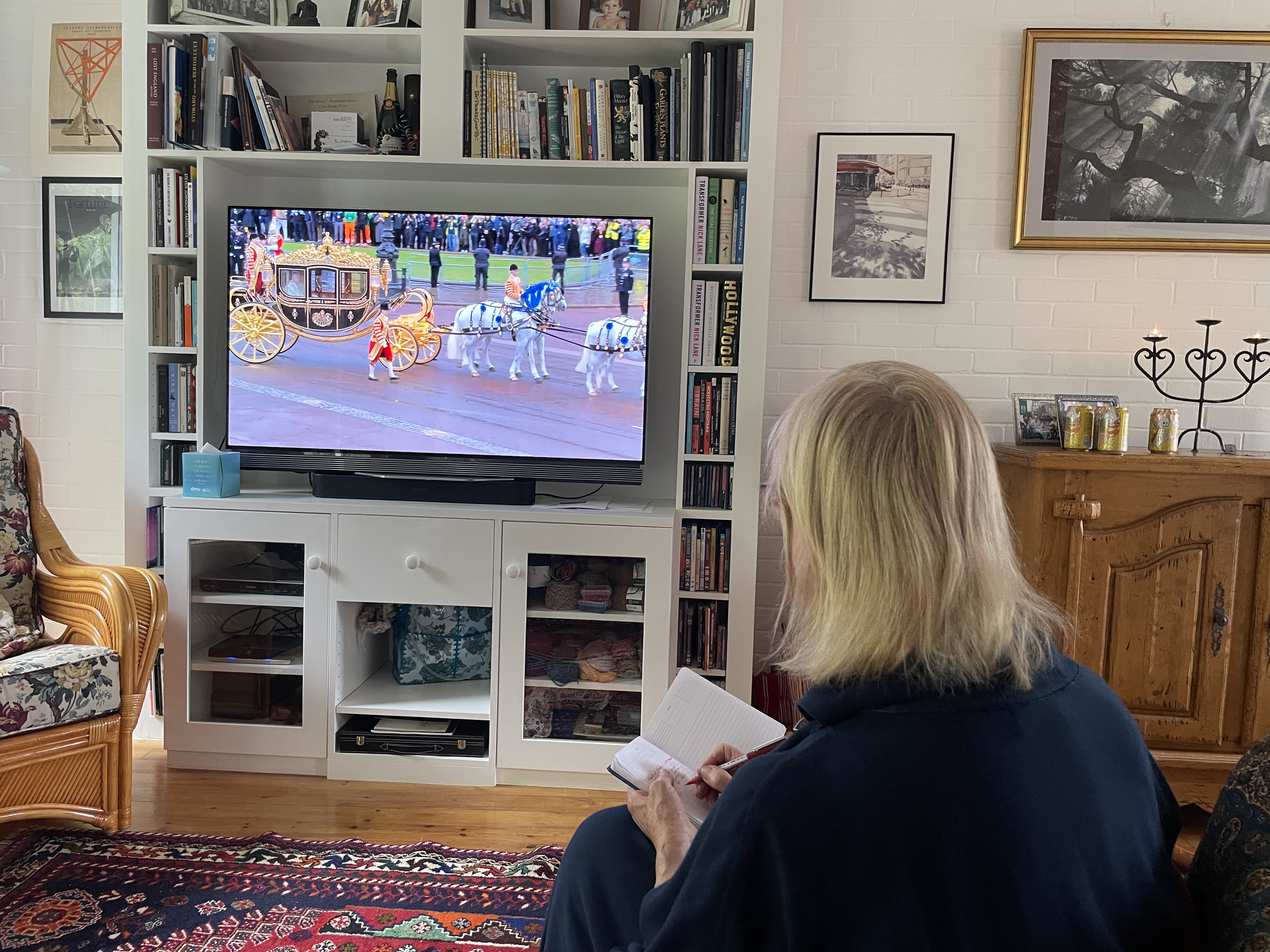
But in the Diamond Jubilee State Coach, the King and Queen looked cold as they emerged from the Buckingham Palace archway driven through the gates and onto the Mall. The coach hangs like Cinderella’s coach. The eight Windsor Gray horses are harnessed with gleaming leather, brass, and heavy blue ribbon braids. The King and Queen are both dressed in white, Camilla wearing a more than striking diamond necklace, and their long ermine trains are tucked up around them. They look almost naked and shy of the mixed reception that could greet them, taking turns nervously waving at the crowds lining the Mall who are wishing them well. Watching the coach leaving the Palace I couldn’t help wondering what was passing through their minds. Their lives together and apart, have been fraught with protocols followed, mistakes made, anguish, remorse and family ripped asunder and patched back up again. Now they are here entering their final chapter of devoting their lives to service.

Graeme Robertson/The Guardian

The Household Cavalry Mounted Band of 48 horses and musicians joined the procession. Either Atlas or Apollo, one of the two drum horses, insistently did a half-pass along the Mall rather than a working walk. But they made it – along the Mall, around Trafalgar Square, and down Whitehall to Westminster Abbey where the first William, Duke of Normandy, was crowned 957 years ago.

Special Bunting on Regent’s Street London as seen from the 88 bus (Photo by Beatrice Murch)

It is perhaps special to see all of this through a child’s eyes. Four days before the coronation Granny took seven-year-old David – and his mother – on the number 88 bus down to the Mall to see the preparations and flags and bunting going up. And we lucked out with a fish and chip lunch at the Admiralty Pub just off of Trafalgar Square. But no desert – as surely – with so many politicians around there would be an ice cream van at every corner on our way to Westminster. But we were wrong. There were far too many policemen and women, barricades going up everywhere and there was not an Ice cream van in site – such was the security already put in place. We had to walk down to the river for our vanilla smoothie with a chocolate stick before getting back onto the number 88 bus and home.   

Watching from home – with millions of others. (Photo by Beatrice Murch)

Saturday came – with the rain – and pancakes for breakfast – as we watched along with millions around the world the pageant unfold before us.  Some of us remember watching the coronation of Queen Elizabeth II in 1953 on a new television set with family and friends and sandwiches in the drawing room. Much has changed in those 70 years and the new King knows it. 

‘Give all the money to the people’ say the Americans but lord knows no pounds would reach the people, never improve services in schools and hospitals, only dribble into and linger in the pockets of politicians and bureaucrats. The Monarchy knows this as they keep their enemies close by inviting so many to this day. We caught glimpses of arrivals; the French president Emmanuel Macron and his hatless wife Brigitte, Jill Biden with her granddaughter Finnegan. Jill Biden sat beside Olena Zelenska, the first lady of Ukraine. Two Arab Skeiks seemed a little lost as they looked for their seats.

But then along came the past British Prime Ministers with their partners.

After the beauty and dignity of the Commonwealth, World, and European leaders, they seemed a scurrilous lot. John Major led, looking almost like an elder statesman before being joined by Tony Blair – who took us to war. Gordon Brown, who tried to speak the unpopular truths of our country, stood a little aside of David Cameron, who tossed us out of the European Union. Teresa May was followed closely by the Johnsons – Boris was having another bad hair day – and Liz Truss, who had both ushered the Queen to her death bed.

T. May, B. Johnson, and D. Cameron have their partners and Front Row seats.
The First Minister of Scotland Humza Yousaf arrives with his wife at Westminster.

The sudden departure of Nicola Sturgeon as Scotland’s First Minister left the new Humza Yousaf to scramble a bit for his kit. He came up with a Slanj Asian fusion-style jacket and a mighty sporran bouncing along with his stride all actually quite becoming.

The First Minister of Wales and his wife both looked so very – Welsh. Then the non-working Royals arrived. Prince Harry a little unsteady but carefully flanked fore and aft by his cousins Eugenie and Beatrice whose father Prince Andrew was slipped between an uncle and an aunt. Next came the working royals but the four front chairs were empty. It appeared that the new Prince and Princess of Wales were stuck in traffic! A little rushed they showed up wearing the formal robes of state. Prince George was away helping with Grandpa’s train while Charlotte and Louis were tucked neatly in beside their parents. Beyond the world leaders, the over 2000 guests seated in the Abbey came from the not-so-great but surely the good among the British people. Charity leaders, leaders in conservation, ecology, medicine, science, education, and youth programs. 

Finally, the King and Queen arrived at the Great West Door of Westminster Abbey. There was a little robe shaking and adjustment here and there before they were escorted along the nave, through the choir to the sanctuary to take their oaths – swearing to serve the people of The United Kingdom and his territories, whatever they may be in the foreseeable future.  It is here that maybe tradition and history serves us best. As godparents, we swear to guide our godchildren into the way of Christian faith – not that I was so good about that. At marriages, we swear in front of our Gods – or the state – family, and friends to ‘plight thee my troth’. And when we say those vows we mean to keep them. The king swore on his Bible that “The things which I have here before promised, I will perform and keep. So help me God.” There was a fifty-page ‘order of Service’ to follow to keep everyone on track and explain every moment, every gesture, every act, and there was a lot to get through. The coronation service has evolved over almost a thousand years, changing with each monarch. Today there was music old and new, there were women priests and religious leaders from all faiths in this country. 

The king is stripped – very carefully – of his ermine robe and jerkin and left kneeling in a cotton shirt and trousers with what at first appears to be the most incongruous black buckled shoes. It is time for the King to be hidden behind a screen and be anointed. This part of the service is the most sacred time. A King, his God, and oath to that God.

And then comes the crowning. The day before, Friday, the King and Queen had gone to the Abbey with – presumably almost everyone else – from Bishops to choristers and pages – and walked through the service. But still, there are tricky bits. The Saint Edward’s Crown has always been a problem. The new King remembers how his mother – the late Queen – would wear it, coming to kiss him goodnight, as she practiced carrying its 2.25 Kilograms on her head. Physically and metaphorically it is a heavy burden. 

“Uneasy lies the head that wears the crown”. William Shakespeare gave these words to King Henry IV in that play, as he ponders and accepts the duties and responsibilities of Kingship.

Ben Stansall/WPA/Getty Images

The Archbishop of Canterbury swears allegiance to the King and the crown. He is followed by Prince William who comes forward, and kneels as he swears his allegiance, kissing the crown and then the king –  his father. ‘Amen’ says Charles and it is here that we miss the brother, Harry, to be a part of this – helping support and care for the king and his people.  

Gary Calton/The Observer

Now it is the turn of Queen Camilla whose crown was made for Queen Mary in 1911. When the Queen joins the king they are presented, united by their oaths and commitment before God. The Archbishop prays again, telling the monarch to: “Stand firm and hold fast from henceforth.” He will need to.

Those familiar with the Anglican Eucharist Service know we are now on the home stretch. It is time for holy communion, a few more prayers and singing followed by the blessing and procession out of the Abbey and – into more rain. But there are smiles of relief. It has gone well. The King is crowned, the family more or less in one piece, and though the demonstrators can be heard calling ‘Not my King’ the police are using their – new and improved – from their point of view – powers to arrest the leaders. 

Christian Sinibaldi/The Guardian

The King and Queen are helped into the old Gold State Coach, a beautiful but uncomfortable vehicle. They process at a walking pace and it is clear that though the crowds are thrilled, the footmen are getting weary. They will be glad to get those black pumps off of their feet and be out of their heavy tunics. A full pint of beer will go down a treat. 

Upstairs in the Palace lunch must be ready but there is still the balcony performance. The police slowly guide the crowds down to Buck House, letting them build around the gates for the balcony appearance showing who is working and who has been retired. But before that happens there is another quiet touch. The soldiers who marched in procession are on parade in the Palace Gardens. They want to play the national anthem, sing God Save the King and give three cheers for His Majesty. And the King wants to see them and by his presence say ‘Thank you.’ It is a small thing, and turns the schedule a little on its heels – lunch may be tea-time sandwiches. But it is of such small things that this monarchy may stand firm and survive. 

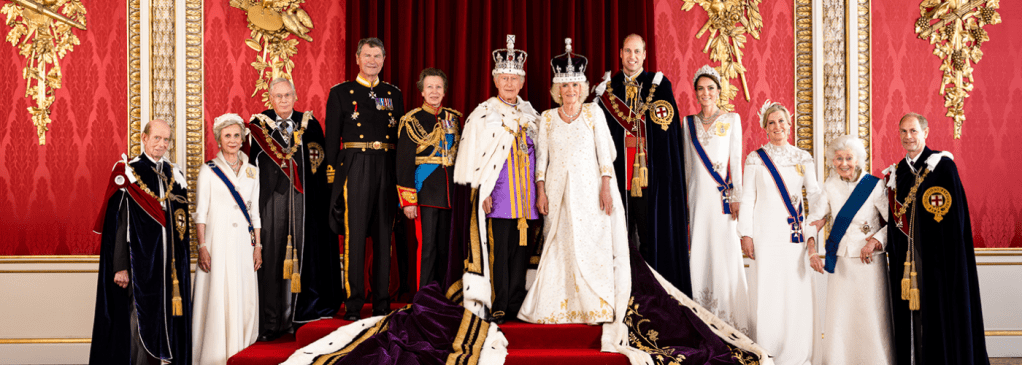
The Working Family from the official website

This has been A Letter From A. Broad. Written and read for you by Muriel Murch 

Truth Bombers

Recorded and Produced by Muriel Murch

I’m remembering a Chinese restaurant – probably in Manhattan – it was loud with cooking and cleaning noises from the kitchen and impatient traffic from the street and even then – when we were half our present age – we had to raise our voices to hear each other. 

“What we need are Truth Bombers,” said our friend and immediately Walter and George began to expand on the idea. All that was needed were people whose reputations are so strong, so respected, that everyone would listen, believe them, and would act accordingly – doing – as Spike Lee said – The Right Thing. ‘Well that’s all sorted’ we thought as it came time to crack open the fortune cookies. How on earth could we have been so naive?

Now as governments become stronger in their authoritarian rules, there have always been truth bombers who are shot down before they can clip the sharp manicured nails of those iron fists. Truth Bombers come from all walks of life, particularly among artists and their offspring – celebrities, and activists – with politicians far down the list of those who follow this path.

Somehow this has all bubbled up in my mind from another British boil-over – you can’t be serious – the country says – when Boris Johnson, past Prime Minister of bumbling, put his father forward for a seat in the House of Lords where he had already booted his brother Leo to safety. 

On 7 March, Gary Lineker spoke out – well, tweeted actually – which now amounts to the same thing – that the language being used around asylum seekers was “Not dissimilar to that used by Germany in the 30s” and that put the government’s knickers in a twist and Lineker off the air. When he first joined the BBC, Lineker had clearly stated that “there are two things that I’ll continue to talk about, the refugee crisis and climate change.” When Lineker was reinstated to Match of the Day the following weekend, the director-general, Mr. Davie, said he had taken “proportionate action”. Adding “We believe we did the right thing. I think I did the right thing.” The row over Lineker’s tweet led to fresh calls for BBC chairman Richard Sharp to resign. After things quieted down, Lineker added: “What they have to think about first and foremost – the government of the day whether it is Tory or Labour – cannot decide who the chairman of the BBC is, or have any kind of influence on who they put in the director of news or anything else – though it looks like another ermine robe could be floating down the BBC’s back staircase.” 

Photo by Mike Egerton A.P

The ten-hour flight from San Francisco was as smooth as those things can be. Dear Taghi Amirani met us at Heathrow – driving us into five minutes of sunshine before the grey clouds of England covered the sky over the old A4 road into London. It is a scruffy road, airport hotels sit bossily beside old fields that have been given up and over to scrub and travelers of all kinds. A few plum trees are in blossom and new emerald-green leaves are appearing on the roadside trees. When the sunlight strikes them my spirits lift at this harbinger of spring. Even the houses in Hounslow, that sit directly under the flight paths of so many planes, look fresh and optimistic. Tulips have been planted to follow the daffodils along grass verges. As we come into the city, blackened tree trunks and branches are leafing out saying yes to this season. 

Slowly we begin to settle in – unpacking this – rediscovering that and wondering where on earth is the other thing. And we look at the shift in the news items of today. The main themes of course remain the same, corruption by public political figures. Boris and his Papa now receding into the back pages while two Scottish figures from the Scottish National Party were arrested and then released on bail. Last month it was the former chief executive Peter Murrell – husband of Nicola Sturgeon – the recently resigned First Minister of Scotland – and this week the Scottish National Party treasurer Colin Beattie. Then there is the little matter of Rishi Sunak’s wife’s investments in childcare firms not being mentioned on some disclosure forms. Instead, we get to see Rishi and his wife – who wears the taut skin of a supremely rich woman – on the floor – smiling as they appropriate jumbo Lego blocks from nervous children. 

Meanwhile, inflation in England is at over 10%, the highest in Western Europe – Brexit – Thank you again. Junior doctors are out on strike for more than their £14 an hour – the supposed living wage in England. The nurses are once more teetering on striking while surgeries and other procedures are being canceled. The National Health System appears to be falling apart which may be the no-longer-hidden goal of this government that put forward a Prime Minister of color as the fall guy. 

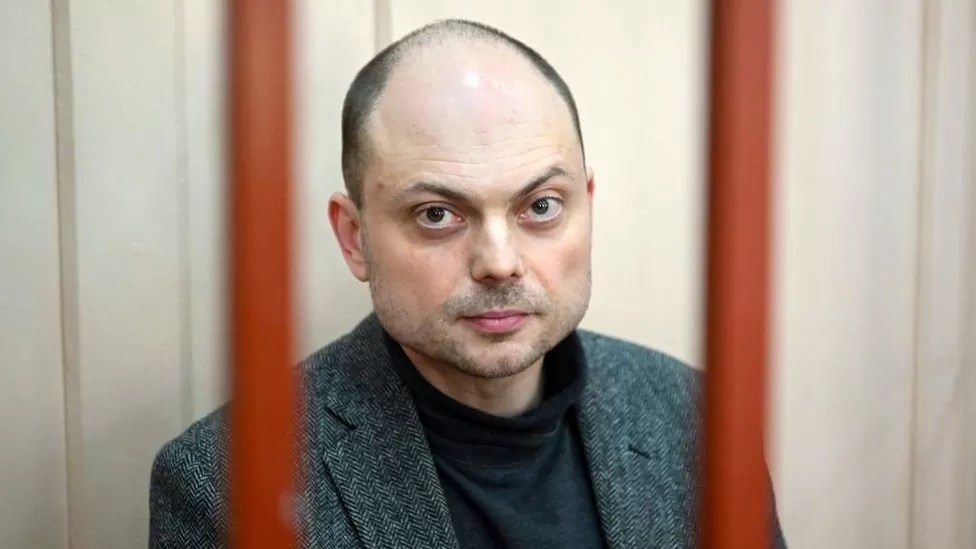
It is time for the ten o’clock news and though the Scottish indecent party politics lead, followed by a smiling Rishi on the floor with a toddler’s Lego, the main item is the recent trial of the Russian activist and journalist Vladimir Kara-Murza. Murza is Russian and came to England as a teenager, later attending Cambridge University. He worked in journalism before becoming an adviser to Boris Nemtsov, another Russian political opposition leader who was shot and killed in 2015. Murza now lived in the United States with his wife and family. Then later, he wrote from his cell, “We all understand the risk of opposition activity in Russia. But I couldn’t stay silent in the face of what is happening, because silence is a form of complicity”. He has survived two alleged poisoning attempts but at the onset of this war knew that he had to return to Russia where he was immediately arrested and now found guilty of criticizing the war in the Ukraine, spreading “false” information about the Russian army and being affiliated with an “undesirable organization”. all equating treason. He has been sentenced to 25 years in jail, the harshest sentence yet for political dissidents. Along with Russian Alexei Navalny, Belarusian Alex Bialiatski, and others, Vladimir Kara-Murza is a Truth Bomber.

BBC News

Which brings us to Sir David Attenborough, another truth bomber – Still flying missions – Sir David Attenborough’s new flagship series, Wild Isles, looks at the beauty of nature in the British Isles. Five episodes are currently airing in primetime slots on BBC One. But the sixth episode – a stark look at the losses of nature in the UK and what has caused those declines will only be available on the BBC iPlayer. It is understood to include examples of rewilding, a controversial concept in some deep rightwing circles. Once again the Government’s knickers are in a twist – and all of a sudden it doesn’t seem so far a stretch between rapping Gary Lineker’s knuckles, clipping Sir David’s prime-time wings, and jailing Vladimir Kara-Murza. 

Photo BBC

This has been A Letter From A. Broad written and produced for you by Muriel Murch.
February Cold

Recorded by WSM knit together by MAM

When in August 2021 western Military forces withdrew from Afghanistan, a plane-load of dogs was evacuated from the country leaving even less room for those Afghani families who had helped the allied troops during the war. Today in the UK an estimated 9,000 Afghans are still living in temporary accommodation in hotels along the Bayswater Road. Some settling occurred. Jobs were found, low-paying and under the table for sure; children went to school and learned English along with math as they began to make a new life. Now the British government plans to move these families to Yorkshire. It won’t even be the same English. 

Rumor has it – via The Daily Mail – that Boris Johnson has made over five million quid since leaving office as Prime Minister, not a bad haul for a bumbling bear. And with that – (offers accepted at over four million) – his offer has been accepted on a manor house – with a moat. But the moat only runs around three sides of the house so it won’t do a lot of good when the people finally come for him. He may think he is safe in Oxfordshire, but outside of the university Quad, there are country folk who know what he has done.

Brightwell Manor behind the church

As Polly Toynbee writes in The Guardian, the true legacy of Boris Johnson is that dishonesty is standard, the Commons has lost sight of the truth. The former leader’s disregard for truthfulness emboldens others happy to follow his example, knowing the system rarely holds them to account.

Nicola Sturgeon is stepping down as First Minister of Scotland. This is a big blow for the independence movement she has championed for her entire political career. Nicola, recognized in the western world, like Angela, by her first name, is a deeply respected politician. Her daily briefings through the Covid pandemic were a relief to everyone in the British Isles. When mistakes were made by her politicians, the retribution was swift. Nicola’s level of honesty was never equaled in the English government and only highlighted the ‘let the bodies pile up’ leadership south of the border. Though there may be plenty of young politicians coming up through the Scottish ranks, the question of Scotland’s independence remains in deadlock. Nicola insisted that her decision to step down was anchored in what she felt was “Right for the country, for my party, and the independence cause I have devoted my life to.”

Nicola Sturgeon Photograph: Xinhua/Rex/Shutterstock

Russian President Vladimir Putin thought he had Alexei Navalny ‘done and dusted’ when last year Navalny was sentenced to 20 plus years in jail. For a few months, Putin could allow himself a grin and a chuckle thinking of all the lost years of family and political life that Navalny would endure. If Navalny did survive the sentence, Putin could hope that he would emerge a husk – a broken man. But this month that grin turned tight-lipped. The documentary film Navalny was nominated for both a British BAFTA and the American Oscar Awards. And on Sunday it won the British BAFTA for the best documentary film.

Navalny won the BAFTA for best documentary in Feb 2023.

However, the Bulgarian investigative journalist Christo Grozev, who features in the film Navalny was, along with his family, banned from attending the ceremony in London due to a public security risk. In the film, Grozev and his fellow journalists tracking the poisoning of Navalny clearly show the Russian States’ involvement. Pushing the blame hockey puck around the stadium, the British Metropolitan police force said that while it could not comment on the safety of an individual or advice given to them, it was “absolutely concerned” with the “hostile intentions of foreign states” on UK soil. And they have a point. The finger of accusation points straight northeast to Russia with the successful poisoning of Alexander Litvinenko and the botched attempt on Sergei Scribal and his daughter Yulia that killed a British woman, Dawn Sturgess, in error. All this, mind you, when the aforementioned past Prime Minister Boris Johnson gave a cozy seat to the Russian newspaper mogul (owning among other things the Evening Standard) Lord Lebedev, in 2020. A heavy sum supporting the Conservative party was added to their coffers. I can’t get the image out of my mind of a snake charmer playing his flute as his pet cobra rises in the woven basket of his hiding.  

But the Met Office truth remains that “the situation that journalists face around the world, and the fact that some journalists face the hostile intentions of foreign states whilst in the UK, is a reality. Which begs the next question, How will the American academy respond to the nomination of #Navalny? Navalny knows this film is his cross on Calvary and that he may be the one who does not make it down from the Hill. Havel made it through – Mandela made it through – will Navalny?

Found lying on the streets of Bucharest 1999 by Walter Slater Murch and Dei Reynolds. Looked to be used by someone homeless as a cardboard mat. Brought home to remains as relevant as ever.

In the early days following the news of the earthquake in Turkey and Syria, a friend of a friend wrote letters, and – as we spread the news of this tragedy – we share them. Tuna Şare wrote to Lucia Jacobs who wrote to A. Broad. Here is a part of Tuna’s letter and I have updated the numbers …. 

“I am deeply shaken, still in Oxford but will go to Turkey in two days to join the rescue and help operations.

You may have heard about the earthquakes in Turkey and Syria. Two earthquakes (7.8 and 7.6 in magnitude) affected 10 cities in Turkey. The area affected is the size of the entire United Kingdom. Earthquakes caused an unprecedented energy discharge equivalent to 130 atomic bombs, and the earth’s crust moved by 3 meters, damaging roads, bridges, and airports. 

The recent estimates of the people under the rubble (and dead by now) are around 47,000, and millions are left homeless in bitter winter conditions. The scale of destruction is apocalyptic. Our beloved city of Antioch, for example, is literally all gone along with its cultural heritage. Many archaeologists and academics, students have died and lost their families. Homes too. 

Best Wishes”

Tuna

Mother is very angry. She has tried to hide it, burping and farting, holding her wind in as best she can until she exploded. Two weeks after this initial emesis she has vomited again. The latest death count is up to 47,000 and still rising. How can one care for the fusses of politicians and small scrappy wars where the planet is so attacked by the creatures who feed off of her. 

As we hear the news I think about those still buried – alive – and waiting for help that may or may not still come. 

There is a line -a scene – at the end of the film The English Patient where Katharine is mortally injured and alone in the cave. Almasy has gone to get help and left her with a flashlight, a pencil, and paper.

Katharine is writing.  The FLASHLIGHT is faint.  She shivers.

“…the fire is gone now, and I’m horribly cold. 
I really ought to drag myself outside
but then there would be the sun …
I think of those still living, trapped, crushed,
buried in the rubble of our making 
The light has gone out …
and we watch it flicker and fade.”

KATHARINE (O/S) – The English Patient

This has been A Letter From A. Broad. Written and Read for you by Muriel Murch