The King’s Coronation May 6 2023

May 6 2023 Coronation Day.

Written and Produced by Muriel Murch – with WSM by my side.

It was raining – of course it was – with the steadiness that puts up umbrellas and gives rise to the English complexion. It was not cold.

But in the Diamond Jubilee State Coach, the King and Queen looked cold as they emerged from the Buckingham Palace archway driven through the gates and onto the Mall. The coach hangs like Cinderella’s coach. The eight Windsor Gray horses are harnessed with gleaming leather, brass, and heavy blue ribbon braids. The King and Queen are both dressed in white, Camilla wearing a more than striking diamond necklace, and their long ermine trains are tucked up around them. They look almost naked and shy of the mixed reception that could greet them, taking turns nervously waving at the crowds lining the Mall who are wishing them well. Watching the coach leaving the Palace I couldn’t help wondering what was passing through their minds. Their lives together and apart, have been fraught with protocols followed, mistakes made, anguish, remorse and family ripped asunder and patched back up again. Now they are here entering their final chapter of devoting their lives to service.

Graeme Robertson/The Guardian

The Household Cavalry Mounted Band of 48 horses and musicians joined the procession. Either Atlas or Apollo, one of the two drum horses, insistently did a half-pass along the Mall rather than a working walk. But they made it – along the Mall, around Trafalgar Square, and down Whitehall to Westminster Abbey where the first William, Duke of Normandy, was crowned 957 years ago.
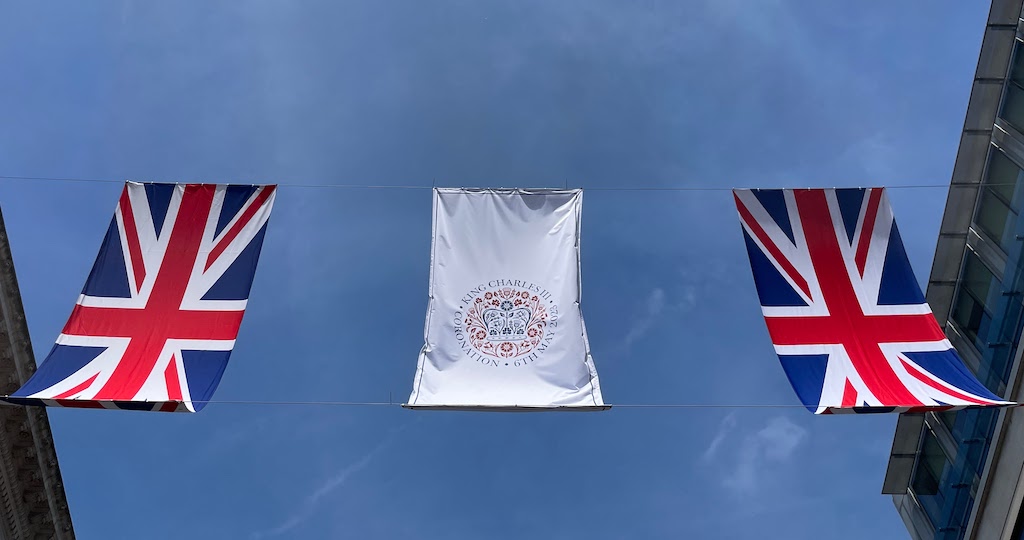
Special Bunting on Regent’s Street London as seen from the 88 bus (Photo by Beatrice Murch)

It is perhaps special to see all of this through a child’s eyes. Four days before the coronation Granny took seven-year-old David – and his mother – on the number 88 bus down to the Mall to see the preparations and flags and bunting going up. And we lucked out with a fish and chip lunch at the Admiralty Pub just off of Trafalgar Square. But no desert – as surely – with so many politicians around there would be an ice cream van at every corner on our way to Westminster. But we were wrong. There were far too many policemen and women, barricades going up everywhere and there was not an Ice cream van in site – such was the security already put in place. We had to walk down to the river for our vanilla smoothie with a chocolate stick before getting back onto the number 88 bus and home.   
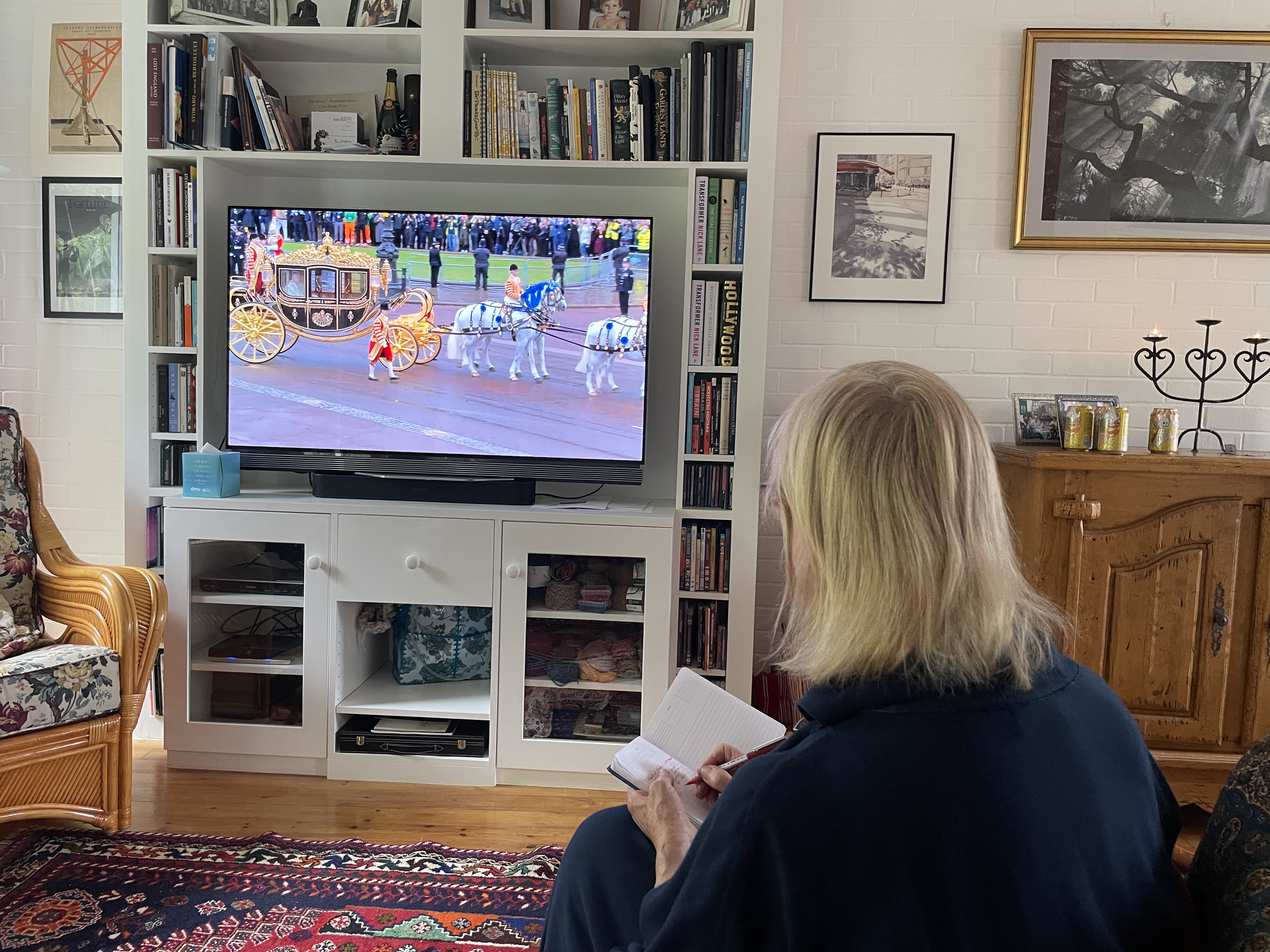
Watching from home – with millions of others. (Photo by Beatrice Murch)

Saturday came – with the rain – and pancakes for breakfast – as we watched along with millions around the world the pageant unfold before us.  Some of us remember watching the coronation of Queen Elizabeth II in 1953 on a new television set with family and friends and sandwiches in the drawing room. Much has changed in those 70 years and the new King knows it. 

‘Give all the money to the people’ say the Americans but lord knows no pounds would reach the people, never improve services in schools and hospitals, only dribble into and linger in the pockets of politicians and bureaucrats. The Monarchy knows this as they keep their enemies close by inviting so many to this day. We caught glimpses of arrivals; the French president Emmanuel Macron and his hatless wife Brigitte, Jill Biden with her granddaughter Finnegan. Jill Biden sat beside Olena Zelenska, the first lady of Ukraine. Two Arab Skeiks seemed a little lost as they looked for their seats.

But then along came the past British Prime Ministers with their partners.

After the beauty and dignity of the Commonwealth, World, and European leaders, they seemed a scurrilous lot. John Major led, looking almost like an elder statesman before being joined by Tony Blair – who took us to war. Gordon Brown, who tried to speak the unpopular truths of our country, stood a little aside of David Cameron, who tossed us out of the European Union. Teresa May was followed closely by the Johnsons – Boris was having another bad hair day – and Liz Truss, who had both ushered the Queen to her death bed.

T. May, B. Johnson, and D. Cameron have their partners and Front Row seats.
The First Minister of Scotland Humza Yousaf arrives with his wife at Westminster.

The sudden departure of Nicola Sturgeon as Scotland’s First Minister left the new Humza Yousaf to scramble a bit for his kit. He came up with a Slanj Asian fusion-style jacket and a mighty sporran bouncing along with his stride all actually quite becoming.

The First Minister of Wales and his wife both looked so very – Welsh. Then the non-working Royals arrived. Prince Harry a little unsteady but carefully flanked fore and aft by his cousins Eugenie and Beatrice whose father Prince Andrew was slipped between an uncle and an aunt. Next came the working royals but the four front chairs were empty. It appeared that the new Prince and Princess of Wales were stuck in traffic! A little rushed they showed up wearing the formal robes of state. Prince George was away helping with Grandpa’s train while Charlotte and Louis were tucked neatly in beside their parents. Beyond the world leaders, the over 2000 guests seated in the Abbey came from the not-so-great but surely the good among the British people. Charity leaders, leaders in conservation, ecology, medicine, science, education, and youth programs. 

Finally, the King and Queen arrived at the Great West Door of Westminster Abbey. There was a little robe shaking and adjustment here and there before they were escorted along the nave, through the choir to the sanctuary to take their oaths – swearing to serve the people of The United Kingdom and his territories, whatever they may be in the foreseeable future.  It is here that maybe tradition and history serves us best. As godparents, we swear to guide our godchildren into the way of Christian faith – not that I was so good about that. At marriages, we swear in front of our Gods – or the state – family, and friends to ‘plight thee my troth’. And when we say those vows we mean to keep them. The king swore on his Bible that “The things which I have here before promised, I will perform and keep. So help me God.” There was a fifty-page ‘order of Service’ to follow to keep everyone on track and explain every moment, every gesture, every act, and there was a lot to get through. The coronation service has evolved over almost a thousand years, changing with each monarch. Today there was music old and new, there were women priests and religious leaders from all faiths in this country. 

The king is stripped – very carefully – of his ermine robe and jerkin and left kneeling in a cotton shirt and trousers with what at first appears to be the most incongruous black buckled shoes. It is time for the King to be hidden behind a screen and be anointed. This part of the service is the most sacred time. A King, his God, and oath to that God.

And then comes the crowning. The day before, Friday, the King and Queen had gone to the Abbey with – presumably almost everyone else – from Bishops to choristers and pages – and walked through the service. But still, there are tricky bits. The Saint Edward’s Crown has always been a problem. The new King remembers how his mother – the late Queen – would wear it, coming to kiss him goodnight, as she practiced carrying its 2.25 Kilograms on her head. Physically and metaphorically it is a heavy burden. 

“Uneasy lies the head that wears the crown”. William Shakespeare gave these words to King Henry IV in that play, as he ponders and accepts the duties and responsibilities of Kingship.

Ben Stansall/WPA/Getty Images

The Archbishop of Canterbury swears allegiance to the King and the crown. He is followed by Prince William who comes forward, and kneels as he swears his allegiance, kissing the crown and then the king –  his father. ‘Amen’ says Charles and it is here that we miss the brother, Harry, to be a part of this – helping support and care for the king and his people.  

Gary Calton/The Observer

Now it is the turn of Queen Camilla whose crown was made for Queen Mary in 1911. When the Queen joins the king they are presented, united by their oaths and commitment before God. The Archbishop prays again, telling the monarch to: “Stand firm and hold fast from henceforth.” He will need to.

Those familiar with the Anglican Eucharist Service know we are now on the home stretch. It is time for holy communion, a few more prayers and singing followed by the blessing and procession out of the Abbey and – into more rain. But there are smiles of relief. It has gone well. The King is crowned, the family more or less in one piece, and though the demonstrators can be heard calling ‘Not my King’ the police are using their – new and improved – from their point of view – powers to arrest the leaders. 

Christian Sinibaldi/The Guardian

The King and Queen are helped into the old Gold State Coach, a beautiful but uncomfortable vehicle. They process at a walking pace and it is clear that though the crowds are thrilled, the footmen are getting weary. They will be glad to get those black pumps off of their feet and be out of their heavy tunics. A full pint of beer will go down a treat. 

Upstairs in the Palace lunch must be ready but there is still the balcony performance. The police slowly guide the crowds down to Buck House, letting them build around the gates for the balcony appearance showing who is working and who has been retired. But before that happens there is another quiet touch. The soldiers who marched in procession are on parade in the Palace Gardens. They want to play the national anthem, sing God Save the King and give three cheers for His Majesty. And the King wants to see them and by his presence say ‘Thank you.’ It is a small thing, and turns the schedule a little on its heels – lunch may be tea-time sandwiches. But it is of such small things that this monarchy may stand firm and survive. 
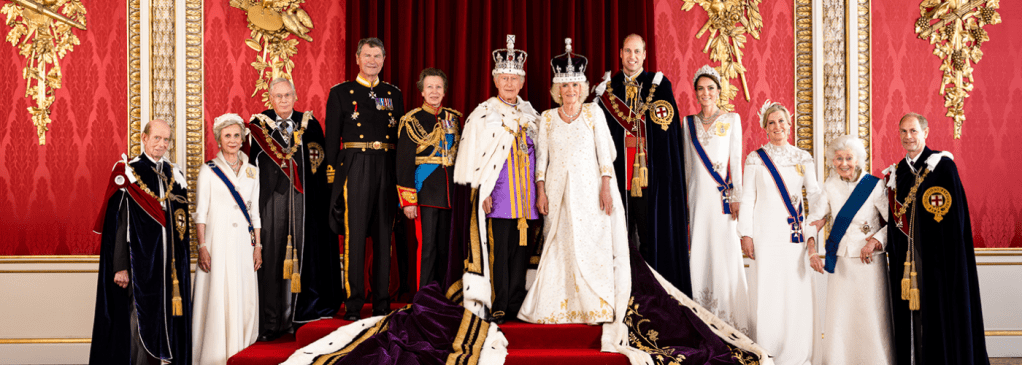
The Working Family from the official website

This has been A Letter From A. Broad. Written and read for you by Muriel Murch 

Truth Bombers

Recorded and Produced by Muriel Murch

I’m remembering a Chinese restaurant – probably in Manhattan – it was loud with cooking and cleaning noises from the kitchen and impatient traffic from the street and even then – when we were half our present age – we had to raise our voices to hear each other. 

“What we need are Truth Bombers,” said our friend and immediately Walter and George began to expand on the idea. All that was needed were people whose reputations are so strong, so respected, that everyone would listen, believe them, and would act accordingly – doing – as Spike Lee said – The Right Thing. ‘Well that’s all sorted’ we thought as it came time to crack open the fortune cookies. How on earth could we have been so naive?

Now as governments become stronger in their authoritarian rules, there have always been truth bombers who are shot down before they can clip the sharp manicured nails of those iron fists. Truth Bombers come from all walks of life, particularly among artists and their offspring – celebrities, and activists – with politicians far down the list of those who follow this path.

Somehow this has all bubbled up in my mind from another British boil-over – you can’t be serious – the country says – when Boris Johnson, past Prime Minister of bumbling, put his father forward for a seat in the House of Lords where he had already booted his brother Leo to safety. 

On 7 March, Gary Lineker spoke out – well, tweeted actually – which now amounts to the same thing – that the language being used around asylum seekers was “Not dissimilar to that used by Germany in the 30s” and that put the government’s knickers in a twist and Lineker off the air. When he first joined the BBC, Lineker had clearly stated that “there are two things that I’ll continue to talk about, the refugee crisis and climate change.” When Lineker was reinstated to Match of the Day the following weekend, the director-general, Mr. Davie, said he had taken “proportionate action”. Adding “We believe we did the right thing. I think I did the right thing.” The row over Lineker’s tweet led to fresh calls for BBC chairman Richard Sharp to resign. After things quieted down, Lineker added: “What they have to think about first and foremost – the government of the day whether it is Tory or Labour – cannot decide who the chairman of the BBC is, or have any kind of influence on who they put in the director of news or anything else – though it looks like another ermine robe could be floating down the BBC’s back staircase.” 

Photo by Mike Egerton A.P

The ten-hour flight from San Francisco was as smooth as those things can be. Dear Taghi Amirani met us at Heathrow – driving us into five minutes of sunshine before the grey clouds of England covered the sky over the old A4 road into London. It is a scruffy road, airport hotels sit bossily beside old fields that have been given up and over to scrub and travelers of all kinds. A few plum trees are in blossom and new emerald-green leaves are appearing on the roadside trees. When the sunlight strikes them my spirits lift at this harbinger of spring. Even the houses in Hounslow, that sit directly under the flight paths of so many planes, look fresh and optimistic. Tulips have been planted to follow the daffodils along grass verges. As we come into the city, blackened tree trunks and branches are leafing out saying yes to this season. 

Slowly we begin to settle in – unpacking this – rediscovering that and wondering where on earth is the other thing. And we look at the shift in the news items of today. The main themes of course remain the same, corruption by public political figures. Boris and his Papa now receding into the back pages while two Scottish figures from the Scottish National Party were arrested and then released on bail. Last month it was the former chief executive Peter Murrell – husband of Nicola Sturgeon – the recently resigned First Minister of Scotland – and this week the Scottish National Party treasurer Colin Beattie. Then there is the little matter of Rishi Sunak’s wife’s investments in childcare firms not being mentioned on some disclosure forms. Instead, we get to see Rishi and his wife – who wears the taut skin of a supremely rich woman – on the floor – smiling as they appropriate jumbo Lego blocks from nervous children. 

Meanwhile, inflation in England is at over 10%, the highest in Western Europe – Brexit – Thank you again. Junior doctors are out on strike for more than their £14 an hour – the supposed living wage in England. The nurses are once more teetering on striking while surgeries and other procedures are being canceled. The National Health System appears to be falling apart which may be the no-longer-hidden goal of this government that put forward a Prime Minister of color as the fall guy. 

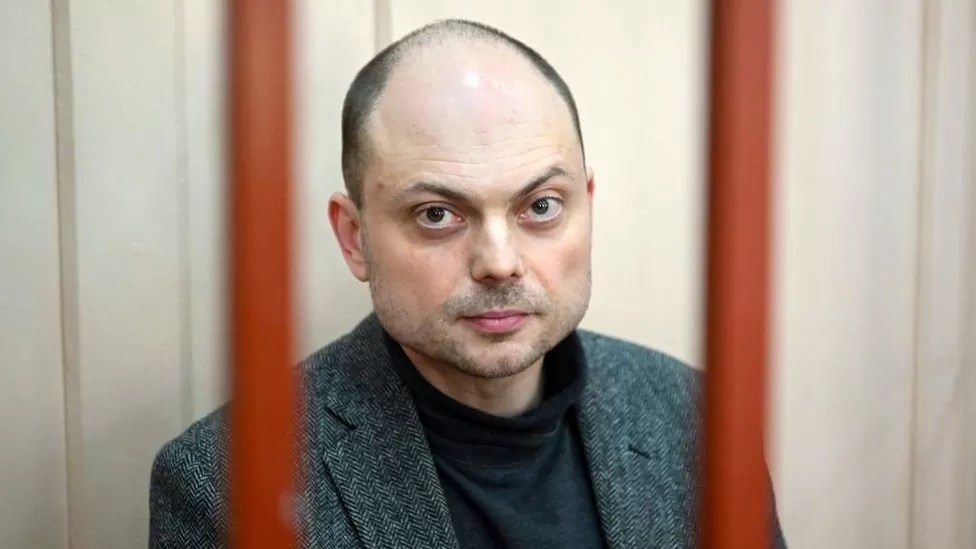
It is time for the ten o’clock news and though the Scottish indecent party politics lead, followed by a smiling Rishi on the floor with a toddler’s Lego, the main item is the recent trial of the Russian activist and journalist Vladimir Kara-Murza. Murza is Russian and came to England as a teenager, later attending Cambridge University. He worked in journalism before becoming an adviser to Boris Nemtsov, another Russian political opposition leader who was shot and killed in 2015. Murza now lived in the United States with his wife and family. Then later, he wrote from his cell, “We all understand the risk of opposition activity in Russia. But I couldn’t stay silent in the face of what is happening, because silence is a form of complicity”. He has survived two alleged poisoning attempts but at the onset of this war knew that he had to return to Russia where he was immediately arrested and now found guilty of criticizing the war in the Ukraine, spreading “false” information about the Russian army and being affiliated with an “undesirable organization”. all equating treason. He has been sentenced to 25 years in jail, the harshest sentence yet for political dissidents. Along with Russian Alexei Navalny, Belarusian Alex Bialiatski, and others, Vladimir Kara-Murza is a Truth Bomber.

BBC News

Which brings us to Sir David Attenborough, another truth bomber – Still flying missions – Sir David Attenborough’s new flagship series, Wild Isles, looks at the beauty of nature in the British Isles. Five episodes are currently airing in primetime slots on BBC One. But the sixth episode – a stark look at the losses of nature in the UK and what has caused those declines will only be available on the BBC iPlayer. It is understood to include examples of rewilding, a controversial concept in some deep rightwing circles. Once again the Government’s knickers are in a twist – and all of a sudden it doesn’t seem so far a stretch between rapping Gary Lineker’s knuckles, clipping Sir David’s prime-time wings, and jailing Vladimir Kara-Murza. 

Photo BBC

This has been A Letter From A. Broad written and produced for you by Muriel Murch.

February Cold

Recorded by WSM knit together by MAM

When in August 2021 western Military forces withdrew from Afghanistan, a plane-load of dogs was evacuated from the country leaving even less room for those Afghani families who had helped the allied troops during the war. Today in the UK an estimated 9,000 Afghans are still living in temporary accommodation in hotels along the Bayswater Road. Some settling occurred. Jobs were found, low-paying and under the table for sure; children went to school and learned English along with math as they began to make a new life. Now the British government plans to move these families to Yorkshire. It won’t even be the same English. 

Rumor has it – via The Daily Mail – that Boris Johnson has made over five million quid since leaving office as Prime Minister, not a bad haul for a bumbling bear. And with that – (offers accepted at over four million) – his offer has been accepted on a manor house – with a moat. But the moat only runs around three sides of the house so it won’t do a lot of good when the people finally come for him. He may think he is safe in Oxfordshire, but outside of the university Quad, there are country folk who know what he has done.

Brightwell Manor behind the church

As Polly Toynbee writes in The Guardian, the true legacy of Boris Johnson is that dishonesty is standard, the Commons has lost sight of the truth. The former leader’s disregard for truthfulness emboldens others happy to follow his example, knowing the system rarely holds them to account.

Nicola Sturgeon is stepping down as First Minister of Scotland. This is a big blow for the independence movement she has championed for her entire political career. Nicola, recognized in the western world, like Angela, by her first name, is a deeply respected politician. Her daily briefings through the Covid pandemic were a relief to everyone in the British Isles. When mistakes were made by her politicians, the retribution was swift. Nicola’s level of honesty was never equaled in the English government and only highlighted the ‘let the bodies pile up’ leadership south of the border. Though there may be plenty of young politicians coming up through the Scottish ranks, the question of Scotland’s independence remains in deadlock. Nicola insisted that her decision to step down was anchored in what she felt was “Right for the country, for my party, and the independence cause I have devoted my life to.”

Nicola Sturgeon Photograph: Xinhua/Rex/Shutterstock

Russian President Vladimir Putin thought he had Alexei Navalny ‘done and dusted’ when last year Navalny was sentenced to 20 plus years in jail. For a few months, Putin could allow himself a grin and a chuckle thinking of all the lost years of family and political life that Navalny would endure. If Navalny did survive the sentence, Putin could hope that he would emerge a husk – a broken man. But this month that grin turned tight-lipped. The documentary film Navalny was nominated for both a British BAFTA and the American Oscar Awards. And on Sunday it won the British BAFTA for the best documentary film.

Navalny won the BAFTA for best documentary in Feb 2023.

However, the Bulgarian investigative journalist Christo Grozev, who features in the film Navalny was, along with his family, banned from attending the ceremony in London due to a public security risk. In the film, Grozev and his fellow journalists tracking the poisoning of Navalny clearly show the Russian States’ involvement. Pushing the blame hockey puck around the stadium, the British Metropolitan police force said that while it could not comment on the safety of an individual or advice given to them, it was “absolutely concerned” with the “hostile intentions of foreign states” on UK soil. And they have a point. The finger of accusation points straight northeast to Russia with the successful poisoning of Alexander Litvinenko and the botched attempt on Sergei Scribal and his daughter Yulia that killed a British woman, Dawn Sturgess, in error. All this, mind you, when the aforementioned past Prime Minister Boris Johnson gave a cozy seat to the Russian newspaper mogul (owning among other things the Evening Standard) Lord Lebedev, in 2020. A heavy sum supporting the Conservative party was added to their coffers. I can’t get the image out of my mind of a snake charmer playing his flute as his pet cobra rises in the woven basket of his hiding.  

But the Met Office truth remains that “the situation that journalists face around the world, and the fact that some journalists face the hostile intentions of foreign states whilst in the UK, is a reality. Which begs the next question, How will the American academy respond to the nomination of #Navalny? Navalny knows this film is his cross on Calvary and that he may be the one who does not make it down from the Hill. Havel made it through – Mandela made it through – will Navalny?

Found lying on the streets of Bucharest 1999 by Walter Slater Murch and Dei Reynolds. Looked to be used by someone homeless as a cardboard mat. Brought home to remains as relevant as ever.

In the early days following the news of the earthquake in Turkey and Syria, a friend of a friend wrote letters, and – as we spread the news of this tragedy – we share them. Tuna Şare wrote to Lucia Jacobs who wrote to A. Broad. Here is a part of Tuna’s letter and I have updated the numbers …. 

“I am deeply shaken, still in Oxford but will go to Turkey in two days to join the rescue and help operations.

You may have heard about the earthquakes in Turkey and Syria. Two earthquakes (7.8 and 7.6 in magnitude) affected 10 cities in Turkey. The area affected is the size of the entire United Kingdom. Earthquakes caused an unprecedented energy discharge equivalent to 130 atomic bombs, and the earth’s crust moved by 3 meters, damaging roads, bridges, and airports. 

The recent estimates of the people under the rubble (and dead by now) are around 47,000, and millions are left homeless in bitter winter conditions. The scale of destruction is apocalyptic. Our beloved city of Antioch, for example, is literally all gone along with its cultural heritage. Many archaeologists and academics, students have died and lost their families. Homes too. 

Best Wishes”

Tuna

Mother is very angry. She has tried to hide it, burping and farting, holding her wind in as best she can until she exploded. Two weeks after this initial emesis she has vomited again. The latest death count is up to 47,000 and still rising. How can one care for the fusses of politicians and small scrappy wars where the planet is so attacked by the creatures who feed off of her. 

As we hear the news I think about those still buried – alive – and waiting for help that may or may not still come. 

There is a line -a scene – at the end of the film The English Patient where Katharine is mortally injured and alone in the cave. Almasy has gone to get help and left her with a flashlight, a pencil, and paper.

Katharine is writing.  The FLASHLIGHT is faint.  She shivers.

“…the fire is gone now, and I’m horribly cold. 
I really ought to drag myself outside
but then there would be the sun …
I think of those still living, trapped, crushed,
buried in the rubble of our making 
The light has gone out …
and we watch it flicker and fade.”

KATHARINE (O/S) – The English Patient

This has been A Letter From A. Broad. Written and Read for you by Muriel Murch

Storms Here and There

Recorded by WSM KNit together by MAM

Storms Here and There.

The big storms in California and the Pacific North West have moved on and the cold snaps – also considered a weather abnormality – that settled in England and Europe are melting as they subside.

Along the roads around the lagoon and in our hamlets that we travel, the eucalyptus trees fell with a post-coital groan before crashing into the receptive embrace of the ground below. It is no ‘little death’ but a dance of death as the trees pull the soil and hillsides down, exposing their mud-bound roots. Cypress and Fir gave way also, only the native Redwood groves stood tall and strong. The sign for us all that something is – and will – change. 

This weekend, as we drove from North to South on route 101, along the California Coast and then inland, the rivers were only just subsiding, exposing more shifted mud and broken tree limbs trapping the shredded blue tarpaulins of destroyed tent hamlets. My headlights caught a mud-covered man struggling to lift a rusted-out old Radio Flyer red wagon across the freeway barrier. The next day, we passed fields of black plastic-covered strawberries and seedlings, glistening in the breeze and morning sunlight. Then it was on to the freeways of Southern California, to be caught in miles of car traffic, moving too fast and too far to heal the earth. We are the cause of this catastrophe.

Tucked away – as we were – in a musician’s cave carved out of the hillsides of Malibu, I reached for a huge tome of Beatles memorabilia and look back at the time when Paul, George, Ringo, and John were young and – at times – not afraid of taking the mick of the police amidst the crush of teenage fans where everyone was smiling and enjoying the madness of it all. Those were the days when young policemen could be found waiting at rural train stations to greet the last train home, checking to see if any inebriated gentlemen – not sure of where their car was in the parking lot – were sober enough to drive home. More than once, one of those policemen would be at the station exit and, pushing his bicycle alongside of us, walk me home. Maybe he was older than me but not much. He never asked for anything in return for his gentlemanly service. The bus drivers in the town where we trained were a little different – but a smile, a wave, maybe even a light peck on the cheek would be enough to have them drive on with a happy chuckle. 

Now, amidst the cold in England, another chill has descended. One that this UK government is unwilling and unable to address. For generations – with few interruptions – our Prime Ministers have come from the elitist of schools in England: Eton, Harrow, and Winchester. ‘On Forsyte Change’ written in 1930, coming up for 100 years ago, Galsworthy noted these three schools in his vignette ‘A Sad Affair’ which took place in 1866. England’s recent two Prime ministers, David Cameron and Boris Johnson were from Eton. Rishi Sunak is from Winchester.

Jonathan Freedland writing for the Guardian strongly urges that the whole Metropolitan police force be disbanded and reassembled.  There is some cross-party support for this as the current Conservative government is clearly chasing its tail. From the Steven Lawrence murder and debortle of a corrupt investigation in 1993, only tokens within the police force, in attitude or behavior, have changed in thirty years. This year’s uproar is of Officer David Carrick who pursued at least 12 women with rape and sexual assault. He was reported at least eight times, by whoever was brave enough, and has so far kept his uniform, his badge, and his gun, and the Met Office did the only thing they could, in 2009 they promoted him to a special armed unit. Films have been made by the dozen of American cops, notable is Crash written and directed by Paul Haggis in 2004. Efforts have been made to depict plentiful corruption in the English Police force but they still do not dent the iron-clad door of the Met Office.

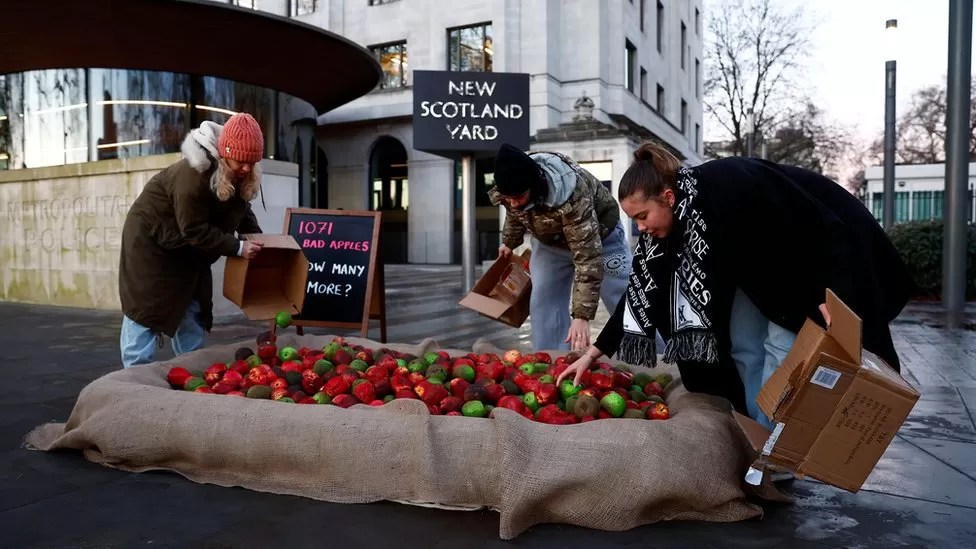
As the flurry of this last scandal broke, a government minister – whose name is not worth looking up – suggested that if anyone feels intimidated by a police officer they should ‘Wave down a bus’. It is clear that this government, like those before it, are as afraid of the police as are the general public. It is not surprising that this week a crate of 1071 rotten bad apples was left outside of New Scotland Yard in London, enough to ruin every batch of hard cider coming out of Somerset.

1071 plastic rotten apples for New Scotland Yard.

The New Met Chief, Mark Rowley, has more than one crate of officers to throw out on some compost heap where maybe they can rot into new earth. Rowley looks almost old enough to have walked a young nurse home from the train station. Maybe he can be the honest cop the whole country needs. But he is one man and the Met Police Force is made up of thousands, some police perpetrators, some intimidated officers, often women and officers of colour, rookies of every kind. 

The targeting of women, men and women of colour, is getting worse and it is hard for women, mothers, teachers, nurses, even policewomen, and women in government. It is a sad moment but no surprise to read of Jacinda Ardern announcing her resignation as Prime Minister of New Zealand. She did what she could, when she could, and now will be home for her daughter.           

Jacinda Ardern announcing her resignation in
Napier, New Zealand yesterday. Photograph: Kerry Marshall/Getty Images

January is also the month of marmalade making for English housewives at home and sometimes abroad. Winnie Carter knew it, and Ben Aiken wrote about it.  But here is a switch. Here on the coast in California, I’ve made my marmalade from our own oranges and lemons. This is something different and delicious. 

This has been A Letter from A. Broad

written and read for you by Muriel Murch
Year’s End

Recorded by WSM Knit together by MAM
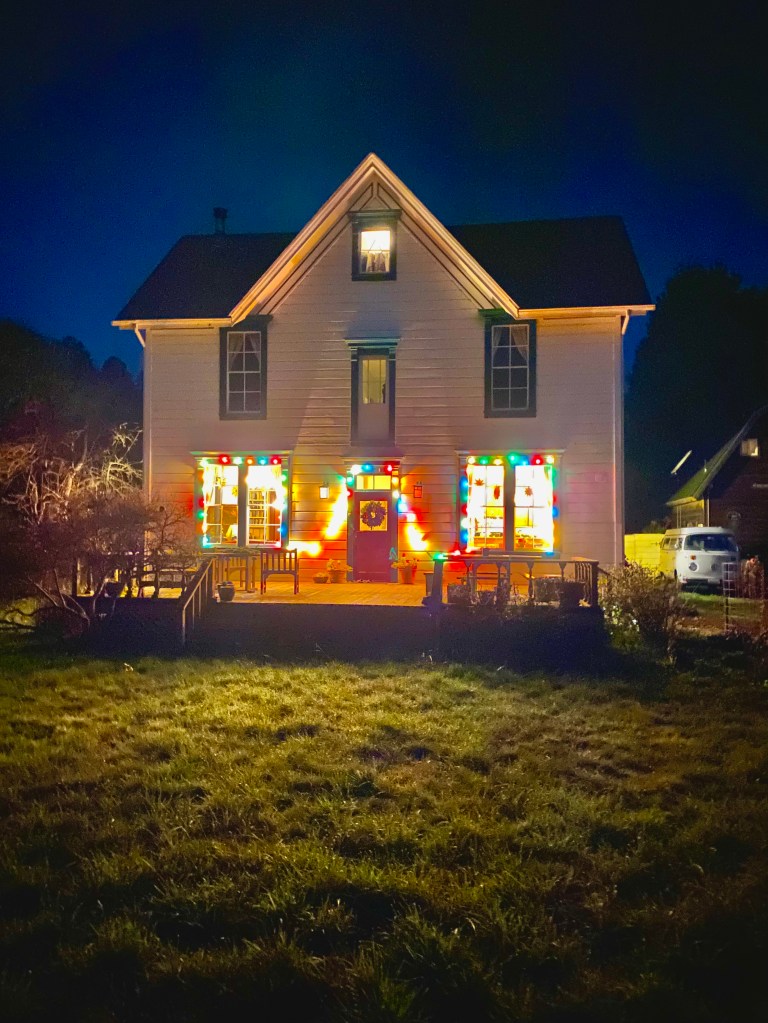
From Thanksgiving to Twelfth Night the farm is lit with forty plus year old lights. Wecloming you home and into the New Year. Photo by WSM.

Year’s end.
November rolled like storm-tossed tumbleweed into December and the nights slid earlier into darkness each evening. Now December is ending and even through the storms covering America the light is beginning to return.
It was already night-time when we landed back from Poland and the Heathrow train stopped at Paddington. The station was closing down for those midnight to five a.m hours. Only the Sainsbury Local stayed lit for the late-night travelers and I dipped in to pick up the milk and bread to be turned to tea and toast in the morning. Outside the vast hollow waiting area which feeds onto the platforms there was no cute, lost Paddington Bear with a suitcase, instead there were a dozen or more old men settling in on the benches – separately – but close enough that each could watch out for another as they came in off of their street-corners to a place of warmth. A plastic shopping bag or a shopping cart contained their travel baggage. I wonder what it is that remains precious to these homeless gentlemen. They each had a blanket that they wrapped around their legs and even their shoulders, if it was big enough. There must be regulars who show up at Paddington, Victoria and Waterloo train stations each night – until they don’t. Do the staff who clean and monitor the stations sweep round the huddled bodies and shopping carts. Is ‘keeping yourself tidy’ a prerequisite to keeping your patch and even bench? What time do you have to ‘move along’ and face the world in the morning? There is a rhythm to this unseen pedalling-in-place, train stations hold these men who watch leavings and loneliness travel alongside of expectation and desire.

Paddington at Paddington

In November Mehram Nasseri died. Nasseri had lived on a bench at the Charles de Gaulle Airport for 18 years and was the inspiration of Steven Spielberg’s film ‘The Terminal.’ Stranded and stateless he perhaps brought a focus to the question of what or where is home. He found a community, and a sense of belonging.

Mehran Karimi Nasseri, or ‘Sir Alfred’, on his home bench at Charles de Gaulle airport. Photograph: Eric Fougere/Corbis/Getty Images

Under Rishi Sunak, the Conservative Government continues with its agenda – to avoid paying Universal European taxes – thank goodness for Brexit – but with no taxes paid by those who could – there is less in the coffers for The National Health Service, the state schools and other community-run organizations. It is now becoming obvious, though it was before if we looked, that the goal is to cripple and disband the NHS, take it away from those who need it most – and the best way to do that is to lock the pay scale of the workers. When I graduated in 1963, satirist Michael Frayn wrote in the Guardian Newspaper: he was looking at reports on wages on what they called ‘the devotional fields’, then primarily nurses. Saying the general principle was to hold the wages as low as possible to keep out ‘undesirable elements wanting to make a fast buck.’ Well they certainly did that, kept the wages as low as possible. Nursing is a devotional field and the wages remain among the lowest of professional workers to this day. On graduation we were encouraged to join the Royal College of Nursing and almost everybody did. But in my youthful idealism I couldn’t ever envision following an order – to go on strike. Now, for the first time nurses are being called on to do that. But they won’t. Instead the ambulance drivers and paramedics will be at the forefront of this battle with the government, and once again the government will win, grudgingly giving out pennies rather than pounds. Nurses will continue to use food banks and be at the mercy of the transport unions who can strike and get the money they are asking for. The Army will get to practice some drills while substituting for the paramedics. And people will die because of it.
From one family to another, we came back home – unsure where that is. We are old nomads – and with a little more infirmity we would be outcasts from the herd but for the moment we are lucky and received by our families wherever we land.
And we landed at the bar in town. With the nudge of a full bladder at 6.30 in the morning we bundled up, and scraping the frosty car windows, to drive downtown and to Smiley’s to watch the World Cup soccer final. The bar was open at 7 in the morning serving its customers what they wanted – a big screen and sports special. And free maté – with honey. It was as fun watching us as it was watching the football, two teams at the very top of their game, with grace, skill and respect as more than once a player in azure blue and white helped another in navy to his feet after a fast clash.
From Sunday to Sunday, turning from the big screen at Smiley’s to the computer screen in the Hayloft and finding the King at Windsor Castle. From here it felt like opening an old blue aerogram letter, with news of home and I watched as keenly as any other ex-pat around the world. There was a light snow on the grounds of Windsor Castle and young girls in the soprano Choristers at the Christmas Carol service in St. Georges Chapel.

The King spoke with no photographs around him to point emotion one way or another. His notes were handy to glance at, maybe showing that the teleprompter was not for him. He spoke in empathy for those families who have lost loved ones this year, of the importance of her faith for his mother – our late Queen, and for him too, and of all faiths. He gave thanks to the hundreds of people who help those in need through the hardships of these times, and very carefully showed those of his family who, by their presence, gratitude and acknowledgment of the work of others, help to sustain us all.


This has been A Letter from A. Broad
written and read for you by Muriel Murch


November Light

Written and produced by Muriel Murch. Recorded by Walter Murch

November has closed in and daylight already slips away before tea time leading into the long evenings. For amusement, we watched our new prime minister and cabinet ministers dance a Scottish highland eight-some reel as partners were swung about, changed, and reunited as fast as the fiddler could play. But a Prince who has become the King rehearsed more than dancing in his beloved Scotland. When the past Prime Minister, Liz Truss ‘recommended’ that the King not go to the COP 27 Climate summit in Egypt he bowed to her will and – as the dance partners changed once more, the New Prime Minister, Rishi Sunak, appeared too busy to go. So King Charles drew up an invitation to a reception, more commonly known as a ‘drinks party’ for world leaders to drop in at Buckingham Palace on their way to Egypt where our new prime minister would address them, before packing his bags, and joining the caravan to Egypt. It was a masterstroke of Diplomacy. It might have helped if Rishi did not look like a happy puppy seeing his master come home, but he showed that – at least on the face of it – his government has one eye on climate change. Rishi did not stay long and the conference ended late, finally promising some financial help to those countries worst hit by climate change. This is not enough and there was no real resolution on curbing Co2 emissions. We remain in danger.

King Charles greats Prime Minister Sunak

Struggling to remain relevant, Sir Keir Starmer announced that if he became Prime Minister he would abolish the House of Lords to ‘restore trust in politics’. With so many Tory ministers in the House of Commons having a spot of bother with the press, this may not be that effective. And he may be too late as Peers from the House of Lords have joined members of the House of Commons all hedging their bets. In 2016 only 47 MPs held an Irish passport. By the end of 2022, there are 321 of them. Our ruling class seems to be keen to remain in Europe. 

We watched the American Mid-term elections with trepidation and the physical attack on Paul Pelosi at home in San Francisco holds only two degrees of separation for us. But Mark Kelly won in Arizona and what we feared would become a miscarriage turned into – as one young friend called it – a little mid-monthly-term spotting. But as we see money amassed to be traded for power and the children who hold it become so willful and petulant, it is a warning that this American child called Democracy is as fragile as in any other country.

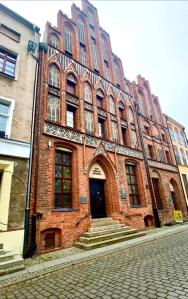
Mid-November saw us in Poland where Walter gave the first outing of his presentation on the Golden Ratio in the Cinematic Frame to an international conference of Cinematographers. And they took it well. Toruñ is an old city, a two-and-a-half-hour drive North-west from Warsaw and only a hundred miles from the borders of Russia, Belarus, and Ukraine. I was sobered at them all breathing the same cold air as Poland. The Polish men, young and middle-aged, are stoic and handsome – not yet fat with excess – they look as if they could be artists or soldiers – preparing for another war.  

The first afternoon I left the hotel for a mid-afternoon stroll and at 2 p.m. the grey day was already receding. Walking along the towpath by the River Vistula, little white pieces of flotsam kept pace with me, bobbing in and out of the whirlpool eddies. The river is fat, wide, and brown as if grumbling from the mud below. The bridges that span across it are sturdy and utilitarian. There has been no money to spend on beauty. Under the bridge, back up into a small park, rests an old war-lookout bunker with its slotted windows. There is graffiti on the bricks and a homeless man had parked his belongings beside it in the long grass.

Copernicus’ house in Poland

The final morning was free and we set out walking to Copernicus’ house – as one does – which is now a museum to the study of the stars, mathematics, and medieval life complete with a hand spindle for spinning wool. Along the small cobbled street, we were approached by a young mother and her not-yet-teenage daughter. With her broken English, she showed us the map on her cellphone written in Ukrainian. She was anxious, and lost, not wanting to be late for a job interview. She is a refugee here as the old enemies of Poland and Ukraine unite, sharing the same fears and foes – of Russia. After touring Copernicus’s medieval mathematics we came back onto the cobblestone street and drifted over to the beautiful, small chocolate shop. An old van was parked outside with its doors propped open. Tree branches, wire, and tools were strewn on the pavement as two well-wrapped-up gentlemen began to dress the shop window for Christmas and winter. The shop owner was holding their ladder steady, and, no doubt sharing her directions. On such a dark afternoon this promise of light, which will stay until spring, is comforting.

The train traveled fast through the French Countryside and for Thanksgiving, we go home to where the heart is joining our daughter’s young family in Utrecht. Though we were concerned as that day Argentina had lost to Saudi Arabia 2 to 1 in the World Soccer Tournament being played in Qatar. But a world goal was scored by the team from Iran, everybody’s favorite football to kick around. Iran lost to England 6 to 2 that night but won in respect as they stood silently in solidarity with their country’s women while their national anthem was played. Knowing what could await them and what already might be happening with their families, no one can doubt the raw courage of these young players asking for a freer more democratic country. It is early days yet in the month-long tournament and who knows how far that ball will be kicked down the field. 

Our last afternoon in Utrecht we all walked to the Magic Circus pitched up in the park beside the school. In the late afternoon, we queued outside the small striped tent and single mobile kiosk selling popcorn. The rough benches inside were arranged in a semicircle and it looked like there had been a new expenditure on fifty black plastic chairs. For two hours seven performers from Europe and Argentina, doubled up as spinners of candy floss and flippers of dutch pancakes in the intermission, brought magic to the families in this international city and we carried our smiles with us as we walked home in the dark. Our last evening – hamburgers for supper and then Argentina played Mexico in a game as football should be played. Argentina won 2 – 0.  

Our son-in-law Santi on stage with and then carried off by the Argentine circus performer
Cotton candy tastes just the same ‘says Granny’ and doesn’t stand a chance with this kid.

This has been A Letter From A. Broad. Written and Read for you by Muriel Murch. 

The Marmalade Diaries The True Story of an Odd Couple by Ben Aitken

We met at the Community Library where we both volunteer as best as we can. He, Ben Aitken, is holding a book In the Blink of an Eye and I am weeding the roses. “Is this your husband?” he asks. “Yes.” I reply. And then he says something else and we chat. It is great to have young people volunteering at the community library. A few days later there is a joint book reading at the library and I go along. Ben discusses and reads from The Marmalade Diaries and Freya Sampson does the same with her book The Last Library. Both authors are well-spoken and while their books touch on many themes, community – in one form or another – is a constant. Later in the summer, the community (there is that word again) library hosts a barbeque party for the volunteers. A little wine is drunk, some sausage rolls and sweets are eaten and I ask Ben if he would talk to me about his book, The Marmalade Diaries for KWMR.org our community radio station in Point Reyes California, and he agreed.

After her husband of 60 years had died, 85-year-old Winnie Carter needed a lodger to live with her at home. Ben became that lodger. And then came Covid and the lockdown. The conversation explores how those Covid Lockdown months impacted all of us, especially the old, those alone, and families. And what Ben learned along the way. How did Covid change us and how did our lives change doing those long months?

Ben Aitken in conversation with Muriel Murch

Dear oh Dear

Recorded by WSM edited by MAM
King Charles III greets Prime Minister Sunak

“Dear, oh dear” muttered the new King, Charles III, as he greeted Liz Truss at Buckingham Palace only two weeks ago. The double doors were swung open by a liveried equerry announcing “Prime Minister – Your Majesty”. Ms. Truss bobbed forward to shake hands with the King, and said, ”Your Majesty, great to see you again,” the King smiled as he replied “Back again?” – “Well come along then,” he may have continued – but we missed that bit as, like a patient headmaster, he led the not quite settled in new Prime Minister into another room. Last week – as I began to unpack in Rome – she was back. “Oh dear oh dear.” The King may have said – again.

So Liz Truss was out, holding the seat warm for whoever wanted her place. There were only three takers for the open seating plan at Number Ten Downing Street, and they were not sitting in the stalls. Boris Johnson immediately flew back from his holiday in the Caribbean – reportedly booed as he got on the plane. Rishi Sunak got busy on his phone, emails, or in the tea rooms. Only Penny Mordaunt was seen in the halls of Westminster, looking strong, sensible, and even a little tough. She made me wonder what a woman like her could do if the men in Parliament really backed her. But these men are not the backing kind. 

The country was in an uproar as the disaster of Truss’s short-stay-to-let was seen but not averted. Clusters of shoppers were shown tut-tutting at the country markets – always the prettiest picture – as parliamentary plotting – all perfectly legal – continued. A candidate had to have at least 100 Conservative votes to make the ballot for the role of Prime Minister and by the deadline of 2 p.m. on Monday Rishi had 182. Penny conceded at 1.58 p.m. Boris, like a cornered bear, threw in his towel, and lumbered away on Sunday night, declaring ‘this is not the right time’. Let us hope history is remembered and it never becomes his right time again. Sunak was educated at Winchester College, not Eton, and like Avis, it can be hoped that he will ‘try harder’. 

The autumn temperature drops day by day and the leaves fall from the London trees only just faster than the Conservative cabinet ministers gathering their pens and papers as they scuttle out of their seats.

In our corner of London the cool morning air smells of sweet ripe apples, from a box of them set out by a neighbor when she returns from her country retreat. I make apple sauce that is as perfect as Bramley apples give before we go to Europe: first to Utrecht with family and an end-of-summer outdoor birthday party, then onto Paris to be with friends. Paris sparkles with the first crispness of autumn sunlight and delight, the streets and buildings shine as they brush off the stale air of summer and the lingerings of Covid. People are cautious and sensible as they move through the streets, mindful of the effects of the Ukrainian war on fuel supplies and costs. The city seems hopeful, bordering on contentment. A restaurant owner brings out a jar of truffles he has just acquired and we laugh in happy expectation of his fine omelets. We are here in the autumn of our lives, cherishing it, for we know our winter is near.

Fresh Truffles in Paris

And then it is onto Rome for their Film Festival, showing William Kentridge’s ‘Self Portrait as a Coffee Pot’. We are driven from the airport through the back streets into bulging traffic leading to the Tiber River and the city beyond looking weary, beaten down by the effects of the Covid pandemic. A bad garbage strike after the summer’s heat has left the big street bins battered and tainted with pigeon residue. Finally, we reach The Eden Hotel and from our terraced window we look down on a Rome that doesn’t seem so bruised. Lying in the marble bath at dusk I watch the bats wake up and zoom out from under the tile roof just above me to the park below.

Old and new friends in Roma; Noah, Linda, Aggie, Franca, Walter, Conrad, Laura

It takes a day – and we only had two – to breathe in the air of this city which I had come to terms with 24 years ago when I joined Walter on location. On our last evening, walking with friends after dinner we passed by an alleyway I remembered. Then, in a store window, three or four prepubescent girls sat cross-legged under a single light bulb. Old Persian rugs hung behind the girls, and their heads were bent low over their hands which were busy, stitching, weaving threads through old worn carpets. 

The day we leave, our driver is a woman and I am grateful to see this small step forward for equality in Rome. The road she took out of the city twists and turns and we crossed the river three times. The small riverside shrubs of 24 years ago have grown to trees but still the Tiber moves fast. They say a body tossed into the river is never found.  As we left the ancients – looking worn in the grey light – we drove up through the graffiti-clad outskirts of the city. The colors were dusty as they lay scrawled over the lower apartments of these almost middle-class neighborhoods, pulling them down as if in anger that the slums cannot rise but only spread. 

The flight to London was full and it was not until we landed and were ready to go through UK passport control that I stopped to use the facilities. There was a poster on the stall door; a young man’s face peering out from a confusion – of a woman’s hand, a car window, and lights, with the words ’Can you see me?’ ‘Slavery Still Exists’. On the way home, amidst catching the stealth movements of our politicians, I thought of those young girls sitting in the shop window and wondered what became of them in the ancient world that is Rome. 

This has been A Letter From A. Broad. Written and read for you by Muriel Murch.

The Queen

Recorded by WSM Written, read and knit together by MAM
Waiting for the next Prime Minister photo by Jane Barlow

It has barely been three weeks since September 6th, when a rumpled Prime Minister Johnson arrived at the Balmoral Castle gates to hand in his card at 11 a.m. In quick succession, he was followed by the tight-skirted Truss. It was a long morning for our Queen, and for those watching with concern – seeing the Queen holding onto a stick with one hand while smiling and extending the other used and bruised hand, to Liz Truss. The Queen’s head looking large on her diminished frame, her nose pinched – straining for air – while no amount of lipstick covered the cyanosis of her lips. Tuesday was a brave day. Barely 48 hours later the Queen died as she had lived, in service to her nation. The heavens opened, pouring down their tears and we are still grieving.

Accompanied by The Princess Royal and her husband Admiral Sir Tim Laurence, the Queen’s coffin slowly made its way south to London to lie in state at Westminster Hall where over two hundred and fifty thousand people from all walks of life filed past to pay their respects and say ‘Thank you Ma’am for your service’. Did she cover all the bases? One could, if one chose, fault her for some family issues, but not on duty to her country as she saw it; honoring and hosting state and national moments or those small engagements around the country. The late Queen Mary was paraphrased as saying ‘We are the Royal Family and we love Infrastructure.’ We all feel a little stronger and stand a little straighter, when someone else shows interest and gratitude for what we do.

Her Majesty The Queen opens Parliament 2017 wearing – a hat –

The Saturday after the Queen’s death I wove my way behind Piccadilly through the lines of police vans parked all around St. James’ Square, then down the stairs behind that Palace to enter The Mall that felt like the nave of a giant cathedral. There was a quietness in this crowd, many carrying flowers and leading children, that was to last for days all across the country. People walked along the pavements to Buckingham Palace, sometimes with a pause as King Charles III and the Queen Consort were driven in and out of those palaces, Buckingham and St. James’. They were back and forth all afternoon and one hoped that they got at least 15 minutes for a sit-down cup of tea. The Autumn skies tossed grey and white clouds over the park trees, but the rain stayed hidden behind them.

What does it mean for a young girl to take a vow to follow a life that was chosen for her rather than she chose? It happens in all walks of life, people are lucky if they get to live their dreams. It takes an effort and strong will to turn your given path into your chosen one. The Queen embraced her role until she could relish it and turn it to her desiring. 

There are fewer of us alive now who remember Queen Elizabeth’s coronation than who will remember her death and funeral. John Galsworthy wrote in the Forsythe Saga at the death of Queen Victoria. “We shan’t see the like of her again”. But now we have this Elizabeth was our Queen for 70 years. Even in death, the Queen managed something that the government could not – as the Transport Unions and the Royal Mail held off their strikes until next month. 

At the announcement of the Queen’s death, all the television stations began airing their programs that they had been building for this moment. Planning for the Queen’s funeral had begun when she turned 79. All the news Broadcasters wore black. Huw Edwards, the senior news anchor man at the BBC – and he a Welshman – allowed himself to show some emotion. Those who wished to see the films, the footage, forever repeated could do so. It was like a huge family album of our family, our Queen, for as she vowed to give her life, be it long or short, to our service, she did – and we claimed her and the family as our own, rejoicing in the good times and fussing at the bad. The television stations played ten full days of coverage, back and forth with all the joys and the horrors replayed over and over again, probing into a life lived in the spotlight of her public, her people. The new King’s state and public greetings and meetings were followed in flashy detail. The pageantry and processions built like gentle love-making to the climax as the coffin was carried from Westminster Hall to Westminster Abbey. Giving his address from the pulpit of the Abbey – Justin Welby, the Archbishop of Canterbury – looked down across the nave at the congregation seated below. He spoke of our collective grief, the Queen’s abiding Christian faith, and service to duty, and then let out his zinger: “People of loving service are rare in any walk of life. Leaders of loving service are still rarer.” 

The service over, it was on to Wellington Arch where the coffin was transferred to the royal Hearse then driven slowly on through Hyde Park to join the A 30 road to Windsor. Just as she had begun her journey from Balmoral through the countryside of Scotland now she returned to the farms and lanes of Berkshire.

The Queen’s Corgi Dogs return from Balmoral Castle

The flags at all the royal residences flew at half-mast until the day after the State Funeral when the official period of public mourning ended. The Royal family and some of us will continue as long as we need.

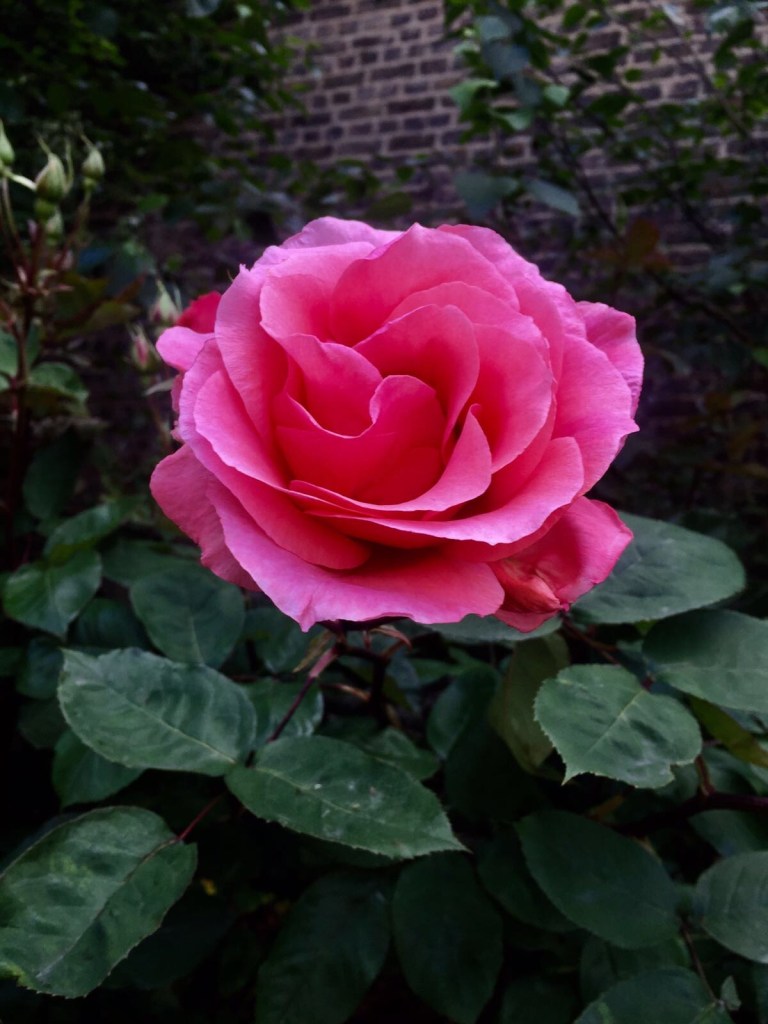
In our little London garden is a David Austin Queen Elizabeth rose – still blooming in autumn. My mother bought it after my father died when she had to start a new life in her new home. Now it is with us. The same rose was among the flowers on the Queen’s coffin – in remembrance of things past but not forgotten.

Queen Elizabeth Rose by David Austin.

This has been A Letter from A. Broad, written and read for you by Muriel Murch. 

Tripping About the Countryside

Recorded and Knit together by WSM

They took to the stage on all three major television channels; the BBC, ITV, and Sky. Rishi Sunak trots eagerly up to the podium in his Gucci loafers, though sometimes jacket-less, unsuccessfully portraying a working man. Liz Truss walks carefully in her heels with a smug smile and discreet earrings – one day saying one thing and the next day saying another. She is changing statements, but maybe not her mind which appears to be missing in action at the moment. These are the Conservative leadership rivals to be the next Prime Minister clashing on how they will address: high inflation, the rising cost of living, gas prices, Ukraine’s war with Russia, while sidestepping how both of them are looking to kill the National Health Service. But then the broadcasts stop, the candidates and their lies are just too transparent and boring. Now each gets a news moment as Liz changes her earrings to gold stirrups visiting a farm, and Rishi puts his jacket back on to speak at the Royal St. George’s Golf Club.

Those rural earrings

Like the story of the frog in the hot-tub, the National Health Service is coming to a slow boil. The news has me hold my head with the charts of the numbers of medical staff, doctors, and nurses that have left the Health Service. There are two main reasons for this. Since Brexit, European nurses and doctors are better off regarding pay, hours, and family situations returning home. English-trained nurses and doctors are fleeing abroad to countries that pay more. England is reaching out to poorer countries and importing staff from those that pay even less than England. This migration has gone on since we English, Irish and European nurses flew to America, Canada, and Australia for better living and pay. But nobody talks about Brexit being the cause for this new low, the ridiculous staff-patient ratios, and the non-pay of nurses and doctors. The government counts on the moral inability of nurses and doctors to abandon their patients, and laugh all the way to the locked coffers.

The sky is cloudy and dull, pouting at being left behind in grey England while these two politicians vie for the Conservative leadership. The chambers of the House of Commons sit empty as ministers flee the city, following the example of their old boss Boris Johnson, who took his family off to Greece for the holiday month of August. 

There is no rain. The streets are sticky with the detritus of human and animal food ingested and eliminated. Leaves are falling from trees a month ahead of Autumn. They are dry, crisp, and crackle when kicked about on the pavements. There are no conkers on the chestnut trees in the park and those not-so-old trees are dying.

The second heat wave was well underway, and the scheduled train strikes still a day off when I traveled from Waterloo to Hampshire. The South West trains are all new and all air-conditioned which bought a welcome relief from the rising heat. I am meeting three old friends for lunch at the North Hants Golf Club. The youngest of us is only 75 years old. The tables and umbrellas are set out on the veranda overlooking the first and last holes of the course. Though it is hot we can safely gather in the shade. We sort of look great – in our elderly way. We were children together, almost sisters, and though our paths diverged our roots were seeded in the same soil. My friends stayed close to their rootstock and settled deep in rural Hampshire and Wiltshire, each raising champion horses, sheep, and cattle.

Four for Lunch, Sue, Susan, Ann, and Susette

The North Hants Club is well over 100 years old but was still young when we were. Within that world, there is the sweetnesses to be found in any close-knit organization that becomes a family. Jackie has been a part of the kitchen staff for 43 years and we have known each other with mutual respect and admiration through all that time. The kitchen, where deep frying remains a specialty, is stellar and provided us four Caesar salads that were not on the menu along with teasers from their small tapas plates. It was grand to be together and share our autumnal news. We spoke of our lives, of families, and thought of old friends, remembering that though now we are four, we used to be six. The relentlessness of life continuing after another’s death has a bite to it that is hard to define.

Susan getting Settled

Returning to London the train stops at Weybridge and ‘all change’ is called out – to anyone who can understand the voice through the microphone. There are no leaves on the line, these tracks have not buckled from the heat but there is a fault with the train and so we are directed to a local one waiting on a side platform. ‘Change at Staines for the fast train to Waterloo.’ But I don’t. I stay seeing the names Virginia Water, Staines, Barnes, East and West, Putney, and Chiswick before Clapham and Vauxhall. I realize this so slow train travels alongside the western A30 road laid down over the old Roman Road and follows the historic London to Land’s End coaching route – a popular place for highwaymen. William Davies, known as the Golden Farmer and robber of coaches traveled across Bagshot Heath and was hanged in 1689 at a gallows at the local gibbet hill between Bagshot and Camberley. The Jolly Farmer pub built close by was in remembrance of him.

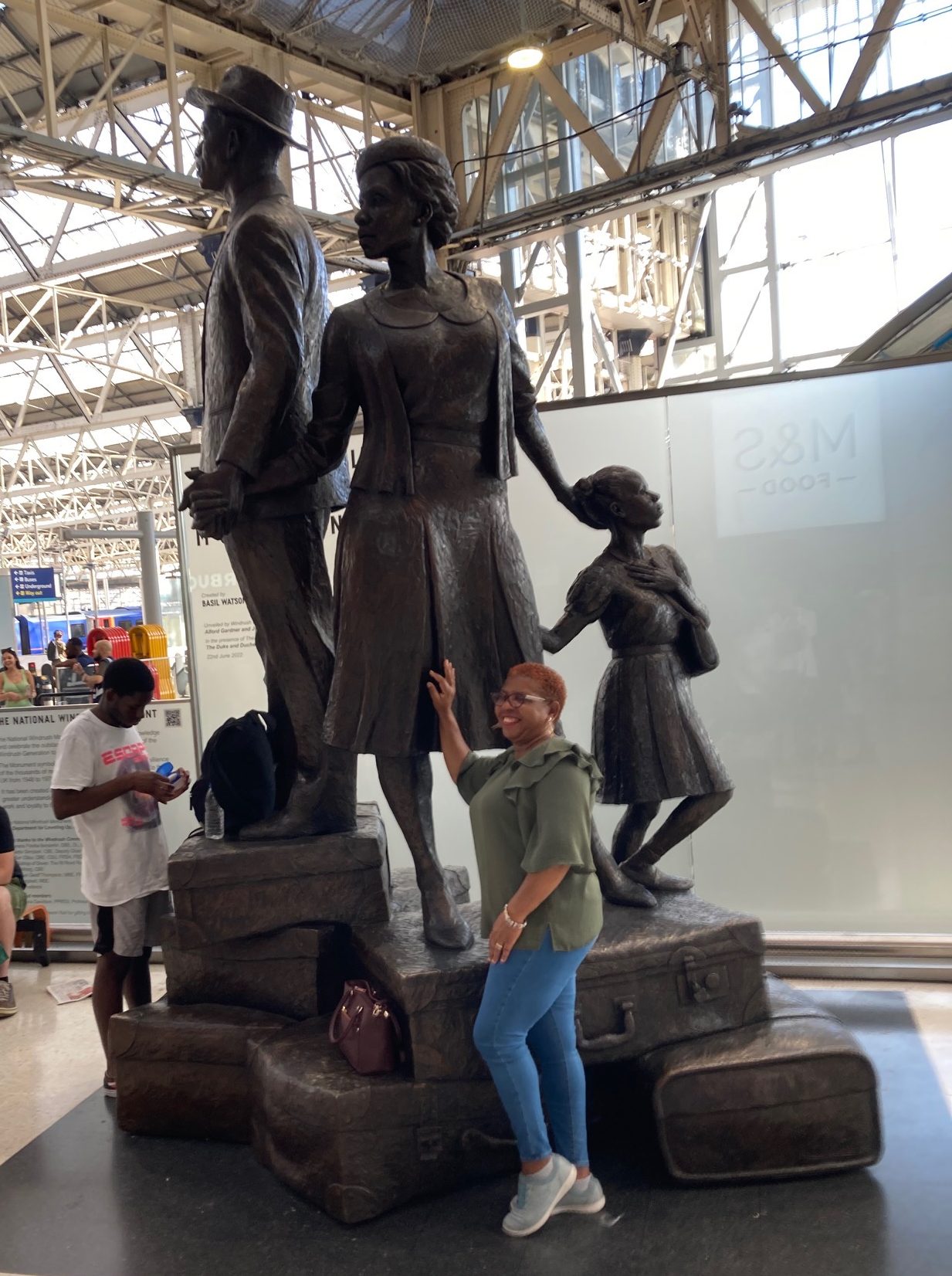
Sculpture to honour the Windrush Generation of Immigration at Waterloo

The train pulled into Waterloo and the platform exit is beside the newly erected statue tribute to The Windrush Generation immigrants who came from Jamaica and the Caribbean to help England after the Second World War. It is a fine statue, showing hopeful and proud parents and their young daughter. She would grow up to become one among us in nursing school, another sister from another time. Tourists from Africa and America proudly stand beside the statue for their photograph moment.

I was not alone in going out today with a cardigan and umbrella though neither was needed. We, and the earth, are crying for rain – or would be if we could cry. All we can do now is sweat, copiously, as we wait for the bus. An Asian gentleman of about my age is also waiting for the number 274. When it arrives he graciously extends an ‘after you’ gesture to let me board before him. We sit on opposite sides of the bus in the reserved for old people seats. The bus driver is not yet exhausted and the bus almost empty. It is August. Hot, dry, there is no school, and whoever can be – is on holiday. I find myself imagining the cold rainy days of autumn, wishing for them, and having a hard time believing the evidence before me that we are seriously damaging our planet. ‘First, do no Harm’ is the Hippocratic oath and here we are committing murder. The bus goes quickly along its route carrying its few passengers. My gentleman friend gets off at Prince Albert Road. He smiles at me and I at him. It is a moment of grateful recognition but I’m not sure what of.

Now there are hosepipe bans imposed by most of the Water districts, whose own leaks are responsible for almost 30 % of water loss around the country. Then quickly news comes of the other leaks, of sewage from more faulty treatment plants into the local rivers and streams, or to the sea for those low-lying coastal areas. It is too much for the cartoonists who show pictures of Boris Johnson, remember him? the still – but on holiday – Prime Minister, entering the sea somewhere in Greece. Sewage flowing outwards but not yet gone.

This has been a Letter from A. Broad. Written and Read for you by Muriel Murch