Remembering the First Time

Remembering the First Time

Written and produced for you by Muriel Murch with WSM by my side

It was 1948 and I was 5 years old when, with my mother and Brett, my nanny, I stood on the side of The Devil’s Punch Bowl. As each horse came to the crest of the gully, they paused, taking in the drop, collecting three strides down, before a leap over the solid tree-trunk above the deep ditch then galloping up the other side and away onto the rest of the course. As a big grey horse thundered past, my mother and Brett let out a cheer for the Swedish rider. Brett was from Sweden and this was the first Olympics after the Second World War. The equestrian events at the 1948 London Olympic Games were all held close to home at the Tweseldown Racecourse by Aldershot – a military town and at a very early age we were taught, “Never talk to the soldiers”. The American team won the eventing, the Swedish team placed second, with Mexico taking the Bronze medal. The changes in the political geography of countries can often be seen at the Olympics. In those days Mexico and Argentina sent successful equestrian teams all over the world. I never got over the thrill of seeming that grey horse leap into and over the Devils Punch Bowl.

Tweseldown Racecourse from Wikipedia

I was hooked and it would be less than ten years before Taffy and I were galloping through those same forests and over any obstacle I found in the secret freedoms that lay on those moorlands. 

We remember those first times, and now as this year’s Olympics play out in Paris we watch the athletes perform, many for the first time for their country.

Sir Keir is a serious man and treating his new premiership with appropriate gravitas, and while the Labour Government was seriously going about getting settled in, they too felt they could breathe gently and watch our athletes in Paris giving their very British best. But if he had hoped for a longer honeymoon period it was soon cut short as we watched the riots break out in a fire storm over the killing of three little girl children finishing a dance class in Southport. An unnamed seventeen year old boy – incorrectly rumored at first to be a Muslim refugee – is being held in custody. Rumours – spreading as fast as the wildfires of Canada and California, have sparked violence in cities across the country. Far-Right nationalists fuelled by the disinformation from social media, are following a pattern discernible in North America, Israel and Hungary, among other eruptions around the world. Gray headed grannies holding signs for ‘Nans not Nazis’ are in danger of being knocked to the ground by the boys in thier street that they may have helped raise.
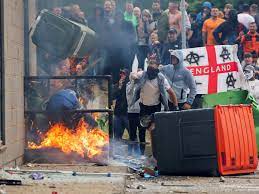
Far right rioters attack asylum seeker hotels in Tamworth. Photo for Al Jazeera

From Southport in the north to Aldershot in the south, towns up and down the country that hold deep pockets of poverty and unemployment are fuelled with anger and rioting in an all-too-familiar manner. Sir Keir Starmer is facing his first time as Prime Minister with this storm battle and our country’s worst elements. Nigel Farage barely makes an effort to keep a neutral face while he sits in Parliament and no one can believe that he is not chalking one up for the far-right team. The Police have been given ‘extra powers’, more prosecuting lawyers have been called in, though from where and where to it is hard to tell.  ‘The rioters will feel the full force of the law,’ promises Sir Keir, but some of us wonder if those said rioters will care, and what the law stands for – for them and for us all. It just took one incident – no matter that misinformation was spread – lines are drawn across the streets of neighbors, with those leaving flowers for the children and their families, and those rioting for an England they never knew, each side is screaming to be heard.

Certainly other government leaders are not concerned about the internal laws of their own country or the international laws that loosely hold the global community together. The recent swap of Political prisoners, brokered by Germany, Norway, Slovenia, Poland, North America, and Russia that took place in Turkey was the largest game of checkers since the Cold War. 16 Russian dissidents, Germans and US prisoners were returned for 8 Russian undercover spies and agents. But there are still hundreds of political prisoners left behind in Russian prisons, and who knows how many Russian prisoners are also still in European and American jails. When the talks first started, Navalny’s name was among those put forward for release, ‘Sure, no problem,’ said Putin in the Russian political way. During the months that the final arrangements fell into place and the talks continued the ‘Sure no problem’ line was repeated, but Navalny died in prison on February 16th.  Bait and switch. Check mate. Putin never intended for Navalny to go free. 

It was 1992 when at KPFA Pacifica, I was handed ‘Time and Tide’ a new book by Edna O’Brien who was coming to California for an extensive book tour. This was to be my first book interview. As I picked up the book and turned it in my hand, the portrait of a sensual and defiant Edna stared out at me from the back cover. Edna was a woman who – if she took to your husband at a dinner party might – or might not – return him for breakfast. This I knew to be true. ‘Time and Tide’ was not an easy book, even if you were a follower of Edna’s writing. But I understood Nell, her heroine, even as I cringed at all the troubles that beset her through the pages. 

Edna O’Brien at that time. Photo from The New Yorker

Edna arrived at the radio station in a fuss. Her plane has been delayed and her luggage was lost. She was as tiny and Irish as I was tall and English but quickly I saw that we were both nervous. Edna upset at the loss of her luggage and the fact that her silver pendant had rubbed a stain on her white jumper. I was terrified of her intellect and sexuality. But as we sat down, locked together in the recording booth, and began to talk, she relaxed, answering my questions with eagerness and generosity and the conversation began to roam as she remarked “Well, Ulysses is difficult isn’t it?” Then we slipped into film as both of us had been knocked sideways with ‘Raise the Red Lantern.’ by Zhang Yimou. It was clear we shared a mutual concern for the plight of young women and that, as well as my thorough preparation, softened Edna and she recommend me for the publishers next author, Susan Sontag.  Now Edna has died at the age of 93 after a long illness and I wonder what was the illness that took her away from this world at the beginning of this late summer time. Edna was my first Author Interview and I will never forget her.

Apart from the riots and the Olympics there are the perennial editorial concerns about the decline of wildlife and insects. Our little terrace is less than 150 square feet and is now full of summertime beauty. We get excited when we see the honey, bumble and mason bees, and then a cabbage white butterfly, an orange tiger moth, and a blue dragonfly also come by. Their first arrivals let us know we are doing the right thing on our tiny patch of heaven.
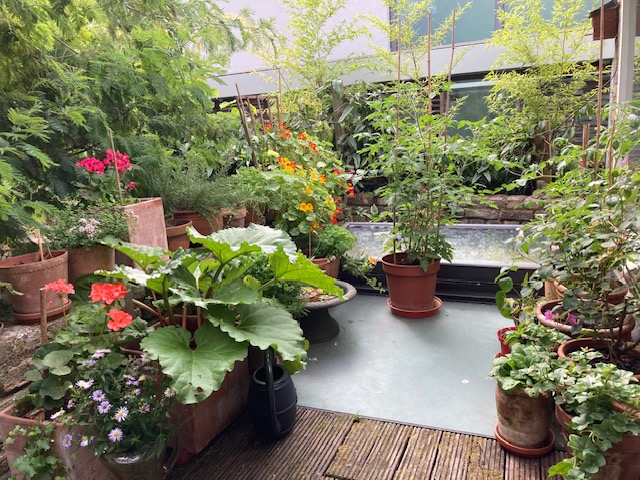
A little London Terrace MAM

This has been a Letter from A. Broad. Written and read for you by Muriel Murch, and supported by murchstudio.com

A correction from the audio to the text. In the audio I say Stockport when it should be Southport.

Navalny

Written and Produced for you by Muriel Murch with WSM by my side

The news of Alexei Navalny’s death is confirmed. First offered with a shrug from the Kremlin, for ‘what did you expect? That we would let him live forever?’

This single death takes over my consciousness as I think I can imagine it – while the multiple slaughters are that are occurring in Gaza and on the West Bank leaves me sifting through pictures of rubble, hospitals and carnage, not really knowing who or what I am looking for, or at. Navalny’s death has me remembering the South African Activist Steve Biko. While Wikipedia maintains that his Political Legacy remains ‘a matter of contention’ there is no doubt that he was a forceful presence against apartheid. Wikipedia also tells us that Biko was the twenty-first person to die in a South African prison in twelve months, and the forty-sixth political detainee to die during interrogation since in 1963 the South African government introduced laws permitting imprisonment without trial. Biko and Navalny were both men of their time and place, both political prisoners killed with the direction or approval of the state. It is not uncommon, this singling out of one man whose presence has become more than annoying, but is still only a potential threat to those currently in power.

The English Royal Courts of Justice are wrestling with another moral question ‘Which is the more serious crime: extrajudicial killings, routine torture of prisoners and illegal renditions carried out by a state. Or exposing those actions by publishing illegally leaked details of how, and where, and when and by whom they were committed?’ Now, after ten years, Julian Assange is having his day in court though he is not present. He is reportedly too unwell to even watch his appeal via a video link. Assange has been asking to be able to appeal against the decision to extradite him to the US to face trial under its Espionage Act for his publication of documents, via WikiLeaks. The documents – handed to him by the former US soldier Chelsea Manning – detailed illegal US actions in Afghanistan, Iraq, Guantanamo Bay and elsewhere. While still not having been convicted of any crime he is in his fifth year in high security in Belmash prison. The memory of Daniel Ellsberg who in 1973, was hauled into the legal system for exposing the US government and military activities in Vietnam hovers over this hearing. No-one knows yet what will happen  – except that you can bet someone is looking at film rights… 

Across the river, the Houses of Parliament are turned upside down with Sir Lindsay Hoyle the Speaker of the House of Commons loosing his cool and his gavel as he tries to control both sides of the aisle. The clamoring from the Labour, Conservative and all parties in between that they want a stop to the bombing and fighting  – turns into an uproar for two days – fussing over a breach in protocol that happened due to the rising threats of retaliations to Members of Parliament. It sounds silly – but – we remember the Labour MP, Jo Cox, killed by a Neo-Nazi supremacist in 2016 followed by the conservative MP, Sir David Amess, in 2021 by a Jihadist. Both of these instances occurred during Sir Lindsay’s time in government. Since 1812 only six members of parliament have been killed while in office but the pace of assassination seems to be stepping up in the 21st century. Maybe Sir Lindsay is being super-aware and damning the little rules and regulations – there could be an inquiry – but probability not. Apart from some tut-tutting over the tea cups this will blow over and the government will move onto more important issues as the UK tries again to be relevant and meaningful on the world stage.  

But can it? Will the United Kingdom ever accept that, since Brexit, and our disengagement from Europe, nobody is really listening. Last week Zelensky welcomed the leaders of Italy, Canada and Belgium along with the European Commission president Ursula von der Leyen who all stood beside him as he spoke at Kyiv. The US president Joe Biden tuned in by video. Boris Johnson popped over with a few delegates – of what I’m not sure – to wave his tattered flag and tell whoever he was speaking to – that he was sure that Ukraine could beat the Russian forces. But quietly – and maybe not so quietly – much of the rest of the world is not so sure. 

Meanwhile Sir David Cameron – how handy is that prefix of Sir – in his role of Foreign Secretary is being a little more serious on the world stage as he speaks up for a two state solution to the war in the Middle East. Just like the Jewish people displaced from Europe in the last two World Wars, he insists Palestinians must have a homeland to call their own. 

But Rishi Sunak flew into Wales, so sidestepping the rising concerns of racial bigotry brewing in London. He has hardly rapped Suella Braverman’s knuckles for her racially inflammatory writing and shrugs off Lee Anderson’s remarks about Sadiq Khan, the mayor of London, ‘giving London to his mates’. It’s getting scary – again. Instead Rishi is in Wales standing side-by-side with net zero and climate conspiracy groups of Welsh farmers as he tries to bolster his rural vote. The Welsh Labour government is proposing a new payment scheme in which farmers will have to prove 10% of their land is woodland and 10% of it is quality habitat for wildlife. That’s not so much and in Wales, so full of hills and dales where the sheep roam and get lost all the time.

Rishi Sunak speaking with farmers after he delivered a speech at the Welsh Conservatives conference 2024. Photograph by Peter Byrne

As I write, the home team of Pacific Slope Tree Company is working on my Gertrude Jekyll corner. Jekyll always wrote that we should leave a portion of our gardens to the wilderness and I have stayed true to that. Many years ago – in my naiveté – I planted at least 40 pine trees to provide a windshield and wilderness habitat. The trees grew tall providing a deep shade and soon brambles covering the forest floor. They did create a habitat while over the years the blue jays buried their oak acorns and forgot them. As the pines grew taller and weaker they were harvested for fire wood. Now some of the young oaks are straight and strong, others a little weaker but with more light and air they too could flourish. The last pines will come down now and let the young oaks emerge as a new wilderness.

This has been A Letter from A Broad written and read for you by Muriel Murch.

And always overseen by – beatrice@murchstudio.com

An Inquiry

Written and produced for you by Muriel Murch with WSM by my side.

‘Yes Minister’ first aired on The BBC television in 1980 until it ended in 1988, possibly due to the fact that it was becoming harder to distinguish the comedy series from the nightly newscasts that followed. Among the many quotes attributed to the Cabinet Secretary Sir Humphrey is “Minister there is going to be an Inquiry” to which the reply from The Prime Minister Jim Hacker is “Oh good, then nothing will happen.” Well yes and here we are again – 

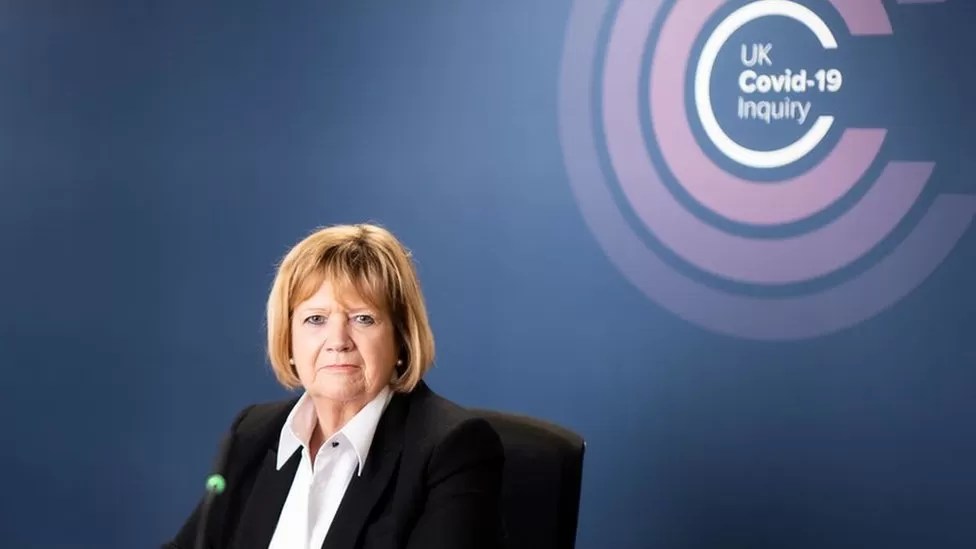
Baroness Hallett promises the inquiry would be ‘thorough and fair’. Photo from Piranha Photography.

Last week saw the beginning of “Britain’s Public Inquiry” to understand the Conservative Government’s responses and handling of the Covid pandemic. But for the life of me, I can’t find out who is in charge of “Britiain’s Public Inquiry” and what – after the facts have hopefully been gathered – will happen? Will lessons have been learnt? Will those deemed responsible be held responsible? Will there be any retribution? Will anyone be called before a court of law or those pages of documents produced be filed away rather than read. Last week when Dominic Cummings gave his testimony he asked that the inquiry also focus on the broader failures of the system. Reading – for I can’t listen to them talking – it is clear that as blame is shuffled about like pearls under walnuts, the prize goes to the then Prime Minister Boris Johnson. Dominic Cummings likened working with Boris Johnson to driving a shopping cart with a wonky wheel. 

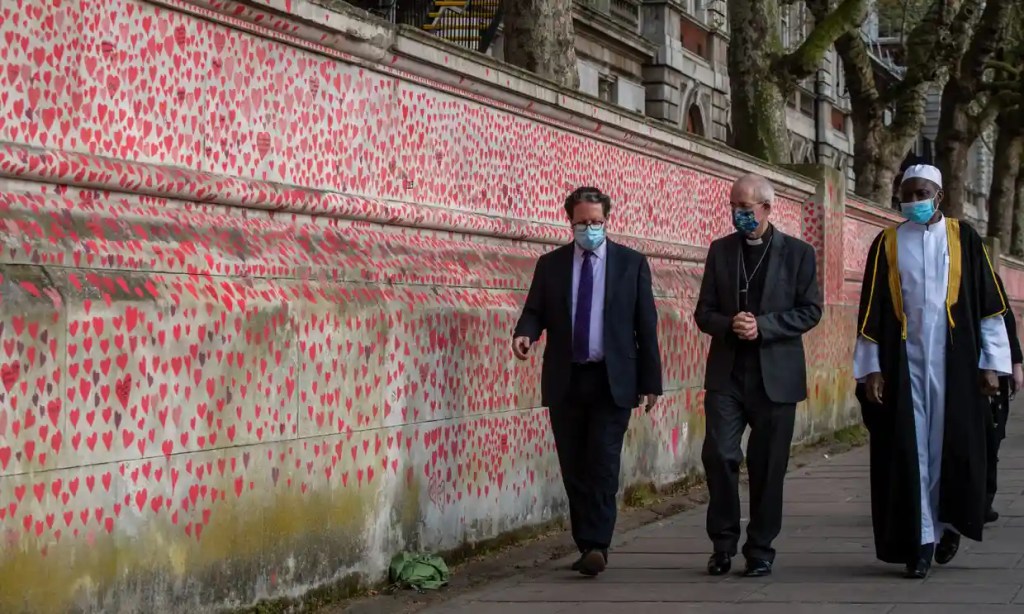
It is not without irony that the inquiry is taking place at Whitehall just across the river from the Covid Memorial Wall that was created and painted in 2021by people who had lost loved ones, or worked in the NHS, coming together with the good guidance of the group ‘Led By Donkeys’. Over 240,000 painted hearts cover more than a third of a mile alongside the Thames River outside of St. Thomas’s Hospital. During this time the public were afraid and looked in vain for leaders in the government where all the common sense had been bred and educated out of almost anyone in Westminster not yet of pensionable age. It was like putting drones in charge of the beehive to collect pollen and care for their queen, when all they could think about was kingship and sexual obsession. 

From left: Rabbi Daniel Epstein, the archbishop of Canterbury, Justin Welby, and Imam Kareem Farai visiting the wall in April. Photograph: Chris J Ratcliffe For Covid-19 Bereaved Families For Justice/Getty Images

People are booking their theater seats. We follow the inquiry like a serialized Charles Dickens story in the magazines of the day. Up to testify next are the past Prime Minister Boris Johnson, his hovering henchman Matt Hancock, and the holder of the chair at the moment, Rishi Sunak. But it is the failings of one particular individual, Boris Johnson, who was ultimately responsible for directing the government, which will continue to be scrutinized in the months ahead. Johnson’s successor-but-one as prime minister, Rishi Sunak — who was U.K. Chancellor during the pandemic — also has questions to answer. All three men — Johnson, Sunak, and Hancock — are to appear before the inquiry in the same week at the end of November. 

Photo Credit to Art Center Wikipedia

Sunak has thrown his dead cat into the ring – by hosting an international AI conference on safety issues that was held at Bletchley Park. The conference produced some back-patting for, and from, the UK, US, and European leaders who attended while getting a nod of approval from the United Nations. Elon Musk arrived to give a speech and chat with Rishi at Downing Street. Both men in their uniforms, Elon remains rumpled and a little unshaved while Rishi rolls up his pristine white shirt sleeves possibly looking for his next job opportunity after this gig is over. So will anything happen from this inquiry apart from “Lessons have been learnt”? The Infected Blood Inquiry – the Stephen Lawrence Inquiry – and the Greenfield Tower Inquiry – have each chipped away at this UK government, but not a lot has changed. Could this inquiry be the one showing that Britain’s democracy has really gone up in flames? I’m writing on Guy Fawkes night – our night of fireworks – celebrating the failure of the 1605 attempt to blow up the Houses of Parliament. We may be holding our breath and will it happen this time? I cannot watch the inquiries – it is too painful – so instead I read.

in an interview, the American thinking and writer, James Baldwin, said “You must realize that if I am starving you are in danger”. And in this simple truth, buried deeply, lies some of the reasons the wars are being fought all around us. Johnathan Freelander writes eloquently and with great heart in this weekend’s Guardian Newspaper, that no side of the Israeli, Gaza, and Jordan triangle conflict are searching for a peaceful conclusion – at this time. In Pulse “Stories from the Heart of Medicine,” I read a translated account from Hadar Sadeh, an Israeli youth psychiatrist working at a Medical Center, about twenty-five miles from the Gaza Strip. Then I open an email from our Palestinian friend and filmmaker, Annemarie Jacir. Each woman weeps at the death of children and physical destruction that they see around them. Each letter could have been written the other.

And see how the war in Ukraine gets roughly pushed to one side even as we know it continues? Old statesmen take planes from one capital city for talks then board another, exchanging their suit jackets for a flack vest as they land in a war zone to encourage young men to face death bravely for their country. Ukrainian President Zelensky rightly worries that this other war is distracting from support to his war – defending Ukraine from Russia’s invasion. How much can we carry in our hearts? And tucked away even further is the news that Russia’s President Putin’s arch-opponent Alexei Navalny’s three lawyers have been detailed. They are facing trial for participating in the so-called extremist group, Navalny’s Anti-Corruption Foundation. If they end up in jail then all contact to the outside world will be lost for Navalny. Each of these eruptions is bleeding like an aspirin-fed wound and all the pressure that is applied will not staunch or stop it any time soon.  

This has been A Letter From A. Broad written and read for you by Muriel Murch.

Truth Bombers

Recorded and Produced by Muriel Murch

I’m remembering a Chinese restaurant – probably in Manhattan – it was loud with cooking and cleaning noises from the kitchen and impatient traffic from the street and even then – when we were half our present age – we had to raise our voices to hear each other. 

“What we need are Truth Bombers,” said our friend and immediately Walter and George began to expand on the idea. All that was needed were people whose reputations are so strong, so respected, that everyone would listen, believe them, and would act accordingly – doing – as Spike Lee said – The Right Thing. ‘Well that’s all sorted’ we thought as it came time to crack open the fortune cookies. How on earth could we have been so naive?

Now as governments become stronger in their authoritarian rules, there have always been truth bombers who are shot down before they can clip the sharp manicured nails of those iron fists. Truth Bombers come from all walks of life, particularly among artists and their offspring – celebrities, and activists – with politicians far down the list of those who follow this path.

Somehow this has all bubbled up in my mind from another British boil-over – you can’t be serious – the country says – when Boris Johnson, past Prime Minister of bumbling, put his father forward for a seat in the House of Lords where he had already booted his brother Leo to safety. 

On 7 March, Gary Lineker spoke out – well, tweeted actually – which now amounts to the same thing – that the language being used around asylum seekers was “Not dissimilar to that used by Germany in the 30s” and that put the government’s knickers in a twist and Lineker off the air. When he first joined the BBC, Lineker had clearly stated that “there are two things that I’ll continue to talk about, the refugee crisis and climate change.” When Lineker was reinstated to Match of the Day the following weekend, the director-general, Mr. Davie, said he had taken “proportionate action”. Adding “We believe we did the right thing. I think I did the right thing.” The row over Lineker’s tweet led to fresh calls for BBC chairman Richard Sharp to resign. After things quieted down, Lineker added: “What they have to think about first and foremost – the government of the day whether it is Tory or Labour – cannot decide who the chairman of the BBC is, or have any kind of influence on who they put in the director of news or anything else – though it looks like another ermine robe could be floating down the BBC’s back staircase.” 

Photo by Mike Egerton A.P

The ten-hour flight from San Francisco was as smooth as those things can be. Dear Taghi Amirani met us at Heathrow – driving us into five minutes of sunshine before the grey clouds of England covered the sky over the old A4 road into London. It is a scruffy road, airport hotels sit bossily beside old fields that have been given up and over to scrub and travelers of all kinds. A few plum trees are in blossom and new emerald-green leaves are appearing on the roadside trees. When the sunlight strikes them my spirits lift at this harbinger of spring. Even the houses in Hounslow, that sit directly under the flight paths of so many planes, look fresh and optimistic. Tulips have been planted to follow the daffodils along grass verges. As we come into the city, blackened tree trunks and branches are leafing out saying yes to this season. 

Slowly we begin to settle in – unpacking this – rediscovering that and wondering where on earth is the other thing. And we look at the shift in the news items of today. The main themes of course remain the same, corruption by public political figures. Boris and his Papa now receding into the back pages while two Scottish figures from the Scottish National Party were arrested and then released on bail. Last month it was the former chief executive Peter Murrell – husband of Nicola Sturgeon – the recently resigned First Minister of Scotland – and this week the Scottish National Party treasurer Colin Beattie. Then there is the little matter of Rishi Sunak’s wife’s investments in childcare firms not being mentioned on some disclosure forms. Instead, we get to see Rishi and his wife – who wears the taut skin of a supremely rich woman – on the floor – smiling as they appropriate jumbo Lego blocks from nervous children. 

Meanwhile, inflation in England is at over 10%, the highest in Western Europe – Brexit – Thank you again. Junior doctors are out on strike for more than their £14 an hour – the supposed living wage in England. The nurses are once more teetering on striking while surgeries and other procedures are being canceled. The National Health System appears to be falling apart which may be the no-longer-hidden goal of this government that put forward a Prime Minister of color as the fall guy. 

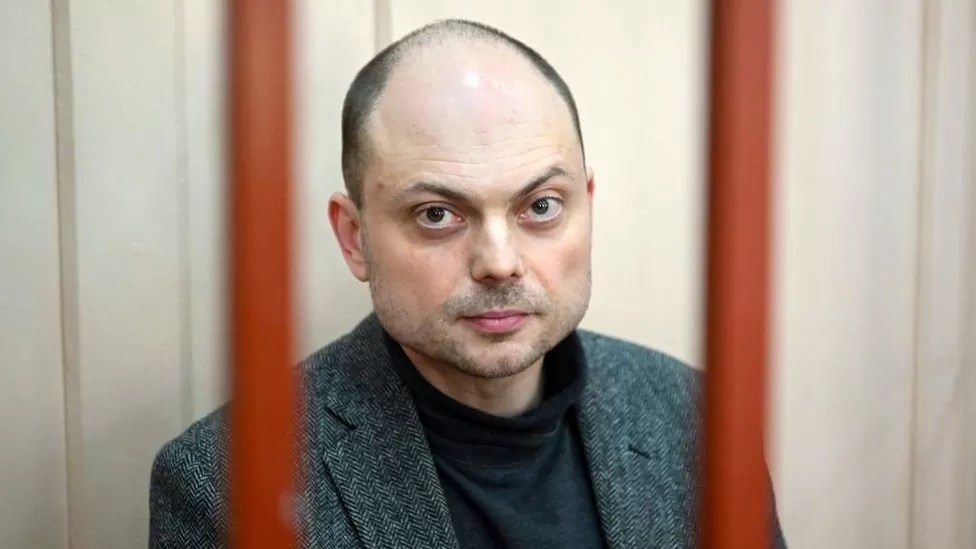
It is time for the ten o’clock news and though the Scottish indecent party politics lead, followed by a smiling Rishi on the floor with a toddler’s Lego, the main item is the recent trial of the Russian activist and journalist Vladimir Kara-Murza. Murza is Russian and came to England as a teenager, later attending Cambridge University. He worked in journalism before becoming an adviser to Boris Nemtsov, another Russian political opposition leader who was shot and killed in 2015. Murza now lived in the United States with his wife and family. Then later, he wrote from his cell, “We all understand the risk of opposition activity in Russia. But I couldn’t stay silent in the face of what is happening, because silence is a form of complicity”. He has survived two alleged poisoning attempts but at the onset of this war knew that he had to return to Russia where he was immediately arrested and now found guilty of criticizing the war in the Ukraine, spreading “false” information about the Russian army and being affiliated with an “undesirable organization”. all equating treason. He has been sentenced to 25 years in jail, the harshest sentence yet for political dissidents. Along with Russian Alexei Navalny, Belarusian Alex Bialiatski, and others, Vladimir Kara-Murza is a Truth Bomber.

BBC News

Which brings us to Sir David Attenborough, another truth bomber – Still flying missions – Sir David Attenborough’s new flagship series, Wild Isles, looks at the beauty of nature in the British Isles. Five episodes are currently airing in primetime slots on BBC One. But the sixth episode – a stark look at the losses of nature in the UK and what has caused those declines will only be available on the BBC iPlayer. It is understood to include examples of rewilding, a controversial concept in some deep rightwing circles. Once again the Government’s knickers are in a twist – and all of a sudden it doesn’t seem so far a stretch between rapping Gary Lineker’s knuckles, clipping Sir David’s prime-time wings, and jailing Vladimir Kara-Murza. 

Photo BBC

This has been A Letter From A. Broad written and produced for you by Muriel Murch.

February Cold

Recorded by WSM knit together by MAM

When in August 2021 western Military forces withdrew from Afghanistan, a plane-load of dogs was evacuated from the country leaving even less room for those Afghani families who had helped the allied troops during the war. Today in the UK an estimated 9,000 Afghans are still living in temporary accommodation in hotels along the Bayswater Road. Some settling occurred. Jobs were found, low-paying and under the table for sure; children went to school and learned English along with math as they began to make a new life. Now the British government plans to move these families to Yorkshire. It won’t even be the same English. 

Rumor has it – via The Daily Mail – that Boris Johnson has made over five million quid since leaving office as Prime Minister, not a bad haul for a bumbling bear. And with that – (offers accepted at over four million) – his offer has been accepted on a manor house – with a moat. But the moat only runs around three sides of the house so it won’t do a lot of good when the people finally come for him. He may think he is safe in Oxfordshire, but outside of the university Quad, there are country folk who know what he has done.

Brightwell Manor behind the church

As Polly Toynbee writes in The Guardian, the true legacy of Boris Johnson is that dishonesty is standard, the Commons has lost sight of the truth. The former leader’s disregard for truthfulness emboldens others happy to follow his example, knowing the system rarely holds them to account.

Nicola Sturgeon is stepping down as First Minister of Scotland. This is a big blow for the independence movement she has championed for her entire political career. Nicola, recognized in the western world, like Angela, by her first name, is a deeply respected politician. Her daily briefings through the Covid pandemic were a relief to everyone in the British Isles. When mistakes were made by her politicians, the retribution was swift. Nicola’s level of honesty was never equaled in the English government and only highlighted the ‘let the bodies pile up’ leadership south of the border. Though there may be plenty of young politicians coming up through the Scottish ranks, the question of Scotland’s independence remains in deadlock. Nicola insisted that her decision to step down was anchored in what she felt was “Right for the country, for my party, and the independence cause I have devoted my life to.”

Nicola Sturgeon Photograph: Xinhua/Rex/Shutterstock

Russian President Vladimir Putin thought he had Alexei Navalny ‘done and dusted’ when last year Navalny was sentenced to 20 plus years in jail. For a few months, Putin could allow himself a grin and a chuckle thinking of all the lost years of family and political life that Navalny would endure. If Navalny did survive the sentence, Putin could hope that he would emerge a husk – a broken man. But this month that grin turned tight-lipped. The documentary film Navalny was nominated for both a British BAFTA and the American Oscar Awards. And on Sunday it won the British BAFTA for the best documentary film.

Navalny won the BAFTA for best documentary in Feb 2023.

However, the Bulgarian investigative journalist Christo Grozev, who features in the film Navalny was, along with his family, banned from attending the ceremony in London due to a public security risk. In the film, Grozev and his fellow journalists tracking the poisoning of Navalny clearly show the Russian States’ involvement. Pushing the blame hockey puck around the stadium, the British Metropolitan police force said that while it could not comment on the safety of an individual or advice given to them, it was “absolutely concerned” with the “hostile intentions of foreign states” on UK soil. And they have a point. The finger of accusation points straight northeast to Russia with the successful poisoning of Alexander Litvinenko and the botched attempt on Sergei Scribal and his daughter Yulia that killed a British woman, Dawn Sturgess, in error. All this, mind you, when the aforementioned past Prime Minister Boris Johnson gave a cozy seat to the Russian newspaper mogul (owning among other things the Evening Standard) Lord Lebedev, in 2020. A heavy sum supporting the Conservative party was added to their coffers. I can’t get the image out of my mind of a snake charmer playing his flute as his pet cobra rises in the woven basket of his hiding.  

But the Met Office truth remains that “the situation that journalists face around the world, and the fact that some journalists face the hostile intentions of foreign states whilst in the UK, is a reality. Which begs the next question, How will the American academy respond to the nomination of #Navalny? Navalny knows this film is his cross on Calvary and that he may be the one who does not make it down from the Hill. Havel made it through – Mandela made it through – will Navalny?

Found lying on the streets of Bucharest 1999 by Walter Slater Murch and Dei Reynolds. Looked to be used by someone homeless as a cardboard mat. Brought home to remains as relevant as ever.

In the early days following the news of the earthquake in Turkey and Syria, a friend of a friend wrote letters, and – as we spread the news of this tragedy – we share them. Tuna Şare wrote to Lucia Jacobs who wrote to A. Broad. Here is a part of Tuna’s letter and I have updated the numbers …. 

“I am deeply shaken, still in Oxford but will go to Turkey in two days to join the rescue and help operations.

You may have heard about the earthquakes in Turkey and Syria. Two earthquakes (7.8 and 7.6 in magnitude) affected 10 cities in Turkey. The area affected is the size of the entire United Kingdom. Earthquakes caused an unprecedented energy discharge equivalent to 130 atomic bombs, and the earth’s crust moved by 3 meters, damaging roads, bridges, and airports. 

The recent estimates of the people under the rubble (and dead by now) are around 47,000, and millions are left homeless in bitter winter conditions. The scale of destruction is apocalyptic. Our beloved city of Antioch, for example, is literally all gone along with its cultural heritage. Many archaeologists and academics, students have died and lost their families. Homes too. 

Best Wishes”

Tuna

Mother is very angry. She has tried to hide it, burping and farting, holding her wind in as best she can until she exploded. Two weeks after this initial emesis she has vomited again. The latest death count is up to 47,000 and still rising. How can one care for the fusses of politicians and small scrappy wars where the planet is so attacked by the creatures who feed off of her. 

As we hear the news I think about those still buried – alive – and waiting for help that may or may not still come. 

There is a line -a scene – at the end of the film The English Patient where Katharine is mortally injured and alone in the cave. Almasy has gone to get help and left her with a flashlight, a pencil, and paper.

Katharine is writing.  The FLASHLIGHT is faint.  She shivers.

“…the fire is gone now, and I’m horribly cold. 
I really ought to drag myself outside
but then there would be the sun …
I think of those still living, trapped, crushed,
buried in the rubble of our making 
The light has gone out …
and we watch it flicker and fade.”

KATHARINE (O/S) – The English Patient

This has been A Letter From A. Broad. Written and Read for you by Muriel Murch

Fires that Smolder and Burn

Recorded and Knit together by WSM

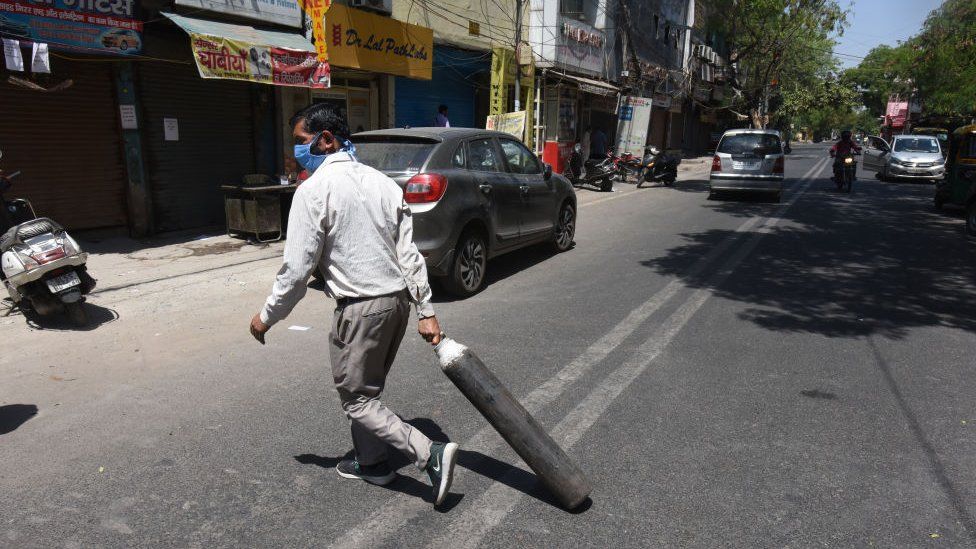
In India the cremation vats are burning continuously as undertakers and priests work as hard as the doctors, nurses and all the health carers. Oxygen tanks are being rolled off of lorries and loaded onto carts as relatives try to help their families at home. There is no room in the hospitals of Delhi or Mumbai and other major cities.The black market is doing a fierce trade in oxygen while fake medicines are being manufactured and sold as quickly as any that are real.

Finding Oxygen

US President Joe Biden is shipping off 60 million doses of the Oxford/AstraZeneca vaccine to India. Not that America would have been using them any time soon as the AstraZeneca vaccine has not been approved in the US. It’s a start and other countries around the world that have a clear but discrete ‘me first’ policy are bending a little and offering help with formulas and ingredients for factories in India to manufacture their own vaccines. 

India is a sprawling continent with its own ways of being that is often hard for westerners to understand. All continents are tricky, and swayed by the personalities of the men and women in power and who cling to that power. They are so big and hold so many diverse opinions that it is often impossible within a democracy to turn the tide to bring safety to those shores. In autocratic states such as China and Russia there are other difficulties. Islands are easier to contain, especially if you have a sensible woman at the head of government such as Jacinda Ardern in New Zealand. 

The fate and state of India under its pandemic situation has pushed other countries’ political dilemmas off of the news media and onto the back-burner of our minds. We are only dimly aware that Alexei Navalny has stopped his hunger strike, and that opponents to the overruling political parties in Hong Kong are being quietly jailed.

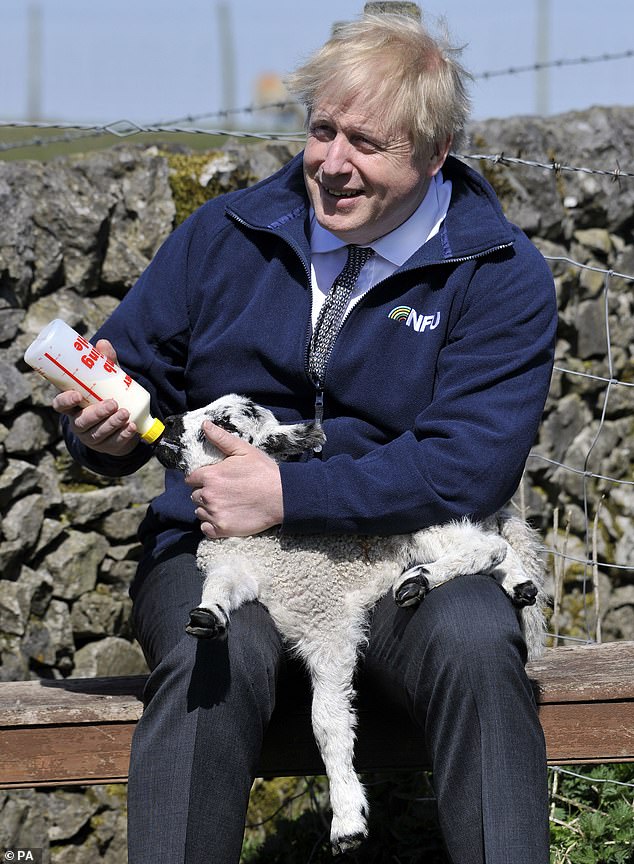
Boris with a Bottle

As India burns its dead, our Prime Minister is refurbishing the flat above number 11 Downing Street with new wall paper, while he is seen out feeding lambs in the Yorkshire Dales or playing ping-pong table tennis in a factory. Neither is a pretty sight. And parliamentary ministers are leaping up and down asking very pointed questions: not about helping India, or even updates on the UK Covid policies, but who is paying for the wallpaper? Sometimes ‘Little England’ beggars  belief. As we look on the blackmarket sales of oxygen and medication in India, are they really any different from the UK government’s Covid contracts awarded in 2020 through VIP lanes jotted down somewhere for who gets what contracts? How is this different from Street Black Markets? Maybe only in style.

People are dying in the thousands in India and this country is riding a roller coaster following the antics of David Cameron and Boris Johnson tripping over their own shoelaces running through the halls of power and out the other side. So we are left at the moment wondering and gossiping about who paid for the wallpaper at number 11, as if Boris Johnson and this family are going to stay there for a while. The power behind the Prime Minister’s throne is shifting in the back bedroom and it is unclear who is going to hold the reins on this donkey and guide him through the narrowing streets of London’s power. Will it be Carrie Symonds his fiancé, partner, girlfriend or Dominic Cummings the advisor with short sight but looking over the long view, or one of those Tory politicians seen to be “not seen” at this moment in time.

Headlining the Daily Mail paper this weekend, one senior minister was quoted, and then it was naturally denied by another, that last October at a Downing Street meeting Boris Johnson said “No more ***** lockdowns – let the bodies pile high in their thousands.”

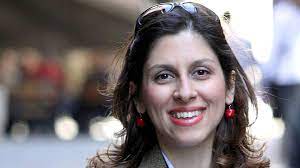
But now, while Boris Johnson denies and flounders in the shallow waters of who paid for how much wall-paper, other tossed-off foolish remarks made when he was foreign secretary remain a serious blot on Britian’s foreign policies. In 2016 Iranian officials cited Johnson’s words that ‘Nazanin Zaghari-Radcliffe was teaching people journalism in Iran’, as evidence that she had engaged in “propaganda against the regime”.  Returning from visiting her mother in Tehran, she was arrested and jailed for ‘spreading such propaganda’ a charge that is hotly denied by her, her family and the British government. Having completed her five years in jail, the Iranian courts have now sentenced her to another year with a further year’s travel ban. Nazanin is but a pawn, placed on a hot square of the chess board, caught between Iran’s strong Queen and Britian’s slow moving King. She is encircled and held captive for a long overdue debt of four hundred million pounds owed to Iran that may never get paid. Nazanin is one woman, one wife, one mother set to serve one more year – if she can.

Nazanin Zaghari-Radcliffe

Three years ago a young Iranian friend, Fateme, give me a pair of red Iranian earrings. They are bright and pretty and similar to a pair that Nazanin is seen wearing in early pictures before she was taken prisoner. Foolishly, or not, I wear them trying with the strength of one woman’s love to bring another courage for the year ahead.

This has been a Letter from A. Broad. 

Written and read for you by Muriel Murch 

First aired on Swimming Upstream – KWMR.org

Web support by murchstudio.com

Sunshine Weekend

Recorded and Knit together by WSM

The sun shone and the weather was perfect on Saturday for Prince Philip’s funeral at St. George’s Chapel in Windsor Castle. Orchestrated by The Prince but now adapted in strict accordance with the Government’s rules for these Covid times, 30 members of the Prince’s family, all appropriately distanced, were in attendance. The ceremonial military guards, the Windsor house staff from the HMS Windsor bubble, his Fell carriage ponies, and close family remained masked and socially-distanced throughout the afternoon service. How glad we, who watched, were for their masks. As the Queen sat alone, mostly with her head bowed, her grief was only visible in her reddened eyes.

The Duke had added personal touches to his funeral: the Sailor’s piping call for permission to come aboard and entrance for his coffin into the chapel. At the service closing the highlander’s solitary bagpipe lament played in the empty nave while his coffin was lowered to the crypt below. The blessing followed, and the Dean of Windsor and the Archbishop of Canterbury led Her Majesty and the family out through the Galilee Porch. The Queen drove back to the castle with her lady-in-waiting while Prince Charles chose to walk and the family followed, the men warm in their overcoats and the women brave in their black stiletto-heeled shoes. Sometimes it is when walking in the sunshine that words can be spoken, gently, cautiously and hopefully healing. Did any of the family manage to have tea together? What sort of bubbles were established and kept? Where was the time when a family can gather, talk, sharing their sorrow under the banter of day-to-day catch-up chatter. Through the late afternoon and into the evening, I kept thinking about the Queen – wondering who was with her or did she sit – alone – in the silence of that time and all the times to come.

The Duke of Edinburgh’s Fell ponies and carriage at Windsor for his funeral

The sun continued to shine on Sunday as the country began slowly to go about its weekend business. Londoners in Regent’s Park gathered in discrete family bubbles, picnicking on blankets as their children played and scootered and the volley ball games spread out beyond the football pitches. The cherry blossoms on the young trees are giving way to lime-green leaves and the wisteria buds are swelling. We wandered into the hidden St. John’s Lodge Gardens. It is a hushed meditation garden where couples and families sit quietly bringing in and packing out their picnics.

Time to get Ice cream

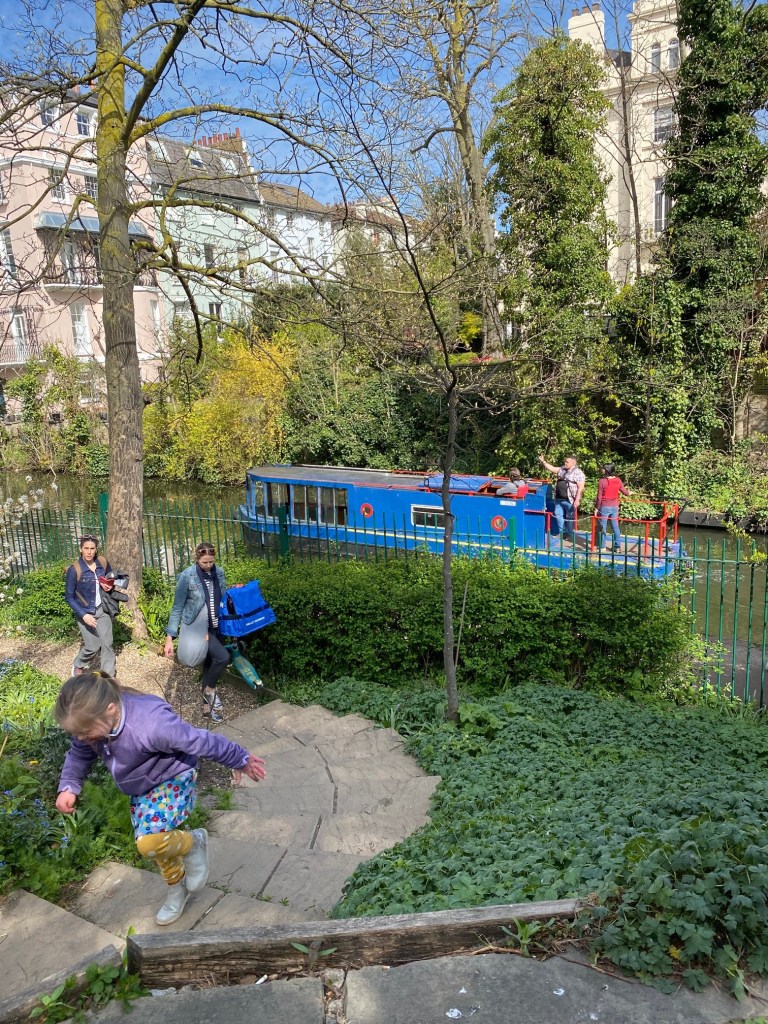
We sit too, watching the robins flit in and out of their nests in the tight hedgerows. Returning along The Broadwalk we crossed the canal and road before dipping into the grounds of St. Mark’s Church. There is a coffee hut, some benches and a sunlit spring garden that cascades down to the canal. It is one of those gardens that is gently tended, but it is clear the garden has the upper hand and the gardener just follows the landscape that unfolds. Now the plots where the Scottish Christmas Trees were sold is lightly fenced and reseeded – by the tree company in their best effort of cleaning up after oneself. Canal boats with happily spaced passengers are chugging and punting up and down the canal. Two young boys have been manning their canoe and brought her to shore. Their mothers and a sister climb the steps through the garden to collect small tubs of much needed ice cream for those intrepid sailors. Such small adventures are huge, taking up the whole of a sunny afternoon. We sit watching together on a bench in the sunshine overlooking the sloping spring garden and the canal. The daffodils have given way to red tulips and blue forget-me-nots. We are comfortable, sipping a fine latte coffee and sharing a crumbling iced carrot-cake, tucked into our place in the city. For the moment the sunshine bathes and soothes us all on this Sunday afternoon in a garden.

It’s an interesting question

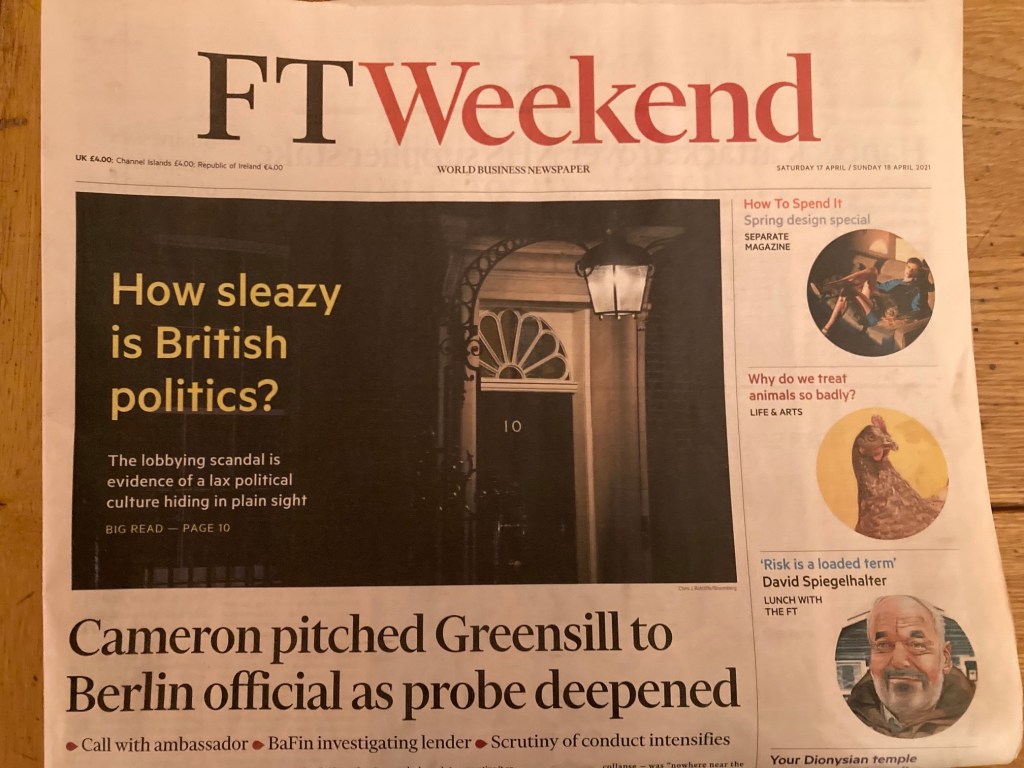
During a weekend of national mourning some politicians hoped to be able to slip under the radar of national scrutiny but not all were lucky. The headline of the weekend edition of the Financial Times reads, ‘How Sleazy are British Politics?’ The page turned to past Prime Minister David Cameron striding from here to there – wherever there may be. Boris Johnson has sanctioned an inquiry over the allegations of misconduct but an old episode of ‘Yes Minister’, is not so far gone in memory:-

“’There is going to be an Inquiry Sir”.

“Oh good.”

“Good Sir?” 

“Yes, that means nothing will happen.”

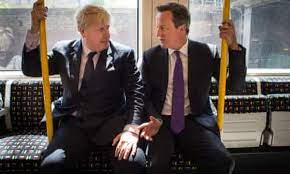
Boris and Doris on the underground

But turning the metaphorical page, opposition leaders are urging the House Speaker, Sir Lindsay Hoyle, to allow a vote on an inquiry into Boris Johnson’s ‘Consistent Failure to be honest” in statements to Ministers.

Given the size of the Conservative majority it is unlikely this motion will come to a debate, but just the idea of it is – well, ballsy Johnson’s blatant misleading and disregard for the parliamentary process is hitting a low water-line, not unlike the autocratic behavior of other world leaders that England shakes its finger at.

One of whom is Vladimir Putin. His political opponent, Alexei Navalny has been on a hunger strike since March 31st and Navalny has been moved to a prison hospital. There is not much time left for his healing or death to occur. Putin must personally long for Navalny to be gone – completely – and yet he must know that if Navalny were to die now it would be as a martyr. Russian news coverage of Navalny’s condition is silent while the world’s telescope scans this horizon. 

This has been a Letter from A. Broad. 

Written and read for you by Muriel Murch 

First aired on Swimming Upstream – KWMR.org

Web support by murchstudio.com

Kill the Bill

Recorded and knit together by WSM

Passover, Easter, the Spring Break, however we call it, the sun came out to bring a little warmth and welcome spring on Sunday. But reminding us to why the English talk constantly about the weather – on Monday snow fell in London. Further north there were gales and serious snow storms and sheep that needed watching as they tried to lamb under the hedgerows.

Over the weekend, Church services took place following the Covid guidelines laid out by the government. Queues outside of one church were reported and, in line with the increasing iron hand of the home office, the Metropolitan police force went out to do their duty. Like a bombing target, the Catholic Church, Christ the King, in South Wimbledon was cited.

As well as following the Covid restriction guidelines, the service was being streamed live on social media, so showed officers striding in, warning priests and parishioners that the gathering was ‘unlawful’. Threatened with fines, the service was abruptly ended. Other places of worship were holding restricted services, and there were probably queues outside of Synagogues and Christian Churches but maybe it was safe to target a nice Polish immigrant Catholic Church. That would do nicely. But it didn’t do nicely and once again the Met has back-footed their agenda. Or have they?

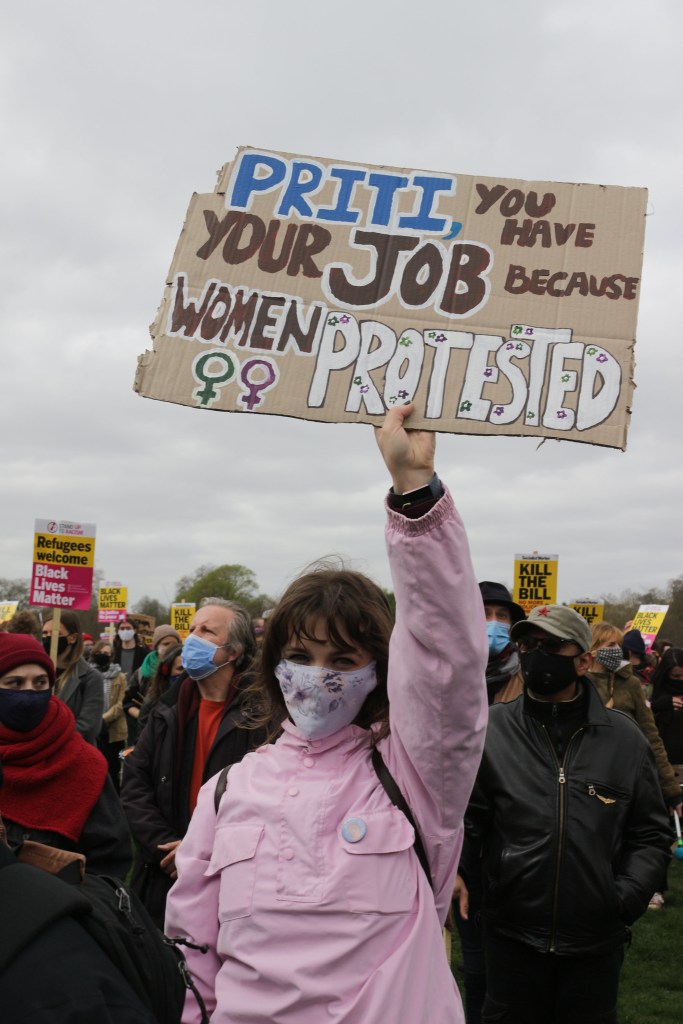
Defending the right to protest – Kill the Bill march, London 3rd April 2021 by Steve Eason

Bringing Covid restrictions into law was the opening the Home Secretary Priti Patel had been looking for, and she is forcing it into action with the Metropolitan police under the Commissioner, Cressida Dick. It looks increasingly clear that Patel wants stronger control of how people behave and, like an insecure school teacher, her default position is to add more regulations with harsher penalties for those who break her rules.

But why has this all gone so wrong – to the right? The British are addicted to their TV sitcoms of Cops and killers. We love to see the police track and solve the most gruesome of murders; either tromping across the rain-battered Yorkshire moors or in the picturesque villages of Oxfordshire, where the weather is almost always sunny. They remind us of gentler days, as when at our small town train station, a policeman would meet the last train from London. I remember returning, close to midnight mind you, and the young policeman, wheeling his bicycle, as he walked me along Elvetham Road to my mother’s house. Surely we would be supporting those fine upstanding men and women. But today they have been found to be not so fine and, like the politicians in power, the humanity they brazenly show dances on either side of criminality.

Trust in the police force has eroded steadily and visibly since the trials of The Guildford Four in 1974, building to a concentrated core over Steven Lawrence’s murder in 1993. Today when people march and protest for Black Lives Matter, or with a policeman held in custody over the murder of Sarah Everard, it seems to frighten Ms Patel into producing a bill called the ‘PoliceCrimeSentencing and Courts Bill 2021‘. It is a mere extension of the Coronavirus Act passed in 2020.

In a Democracy, protesting is considered a human right, and the Home Office says its proposals will respect this. Writing for gal-dem, Moya Lothian McLean says the proposed rules have given the state “enormous authoritarian power using extremely vague language that can be twisted for any purpose”.

The Labour MP Nadia Whittome said: “This bill will see the biggest assault on protest rights in recent history”. Kill the Bill Protests are continuing around the country. It could seem that the freedom to protest governments and military takeovers of state powers, and the freedom to report globally on these issues are getting as tricky and dangerous in England as we’ve seen in Belarus, Moscow, China and Myanmar.

Last week the the BBC’s correspondent John Sudworth abruptly left Beijing, taking his family to Taiwan. The Chinese Government do not care for – and have denounced – his reporting for the BBC on the treatment of the Uyghur people in the Xinjiang region.

In Hong Kong, China held a four week trial and found guilty seven of Hong Kong’s most senior and prominent pro-democracy figures of organizing and participating in an un-authorized rally.

And for leading an opposition party to the government, Alexei Navalny is jailed in Russia following an attempted poisoning on his life. Navalny is now in hospital with respiratory symptoms which must be as alarming as in jail when guards had tortured him with sleep deprivation while encouraging the other prisoners to do the same.

Rebecca Radcliffe reports in the Guardian on Myanmar where the military-controlled media state newspaper, Global New Light, has published wanted lists with the names and photographs of dozens of prominent figures, from actors to musicians. The junta said it would bring charges and criminalizes comments that “cause fear” or spread “false news”. Those accused under the law can face up to three years in prison.

President Joe Biden at work. Reuters

But for the first time in a long time we look back at the United States and see a glimmer of hope, holding our breath as we watch President Joe Biden get right to work with a little train engineer’s hat atop of his head. Maybe he can grease the wheels of government and get that engine going again to carry the American people forward into safety and work. Biden had been around the Washington block a long time and knows how that engine yard works. His oil can is at the ready and he is busy greasing those wheels.

This has been a Letter from A. Broad. Written and read for you by Muriel Murch 

First aired on Swimming Upstream – KWMR.org

Web support by murchstudio.com

Audrey II

Recorded and Knit together by WSM

In 1983 we took the children to see The Little Shop of Horrors when it was playing at a West End Theater in London. The book and lyrics are written by Howard Ashman and the music composed by Alan Menkin. The play starts off almost benignly but then, the little shop, the plant, the good and evil characters emerge along with the storyline until we were all properly horrified as Audrey II’s meandering tentacles devour all before her, before coming down on the audience in the finale. Not sure what sort of mother I was taking the family to such a show but they loved it, and apart from a daughter’s inordinate fear of spiders, seem non-the-worse for wear.

But I’m thinking of the story of The Little Shop, something seemingly benign growing with a hunger for the flesh of others, as I look at China and its meandering tentacles. The protestors against China’s takeover of Hong Kong’s parliamentary structure have been crushed and key activists are now jailed. Another tentacle has reached into Myanmar helping the military to quell activists and protesters against their takeover of the democratically elected president and government. So far the Myanmar protests are continuing even as rubber bullets are giving way to metal. At this writing at least 126 civilians have been killed by the military and two policemen have died. Some soldiers are scrambling to India after refusing to follow orders to open fire on their own people. 

Aung San Suu Kyi is still in house arrest

Hidden, as much as is possible, the Russian activists carry on – Navalny may be jailed but the work continues. Like burrowing a tunnel out of a jail, they keep chipping away at the rock face of the autocratic power held by Vladimir Putin who is beginning to feel the itch under his iron jacket.

The rollout of the vaccination program in England has been methodical and steady. As of today, over 23 million people have had their first dose of vaccination while over a million and a half have had their second injection. The AstraZeneca Vaccine has got some bad press (re: blood clots) but in this time of ‘who says what’ it is hard to know the truth. Statistics, as anyone who has taken basic Statistics 101 knows, can say one thing and then another depending on the chosen variables. The UK virus infection rates are going down, though they may rise as more restrictions are lifted. Today only 52 deaths were recorded from the virus. Soon it could be that the death rate from the virus is no greater than that of the winter flu.

How will we come out of our lockdown? Maybe it is our age – of course it is our age – but my friends and I are cautious, there is a hesitancy to come out of the cave and onto the street, into the garden. It is almost a collective lethargy among older friends. There have been articles about how hard lockdown has been on younger families but I also feel a sweeter caring and closeness among those of us who are older.

Between International Women’s Day and Mothering Sunday, English women from all walks of life waited and watched when Sarah Everard, a 33-year-old marketing executive, went missing while walking home to her flat in Clapham, south London. For days it was just her disappearance that aroused the country to a collective alert attention, overtaking any regal outpourings of emotion that had preceded it. For a fear gripped every woman of all ages. Now Wayne Couzens has been remanded into custody and here is the rub: Couzens is an officer in the Metropolitan Police Force. How could this have happened? An off-duty police officer, slowing down, maybe told her not to be walking home that late at night, flashed his badge, not his crotch, and in a moment of unthinking tiredness she got into his car. A week later her body was found in a builder’s disposable bag in the Kent woodlands. Sarah was a young white woman. A woman of color would have been too savvy to get into that car. Never trust a white man, especially a white policeman. There is not a woman alive in London, or maybe even the country, who doesn’t understand the fear that still keeps us vigilant as we age. Women flocked to Clapham Common where Sarah walked. Vigils were called for and then asked to be held privately at home, candles to be lit, as we had once clapped for the NHS. But the Duchess of Cambridge went out – as alone as she could be – mingling among the women to lay flowers with the others. “For Sarah” it read. She said, “I remember what it was like to walk home alone in London,” before she quietly slipped away.

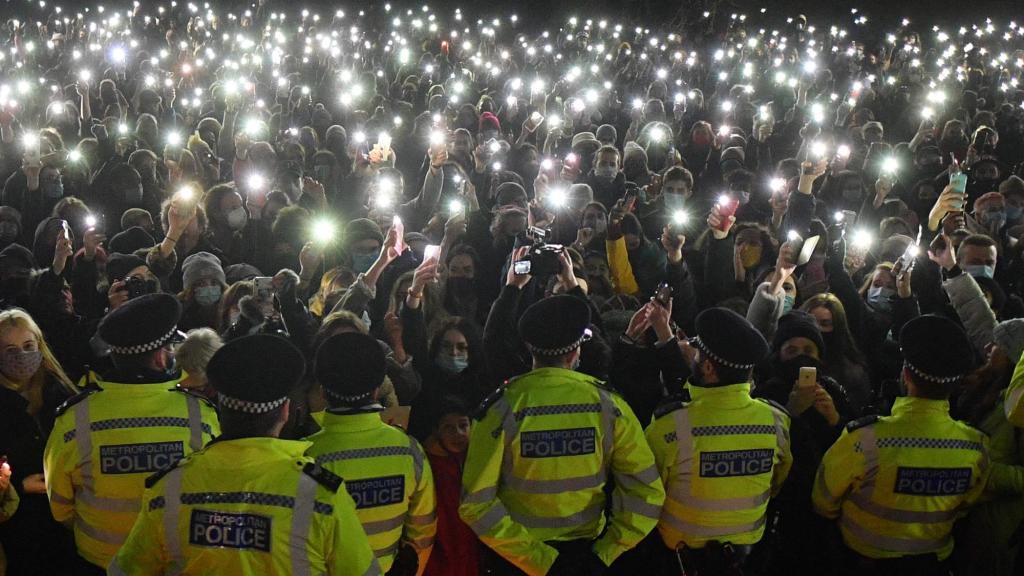
As dusk fell on Saturday, women continued to gather at Clapham Common, laying flowers, and holding their phones high lit as candles. There was a police presence and all was calm – until it wasn’t. Who gave the order, who panicked at the sheer volume of women, at the few protesters who came specifically to disrupt the situation? Someone did and the police moved in, encircling, crowding the women until some of them panicked too. It doesn’t take much – fear, that is – on either side, to make a peaceful situation difficult, a difficult one dangerous, and the repercussions of such a situation to be an excuse for more laws to curtail such protests.

Police officers begin to crowd in on the women at Clapham Common.

Discussions continue, in public and in parliament and the fear, on both sides of the law and the people remains. As we approach the spring equinox and the sky is becoming light again I wonder if the touch of spring is enough to bring us hope and courage to create a new way of being.

This has been a Letter from A. Broad. 

Written and read for you by Muriel Murch 

First aired on Swimming Upstream – KWMR.org

Web support by murchstudio.com

20,000,000 and counting

Recorded and Knit together by WSM

…is a lot of people given their first dose of the Covid vaccine. This week the rollout of vaccinations begins for those between 64-60 years old. Cases of COVID infections in the UK are down 40% and – for the moment – England can be hopeful. Last week The Queen joined health workers from around the UK on a Zoom conference call, talking of how well the program is going and how important it is. The Queen added that her vaccination “Didn’t hurt at all” and encouraged those who were nervous about having a vaccination “to think of others and protect them by having the vaccination.” At 94 she remains in lockdown in Windsor Castle while Prince Philip, her 99-year-old husband, is transferred from King Edward Vth hospital to St. Batholomew’s and there are other family concerns on her mind. She is not immune from the extra burdens that this time brings. In her own isolation from family and work, she shares the worries which we all carry with the sense that the world is closing in on us. For some people, this time brings issues of weight gain, but in The Queen I see weight loss and the concerns of aging for both her and Prince Philip are on my mind.

Her Majesty The Queen urges people to get the vaccination

Stacy Abrams was a bright light when she zoomed into Andrew Marr’s Sunday show. Smart, polite, and clear with her message of upholding the democratic voting process in North America. She is a strong intelligent woman and her interview was a source of hope of sanity in the United States. She has me wondering, almost wishing, that it will be the women of color who might save the U.S. and even humanity.

Stacey Abrams

So many nations are caught in struggles for national power and control while others reach for a form of democracy. The United Arab Emirates is not of the latter. Last week, footage from a sequestered phone-camera was released taken by Princess Latifa locked in the bathroom of her villa/jail as she called out for help. Princess Latifa has accused her father, Sheikh Mohammed bin Rashid, the ruler of Dubai and vice-president of the UAE, of holding her hostage in Dubai since she tried to flee the city in 2018. The statements from  Dubai say “she is safe in the loving care of her family.” But no pictures of her are forthcoming.

And in other countries, the clenched iron fist of authoritarian rule is being met with continued resistance, and the continued resistance is being countered by fists squeezing on the triggers of guns and power. 18 protesters were killed in Myanmar this weekend. Aung San Suu Kyi has been brought to court, via video link and though purported to be in good health, her lawyer was forbidden to see her – and again, no pictures of her are forthcoming.

The news from Hong Kong where protests continue is of 47 public officials who have not sworn the new oath of loyalty to Beijing, China, and Communism and who were put on trial. The newly introduced oath of loyalty aims to cull anyone who seeks to maintain or improve democracy in Hong Kong from holding public office. They would be banned from running in elections for the next five years.

It is a worn phrase – ‘while protests continue’ – and yet protests do continue wherever they are needed as democratic challenges and activists are suppressed, along with the journalists who report them. 

A Belarus court has jailed two TV journalists of Poland-based Belsat TV for two years on charges of fomenting protests while filming a rally against the country’s leader. James Shotter and Max Seddon wrote for the Financial Times reporting on the Belarusian activists who have slipped across borders, to Lithuania, and Poland. Nexta, founded by a prolific blogger, Stsiapan Putsila is run by a small young and savvy group of activists. Posting quick-fire information and images on Telegram, it has become the main source of news for what is happening and where to be for the Belarusian public.

Another story, a single paragraph, maybe of deeper relevance than first observed, is of Mikita Mikado, the Silicon Valley founder of a Belarusian software firm who launched a crowdfunded platform to help security officers pay the heavy fines needed to leave the force and re-train for other work. Hundreds from the Belarusian police-force have reached out to him, sick of the violence they are asked to perpetuate. Lukashenko is beginning to ramble with his statements while Putin hopes that with Navalny put away he can sit back and watch – for a moment.

How to find comfort or inspiration during these times? Reading helps, those books that one never had time for before. Finally, Middlemarch by George Eliot is by my bedside, and to my amazement, I am enjoying the words, the pace of reading, and the story – in the doses that bedtime reading provides.  But like many others, I return to poetry and found renewal with a program from the Wigmore-at-home series. I settled in to listen and watch a performance by Alice Coote, Christian Blackshaw, and Ralph Fiennes as they wove together the music, letters, and poetry of Tchaikovsky and Pushkin. They gather artists and audience together bringing us solace and strength for this time.

This has been a Letter from A. Broad. 

Written and read for you by Muriel Murch 

First aired on Swimming Upstream – KWMR.org

Web support by murchstudio.com