The Salon Season

Written and Read for you by Muriel Murch with WSM by my side

The Salon Season is here.

Storm Amy came and went, whipping the wind high and hard through London bringing down the first autumn leaves, but walking our mile canal loop the water was dark, clear, the overhanging trees holding their gold and russet leaves hidden for a little while longer. But other great trees have fallen. The quiet passing of Jane Goodall while still working was as if she left on a broomstick, while telling us to get on with it. Jillie Copper, an author known as the queen of the bonk-buster, gathered up her skirts as she swirled out the door. Diane Keaton quickly followed after them. These women, so dissimilar in work, all shared their passionate love of dogs. Surely a light example to find that which unites us.

Sarah Mullally photo from Wikipedia

Another woman has been called forward. Sarah Mullally has been voted as the new Archbishop of Canterbury in a church that still is allowed to teach that men should have authority over women. It has been six months since the Right Reverend Justin Welby resigned over not paying due-diligence to the problems of the church. Due-diligence to problems; something that all heads of church, state, and police struggle to maintain. But Sarah Mullally is also a nurse, and as she moved to further embrace her faith, taking up the role of priest, then bishop, she is mindful of the division her appointment as Archbishop of Canterbury and head the World Anglican Church will bring. As devout a feminist as she is a Christian, Bishop Mullally has a hard row to hoe and many priests and bishops under her care will resist her as she struggles to unite this wide-bodied church, weaving a bobbin through its warp, joining  the threads of communication. Maybe between a woman like Bishop Mullally and the Venezuelan María Corina Machado, the winner of this year’s Nobel Peace Prize, some world shift can occur towards peace in our time. 

This past weekend the Israeli attacks on Gaza have halted but there is no end to the dying. While trucks have begun to roll into the bombed streets, cleared only enough to allow them through, they move slowly, allowing the near starving to seize whatever sacks they can off the flat beds. Stalls are set up and, even in this mayhem, sellers are trading to those with money while those that don’t must resort to theft. Medical supplies and nowhere close to sufficient. 

Driven in Toyota trucks, 20 living Israeli hostages were returned to Tel Aviv while 2000 Palestinian captives were bussed from Israel into and released in Gaza. While the Israeli hostages mostly had families and homes to return to the Palestinians returned to bombed homes and decimated families. Their return must be soaked in deep grief pouring into anger. 

Omar Al-Qattaa AFP Via Getty Images

The American President flew into Tel Aviv to address the Israeli parliament. He was greeted with a standing ovation which guaranteed to feed his hunger for a while. At the peace summit held in Egypt with his counterparts lined up behind him he declared “The prayers of millions have finally been answered. At long last, we have peace in the Middle East.”

At the photo shoot a back drop of European and Arab leaders stood behind him. Sir Keir Starmer looked puzzled, Emanuel Macron stoic, and the Italian Prime Minister, Giorgia Meloni, completely bemused. Later that day, perched on a suitably serious chair in a ‘for the press’ moment, the King of Jordan blinked furiously and frantically into the hot lights as he tried to be diplomatic, positive, and truthful with his thoughts and concerns for future peace in the Middle East. It was not easy. Can the American President stay focused enough to go through with meetings to implement the 20 point Peace plan?
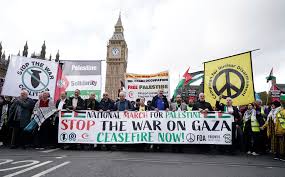
Peaceful protests in London

During these last two years of this conflict, peaceful rallies for Palestine to be recognized as a sovereign State have been held throughout Europe and the Western world. Beyond thousands have gathered in the major capitals of Italy, France, Spain, The Netherlands and more. And here in the United Kingdom, London, Manchester and other big cities have been holding huge gatherings of silent, peaceful protests for the freedom of Palestine. But in the United Kingdom is it considered a crime, the government having designated the Palestine Action organization a terrorist organization. Last week in Manchester a single terrorist attacked a Jewish Synagogue. Amidst a mess of gunfire three people are dead and Manchester is wounded. Despite the Prime ministers pleas – never a good sound bite – for the weekend Pro-Palestinian demonstration at Parliament Square in London to stop – it didn’t – and the police moved steadily through arresting nearly 500 silent protesters aged between 18 and 89. England seems too small, in geography and spirit to allow its people to protest in peace for peace.

As Michaelmas passes and the autumn evenings shorten and lower its lights, the London salon season begins. Friends gather together for evenings of art and friendship. A dear friend, a Chinese artist, who has lived and performed her life and work mostly in England and Europe hosts the first: a music and poetry Salon at her home tucked away at the top of the Heath. We are in London but not – at this moment – of it. There are no tall ceilings with giant chandeliers hovering over us, nor gilt-edged velvet chairs as in a castle. But there is soft lighting, a comfortable sofa, mixed chairs and the floor to sit on. The rooms fold away from each other, one behind the grand piano and the others concertinaing back into the warmth of the kitchen. Old and new friends come together – catching up on the year past – no time for future dreams before the poetry and music about to be shared. Everyone is nervous. The friends she has gathered are for the most part just that – friends – most are artists with a small a. As the evening unfolds, poetry mingles with music. The grand piano gets its longed-for work out, Tang poems from the 1700s are read in Mandarin, Cantonese, Russian, Latin, Japanese, French, German, Esperanto, Polish, Italian, Danish and Spanish. A poem translated from its original Italian prose into English poetry captures a brief moment in China. All are blended between theatre, mime and the music.

Poetry read by Walter Murch

The evening lifts us and for a few hours we are gathered together in the womb of art and beauty that sustain us, giving us strength to walk back into the dark night and return to the world.

This has been A Letter From A. Broad. Written and read for you by Muriel Murch 

As always supported by https://www.murchstudio.com

Extracts of Xi’an of Eight Rivers written by Curzo Malaparte and read by Walter Murch. Music from Keith Hammond and Katrine M. Lehmann

Correction in the audio. Tang poetry is from the 700s not 1700s.

It’s Only Going to Get Worse

Written and read for you by Muriel Murch with WSM by my side

“The next time you do this lady, you’re going downtown.” He was big, beefy and, even from behind his counter desk, threatening, as he leaned forward into my space. Was it my space? The flight back to San Francisco had been full and fraught. Wearing my very nice Irish tweed suit (How I wish I could fit into it now) and my pearls, was usually enough to let me sail through customs and immigration when returning to the United States. Since 2000, I had been commuting back and forth to England taking care of my mother as best I could as Congestive Heart Failure quietly worked its way, taking its toll, through her body. She never complained about the distresses and frustrations and even fear it caused her through the three plus years of her illness. But this was 2003, two years after 9/11 and the ante had been upped. I was shaken as he slapped my green card and English passport down on the counter and passed them back to me. I hurried away from this glowering man in his booth before he had beckoned the next person standing in line forward for his scrutiny.

Soon after, I was safely back on the farm a close neighbor stopped by. I was still so shaken I told him, I was telling everyone, what had happened. And he replied,

“Bill’s sister works in Washington. Would you like me to ask him to ask her what is going on?” 

“Yes please,” I replied. He left shortly and it was only two hours later that he phoned me back. The advice from Washington was: 

“Have her do her paperwork now. It is only going to get worse”. I heeded her advice reluctantly and over the next two years finished the required paperwork and took my tests, before finally stepping into the Hall of Justice in San Fransisco to stand and swear. It was a sobering moment, not only for me and hundreds of others, but watching those young people in military uniforms finally reaping the rewards of their service.

NAS SIGONELLA (July 20, 2010) – Candidates for American citizenship representing eight countries, raise their right hand and recite the Oath of Allegiance during a citizenship ceremony held here July 20. Eleven candidates participated in the ceremony to become U.S. Citizens. (U.S. Navy photo by Mass Communication Specialist 1st Class Erica R. Gardner/RELEASED).

Our daughter Beatrice took her work break to meet me and, over a sort of celebratory lunch, helped me fill in my voter registration papers. Now I could vote, and, as importantly, protest the death penalty outside of prisons without fear of deportation. I can count myself among the lucky ones, and privileged to be so. 22 years later ‘it’ has indeed proved to be so much worse than we could ever have imagined and those not so lucky, not so privileged, are living in fear while some are paying a terrible price with the regime in power as they make their bids for a better life and freedom for their families. 

We have to dig deep into the news to follow the paths of the American government’s lawlessness, and when we do it is sickening beyond belief. We don’t really know where to turn. The world is boiling over with the gastric disturbances of climate change amid the constant eruptions of war and destruction.

A not so small incident happened this week as Ursula Von der Leyen’s plane to Bulgaria was left circling for an hour while the satellite navigation system system was jammed. “Nothing  to do with us,’ said the Kremlin spokesperson, Dmitry Peskov, “Your information is incorrect.” While Mark Rutte, Nato’s secretary general, said they are working night and day to make sure this does’t happen again, I’m not putting money on their being successful.

President Zelensky and Europe

And so the wars’ effects spread, across  continents, each one oozing out to the other, Europe, The Middle East, and beyond. When the American President isn’t pouting that he has not been invited to China, he is busy plotting what he is going to do with Gaza when it finally becomes available. But what is it? Gaza, The West Bank, Palestine? Well that rather depends who you are talking with. President Macron calls it all Palestine, other European leaders are set to agree while BiBi Netanyahu calls it Gaza and The West Bank trying to keep Palestine even more separate.The American President calls it Beach Site property.

Israel continues to bomb Gaza, targeting hospitals and journalists.

The Committee to protect journalists says that to date at least 189 journalists and media workers have been killed in Gaza in the most deadly conflict for journalists ever recorded. As we watch the nightly news, the lead anchor for that evening repeats, “Israel does not allow foreign media to film in Gaza and so this footage comes from, dot, dot, dot. “ Whoever can record it” Bolex cameras have given way to smart phones and the footage is shared across the world aired by which ever country chooses to show it. 

Dusk on the street – Auntie (The BBC) is tucked safely behind the church

On Tuesday we found ourselves at the entrance to the BBC headquarters in London. It has been twenty years since I first popped in to watch an interview. Yellow-jacketed security personnell man the paths winding between the barriers which go up and down and are moved around as rumours cross the courtyards to other waiting press and protesters who are always present. We have an appointment and are let in, then directed to more security. It’s a tight ship or a giant warhorse depending on your focus for the day. Eventually wearing our guest passes – clearly visible please – we pass through more guarded glass doors and look down on the huge buzzing news room below. Though brightly lit, it is somewhat spooky, the below aspect of it, as if a design relic of old wartime bunkers. Now instead of long tables with maps there are rows of computer hubs catching news from around the world, some of it coming from those phones that are held up in Gaza, in Kiev, in Afghanistan, but rarely the Sudan or even Haiti. No photographs are allowed here either and the security remains visible as we make our way through the warren of lifts and corridors and messy drink alcoves that look like they belong on a train until we reach a recording suite. There is enough gear to make a community-radio head swoon except that I understand that though they have the equipment, the personnel and money, community radio has a greater freedom.

Two guests, one host, one producer, one engeneer. Be still my lustful heart.

It’s a straight forward forty-five minutes of book talk for Walter, another guest and the host before heading to the bar for drinks. Fully back from the Covid year, the space is loud, raucous and liquid and the cider is not bad. The men and women crews gathered here are grateful to do the good work that they can.

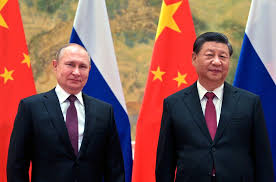
Vladimir Putin and Xi Jinping stand together

I watch the evening news with a slightly different take, looking for what is chosen and what is not. Russia keeps on bombing Ukraine. There are no talks of peace in any of these war zones. A new world order gathers for a military parade in Beijing as Xi Jinping hosts China’s largest-ever military parade, with Vladimir Putin and Kim Jong-un, standing and almost smiling in a show of defiance to the West. The American President and other Western and European leaders were not in attendance. 

Though notably absent from our newscasts for the last few days, the American president immediately posted a petulant response, an embarrassment to even some of his supporters. As speculation abounds a diagnosis of Chronic Venous Insufficiency has been given. Similar in presentation and outcome as varicose veins, he may find them as useful today as a little bone spur was 60 years ago.

This has been A. Letter From A. Broad. written and read for you by Muriel Murch.

As always supported by https://www.murchstudio.com

August in LA

Written and read for you by Muriel Murch with WSM by my side

August is a hard month for California. The sun sears down on the land that slides out from underneath the mountain ranges towards the sea. Only the water cascading down from the mountains and channeled into the fertile fields below brings relief and wealth, and the sense that all is as it should be. But looking closely, cracks are beginning to emerge. The eruptions of wealth, from early settler gold diggers in the Northern Hills, to the tech innovators in Silicon Valley playing their chips, surge and wane while those other essential and lucrative industries of agriculture and cinematic art are holding on, even as they feel the the claws of federal predators stretch and contract, preparing to strike at this strength and wealth while waiting until other, bigger fish for the moment, are fried.

The plane from London touches down at LA International. Not sure what to expect we are amazed at the ease of facing a camera before the gates are opened into the United States. Collecting our bags, we too are collected by our driver. We are exhausted but Bruno, an Angeleno, born and bred, with his own faded dreams has a lot to tell us and we listen as best we can. Depending on the time of day and day of the week each driver has their preferred route. Today we are driven to Beverly Hills on Sepulveda Avenue. The Avenue is large, even by old Los Angeles standards, dusty, dry and worn, laid down before the freeways had been dug out and around snaking through this city ever hungry for more traffic with seven lanes each way, at times barely able to contain the flow of cars.

Best burger at The Apple Pan

Entering The Four Seasons Hotel, the bright lights of the chandeliers beam down on the vast urns of gladioli denying the suffering outside. The following night we leave for the Apple Pan – open from 11 to 11 – on West Pico Boulevard, serving the same menu since 1947. It’s interesting to see Uber drivers from different cities, how they adapt to their city, get a job a gig and somehow make it all work – for a while. For we are all aware, both passengers and drivers how precarious is the American world today. We have paid homage to The Apple Pan since the 1960s, growing older along with Manny on the left wing, and Gordi on the right, of the big horseshoe-shaped counter that surrounds the deep friers and fronts the cavernous kitchen behind. Manny and Gordi began as young counter-boys about the time we first motorcycled into Los Angeles in 1965. They have both retired, but we continue to come, showing our children this tradition whenever we are in Los Angles together. Three kinds of burgers and four sandwiches make up the main menu with a generous helping of french fries. Flipping the menu over to deserts, only the Fresh Apple and Pecan pies are not cream pies – the rest are cholesterol heaven. You want Ice Cream? That will be double Dutch Vanilla.

Entering The Apple Pan is like entering a cave. For awhile, the beat and heat of the outside world is left behind. Even if your truck-driving is more limousine laden than diesel loaded, this is trucker heaven. We come to decompress, to speak and be spoken to kindly, it is almost holy. In years gone by West Pico was bright with shining mall lights, the intersection humming with life but now the outside street is dark and bare. Swaths of real estate have been shuttered, the lights turned off, only the blinking of a few cars and hissing busses pass by. It has taken me two days to find the right word for this Los Angles – it is – desolate. America does not seem so great again.

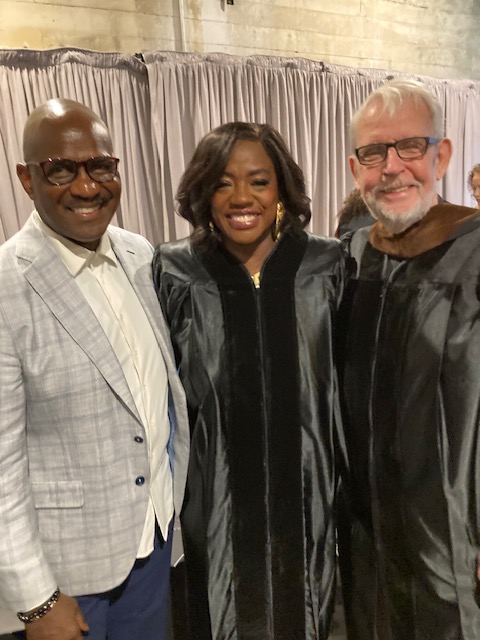
Julius Tennon, Viola Davis, Walter Murch

The week ahead holds a busy schedule. Along with Viola Davis, Walter received an Honorary Doctorate from the American Film Institute. Each of them, a power-house within their spheres, spoke passionately from within their disciplines and I wonder what the graduates made of them both.

For a morning, because it is a graduation with new beginnings for young artists, there is hope and relief in the air. And laughter as when we stop in at the post-event brunch and the faculty head of editorial asked me, 

“Are you?”

“Yes.”

and laughter

“You’re famous in Hollywood. You must have the patience of a saint.”

And there is more laughter. 

A little nervous beside Marylin

We connect with the friends that we can. There are friends too sick to visit, there are friends who have put their homes back together after the Palasades fires, and friends who are only just beginning. These are the precious moments. 

And then the work. ‘Suddenly Something Clicked’ is clicking along. The buzz around its publication is moving quickly through the Los Angles Post Production community and at the same time ‘Harvesting History’ is having its own quieter moment.

Randal Kleiser and WSM are listening – along with a standing room only audience.

Randal Kleiser led us both through our books at Chevalier’s Book Store in Larchmont before Lawrence Weschler puppeteered Murch at The Hammer Museum and the following night Murch just carried on determined to expose as many minds as possible – in another packed house at the Pasadena College of Art and Design – to his exploration of the Golden Ratio of the human face and its relation to cinema. He’s almost come up with an answer, but an absolute answer that might hold truth in logic would perhaps disperse the magic. And what is the magic of these days for these film makers? Maybe the fact that someone is thinking about and able to articulate what they hardly know goes on in their own minds. “Oh that is what I am doing, that is what is happening.” There is hope and validation and even a good dose of courage to be gained by listening.

We are lacking the stamina that is needed for such a full adventure and were felled with summer colds that descended like thick fog and hovered on the brink of bronchitis. Walter was downed early, checked out and prescribed a broad antibiotic by the brisk 60 year young hotel house doctor. I fall at the end, somehow packing and flying until we reach the safety of our London cottage. I wail that I want Doctor Joe, with his gentle chuckling care and beloved Mo with her Chicken soup.

The saving grace of illness is that it was two nights before we are able to manage the world news, Gazas rubble and carnage taking third billing to the immigration rows and the slow bizarre meeting of The American President with Vladimir Putin in Alaska followed by the European Leaders ‘Coalition of the Willing’ in Washington DC. There is the news, and the the body language, and maybe some fake AI unfurling as this madness of the about turns of this play out in unreal time. Sifting through the lies and the truths, the temptings and concessions, the breath-holding is reminiscent of a mother feeding a toddler with a buzzing airplane spoonful of spinach maybe to be spat out in a rage or grasped and swallowed looking for the prize of peace.

This has been A Letter From A. Broad written and read for you by Muriel Murch 

As always supported by murchstudio.com

Dress to Impress

Written and read for you by Muriel Murch with WSM by my side

Dress to impress and dress for success, sometimes we try – but what does that mean – and for whom and for when are we dressing? This week I dressed for an appointment with a new doctor because I wanted him to see and receive me, and not to toss me off as another white 82 year old female with knee pain. So my fingernails were a playful bright green.

Green Nails by Esra Afşar on Unsplash

I may not be a spring chicken but I’m not ready to shuffle off with a walker just yet. I’m praying for a physical exam and an x-ray and a picture that would tell me what is going on with my knee and how can we fix it. It is 15 years since that knee was replaced and I’m aiming for at least another five. It looks like the green nail varnish worked and slipped this fast-talking professional fellow out of total keep-it-together efficiency to ask ‘So how tall are you’? and we laughed – before getting serious again and him telling me what the x-ray pictures showed. ‘Your knee is fine – your hip is worn out.’ Seems like another case of ‘rode hard and put away wet’. But I know to be beyond grateful. I am fortunate to have options in front of me and live a life where such care is accessible.   

Gaza: Doctors Under Attack

In countries that are at war, with themselves and each other, this is not so. The old, the infirm, the young and sick, are all vulnerable and frequently dying for and from the wars that ravage around them. Within the jungles of Myanmar, the city streets of Belarus and the open fields and villages of Ukraine, we are not privy to the unseen hardships played out in those lands. This week we watched ‘Gaza: Doctors Under Attack’ a documentary that was first commissioned by the BBC. Then, according to Stuart Heritage writing for The Guardian, “dropped due to the risk that it created “a perception of partiality”. Luckily Channel 4 picked it up and it is also now available on YouTube. Channel 4’s Louisa Compton warned that Doctors Under Attack would “make people angry, whichever side they take.” She is right. This is the sort of television that will never leave you. Maybe it can provoke an international reaction and we owe it to the people and the countries to not look away. And I don’t, instead finding images remain front and center in my mind making me think deeper about what is happening and how it is happening.

A doctor, who has just lost members of his own family, kneels beside a bed shared by two staving children and asks the older boy fed with a gastric tube “What do you want, What would you like?” The boy whispers, “Mango, mango and grapes”. “And the doctor laughs gently with him, “Mangos and Grapes. You shall have them” while in his heart he knows that joy may have to wait for another life time. As he pats the boy, feigning reassurance he steadies himself against the weeping that is in his soul. And maybe we too must at the least bear witness to the horrors that are happening just around our global corner, as a less than five hours flight from London to Israel has become. 

Some of the doctors followed in this film are still alive and working. Some are not. Almost all have been imprisoned, tortured and lost family members. The film follows a trajectory of sorts. It begins as hospitals are warned to evacuate – but there is nowhere for patients or staff to go. Then an air strike happens, causing more chaos and casualties among the patients and staff who remained. There is a final follow-through as the doctors homes and families are bombed before the attacks move onto the next hospital and repeat the format. Hospital buildings can be rebuilt – though it is doubtful that is the agenda here – but the taking out by imprisonment, torture and death of top medical personal leaves a hole in the knowledge of medicine that will take more than one decade to repair. 

‘No water, no electricity’ … surgeons at work in Gaza: Doctors Under Attack. Photograph: Basement Films

Since the film was made last year, medical officials of all areas in Gaza are facing mass casualties and deaths of Palestinians wounded by Israeli fire as they scramble and fight for food. Relief aid distribution is now almost solely in the hands of The Gaza Humanitarian Foundation, a US and Israel-backed organization, formed in February 2025, and now helmed by Johnnie Moore Jr of Delaware, an evangelical leader and businessman – which seems awfully close to Washington DC. In May the GHF took over from any organization sanctioned by the United Nations. I am not alone in feeling that this organization is disguising target practice as aid. 

But we see very little of this on our daily evening news. Summer sports keep us happy, the heat waves keep us worrying, and we sigh at the incredible slowness of the government body inquiries into biggest miscarriage of Justice –  the Post Office scandals – between 1999 and 2015 – finally come to a conclusion, exonerating those 900 sub-postmasters who were wrongly accused of masses of thefts, – the Horizon computers did it. 13 sub-postmasters committed suicide, many died of old age. The inquiry’s chair has begun to release the reports. Judge Sir Wyn Williams is a singing Welshman, president of Pendyrus Male Choir, which somehow makes one feel that he is a sensible fellow able to lead this committee walking through the dutiful steps to bring the officials to account, saying what needs to be said. It has taken a singing Welshman to steer this inquiry into publication

After the relief of seeing this debortle coming to an end, we watched French President Macron toss the prickly ball of illegal immigration back and forth with Prime Minister Starmer in the House of Commons before they both enjoyed the perks of a State visit. President and Madame Macron’s State visit to Britain is the first of France, or indeed Europe, to England since Brexit. The final banquet, hosted by the King and Queen at Windsor Castle, brought out all the medals and sashes one could find, a tiara or two, good will and good manners to all, with proper speeches and – we hope – good French wine. A little brightness to end the day. 

Sashes, medals and a Tiara but no green nail varnish

As censorship continues pulsing in with the tide of fear we must watch for rogue waves while the ripples over the sand show us where the truth is hiding, like clams under the sand sending up spouts of sea water, cleaning its breathing and screaming for life. But in England, coming down firmly in favour of censorship, protesting and supporting the pro-Palestinian, anti-Israeli activist group Palestine Action, has washed in another ruling under anti-terrorist laws as the government hurries to  project its own agenda. There are spouts of truths in all the theaters of war and governments and while those in authority try so hard to hide them they continue to wash up on the shores of our consciousness.

This has been A Letter from A. Broad. Written and read for you by Muriel Murch 

Grateful to be supported by murchstudio.com/

Half a Life-time Ago

Written and produced by Muriel Murch with WSM by my side

Forty-one years – half our life-time – ago we packed up our bags and the family and said goodbye to our home, leaving for two years in England to begin making ‘Return to Oz’ for Disney studios. In our inexperience and naiveté we didn’t know what was ahead for us or the film, and it was an intense two years full of more adventures than we had bargained for. We returned bruised but not broken though the film had a harder time of it. Abandoned by the studio whose revolving doors had spun executives in and out approximately every six months ‘Return to Oz’ was not given a good send-off as it was threaded up in cinemas around the country. Many years later Sydney Pollack, a film director, producer and friend, when battling the same issues with ‘The Talented Mr. Ripley’ said that “you can take an audience to hell and back, but you have to let them know where they are going.” Disney was not prepared to do that with Oz and neither was Paramount with Ripley. Both films felt the force of those non-decisions. But eventually both found their audiences and have a strong following to this day,

Return to Oz Poster by Drew Struzan that was never used.

On Saturday morning we were driven across London – never a smart thing to do on a Saturday morning – to the British Film Institute – on the South Bank of the Thames River. The driver dropped us off – as they do – somewhere in the back of the vast South Bank complex – and it took us awhile to find our way to the BFI entrance. We were late. ‘Return to Oz’ had already started, Dorothy had just found the key to Oz, showed it to Aunt Em and was about to be taken off to Dr. Worley’s. My friend Tansy as Toto was putting in a star performance. We were ushered to our seats in the back and as we slowly got used to the dark we saw that this large theatre was almost completely full of families and fans glued to the screen. They were laughing at the jokes, and following along, even staying silent and alert when the film froze as the projectionist missed the final breath-holding reel changeover. As the lights came up the audience of some film makers, film buffs. and children settling in for the Q and A. A young girl who had participated in the fun children’s hour hosted before the film asked Walter “Is Oz real?” and he answered, “Well that is the question isn’t it?” 

Thames in spring – photo by Beatrice Murch

Eventually we left the BFI, going out into the bright sunlight and joined the weekend folks along the South Bank of the river. The tide was in, the wind was up and the tourists were thick, walking and pausing to see the street artists with their puppets, music, youthful energy and hope. Strolling along we were bemused and touched that the work of 41 years ago still lives in the minds and hearts of these families. Crossing the Westminster Bridge I thought of the Nome King’s destruction by a plucky girl, her Army, the Gump, a squishy pumpkin, a chicken and an egg. For this afternoon moment we were relieved of thinking of the current Nome King who is destroying the Oz of Frank Baum’s world and dreams, the new age of invention as it was then in America and continued to be – until this time.

It’s pretty steady, each and every day a new decree is published from the Emperor who – although despite falling asleep while wearing a blue suit at the Popes Funeral – seems not to have any other clothes. He is moving on, already bored with the finer details of making a deal with Ukraine’s President Zelensky – gouging out huge mineral reserves in exchange for a paper-thin promise of more weapons, a cease-fire with Russia and some small print saying which countriy’s mayors, Russia or the Ukraine, gets to sit on which city council. President Zelensky has signed away half of his countries mineral wealth to this US President, betting that he won’t last his full term and hoping that eventually some calmer heads might prevail. For the moment the word from one of many Ukrainian women who have sheltered in Europe, finding work where they can is that ‘We are running out of men’.

It is as if the US president is no longer content with the swing of his golfing driver but has taken to fishing, wading in over his knees as he casts his rod and line out into the waters. He is moving on from the river bank of Gaza – leaving his pal Benjamin Netanyahu to finish mopping up the remains of that invasion. Hamas will burrow deeper into the sands of the desert that will indeed become deadly.  

photo by Faith Ninivaggi for Reuters

He is even more dangerous with a fishing rod, spinning it back and then out with too heavy a lure on the end. While we watch, Vice President Mike Pence received a Kennedy Medal of Honor and pause to take in the meaning of that award, for him and the country. 

Last week Public Broadcasting was threatened and ‘Films not made in America’ are on this week’s hit list as he called them a “security threat”, saying that “Other nations have stolen our Movie industry” The thought that art forms of any kind are like cats not owned by anyone but casting their lot with whoever gives them the best deal has not crossed the minds of the minions in the White House. Or maybe it has? Is the film industry to be reeled in with all the creators of all art to be marinated with the a new sauce before being tossed into the scorching barbecue pit of Great America. 

Spring has balked at heralding summer. The clouds are heavy with gun smoke as Israel attacks Yemen, Lebanon, Syria and Gaza all in one day. The blame lies elsewhere they say. And so far there are no children with a magical army of peace to stop this.

Here in Great Britain council seats were contested across the country splitting the United Kingdom into disarray. The Reform party led by Nigel Farage has taken a bold lead, sending the Conservatives tumbling to sit below the Lib Dems, whose leader, Ed Davey, MP for Kingston and Surbiton, is busy celebrating by playing village cricket and serving up just-out-of-the oven warm scones smothered in cream and strawberry jam at the tea break. Sir Keir Starmer looks rather shell-shocked and is almost pleading with the people to ‘give him more time.’ before he, too, dutifully served tea at the long table laid out along Downing Street for the 80th VE celebrations for the end of WW II.   

Princes George and William listen to a Veteran at Tea time in Buckingham Palace

Monday was the beginning of England’s week long celebrations. The Royal family were dutifully out on display, paying tribute to the soldiers, sea and airmen who fought then, and those who continue to serve. As in other countries that celebrate this day, there are fewer and fewer active service personal alive to be wheeled out and thanked, while each country continues to prepare for war.

This has been a letter from A Broad written and read for you by Muriel Murch. 

Supported by murch studio.com

Harvesting History

Written and read for you by Muriel Murch with WSM by my side

The sun was shining as I finished refreshing the chicken house. Blue, the rooster, led his ladies milling around, happy as they checked out the new straw and shavings. And then, out of the silent sky came the roar and rumble. Looking up, I saw nothing, but heard and felt it deep in my body. I know that sound, it was a fighter jet, flying low overhead and I thought – the war has begun. 

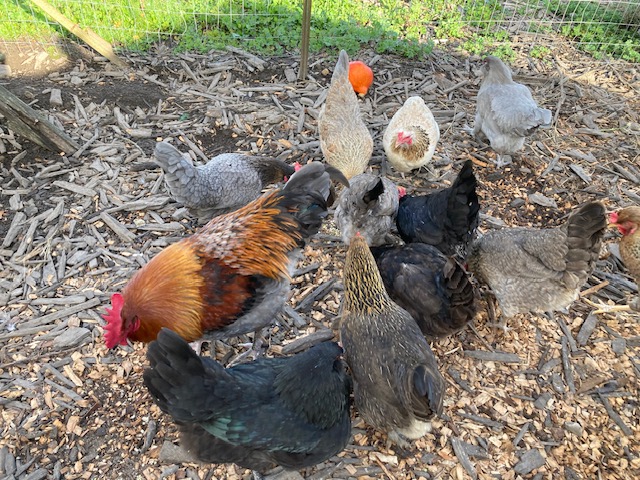
Breakfast in the safety of the Hen house

The news media bombards us and, like the chickens scratching in the orchard, we are half-primed for the pounce of a predator coming from the surrounding underbrush. For the moment, the chickens are safe from a resident bobcat on the hill as I will not let them into the orchard, but we may not be so lucky.

With each item of news about the shenanigans happening in the Happy House in Washington DC, everything we treasure about the Constitution is under attack and it takes more strength than I have not to be afraid of, and for, America. We can hardly glance at Gaza, the Sudan, and the world. But Europe, though teetering on waves of militant bravado has woken up. Germany has just elected a Conservative government – but the seemingly strong right-wing factor is licking its electoral wounds. Even Nigel Farage has toned down his bombastic spittle. A beloved friend in England who was beginning her new life in Scotland now thinks that her old home in the Australian Outback looks safer.

Thinking back into European and American History of less that a hundred years ago is like turning the pages on an old photo album. History, behaviour, and human nature mixes and re-emerges as a sea thrusting the waves of an ocean storm circling us again.

I’m thinking of young Vladimir Putin as a keen and dedicated KGB officer, committed to keeping all the surrounding principalities  herded into the USSR and then, under Putin’s watch, for it all to be upset by Mikhail Gorbachev giving back Ukraine and breaking up the Union of Russia so tightly bound by Stalin. An attempted coup – here is that word again – led to the dissolution of the Communist party in Russia and the USSR four months later. Heady and searing times for a young, ambitious KGB officer. At the same time another ambitious yet nervous young New York business want-to-be was struggling with paternal authority issues. Slipping into real estate with a million dollars, and the advice, “you’ve got to be a killer”, from his father Fred, he began. Among his successes were failures, both moral and financial but he kept playing the part until he became the business man he wanted to be.  But this smiling blustering crook took more than one serious tumble and that was captured and understood by an equally ruthless and ambitious, but more serious President across the continent of enemies. While Putin’s early bruising was from Gorbachev, and remembered for the rest of his life, the US President’s crushing bruising came later, in 2011 when an African-American president, Barak Obama, returned his fire at the White House Correspondents’ Dinner – these personal insults were never forgotten and maybe this was the night that redemption and revenge became the main drive of Donald Trump to rule the universe he knew.

Now these two men are playing on the world stage, ruthless killers and unrepentant deal makers. It is not a good combination for democracy.  Ukraine’s President Zelenskyy may be bold, clever, quick and right but crushing him and regaining Ukraine to Mother Russia remains an objective, with the candy cane of minerals and wheat for the taking. We who are older and watching what is playing out see a repeat cycle on the world stage and know that deep down all of this dog-fighting is personal. There are other young European leaders taking up the helm for Zelenskyy and Ukraine. Emmanuel Macron flies to Washington DC, sits at the right hand of the Emperor and gently laughs, humors and says ‘Ah but no no, it was like this’. The Emperor laps it up, enjoying the adulation of the younger man but will probably pay no heed to his words. Next will come the British Prime Minister, Chief Prosecutor for the Labour Party, Sir Keir Starmer, as devoid of humor and charm as Macron is full of it. He will play another hand, appearing to be ‘taking the President seriously’ while – maybe – we can never be sure with Sir Keir – again trying to guide the US president away from his deal making with Russia.

From The New Statesman

Zelenskyy, Macron, and Starmer are young men, hard working and dedicated to Democracy and a Free Europe but they may not be strong enough to turn the US President away from the skull crushing grasp of the Russian bear Vladimir Putin.

We watch the world stage from our rural corner of California, while looking at the effects of the games played by the boys in the Oval Office. What affects us close to home? What are the things we care about? Hard working families in fear of being torn apart, rangers from the National Parks fired, books banned from Libraries and Schools. 

We are older and need to tidy up our lives. We are not cleaning out the cupboards and barn stalls as we should be, instead have been writing of our work, our lives and worlds together and apart. There are family stories to repeat, cinematic history and community evolution to record. And for some lucky reason both Walter and I are managing in our own ways to remember, to write and to share our lives. Walter’s new book ‘Suddenly Something Clicked’ from Faber & Faber will be on bookstore shelves and Amazon in the UK in May and the US in July. My ‘Harvesting History while Farming the Flats’ will be scrolling out in a digital format for your Kindle in March, followed with a print version a week later. And even an Audio – as soon as I can get to it. Here is a little glimpse in the prologue of our life stories as they moved separately through the decades of our existence together.


After my husband delivered a lecture to a group of Danish Film makers and students Philip calls out, “The last question please,” and a young man stands up.

“Mr. Murch, with your work schedule and the traveling, how do you manage a home life?” then he sits down. Suddenly there is a deeper quiet in the room. Philip nods and raises his eyebrows, which always look striking with his large, round, smooth bald head. He nods as if to say, “yes this is a good question” and looks over at Walter. Walter pauses, not rushing, as he can, to answer with overflowing ideas. Then he responded.

“Truth be told I don’t. I am often on a project for a year, maybe longer, sometimes eighteen months, even two years – and in that time I may not know where I will be six weeks ahead. You will have to ask Aggie that question.” He smiles and looks up briefly before Philip calls out, “Lunch. We will reconvene in an hour.”

‘Harvesting History while Farming the Flats’ is my answer.

Available March 7 2025
as an ebook ISBN 9781960573544
Print ISBN 9781960573698
www.sibyllinepress.com

This has been A Letter From A. Broad, written and read for you by Muriel Murch. 

As always supported by https://www.murchstudio.com

666 Days and Counting

Written and Read for you by Muriel Murch with WSM by my side.
Stinson Beach from the Airplane, photo by WSM

Bump bump bump goes the United Airlines plane as we fly across the mid-west and over the Rockies, it is as if the plane is no longer sure what is United, and as for ‘flying the friendly skies’ that went the way of all bombers. We bumped until we didn’t – descending like a glider over the Point Reyes Peninsula, seeing our home stretch of California before heading back to land. 

As we were a week later than planned, there was no time to slowly unpack and settle in before the appointments all lined up. Day one, Doctor in the city, check. Day two, doctor in the country, check. Day three, The Department of Motor Vehicles, check, an Xray here, a medication pick up there and we are check, checked again – now hungry and exhausted. But it is barely late afternoon and as we are a little ways north we gratefully pull up at the Rancho Nicasio Bar and Restaurant which quietly stays open for those like us, coming home too tired and hungry to cook. It’s a small row, really all one building, and looking at it, it is always strange to think that this was going to be the center seat of Marin County. How would the county have emerged if that had happened instead of San Rafael? The bar restaurant is the biggest holding here, tucked beside it is the grocery store that was out of milk, and almost hidden by an overhanging oak tree in the corner is the post office. As we pull up and the boys walk towards the bar door, another car pulls in and smiling through her window is a dear friend that I haven’t seen for a year. She is here to get her mail – at the post office. And I too have letters to post. Another gentleman, whose name I can’t remember, also smiles hello to me, and I am reminded that this is what the postoffice does – weaving a vital thread through the community as folks come and go checking for their mail and on each other, even more than community libraries, they are places of and for community.

Our town, Bolinas – there, said it out-loud – has been without its post office for 666 days and counting. And we are counting, and marking it down, writing letters, going to meetings, in public and in private and hustling, trying to right this wrong. This town, and others around the country like us, little ones, with not too many people, may not be considered worth the time and effort needed to put things right. After all – how many votes are we? Though adding up a few thousand here and a few thousand there could make a difference. Meanwhile our long-suffering nearby neighbors make room for us at their post offices, where we take up space, make the queues longer at their counters, and mingle with their friends. 

The famous Bolinas 2 Miles road sign memorialised as an ornament.

As we drive home at dusk through the soft falling rain we can stop rushing. I can take in the twisted limbs, fallen trunks and greening pastures, the trees are shiny with their sparse autumnal beauty. The mud in these fields is not so dense and thick as that of small farms in England. The weather is not so raw, and the cattle are calving well on their own. The roads are glistening as streams cross them in a hurry, there are clusters of mushrooms sitting brazenly on the verges, tempting one to stop and venture into the woodlands. But we carry on home, grateful to have finished our day and be able to light a fire for warmth.

It is in the gratitude of sitting by the fireside that I think of those I have left behind in England for these months of relative comfort. The wars still being waged, erupting like bubbling volcanos, The Ukraine, Gaza – is there anything left of Gaza? and now the rock pulled away from the oppression by the Assad regime in Syria uncovering more cruelty than we know how to absorb. How can it go on? So many of us ‘of a certain age’ turn away in depressed horror and despair. A reader had asked Johnathan Freedland of the Guardian “How do we live in this terrible world?” and he tries – at quite a few column inches – to answer. But it is not easy – It is hard to put your faith in the goodness of our fellow human beings when we read of the horror of cruelty and the greed of those in power.

Catching up on old copies of ‘The Week’ I found a quote from President Barack Obama which seems to help. “At the end of the day, we’re part of a long running story. We just try to get our paragraph right.”

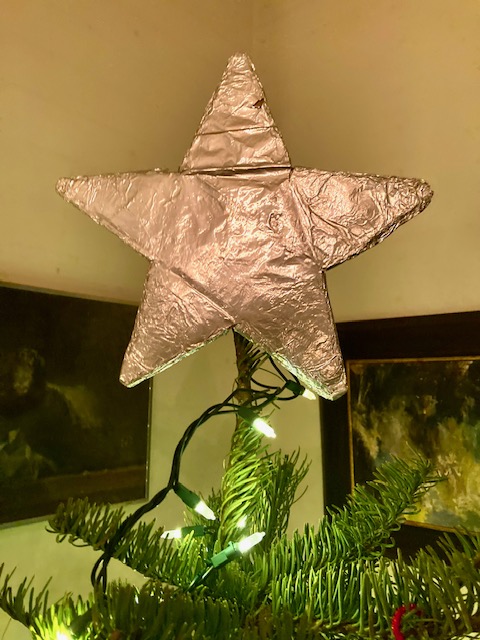
Our family Christmas tree star, going on 40+ years now

So with my paragraph I am sending out a prayer of gratitude for all the good people and things I know are here in our world.

Thank you for those who are trying to bring back our local post office. Thank you to those who are growing our food, caring for each other, those who are helping the sick, the family and friends who are suffering with illness and loss. Thank you to artist friends we know who  have risked so much to bring truth through story into our lives. Thank you.  

This has been A. Letter From A. Broad written and read for you by Muriel Murch

And supported by murchstudio.com

A Week Ago

A week ago on Wednesday.

Written and produced by Muriel Murch with WSM by my side

There was a stillness in the air – The cloud-shielded sky was hiding its sorrow that the world it was covering could well now begin to die. Conversations at the corner cafe were subdued and somber. Nobody was smiling, not even in greetings. Our American friend and neighbor and I sat together nursing our long overdue coffee moment. As we took time to catch up, he spoke of waiting for his Lithuanian passport. What in the world has changed that he is looking forward to a Lithuanian passport? 

Image by Urszula from Pixabay

A lumbering beast has come into the room, lurching forward, knocking against the chessboard where a game is forever in progress. The King has been moved and there is a new guard surrounding him. As the board shudders to a halt, the pawns in the front row of defense are jostling about, each seeking a square of safety. But there is little to be found. Even those soldiers who surround the new King will be knocked off the board before this game is over. 

Prime ministers and presidents across the world pick up their phones and press numbers stored on speed-dial. Who will they phone first, the incoming King or the outgoing President? They will make more than one call, many to be denied later in the press, for there are many corners of the board to be covered. For those – like the Taliban – who don’t have phone access, they can always post a tweet on the public notice board marked X.  Photographic coverage of war leaders shows a smiling Netanyahu and a serious Zelensky. Putin can’t keep the sly smugness out of his eyes while communication with President Zelensky is paused as support is reconsidered. The UK’s chief of defense staff said approximately 1,500 Russian troops were being killed or injured every day, while the 10,000 soldiers sent from North Korea are already suffering casualties. Now the United Kingdom is looking at its options. Possibly how to honor its word with support while changing what that support could mean. A bribe perhaps? Money rather than weapons – but there is no time for funds to become weapons.

In Gaza there are collapsed corridors of rubble where streets and buildings once stood, leaving families to scrape with their bare hands to retrieve the bodies of their loved ones. While the ‘surrender or starve’ policy has been denied by Israel, earlier this week a military official told BBC reports it had “no intention” of allowing Palestinians to return to their homes in Northern Gaza. There will be no cease-fire in Gaza. Israel will continue with its annihilation of that country.

That was the week that was – or was not – depending on your frame of reference. The English news media continue writing and scurrying around words and projecting policies while the politicians, in England and all over Europe, are shifting their papers and policies as fast as they can. The moral high ground seems to be sinking. 

I spent Wednesday and Thursday gnawing on my nails, shredding them to jagged uneven tops. Turning to the drinks cupboard, it was an easy finish of the almost empty sherry, whiskey, and gin bottles. There was not much in them to start with, but upending all three bottles of their dregs was telling. We look around and can only console ourselves with caring for each other.

Neal’s Yard Cheese shop in London by Frank Fujimoto

While politics plays out on the world stage, England continues to play out a mix of lorry-like thievery and home-grown purity. The world famous cheese market of Neal’s Yard Dairy was cleanly relieved of 22 tons of cheese in 950 wheels of cheddar valued at £300,000. While the police seriously consider deliveries to Russia or the Middle East, chef Jamie Oliver was more down to earth tweeting, “There has been a great cheese robbery. Some of the best cheddar cheese in the world has been stolen,” and added “If anyone hears anything about posh cheese going for cheap, it’s probably some wrong’uns.” 

Ah yes, Some of those wrong’uns for sure. But then there are the 5 % good ‘uns such as Paul Horton, the owner of Apidae Honey in Lincolnshire. Paul sells ‘proper honey’. Not like 90% of the honey tested from retailers selling to supermarkets – all considered suspicious by the British branch of the Honey Authenticity Network.

King Charles III at the Remembrance day Service. The Princess Royal next to him.

This weekend is Remembrance Day Weekend. For the first time in a  week the sun is shining. Whenever the date falls, the weekend Friday brings a ‘Festival of Remembrance’ at the Royal Albert Hall with the senior royals all in attendance. The service, filled with traditional music, ends with the first of the two minute silences as paper poppy petals fall on the audience of armed forces and civilians all standing to attention. On Saturday morning the Family comes out once more, leading the nation in remembering those who fought and died in the continued wars we fight. While we follow this remembrance here in England, it is played out in all corners of the British Isles and in Europe.

Sir Keir Starmer joined President Emanuel Macron for the Armistice Day Remembrance in Paris

For the first time since 1944, when Churchill was in Paris, Sir Keir Starmer joined the French President Emanuel Macron for the Armistice Day Remembrance in Paris. They stood together, Sir Keir with his red poppies, Emmanuel with his Blue cornflowers, both symbols of their country’s losses during the wars beyond the first. And in summer, in the cornfields of France and England, those two flowers, the red poppy and blue cornflower grow together, side by side amidst the wheat which is cut down in the harvest of bread and blood. The two minute silence was repeated in at 2 minutes to 11 on the 11th day of the 11th month.

This has been a Letter from A. Broad. Written and Read for you by Muriel Murch 

And as always supported by murchstudio.com

I ain’t’ done nothink

Written and recorded by Muriel Murch with WSM by my side
Eurostar from Rotterdam Station – photo by Beatrice Murch

Though paused along the track, the Eurostar train to St. Pancras arrived on time and we disembark. It seems to have been a full long weekend away in Amsterdam for musicians and young families. We had joined the train at Rotterdam after our grandson David’s 9th birthday and the best Dutch birthday cake ever, homemade by David and his mother. On the platform, those of us who are older, the grand-parent tribe, and the wandering poets are quickly passed by the young musicians and even the families struggling with all their stuff to gather and bundle up. By the time we reach the last turn into the exit there is hardly anyone with us as we pass the four customs officers standing together. They seem to be hanging out, just chatting, but as I look at them – and they don’t meet my eyes – I realize they have been looking at us all. First I wonder what on earth do they think we are carrying, and then I realize they are also looking at whom we might be carrying.

Slavery – indentured servitude – is still alive and well in Britain and Europe. The German far right politician Jörg Dornau employs political prisoners from the uprising against Aleksandr Lukashenko’s political re election in 2020. Dornau owns an onion farm in Belarus where around 30 prisoners work, many of whom, like Nicole who told the story, had been jailed on political grounds and for “liking” old social media posts from 2021. The prisoners sorted onions for roughly £4 a day on what Nicole described as a strictly voluntary basis. And the onions tasted good. They are the lucky ones. But the customs officers waiting to see the passengers leave the Eurostar train were watching for those not so lucky.

Emerging into the station proper we pick up breakfast essentials before heading to the taxi rank. This evening the queue is not too long and we shuffle forward at a steady pace. Naturally everyone is tired, looking at their phones and not speaking. But suddenly there are quick soft running footsteps, and a child’s voice shouting “I ain’t’ done nothink.” More running footsteps, a longer stride and a uniformed youth catches up with the child, who is clutching a brown paper shopping bag and still yelling. “Let me go, I ain’t’ done nothing.” Faces lift from the phones and those in the taxi queue look as the young officer catches the barely clothed child wearing shorts and a very oversized t-shirt. Now there are more footsteps, heavier as in regulation police boots, and six uniformed security policemen, all under the age of thirty catch up with their young partner who is barely holding onto the child still crying out, “Let me go I ain’t done nothing.” Then suddenly the air goes silent and it is over. Taxis come to the curb, the line moves forward, and as we wait three patrol cars with lights flashing and sirens ringing come to a screeching halt beside us. I marvel at all the adrenaline rushing through at least nine men holding one child. And the silencing of the voice that echoes Oliver Twist in 1837 – led on by The Artful Dodger, used and abandoned by Fagin.  What really has changed in almost 200 years? Not so much. Hardship finds us along many paths.

Flying high over the carnival – photo by Beatrice Murch

On the autumn Sunday afternoon in Utrecht we visit a carnival. It has popped up outside of a Jumbo shopping center and is an easy distraction for small children, and some who are no longer so little. We’re cruising, grandson David passes the candy floss as he leads me to this fishing hall, that shooting range, all the time with his eye out for the bungee jumping trampoline that looks terrifying – to a Granny. Suddenly there is his best friend from down their street. The boys are thrilled to see each other, the bungee jump forgotten for the moment while the mothers chat together. The afternoon ends with a closing-time visit to the big public library which is institutional but welcoming and impressive. I am – as Grannies do – sitting, resting and waiting outside when the mother of David’s friend approaches me. Bea has sent her over.  “Mum’s a nurse, ask her.” “May I ask you something?” “Yes of course.”

She is from Ukraine and has three children, two boys and one girl. Her husband has left her and they are now divorcing. The afternoon carnival is a cheap distraction for them together. Her long hair is matted, her clothes look to have come off of the floor and her sneakers are – for want of a better word – inadequate. The children are hovering, watchful, a little distant, protecting her as best they can. They are nervous of her speaking with a strange woman, even from their friend’s family. The mother had a little accident on her bike and her thumb hurts. Is it broken? Should she go to the hospital? But that means a four hour wait in the emergency room and she has three small children. In her state the slightest upset blows into a potential disaster. Softly I ask if I can touch her hand and she nods. I take her hand in mine and begin to gently feel here and there, bend the hand and fingers this way and that. Quickly I know that it is not broken. There is a little warmth suggesting the thumb is strained. I continue to hold her hand, for with the act of touching and receiving her, she begins to calm. I tell her about arnica gel. Seeing their mother relaxing, the children creep closer to us as we retrace our steps to the pharmacy. Which is – naturally – at 5.30 on a Sunday afternoon – now closed. But the young mother is looking better, more purposeful and with a little smile. The children cluster closer still around her as we said goodbye. The eldest boy shakes my hand, the two little ones smile and wave. They are grateful that someone had listened and received their mother. This little Ukrainian family have been in the Netherlands since before the war began.  Maybe they knew what was coming or maybe they just got lucky. Now it makes no difference. They are adrift and broken in a foreign country. Hardship finds us along many paths.

The conflict – pick any red dot on the map – in the Middle East – has pushed the Ukrainian War off of the page and the screen. Cold mud and snipers are not as photogenic as nighttime rockets and buildings ablaze. Rubble and body bags are more prolific in any of the states at war in the Middle East than in the Ukrainian villages on fire. This war has a published start date of October 7 but that cannot have been the beginning. Israeli solders are schooled that attack is the best form of defense, but all of those red dots – in Gaza, in Lebanon and beyond – do not appear as the work of a country defending itself. Back, back we go into history, Europeans and their pens, pencils and rulers, drawing lines across the desert, pointing fingers and saying ‘That will do.’ 

This has been A Letter From A. Broad. Written and read for you by Muriel Murch  

And always supported by murchstudio.com

The Sky is Crying

Written and Produced for you by Muriel Murch with WSM by my side.

“Look Granny, The sky is crying,” David says as he peeks out from underneath our umbrella. And we laugh because the rain is soft and light and warm and we know that it is just a little late May-time cry from the sky. And of course it is raining because the cottage windows have just been washed.

The park Elderflowers are bowed down with the rain

First I see his ladder, it wobbles as he perches it up against the study windowsill before ringing the door bell.

“ello Aggie – I saw you was back.”

“Perfect Chris – I have been thinking about you wondering when we would catch up. How have you been?”

“All right – middling you know.” And together we laugh as old friends do. Chris drives up from Sussex and parks his van somewhere in Camden. His tools are simpler now, an old wooden six-foot ladder that is wrapped in cloth and duct tape to protect the windows, a black plastic bucket, spray bottle of dish soap, window wiper, and cloth. He has a route of regulars through Camden, up Parkway and Regent’s Park Road before curling down through Primrose Hill until he has had enough for the day and can circle back to Camden, load up his van and drive home before the commute traffic gets too full. 

“You’re limping more,” I say to Chris, Such is our familiarity over close to 20 years that I can say such things. 

“it’s uh cyst on my muscle,” he replies. “Never heard of such a thing.” And he limps up and down the stairs. Chris is a London lad who, with his move to Sussex, has dipped his toes into semi-country living. He is old school and while he will go to the doctor he will not voluntarily step foot in a hospital. With Dickinsonian knowledge he knows well that you can die in there. As Chris does less for us – I pay him more. No longer able to hoist a big expandable ladder, nor not steady enough to carry our flimsy one upstairs, he no longer clears out the junk and leaves from our gutters. There was a time when he could reach the outside of the upstairs kitchen window and then help me replant out that lonely flower box. But no more. He can’t get up on the ladder and I can’t get onto the kitchen window ledge. About an hour in it is time to ask. 

“ Would you like a cup of tea now Chris?”

“Oh, wouldn’t mind at all.” And so I make the tea. Chris is close to finishing up but the tea must come as tea break – not the end of the job. With milk, no sugar, and two biscuits. Chris needs the break and I sit down beside him. It is time to talk over matters most serious. But before we start Walter comes up to say hello and goodbye.  Chris doesn’t quite stand up but returns Walter greeting.

“Morning Sir, you are keeping her well then I see.” While my husband chuckles his response I feel like an elderly dairy cow – still producing. But this again is our familiarity. Now it is time to get comfortable with our conversation.

Chris tells me of his sister in France – doing well with her family. And then it is on to politics. 

John Swinney is sworn in as First Minister of Scotland – Photo from Hollyrood

The Scottish National Party is doing the Highland Reel with their changing of the presidential guard – for a moment longer – the leading Scottish governmental party with the First Mister of Scotland, and have just chucked out their leader Humza Yousaf as First Minister. He seemed to go quietly – almost too quietly – some saying he fell on his own sword with his dismissal of a collaboration with the Green Party and then begging them back to no avail. Sir John Swinney steps up to the helm, saying he will continue Yousaf’s independence strategy. A brown man steps down for a white one – who – admittedly is apparently untarnished – unlike Nicola’s Sturgeon’s husband Peter Murrell or her mentor Alex Salmond, neither one as yet in jail for any financial slipping and sliding and who both look like 19th century Moreland farmers still eating beef in quantities over and above the necessary calories for sitting around in government houses. Stepping up to the microphone as the new first minister, Sir John Swinney is trimmer. At first this looks like a right old stitch up, but maybe he is a guiding tugboat bringing this limping ship of the Scottish National party into safe waters. It remains to be seen.

Prime Minister Boris Johnson with his dog Dilyn after voting at a polling station in London in 2022. (Photo: AP/Matt Dunham)

Meanwhile Chris and I continue, curling our lips in mock horror at the buffoonery of Boris Johnson showing up to vote in the English by-elections without any ID – a law brought in by his government under his watch – and his – “you’ve seen me with my terrier dog on a lead” – just does’t cut it. We shake our heads in mutual disdain. Now the tea is finished, and it is time for Chris to carry on along his rounds and we say goodbye until he comes knocking on our door again in a few month’s time. I will see him through the summer, with his little ladder propped up against the window of a rock and roll bar on Parkway.

As the by-election results come in we watch the Tory party begin to implode. Rishi Sunak holds a tight grin as he speaks and congratulates the few Tories who have held onto their seats. A photo-op occurs in an Indian Restaurant where he is filmed chopping carrots with such inefficiency that the by-standing chefs are biting their lips and holding a tight smile as if watching a child with a knife for the first time.  The Labour Party Leader, Sir Keir Starmer tries to look hard-working and casual as he goes about the country congratulating those who have worked hard on winning their labour seats. Poor man – someone should tell him that a white tee shirt under a jumper doesn’t suit every male figure. And all this hopping about the country for these by-elections puts the real business of government aside. The Conservatives are in the process of taking a whipping at the polls and government ministers are shuffling from one foot to another, not yet quite sure where to land and where to speak. 

But Foreign Secretary Sir David Cameron has stayed busy, and along with the French President Emmanuel Macron, committed money and arms to Ukraine while still trying to broker any kind of peace in the Middle East. Russia’s President Putin has plenty to say about that.

The student protests with Pro-Palestinian sympathies about the bombing of Gaza are growing around the world, each country’s universities going about their demonstrations in their own cultural way. On the campuses here in England, because so far there are no overt clashes between the students, the administration and police, they are not covered by the evening news. While the young students and some professors already know the cost of speaking out, they are prepared to do so. When asked by the Guardian columnist Nesrine Malik about the cost – of their education, their reputation – a student replied, “The students in Gaza don’t have schools to protest in; they don’t have medical care to be taken away from them. This is nothing compared to what they’re experiencing.” Could it be that this time it is the young of the world who can silence the guns of war.   

This has been A Letter from A. Broad. Written and produced for you by Muriel Murch

And always overseen by – beatrice @ murchstudio.com