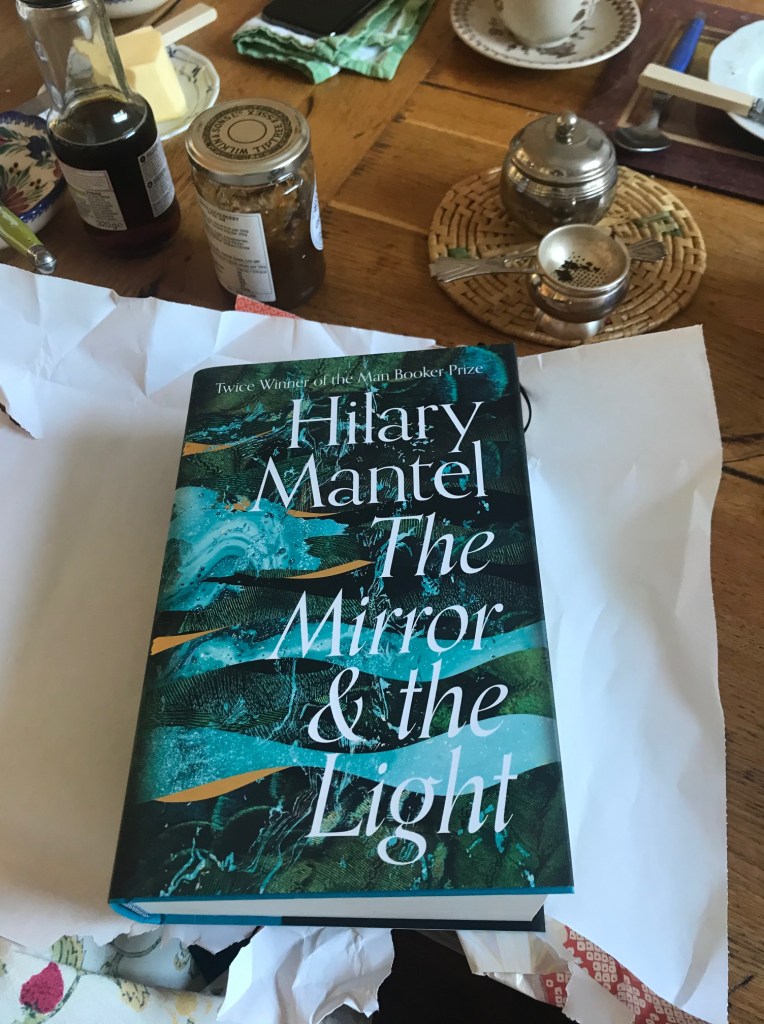
A book to read – one I had hoped would be more satisfying. So at 2 AM I lie awake and fuss wondering what – if anything I can say to the author. And how to calm myself? In times of unease, poetry always helps. Michael Ondaatje’s ‘A Year of Lost Things’ is on my nightstand, poetry with just a page or two of prose remembrances slipped between the stanzas. It is enough and for the next few nights I am lulled to sleep with the beauty of his words. In one section of remembrances, he writes of a friend who becomes the muse for a brother in ‘Anil’s Ghost,’ first published in 2000 and – as one thing leads to another – I search for the book in our local community library. There it is, I take it home and turning the pages am taken back to our 2004 visit to Sri Lanka.
Our visit had fallen easily into place after Walter’s teaching for ten days at the Indian Film School in Pune. Walter had long wanted to go Sri Lanka to visit the Green Memorial Hospital in Jaffna where his maternal Grandparents, Thomas Beckett Scott and Mary Elizabeth MacCallum Scott had, from 1893-1913, worked as medical missionaries.
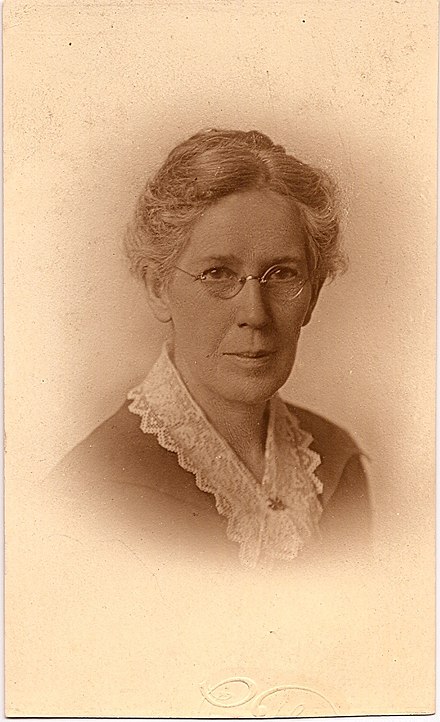
Mary Elizabeth was the first female doctor to work in Jaffna, while at the same time she birthed seven children and started the first nursing school in Manipay which is still in existence today. I wonder about her story, for Mary was the child of deeply Christian parents. She first trained as a teacher, then as a nurse before completing a medical degree in Kingston, Ontario, repeating exams at the Bellevue Hospital in New York. She was one of the first five women to receive a medical degree in America, but maybe getting a degree did not equal getting a job. Did that play a role in their decision to become medical missionaries? She reminds me of another exemplary woman physician, Dame Cicely Saunders, who founded the modern day Hospice movement. Dame Cicely also began her adult life as a nurse before becoming a social worker and then a physician.

But the Green Memorial Hospital is in the Northern province of Jaffna, a strong Tamil district and during out time the war was still active. Michael had guided us to the Kandalama Hotel, designed by his friend the architect Geoffrey Bawa and built into the hillside outside of Kandy. Edwardo drove us for five hours and that was as far as we got.
Everyone was very polite but clear, explaining as gently as they could that the troubles precluded them sending anyone with us to Jaffna and certainly not allowing us on the trains where murder was not uncommon. The Civil War that had begun in 1983 was ongoing and didn’t settle until 2009. We didn’t take it in – and in our ignorance remained enjoying the peace, the water, the birds, and the Buddhas, those hidden in caves, sitting or lying about – though never standing, and the Golden Buddha in Dambulla shining from the hillside across the lake. The Seven Kingdoms of Sri Lanka had been beaten almost into one, the two languages of Sinhala and Tamil remaining the tear in the Island’s fabric. The Portuguese arrived first, then the Dutch to harvest cinnamon and other spices before the British came trading Christianity for tea. It was all rather messy. This week, Sri Lanka welcomes Anura Kumar as their new Left of Center President. Namaste we say to you.

But we didn’t know much about this then. We were immersed in a new culture and beyond grateful for the opportunities and understanding that this time had brought to us. It wasn’t until now, re-reading ‘Anil’s Ghost’ that I came to a glimmer of understanding about what was happening, never mind why and to whom in this country. In an interview, Hilary Mantel, when speaking about history said, “I think novelists are alert for everything historians can find and verify, but also for something different, and extra; history’s unconscious, if you like. You try to grasp an individual’s moment-by-moment experience, as the tides of the past and present wash through them.”
And maybe that is partly why I feel so lost looking about me now. The wars that we are shown remain in the present tense. In Ukraine it is the old women well into their 80’s being packed up to leave their village homes. What can they take with them? Not the last of the harvest from their cottage gardens, the chickens still raising a brood of chicks, but maybe a blanket, a change of clothes, a photograph or two. In Gaza, Israel, Lebanon and Palestine urban rubble with shards of clothes caught on rebar are all that some survivors can find. The Israeli and Hamas leaders, lunging forward like attack dogs straining and then retreating, have been unleashed and given over to the pure fury of warfare and this latest weapon, of first thousands of pagers and then the walkie-talkies blowing up in pockets and hands. There will be over 500 dead in Lebanon before this letter reaches you. These are the things that weigh the heart down.
But meanwhile in our small country, the Annual Labour Party Conference is happening in Liverpool. The Prime Minister assured us last week that “I’m in Control.” We begin to wonder what exactly is he in control of? There is the matter of Sue Gray, his Chief of Staff having a higher salary than him. If she can keep everyone playing by an honour code of written and unwritten rules then good for her she has earned it. But can she? Digging for dirt the media finds that Sir Keir has a new box of tickets for the Arsenal Football season and a very nifty and expensive pair of glasses. The glasses follow his ‘I’m a serious fellow’ style but don’t look a whole lot better than my husband’s from the local pharmacy that cost £7.50. Then there are the clothes for the girls. Wife Victoria in a dress and Deputy Prime Minister Angela Rayner in a billowing too-bright green trouser-suit, both from the new up and coming English fashion house MEEM, look quite smart. But the women beside Sir Keir, Deputy Prime Minister Angela Rayner and Chancellor Rachael Reeves, also looking very smart, need to learn to say their lines without glaringly staring at the teleprompter, widening their mouths with animated articulation. They look like a python getting ready to swallow a sheep, and it could be that ‘we the workers’ are the sheep. They are pushing their vocals in a bid for political authority afraid that any other womanly tone will sound weak.
In Fred Zinnemann’s 1966 film ‘A Man for All Seasons’, Paul Schofield who plays Sir Thomas More, converses with Richie Rich played by John Hurt. Earlier Richie had asked More for a place in Court. More declined, suggesting Richie become a teacher. But Richie gets his place and a golden Goblet. At the river’s edge, More sees the Goblet, looks up to Richie “For Wales Richie, For Wales?” Richie’s shame and humiliation are clear on his face. The cup is dropped into the river.
I don’t see football tickets being returned but maybe fewer parcels, with the compliments of … will be accepted or signed for on the steps of number 10 Downing Street.
This has been A Letter From A. Broad. Written and read for you by Muriel Murch
And always supported by https://www.murchstudio.com

 Muriel Murch