Decisions,
It started with relentless knee pain that would not go away and it was time to see a doctor. Mr. Mazin Ibrahim took one look at my walking and, with experienced confidence, says. “It’s not your knee. It’s your hip, it’s completely worn away and here are the X-rays to prove it.”
It was a slow dance, back and forth, a cortisone injection to the hip, an appointment with a fantastic physical therapist, another determination to lose weight, and for a month or two the cortisone worked – until it didn’t. The pain returned and with it the realization that it was time for ‘The Decision.’ As I begin the emails, phone calls the explanation of schedule, the booking, the payments and the appointments, I have to accept I am on the other side of the nursing desk. Each time I said “I am a nurse too” I can see my nurse dance partners take a deep breath and guide me to their agenda. As Mibaba, the diminutive Philippine nurse, goes through the detailed admission her voice lifts with a musical “Mam” at the end of each question. Before she is finished, she is asking for a full report from my cardiologist. There is no stone this young woman left unturned. Eventually satisfied, she leads me along the corridor where I see a pair of leather-shod feet which I know, just by the way they are pointed, belong on the end of long legs. Mibaba introduces me to Desmond, from Essex and Uganda. He is tall and, as an orthopedic specialist nurse should be, light on his feet. He has seen it all before and fielding my “I’m a nurse too,” slipping into the nurses’ banter and humor. He is laughingly professional with deep knowledge and warmth and we exchange phone numbers.
It’s a 7 a.m start as we arrive at the brightly lit entrance to the Princess Grace Hospital. A cheery Scottish receptionist checks me in, all my paperwork and payment is in order. In the reception area we are joined by other couples. One by one, we are picked up by out admitting nurses and taken to our own private rooms to change… Walter helps me settle in, and himself to the waiting ahead.
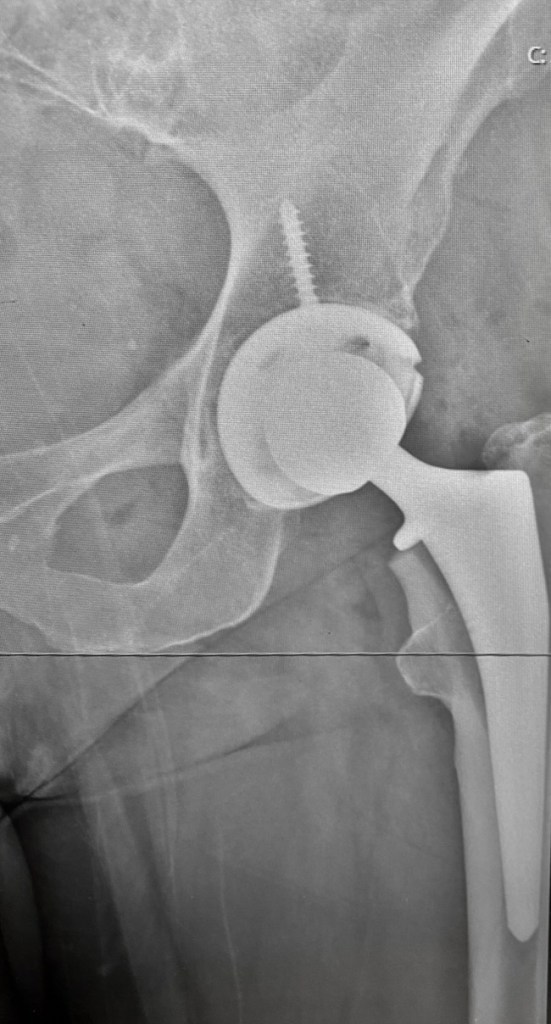
Two attendants come with a gurney and I am slipped onto it. The basement is where the action is, the corridor so narrow that there is only room for one gurney at a time – one in, one out. The door to the surgical suite is open and two men are still mopping the floor as we wheel on past them to a blunt-nosed tiny tool shed. There is just room for the gurney to slide in, with the tool benches all around. “Anesthesiologist” He shouts at me through his mask while pointing to the words on his cap. There are two of them, both Indian, both male, doctor and nurse, a team dancing together as they prepare their next patient for the umpteenth time. Sit up, legs over the edge of the gurney and, cradled in the safe arms of the young nurse who holds me as the anesthesiologist calls out, “Don’t move. Be still”. Now this gurney is wheeled into the newly cleaned and mopped surgical suite. There are fresh big blue containers of sterile equipment, the all-male team also clothed in blue, among them is my surgeon, ready to help hoist me from the gurney onto his table. ‘Wait” I want to say, “I haven’t lost enough weight.” Then an oxygen mask covers my nose and mouth and I’m out.
Back in room 312, Walter is waiting. He sits quietly, watching over us all as I look at my numb legs in my big diaper, “better than a catheter” and I have to agree while watching and participating in the incredible disposable waste that clogs our planet. Day moves to night and back to day. Walter walks across the park from home to hospital and back again. Nurses and therapists, their voices blending in a symphony of all those who make up the serving faces of England today, come and go. Dawn is late while, carefully watched, I get up to the bathroom and wash before a reasonable pot of tea shows up at 7.30 with breakfast. My bladder is working unaided – for which I am truly grateful. As a liquid laxative is washed down with an oral suspension of Morphine I am dimly aware that they might not be the best of dance partners. It is not until the next day when Saturday’s supper returns with a vengeance that everyone gets serious about those absent bowel sounds and my discharge is postponed.

The physical therapist pops in to tackle up and down stairs, and so we go up and down the stairs with no problem until the last dose of morphine kicks in and I slide into a chair. Well if this is a way to change this dimension for the next – it’s fine with me.
Then home, bags of drugs, wise unheeded words from the nurses ‘Don’t let the pain get ahead of you’. And I leave the safety of their care. The world of nurses, these are the voices I want to hear. Melodious, musical and on the brink of laughter if you are someone who would let that in.
Back at home there is warmth by the fire, a kind and willing helper for all things, those exercises to be done and the pain iced away. Walter is ever-vigilant as friends come bearing meals. With such care it takes only a few days to accept that this was the right decision and I am going to get better.
October chilled into November and there are distractions. November 4th was an election day in North America. There were celebrations from New York as Zohran Mamdani is voted to be the new Mayor, redistricting passes in California, and governorships going to Democrats Abigail Spanberger in Virginia, and Mikie Sherrill in New Jersey. All this on the night before we sit together watching the fireworks from the remembrance of Guy Fawkes who tried to blow up the Houses of Parliament in 1605. The King and Crown also chose this time to banish Andrew Mountbatten-Windsor, to the dark forest of Norfolk. From the depth of next January he will call a corner of the 20,000 acre Sandringham Estate home. It is time to start sorting books from bookshelves and suits from his wardrobe.
While I write, the United States President has risen up from 20,000 leagues under the sea and murky waters of the Eastern Seaboard. Not content to wave his tentacles across the American media, crushing those who displease him he has, in a circular sweep with his pal Benjamin, now focused on the BBC. Searching for a hook which which to snare this big fish they have found a questionable editorial choice from an October 28th Panorama Program last year about the US President.

The hook is tightly embedded, heads have rolled, and the mighty organization is left rudderless with no captain or first-mate to hold the ship steady. Another decision is to be made, apologize or stand firm, or even let the Government make this decision for them. Pontus Pilate did not have it any easier.
This has been A Letter From. A Broad Written and read for you by Muriel Murch with WSM by my side and as always supported by Beatrice from MurchStudio
 Muriel Murch