Unlocking the Door

Recorded and Knit together by WSM

There is a recognizable trait sometimes found in business. The person in charge creates a problem. Their problem becomes “the problem” and it can take many attempts before they find a solution. We are here now as Prime Minister Boris Johnson proudly lays out a rally road-map and we hear the engine rev, and the gears engage as we ease out of lockdown and into sunshine. Over 17 million people in England have had at least one dose of a vaccine and already this has brought the number and rate of Covid infections down. There is a schedule for the reopening and testing for pupils and staff in schools. Non-essential shops and restaurants and even pubs have their tentative time-table. We will ‘Follow the data, not the dates’ is the new catch-phrase out of Westminster. Maybe the most touching item is that residents in care homes will be allowed one designated visitor and may hold hands. Boris Johnson and the UK government want to make sure that we come out of this lock-down and stay out. The physical and mental deterioration, never mind hair-care, is visible in everyone.

Watching some of the solitary men and women that walk through our little street, I wonder how they are feeling? We wave and talk when we can, helping each other by this small interaction. I continue to bake but have to watch how much we eat. So beginning at Christmas, I make up little packages and plates to pop into the hands of ‘a lady or gentleman passing by’.

The men respond with poetry. Roughly hand-written, and carefully thought out, they pen notes that are lyrical and heart-felt and pop them in our letter-box to smile at me from the mat. Of course Eastern European Mick, of few teeth – but a growing beard – quotes Mendelssohn. We first met Mick at the Belgo Belgian Beer restaurant on Chalk Farm Road. It was sweet to recognize him as one of the monk-clad waiters, and he would grin his shy, sheepish, smile. But both Belgo and Mick have lost out to Covid. The restaurant has closed and is likely to only reopen one from its chain of six. And wherever Mick landed, that closed too. Jobs for the Micks of the city will be hard to come by.

Howard, long retired as a tennis coach in Regent’s Park, totters through, making his way to the new Morrison’s supermarket. I like to believe that as he sits at his kitchen table, a mug of tea and the crumbling shortbread biscuits at hand, he enjoys writing a verse to deliver when he next ventures out.

This week Alexei Navalny again stood in the dock in Moscow’s law chambers. His appeal was denied and he remains sentenced to two and a half years in prison. President Putin hopes that by jailing Navalny and throwing away the key, that will be the end of that. Navalny may well die in prison and, at the very least, his supporters will wait out the winter before beginning big protests again. There will be little more news from Russia unless – something happens. Putin dismisses the importance of sanctions from the West portraying poor little Russia as being put upon by Europe and North America. 

Focus does remain on Myanmar – for the moment – where protesters continue with their opposition to the military forces that seized power after the elections three weeks ago. The military threats of using deadly force against the protesters are no longer threats, and this weekend funerals were held for the first three protesters killed by the military. A friend with contacts in Myanmar says that the activists are very well organized and, for the most part, safe. The internet continues to be shut down nightly and for several hours into the morning. But the military trucks announcing the ban on gatherings of no more than five people don’t seem to be working.

The first Funeral

COVID or no COVID – Brexit is as Brexit does – and the financial capital that was London is beginning to crumble. “Where to next?’ cry out the banks, brokers, and financial institutions? I think back on the money-cities of ancient times; Rome, Venice, Amsterdam when ships, laden with goods and gold, sailed from port to port. Now trading is through the internet, as companies, like nervous frogs into a pond, jump away from the danger of taxes and excessive regulations. Amsterdam is stirring and their real-estate prices are rising as businesses lure Europeans to the canal shores. Senior executives from HSBC are having their bags packed for them as they scroll through pictures of high-rises, well above the protesters, in Hong Kong where they see profits gleaming in the city’s bright lights.

Last Tuesday the Duke of Edinburgh, who had been feeling a touch unwell, was admitted to a small, private hospital in London. On Saturday Prince Charles drove down from his Highgrove home to visit his father whom he had not seen since Christmas. He was in and out in half an hour and clearly moved as he left the hospital. The Duke is two months shy of his 100th birthday and is ill beyond that than an aspirin and a nap will take care of. What do you say to your wife, to your husband, when this moment of parting comes? Is there an iPad by his bedside with which they can stay in touch? Prince Philip will want to be left alone to heal or not as his body dictates. He will remain in hospital into this week as doctors act with an “abundance of caution” for which we are grateful.

This has been a Letter from A. Broad. 

Written and read for you by Muriel Murch 

First aired on Swimming Upstream – KWMR.org

Web support by murchstudio.com

World Markets

Recorded and Knit together by WSM

When I walked up and over the hill to the Saturday’s farmers markets in the play-yard of St. Paul’s School on Primrose Hill Road I took a detour to a stand of shrubs that has been left to grow on the hill. The outer tresses are vines of sweet and plump blackberries, and I have a small container-full before I head down the back side of the hill into the market. Volunteers are still at the gates, watching who goes in, helping with a queue if necessary, and giving us all a squish of hand sanitizer as we enter the school yard.

What is it about markets? We gather at them as at an oasis for life. A community without such a market feels depleted in a deep way. There is rejoicing when a new market is established and a sadness when one dies.

Borough Market London Photo by WSM

It was probably in the early 1980’s when my mother first said “Come on Saturday and we can go to the market.” There was now a weekly market set up in the Ghurka Square parking lot of the Fleet town library. There were stands selling tools, some of which definitely looked as if they had fallen off the back of a lorry. There were stalls of fruit, vegetables and a small garden shop with its racks of plants, all of whom my mother would barter with, much to my embarrassment, but not to hers. The stall owners knew that they would lose nothing in giving her a bob or two off, and she would happily be back to shop with them again the following Saturday. The butcher and fishmonger, Mr. Driver and Mr. Harden, both taking over from their fathers, brought vans to the market to sell fish and any game that had come their way during the week. Being on the edge of farmland and the countryside there would be plenty of pheasant, rabbit and hare, in season or not. My mother would meet old friends, and though it was no longer the genteel coffee house moments of Mrs. Max’s Cafe it was another way to say hello and check in with each other.

These early markets had a flair of the fair about them, with the sharpness and quickness of traveling people. It was a racy flavor not usually found in the quiet suburbs but one I came to know in the old Inverness Street market in Camden. Now we have the Primrose Hill Saturday produce market and it suits us as I can chat with the organic farmers from Kent and beyond.

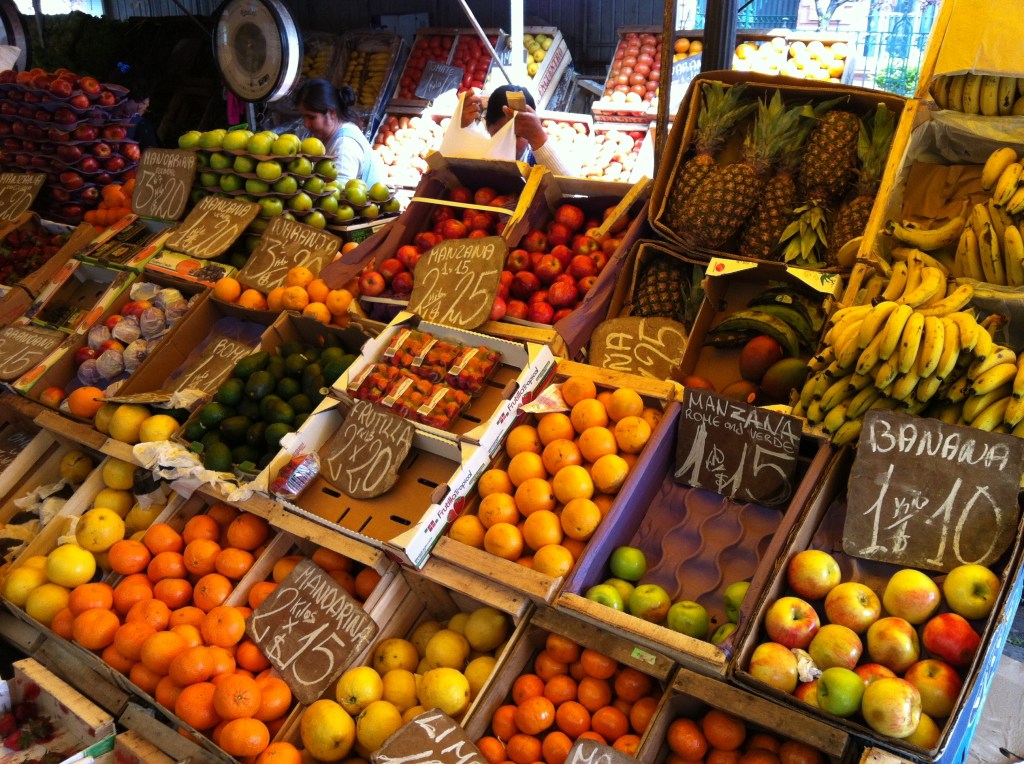
Buenos Aires San Telmo Sabado market

Who holds the keys to markets? For there always is a gate keeper, and not all are as amiable as the volunteers with their hand sanitizer at the St. Paul’s schoolyard entrance. What is it you have to sell and who you might serve or upset plays a part in selling pheasants or films.

The arts, and culture, are being particularly challenged within this Covid-19 crisis situation. The film business is hopping up and down, deals are being struck, contracts withdrawn, to produce, not to produce, to screen, not to screen and Coup 53 which was ready for release at the end of 2019 has been caught in the middle of this jammed water-way and was close to drowning in the river mill-stones along the road to distribution. But Todd McCarthy wondered in his article in Deadline if there was more going on with this film? He writes “At a moment in time when documentaries are in greater favor, and more widely accessible to the public than ever before, it’s both disturbing and ironic that the most enthralling and revelatory documentary I’ve seen over the past year hasn’t yet found a clear path to the public.”

There could be many reasons why mainstream streaming and cinema art-houses have not picked the film up yet for their own pockets. Is the truth of the UK and US involvement in the take-down of Iran’s democratically elected Prime Minister Mossadegh too hot a topic at this time? It could seem that this is so.

Now the film makers have joined a new venue of online viewing. Using the streaming platform eventive.org, Coup 53 will be released in several countries and continents on August 19th and be available for viewing for several weeks thereafter. I don’t actually know how it works but I do know it involves virtual cinemas which are set up by cinemas and other parent organizations, such as KWMR.org. Another leap into the unknown for these film makers, enticing the truth-seeking and curious audience to follow. The newspaper press have already begun writing their stories and in the weeks to come there will be more. In the Sunday Observer newspaper a full page article on Coup 53 has pushed Boris Johnson off of page three onto page five, and Steve Bannon onto page seven.

U-turns and unclear explanations have led to endless chaos and a painful week for Boris Johnson. Even the Honors list has heads spinning and thinking of the saying “Keep you friends close but your enemies closer.” The list of knighthoods and peerages bulges and instead of ‘Off with their heads’, the House of Lords will now be crammed with 800 Lords and Ladies of the Realm. Maybe our Queen can delegate this investiture to Prince Charles who has a swift and steady hand with a sword. Who has been ushered upstairs? One is the cricket hero Sir Ian Botham, who was a staunch Brexiteer. Brother Jo Johnson is moved out of harm’s way into the House of Lords. Philip May, husband of ex-prime minister Theresa May for “political Service” by just getting his wife out of the door of Number 10 and into the limousine during her time in office. And let’s not forget a nice Russian. Mr. Lebedev, whose dad, since we were talking of spies, was a former KGB agent. Now Mr. Lebedev owns the Independent and Evening Standard newspapers – and has been a good friend of Mr Johnson’s. All of this announced on the second day of August when parliament is no longer sitting.

They have gone on holiday. Fewer ministers will travel overseas, but may be seen in shorts and sun-screen licking an ice lolly at a fete in their own constituencies throughout the country. Let’s hope they have plenty of sun-screen, for the temperature is about to get hotter.

This has been A Letter From A. Broad. Written and read for you by Muriel Murch.

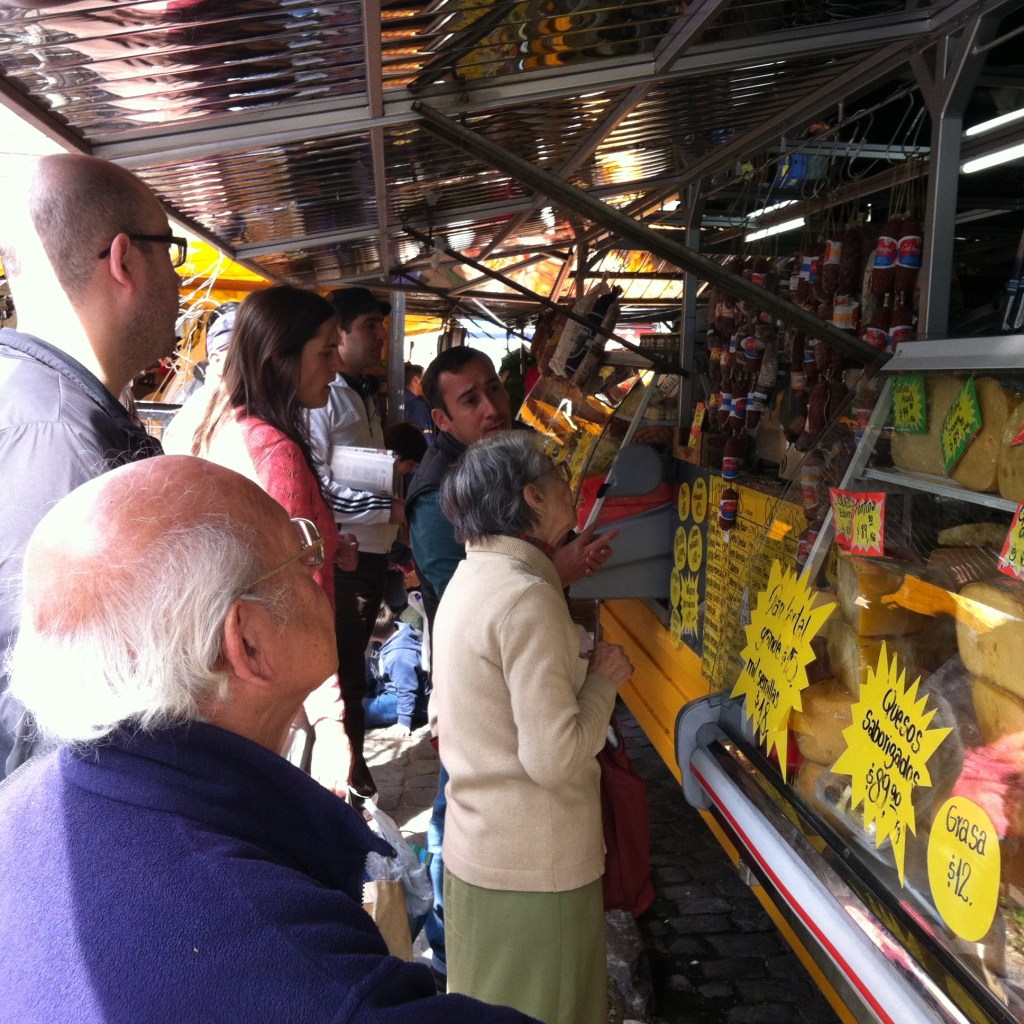
Buenos Aires San Telmo Sabado queso market