Remembering Oscar

Written and Produced for you with WSM by my side.

In 1978 the film Julia was nominated for 10 Academy Awards. Directed by Fred Zinnemann, the film starred Vanessa Redgrave, Jane Fonda, Jason Robards, and – Meryl Streep in her first film. Walter was among the nominees for the editing. Of the ten, Julia won in three categories; Jason for Best Supporting Actor, Vanessa for Best Supporting Actress, and Alvin Sargent for Adapted Screenplay. A few weeks earlier, the BAFTA awards in London had yielded a slightly different crop of awards from its ten nominations with Jane Fonda winning for Best Actress, Dougie Slocombe for Cinematography, Joan Bridge for Costume Design, and Producer Richard Roth for Best Picture. My mother and her pals, whom we had invited to the BAFTA awards dinner with us that year, also scored. With postwar frugality, she and her friends refused to leave opened bottles of wine on the table and so – to my total embarrassment – six bottles were deftly pocketed into Gabardine macintoshes and mink coats.

Hraybould, via Wikimedia Commons

My mother had decided we were being far too serious about the whole awards business and wanted to liven the evening up a bit. “Why it’s just like a school prize giving”. And – as she often was – she was right. But looking back that year on Julia, spent in England having all four children with us, was for me the best of those film adventures that we shared. And when Julia came to an end and was received with critical and box office approval, we kept Fred company going to a few of those awards dinners, bolstering him in the disappointments and learning a thing or two about how the awards machines are oiled and work. At the Directors Guild Awards dinner, Fred quietly whispered why he believed he would not win, while we could see that he did ‘oh so want to’ – just one more time. Woody Allen won for Anne Hall, beating out George Lucas for Star Wars, Steven Spielberg for Close Encounters of the Third Kind, Herbert Ross for The Turning Point, and Fred with Julia. I’m sure I wore the same outfit – a long pale green dress with no particular flair, more discreet than outstanding, but a dress I felt safe in. By Oscar night, because there had been so much political publicity, we were all nervous. Fred nervous from his long-standing knowledge of Hollywood and its people had a saying, “I met him in 1938.” Meaning I know that type and that style. Our nervousness was because we didn’t know our way around this particular Hollywood. Vanessa Redgrave’s nomination for Best Supporting Actress was already causing a stir but she didn’t show any nervousness. The Jewish Defense League had openly objected to her nomination and were picketing that year’s Oscar Ceremony. Vanessa had narrated a film, ‘The Palestinian’ which was critical of Israel’s role in the conflict between Palestine and Israel – then – in 1977. Vanessa’s acceptance speech did not disappoint. There were boos among the applause and Vanessa never returned to work in Hollywood again.
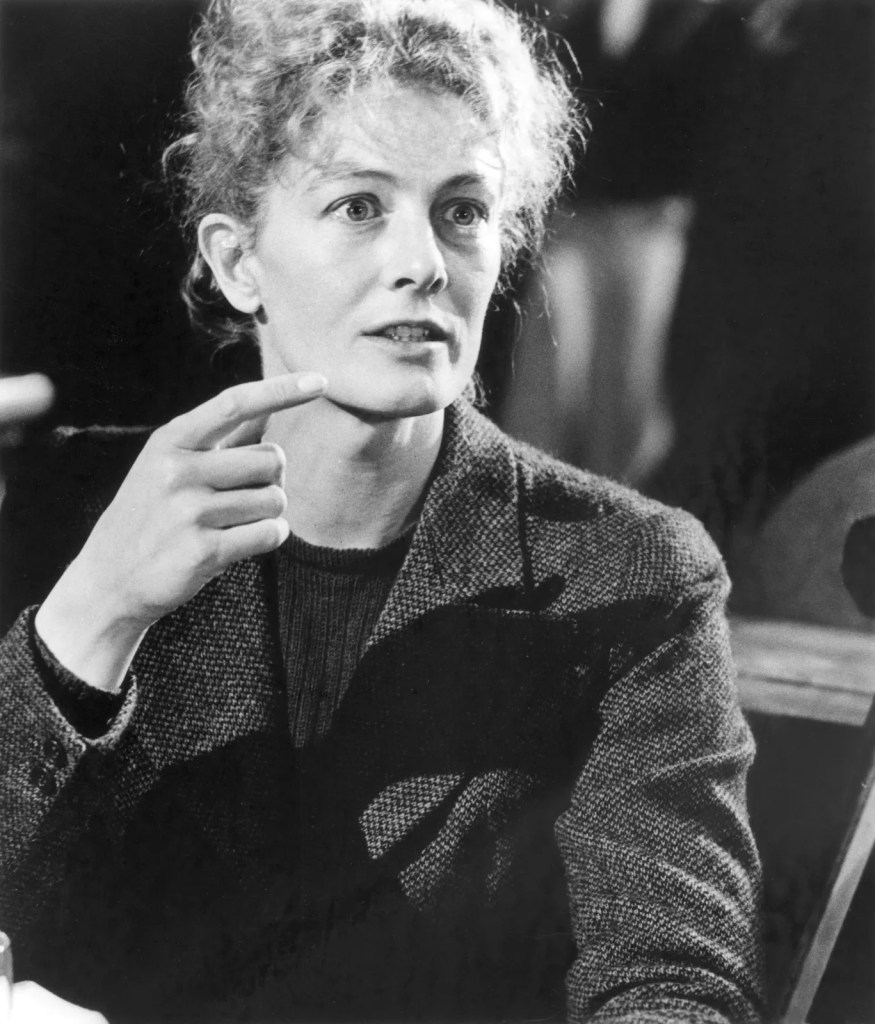
Vanessa Redgrave as Julia in the film of the same name. Directed by Fred Zinnemann 1977

Looking back on that year, and the politics that were uppermost in so many minds, it is hard to accept where we are now. Everything seems more – nothing seems less – and it is frightening for all of those paying attention. 86-year-old Vanessa, and others who have hit that 80-year date, still struggle and sometimes succeed to put the political and artistic work in a perspective that encourages those who follow. Looking back at that seemingly innocent time – but that was not – we are grateful for the work opportunities we had, and the friendships that grew and formed from mutual respect and bound us together. The friendship between Fred and Walter lasted up to and through Fred’s death. On an April spring afternoon in his office, Fred said, “I’m feeling a little tired. I will rest on the sofa.” On his own terms, it was a wonderfully discreet way to leave.

It seems like it has been raining on and off for weeks. Huge clusters of ladybugs have come inside in record numbers, finding their own warm spots, close to light bulbs and on my desk. The farm is saturated to sogginess. Overflowing water scurries down from the Mesa and bounces out from shallow ditches to collect in the fields, puddling in the low spots until it finds its way to another ditch flowing back to the road and beyond. It is as if the farm cradles the water, rocking it from one roadside to the other. The small roadside streams along the road into town are thick with mud pulled from the hillsides and I can’t even see the watercress that was just beginning to be ready for harvest. Now the Wolf Moon has arrived – gentle and mild while as bright and strong as the headlights from the harvesting trucks crossing the fields at three in the morning. The trucks bounce along, with their headlights shining into the hayloft waking me to watch them. I think of them, the drivers and the pickers, rolling out of bed at 2 am to gather the harvest and drive it to its destination by lunchtime. 

Jan 2024 Wolf Moon over Marin by Clint Graves

“Aggie’s breeding frogs.” says one friend to another when we meet in Point Reyes. His friend smiles, and she is not too sure what we are talking about. It is the night-time chorus from our hopelessly disused pond. Somehow – for all of my neglect, water gathers and holds within the reeds, rushes, and Irises and the little green and red-legged frogs settle down to call out to each other. It is at a particular moment in the rainstorms – as if the moonlight on water truly beckons them to sing and mate. There are more, bigger bodies of water up on the Mesa of our town, and for those living close by, the chorus is deafening. Recorder in hand we walk quietly along the driveway but still they hear us. Slowly, then suddenly, all is quiet again as they wait us out. We must leave before they start their singing again. 

Even as we slosh about in our boots outside in the dark this song of the frogs brings a smile to all our faces, begging relief from the horror of the wars’ continuum. Here in a failing pond, is a place of renewal and a sign of hope. 

This has been A Letter From A. Broad. Written and read for you by Muriel Murch 

Rain Stops Play

Recorded and Knit together by WSM

The third week in May – and it is still raining steadily. Umbrella in hand, it was time to take the 274 bus into town. The bus was already half full, so I sat upstairs to look down over the London streets and see a group of young Asian men, carrying their hefty bags full of cricket gear on their way to the park. One is already dressed in his Cricket whites. Do they dream of one day playing in the holy of holies, Lord’s Cricket Grounds close by in St. John’s Wood? Founded in 1788 by Thomas Lord, the grounds were moved at least three times before settling into this corner of Marylebone. Noted historical progressions through the years included that in 1864 the purchase of a lawn mower removed the need to keep sheep. Those young men I saw from my bus would have been in the grounds where my father was a member for all of his adult life.   

I arrived at the edge of the city to where, even with the soft rain falling, the pubs’ and restaurants’ outdoor tables are full. Most shops have been opened again on the Marylebone High Street, but with some noticeable gaps where high-end English brands used to sit proudly on their corner lots. They were always just out of my price range and I am not as sympathetic as I could be. 

On Monday, more lockdown restrictions were eased but we are going slowly, being sensible, as the health Minister Matt Hancock urges us all to be. But maybe there will be some lightening of the infection load that will bring this, and other countries, safely out of hibernation.

Every country is looking at what their government could have done better, safer, faster to save more lives. Doors, gateways, air pathways and sea-channels have been opened and closed with speeds that relate to the economy as much as infection rates. All governments have behaved badly to various degrees. There have been profiteers and deals of equipment, and devious deals of no equipment. Last week the head of a pharmaceutical firm in India fled to London after failing to provide more affordable vaccines to his own country. The blame? Already shifted to Narendra Modi, India’s Prime Minister for not booking ahead and placing his order. The high numbers of infection rates and still low numbers of vaccines are struggling to meet on a world-wide level. 

Over this year and half, the COVID-19 virus has been named and shamed as the Chinese, the Kent and now the Indian variant and – as it was named – so it fled to greener pastures. It must have been obvious to any epidemiologist that the Virus would change and mutate as the opportunity arose. That’s what viruses do. They are as opportunistic as all living beings. The Times newspaper estimated that at least 20,000 passengers from India were allowed to enter the UK because there was a trade deal in the works and a little hop to India would have got Boris out of his wallpaper dilemma . The Daily Mirror called Boris Johnson’s delay on closing travel from India another unforgivable ‘Own Goal’. 

Covid Memorial wall in London

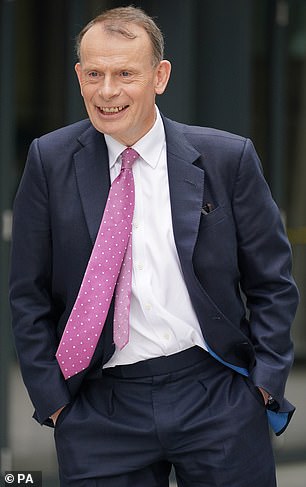
Another news item broke this week, one that many of us have been looking for. Andrew Marr, the BBC political broadcaster, whom we regularly watch with a Sunday Sofa breakfast, said he may leave the corporation so he can share his true views on politics. Speaking in Glasgow with the Scottish journalist Ruth Wishart, he said, ‘At some point, I want to get out and use my own voice again. How and when, I have no idea …. There are many privileges of working at the BBC, including the size of the audience and all of that, but the biggest single frustration by far is losing your own voice, not being able to speak in your own voice.’ Constraints such as this are a knife edge that all paid journalists must traverse, admitting the constraints is another.

Andrew Marr – smiling

For eight days and counting we have watched Israeli airstrikes and Hamas rocket barrages that have killed over 200 hundred people, the vast majority of them Palestinian women and children. Hospital buildings, schools and media centers have been bombed to rubble with Palestinians running, searching for their dead children. The heavy metal disparities are impossible to ignore. Prime Minister Benjamin Netanyahu gave no justification for targeting the 12-story press building in Gaza, though later claimed that Hamas had an intelligence unit inside. No news organization using the building had seen evidence of Hamas presence. He went on, “Israel’s military operation against Palestinian Hamas militants in Gaza will continue with full force. We are acting now, for as long as necessary, to restore calm… It will take time,” Mr Netanyahu warned. Time, to right which wrong?

Vanessa Redgrave in Julia

1978 was the awards season for the film Julia, directed by Fred Zinneman and staring Vanessa Redgrave, Jane Fonda and Jason Robards. Julia was up for eight nominations including for best editor and so we were there that night. Sitting aways away, (Walter’s chances of winning were not considered high) Vanessa looked very young, and alone as she scampered up onto the stage to be greeted by an even bouncier John Travolta. Graciously she accepted her Oscar and then spoke: quietly, politely but with great purpose, her memorable speech denounced what she saw as the Zionist disturbers of that time. That speech cost her a full blown career in Hollywood, thus allowing all of the richness of her work in the cinematic and theatre arts to flow through different channels. Listening again to that speech from 1978 while looking to the now scant news screens, tragically darkened by this new wave of Israeli and Palestinian bombing of the land that is Gaza and Holy – I wonder when will the world be able to bow our heads in prayer – together again.

This has been a Letter from A. Broad. 
Written and read for you by Muriel Murch 
First aired on Swimming Upstream – KWMR.org.
Web support by murchstudio.com