The Salon Season

Written and Read for you by Muriel Murch with WSM by my side

The Salon Season is here.

Storm Amy came and went, whipping the wind high and hard through London bringing down the first autumn leaves, but walking our mile canal loop the water was dark, clear, the overhanging trees holding their gold and russet leaves hidden for a little while longer. But other great trees have fallen. The quiet passing of Jane Goodall while still working was as if she left on a broomstick, while telling us to get on with it. Jillie Copper, an author known as the queen of the bonk-buster, gathered up her skirts as she swirled out the door. Diane Keaton quickly followed after them. These women, so dissimilar in work, all shared their passionate love of dogs. Surely a light example to find that which unites us.

Sarah Mullally photo from Wikipedia

Another woman has been called forward. Sarah Mullally has been voted as the new Archbishop of Canterbury in a church that still is allowed to teach that men should have authority over women. It has been six months since the Right Reverend Justin Welby resigned over not paying due-diligence to the problems of the church. Due-diligence to problems; something that all heads of church, state, and police struggle to maintain. But Sarah Mullally is also a nurse, and as she moved to further embrace her faith, taking up the role of priest, then bishop, she is mindful of the division her appointment as Archbishop of Canterbury and head the World Anglican Church will bring. As devout a feminist as she is a Christian, Bishop Mullally has a hard row to hoe and many priests and bishops under her care will resist her as she struggles to unite this wide-bodied church, weaving a bobbin through its warp, joining  the threads of communication. Maybe between a woman like Bishop Mullally and the Venezuelan María Corina Machado, the winner of this year’s Nobel Peace Prize, some world shift can occur towards peace in our time. 

This past weekend the Israeli attacks on Gaza have halted but there is no end to the dying. While trucks have begun to roll into the bombed streets, cleared only enough to allow them through, they move slowly, allowing the near starving to seize whatever sacks they can off the flat beds. Stalls are set up and, even in this mayhem, sellers are trading to those with money while those that don’t must resort to theft. Medical supplies and nowhere close to sufficient. 

Driven in Toyota trucks, 20 living Israeli hostages were returned to Tel Aviv while 2000 Palestinian captives were bussed from Israel into and released in Gaza. While the Israeli hostages mostly had families and homes to return to the Palestinians returned to bombed homes and decimated families. Their return must be soaked in deep grief pouring into anger. 

Omar Al-Qattaa AFP Via Getty Images

The American President flew into Tel Aviv to address the Israeli parliament. He was greeted with a standing ovation which guaranteed to feed his hunger for a while. At the peace summit held in Egypt with his counterparts lined up behind him he declared “The prayers of millions have finally been answered. At long last, we have peace in the Middle East.”

At the photo shoot a back drop of European and Arab leaders stood behind him. Sir Keir Starmer looked puzzled, Emanuel Macron stoic, and the Italian Prime Minister, Giorgia Meloni, completely bemused. Later that day, perched on a suitably serious chair in a ‘for the press’ moment, the King of Jordan blinked furiously and frantically into the hot lights as he tried to be diplomatic, positive, and truthful with his thoughts and concerns for future peace in the Middle East. It was not easy. Can the American President stay focused enough to go through with meetings to implement the 20 point Peace plan?
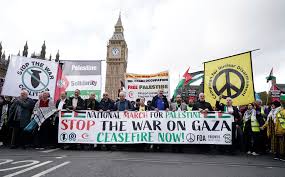
Peaceful protests in London

During these last two years of this conflict, peaceful rallies for Palestine to be recognized as a sovereign State have been held throughout Europe and the Western world. Beyond thousands have gathered in the major capitals of Italy, France, Spain, The Netherlands and more. And here in the United Kingdom, London, Manchester and other big cities have been holding huge gatherings of silent, peaceful protests for the freedom of Palestine. But in the United Kingdom is it considered a crime, the government having designated the Palestine Action organization a terrorist organization. Last week in Manchester a single terrorist attacked a Jewish Synagogue. Amidst a mess of gunfire three people are dead and Manchester is wounded. Despite the Prime ministers pleas – never a good sound bite – for the weekend Pro-Palestinian demonstration at Parliament Square in London to stop – it didn’t – and the police moved steadily through arresting nearly 500 silent protesters aged between 18 and 89. England seems too small, in geography and spirit to allow its people to protest in peace for peace.

As Michaelmas passes and the autumn evenings shorten and lower its lights, the London salon season begins. Friends gather together for evenings of art and friendship. A dear friend, a Chinese artist, who has lived and performed her life and work mostly in England and Europe hosts the first: a music and poetry Salon at her home tucked away at the top of the Heath. We are in London but not – at this moment – of it. There are no tall ceilings with giant chandeliers hovering over us, nor gilt-edged velvet chairs as in a castle. But there is soft lighting, a comfortable sofa, mixed chairs and the floor to sit on. The rooms fold away from each other, one behind the grand piano and the others concertinaing back into the warmth of the kitchen. Old and new friends come together – catching up on the year past – no time for future dreams before the poetry and music about to be shared. Everyone is nervous. The friends she has gathered are for the most part just that – friends – most are artists with a small a. As the evening unfolds, poetry mingles with music. The grand piano gets its longed-for work out, Tang poems from the 1700s are read in Mandarin, Cantonese, Russian, Latin, Japanese, French, German, Esperanto, Polish, Italian, Danish and Spanish. A poem translated from its original Italian prose into English poetry captures a brief moment in China. All are blended between theatre, mime and the music.

Poetry read by Walter Murch

The evening lifts us and for a few hours we are gathered together in the womb of art and beauty that sustain us, giving us strength to walk back into the dark night and return to the world.

This has been A Letter From A. Broad. Written and read for you by Muriel Murch 

As always supported by https://www.murchstudio.com

Extracts of Xi’an of Eight Rivers written by Curzo Malaparte and read by Walter Murch. Music from Keith Hammond and Katrine M. Lehmann

Correction in the audio. Tang poetry is from the 700s not 1700s.

Dress to Impress

Written and read for you by Muriel Murch with WSM by my side

Dress to impress and dress for success, sometimes we try – but what does that mean – and for whom and for when are we dressing? This week I dressed for an appointment with a new doctor because I wanted him to see and receive me, and not to toss me off as another white 82 year old female with knee pain. So my fingernails were a playful bright green.

Green Nails by Esra Afşar on Unsplash

I may not be a spring chicken but I’m not ready to shuffle off with a walker just yet. I’m praying for a physical exam and an x-ray and a picture that would tell me what is going on with my knee and how can we fix it. It is 15 years since that knee was replaced and I’m aiming for at least another five. It looks like the green nail varnish worked and slipped this fast-talking professional fellow out of total keep-it-together efficiency to ask ‘So how tall are you’? and we laughed – before getting serious again and him telling me what the x-ray pictures showed. ‘Your knee is fine – your hip is worn out.’ Seems like another case of ‘rode hard and put away wet’. But I know to be beyond grateful. I am fortunate to have options in front of me and live a life where such care is accessible.   

Gaza: Doctors Under Attack

In countries that are at war, with themselves and each other, this is not so. The old, the infirm, the young and sick, are all vulnerable and frequently dying for and from the wars that ravage around them. Within the jungles of Myanmar, the city streets of Belarus and the open fields and villages of Ukraine, we are not privy to the unseen hardships played out in those lands. This week we watched ‘Gaza: Doctors Under Attack’ a documentary that was first commissioned by the BBC. Then, according to Stuart Heritage writing for The Guardian, “dropped due to the risk that it created “a perception of partiality”. Luckily Channel 4 picked it up and it is also now available on YouTube. Channel 4’s Louisa Compton warned that Doctors Under Attack would “make people angry, whichever side they take.” She is right. This is the sort of television that will never leave you. Maybe it can provoke an international reaction and we owe it to the people and the countries to not look away. And I don’t, instead finding images remain front and center in my mind making me think deeper about what is happening and how it is happening.

A doctor, who has just lost members of his own family, kneels beside a bed shared by two staving children and asks the older boy fed with a gastric tube “What do you want, What would you like?” The boy whispers, “Mango, mango and grapes”. “And the doctor laughs gently with him, “Mangos and Grapes. You shall have them” while in his heart he knows that joy may have to wait for another life time. As he pats the boy, feigning reassurance he steadies himself against the weeping that is in his soul. And maybe we too must at the least bear witness to the horrors that are happening just around our global corner, as a less than five hours flight from London to Israel has become. 

Some of the doctors followed in this film are still alive and working. Some are not. Almost all have been imprisoned, tortured and lost family members. The film follows a trajectory of sorts. It begins as hospitals are warned to evacuate – but there is nowhere for patients or staff to go. Then an air strike happens, causing more chaos and casualties among the patients and staff who remained. There is a final follow-through as the doctors homes and families are bombed before the attacks move onto the next hospital and repeat the format. Hospital buildings can be rebuilt – though it is doubtful that is the agenda here – but the taking out by imprisonment, torture and death of top medical personal leaves a hole in the knowledge of medicine that will take more than one decade to repair. 

‘No water, no electricity’ … surgeons at work in Gaza: Doctors Under Attack. Photograph: Basement Films

Since the film was made last year, medical officials of all areas in Gaza are facing mass casualties and deaths of Palestinians wounded by Israeli fire as they scramble and fight for food. Relief aid distribution is now almost solely in the hands of The Gaza Humanitarian Foundation, a US and Israel-backed organization, formed in February 2025, and now helmed by Johnnie Moore Jr of Delaware, an evangelical leader and businessman – which seems awfully close to Washington DC. In May the GHF took over from any organization sanctioned by the United Nations. I am not alone in feeling that this organization is disguising target practice as aid. 

But we see very little of this on our daily evening news. Summer sports keep us happy, the heat waves keep us worrying, and we sigh at the incredible slowness of the government body inquiries into biggest miscarriage of Justice –  the Post Office scandals – between 1999 and 2015 – finally come to a conclusion, exonerating those 900 sub-postmasters who were wrongly accused of masses of thefts, – the Horizon computers did it. 13 sub-postmasters committed suicide, many died of old age. The inquiry’s chair has begun to release the reports. Judge Sir Wyn Williams is a singing Welshman, president of Pendyrus Male Choir, which somehow makes one feel that he is a sensible fellow able to lead this committee walking through the dutiful steps to bring the officials to account, saying what needs to be said. It has taken a singing Welshman to steer this inquiry into publication

After the relief of seeing this debortle coming to an end, we watched French President Macron toss the prickly ball of illegal immigration back and forth with Prime Minister Starmer in the House of Commons before they both enjoyed the perks of a State visit. President and Madame Macron’s State visit to Britain is the first of France, or indeed Europe, to England since Brexit. The final banquet, hosted by the King and Queen at Windsor Castle, brought out all the medals and sashes one could find, a tiara or two, good will and good manners to all, with proper speeches and – we hope – good French wine. A little brightness to end the day. 

Sashes, medals and a Tiara but no green nail varnish

As censorship continues pulsing in with the tide of fear we must watch for rogue waves while the ripples over the sand show us where the truth is hiding, like clams under the sand sending up spouts of sea water, cleaning its breathing and screaming for life. But in England, coming down firmly in favour of censorship, protesting and supporting the pro-Palestinian, anti-Israeli activist group Palestine Action, has washed in another ruling under anti-terrorist laws as the government hurries to  project its own agenda. There are spouts of truths in all the theaters of war and governments and while those in authority try so hard to hide them they continue to wash up on the shores of our consciousness.

This has been A Letter from A. Broad. Written and read for you by Muriel Murch 

Grateful to be supported by murchstudio.com/

Feet in the Fridge

Writtten and read for you by Muriel Murch with WSM by my side.

Sally came back from across the street, “Granny Turriff has pulled up a chair and has her feet in the fridge.” 

“Well that seems sensible. It is hot today.” replied her mother summing up the family consensus from their kitchen on the small street in the village where I grew up. The temperature must have reached the mid 70s at that time in the early 1950s. Granny Turriff was not my Granny, but she was one of the grannies who lived all around, in the house, or across the street at a time when families stayed close and watched out for each other. There was no air-conditioning then – maybe a breeze from an open back door would rise – stirring the still air – and putting your feet in the fridge was a pretty reasonable way for an elderly lady living alone to stay cool.

London Temperatures for Saturday June 28th

This last week with the heat wave now official – three days of temperatures above 30 degrees celsius, the mid-80s Fahrenheit – I’m remembering Granny Turriff  as I open our fridge door to reach for the freshly made jug of iced tea and the cool air swirls out towards me. The temperature rests in the mid 80s and is 10 degrees hotter that when Granny Turriff put her feet in the fridge. Low level fridges are long gone so no one will see this piece of eccentricity – when practical might be considered just beyond sensible – and such actions could be judged as inappropriate behavior. There are warnings of the ‘extra’ deaths that this heatwave will bring to the vulnerable; the very young, the elderly and the infirm. The news details the pressures this will put on the already stressed health service and we, the very young, the elderly and the infirm, are advised to stay at home, rest and drink plenty of water. It is almost our duty to do so. We will keep the curtains and blinds drawn down to keep out the sun. We will water our plants in the evening time and we will rest. 

The heat wave crosses Europe and given these times an almost manageable concern – what is it that puts global warming into manageable while Palestinian families are bombed, Ukraine battles on struggling to reclaim land stolen by Russia and now the mad man in American makes Dr. Strangelove look sane? 

War, once again there is war. War for The United States of America is almost as big an industry as the entire US agricultural section. With these blasts, like aggressive bowel evacuations, of another attack on a sovereign country – whether one likes the regime or not – I look around searching for a place of reason. There are the “No Kings” demonstrations around the United States and even in Europe and other countries. The leaders of Canada, Mark Carney and Mexico, Claudia Sheinbaum cradle us in hope while the American Democratic party sits about pinging their phones and deleting emails. The American barrel of sanity looks pretty empty.

But this week, in a small organization, I found a firm steadfast remembrance of the horror of war. 

Nurses, old, ofttimes retired are joined by young ones as they group together, state by state to form Nurses Honor Guards. The NHG now has over 300 chapters in all 50 states and continues to grow. Jeanie Bryner is a nurse, a friend, a poet and a power-house member of the Nurses Honor Guard of Eastern Ohio. When asked, the honor guards gathers to perform Nightingale Tribute services for nurses. Like in the military, it consists of the Final Call to Duty. The Nightingale Lamp is lit in the nurse’s honor and when a triangle is rung the nurse’s name is called out three times as a request to report to duty. With the last silence, after her name is called, the nurse is announced as retired and the lamp’s flame is extinguished. She is relieved from Duty. 

Relieved from Duty Display from an Honor Guard.

Last week three chapters of the Nurses Honor Guard from Ohio took buses to Washington D.C. where they had been invited to place a wreath on the Tomb of the Unknown Soldier. And that makes some kind of sense. The little I know, but something, from the strength of the grass-rooted down to earth poetry of Jeanie Bryner – the poetry of rural people, the patients, the nurses who care for them from the heartland of America – these are people who know the loss of war. It is probable that at least half of those women nurses have suffered some deep loss from the wars fought within their lifetimes – never mind their fathers before them. I found the video of the wreath laying ceremony on line – of course I did – and like so many at that ceremony there were tears in my eyes watching these nurses, there for their fellow fallen sisters and brothers, lovers and fathers.

Ohio Chapter of the Nurses Honor Guard at Arlington Washington D.C.

In 1995 Ohio State University published the first of a series of Anthologies on Nursing. ‘Between the Heartbeats Poetry and Prose by Nurses’ was edited by Judy Schaefer and Cortney Davis. As many of us as could traveled to Washington DC. where The American Nurses association was holding its annual meeting. But the ANA refused us permission to present or read at the convention. Instead we found a bookstore that took us in. I don’t remember how many other people came to that reading but we were an enthusiastic and proud group of nurse writers. As we gathered after the reading, mostly meeting each other for the first time, there was one nurse I particularly remember. Above her slacks she wore a brown, checked, gingham, short sleeved shirt. She had read her poem about Vietnam. We asked her if she had visited the new Vietnam Memorial wall. “Oh no.” She replied. “It is too soon.” In our silence we understood we would never know the horror she had witnessed. While the Ohio nurses gathered at the tomb of the unknown solder we all hold the world closer, praying for peace and the seeming unceasing wars to end.

This has been A Letter from A. Broad. written and read for you by Muriel Murch.

Always supported by https://murchstudio.com

Fading Flags

Written and produced by Muriel Murch with WSM by my side.

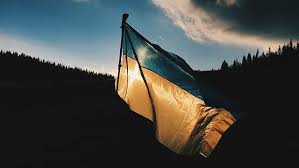
Driving out along the lagoon, over the mountain, and down the twisting road through the Redwoods into another town, the large Ukrainian flags are faded and torn but still fluttering under the trees.

They look weary like the soldiers themselves must be. That war, between Russia and Ukraine, is into its second year and is now being jostled out of the headlines and overtaken by the three way shootout that is occurring between Gaza, Israel and Palestine. The weariness that is shown by the torn Ukrainian flags is but a reflection of the faces of both the Ukrainian and Russian soldiers. Satellite pictures of Russian graveyards show their expansion and a rough estimate is over 50,000 Russian and 31,000 Ukrainian troops killed from this war so far. Mothers do not like to hear such numbers and know that their sons are among the fallen.

Daily, more young, untrained Russian boys and old men are sent into battle to wear down the Ukrainian military. In 2022 the Russian Wagner leader Yevgeny Prigozhin began recruiting prisoners for his private army – until that all went pear shaped and ‘angry words were spoken’. Shortly after that Prigozhin was killed in a plane crash. But – to no one’s surprise – the Russian defense minister has continued with the same policy, containing the stipulation that enlisted prisoners must fight until they die or the war is over – whichever comes first. Prison recruits remain crucial to the success of the Meat Grinder… The modern term for Cannon Fodder.

Nobody really knows how many Russian and Ukrainian solders or civilians are dying. But all Russians steeped in their history know, from Tolstoy’s War and Peace to Maylis De Kerangal’s Eastbound, war in Russia is carried genetically through ancestral bloodlines. For the Ukraine it is not a lot different – maybe the war dead figures are more honest – it is hard to tell. President Zelensky is anxious and impatient calling for the military aid package just passed by the US Congress over the weekend to be delivered now – not in six months time.

Back in London, though there are no more welcome signs for refugees from any country, this war is still on the page. The prancing dance that is happening with Putin, the West, China and the East is keeping at least some journalists on their toes.

London welcomes me back into a land of brown people and I am grateful. There is kindness all around me. I push my trolly-load of luggage towards the parked taxi driver at the airport, who, when we reach the cottage, brings my suitcases inside and lifts them onto the spare bed.

But our UK Government remains as tight, shortsighted and corrupt as ever. Another Tory minister resigns here, mud is slung at Angela Rayner the labour Deputy Prime Minister there, and, goodness me, Peter Murrell, the husband of the last Scottish First Minister, Nicola Sturgeon, is under arrest again.  Released of course – the only polite thing to do – and to be investigated further – in due course. Well maybe. This is beyond sad, another betrayal as most people whatever they felt about an independent Scotland admired and even liked Nicola Sturgeon as she brought Scotland through the Covid crisis. Lifting its head slightly out from underneath these stained seats of government we find other unbelievable act of fly swatting. 

Through The European Commission president, Ursula von der Leyen, the EU have proposed free moment for young European Union citizens and Britons across the borders, allowing young people from the EU to stay in the UK to work or study for reciprocal periods of time. As Ursula said, this would have been where there could be “closer collaboration. The topic of youth mobility is in both our interests, because the more we have youth mobility being on both sides of the Channel, the more we increase the probability we will be on good terms because the next generation knows each other very well.” But Rishi doesn’t seem to want to get to know anyone outside of his home-county set and has rejected that, the government saying that ‘Brexit had ended free movement and it had no desire to reopen that conversation, even with strict conditions on length of stay.’ God help this country. 

As I began to write, the question of shipping undocumented immigrants to Rwanda was being batted back and forth across the aisles of Parliament for maybe the fourth time. There is no doubt that if the bill passes, those held in ‘safe housing’ will disappear into the urban ghettos of this country. Some will die, many will be extorted, while only a very few will reunite with their families or move on to make some kind of a life for themselves. Sunak will merely have transported the jungles of Calais to the cities of Liverpool and London. After a night of back and forth from the green seats of the Commons to the tattered red ones of the Lords the bill was passed – at the cost of 1.8 Million pounds per person – before it was time for an early morning cup of tea. It goes to the King on Tuesday evening and goodness knows how he is going to keep his mouth shut and sign it. 

A Getty Image of Rhishi trying.

It is hard to think about this as I sit on the sofa at dusk watching the evening light soften and glow, as if to say, ‘That was an ok day wasn’t it? The plants in my pots on my small terrace garden must have bloomed for our guests: volunteer Bluebells coming out of home-made compost, yellow Cowslips raised and bowed down. The geraniums and fuchsias are not quite ready to come out of hibernation while the unpruned rose buds are reaching for any weak spring sunshine. The pigeons and squirrels scurry around though the bird feeder needs replenishing and rehanging before the smaller birds will return. But it is dusk and Lucy the fox is back. Her coat is full and healthy while her udder glistens from the recent suckling of her kits. She too has sensed the movement behind the glass, the lights flickering on and off, and has come to check my egg supply. I go to the fridge and get one for her. Sliding open the terrace door I place it just inside the cottage. Tentatively, checking my smell and my seat on the sofa, she steps froward and takes the egg in her mouth, turns and neatly hops off between my pots to trot along the wall and disappear.

Lucy comes for her first egg of the evening Photo by WSM.

She returns ten minutes later for a second egg. How many kits does she have this year? A famous Italian designer has a trophy home just across the wall and with his garden unused for the winter months this could be where Lucy and her family live. The park – with its tall grasses and hedgerows – is just across the road and the canal with its river-rat filled verges is only a quarter of a mile away. Can Lucy and her family live peacefully in that garden or will they too be evicted out of their found safety to wander to find a new place to call home.

This has been A Letter From A. Broad. Written and Read for you by Muriel Murch.  

And always overseen by – beatrice @ murchstudio.com

Rain Stops Play

Recorded and Knit together by WSM

The third week in May – and it is still raining steadily. Umbrella in hand, it was time to take the 274 bus into town. The bus was already half full, so I sat upstairs to look down over the London streets and see a group of young Asian men, carrying their hefty bags full of cricket gear on their way to the park. One is already dressed in his Cricket whites. Do they dream of one day playing in the holy of holies, Lord’s Cricket Grounds close by in St. John’s Wood? Founded in 1788 by Thomas Lord, the grounds were moved at least three times before settling into this corner of Marylebone. Noted historical progressions through the years included that in 1864 the purchase of a lawn mower removed the need to keep sheep. Those young men I saw from my bus would have been in the grounds where my father was a member for all of his adult life.   

I arrived at the edge of the city to where, even with the soft rain falling, the pubs’ and restaurants’ outdoor tables are full. Most shops have been opened again on the Marylebone High Street, but with some noticeable gaps where high-end English brands used to sit proudly on their corner lots. They were always just out of my price range and I am not as sympathetic as I could be. 

On Monday, more lockdown restrictions were eased but we are going slowly, being sensible, as the health Minister Matt Hancock urges us all to be. But maybe there will be some lightening of the infection load that will bring this, and other countries, safely out of hibernation.

Every country is looking at what their government could have done better, safer, faster to save more lives. Doors, gateways, air pathways and sea-channels have been opened and closed with speeds that relate to the economy as much as infection rates. All governments have behaved badly to various degrees. There have been profiteers and deals of equipment, and devious deals of no equipment. Last week the head of a pharmaceutical firm in India fled to London after failing to provide more affordable vaccines to his own country. The blame? Already shifted to Narendra Modi, India’s Prime Minister for not booking ahead and placing his order. The high numbers of infection rates and still low numbers of vaccines are struggling to meet on a world-wide level. 

Over this year and half, the COVID-19 virus has been named and shamed as the Chinese, the Kent and now the Indian variant and – as it was named – so it fled to greener pastures. It must have been obvious to any epidemiologist that the Virus would change and mutate as the opportunity arose. That’s what viruses do. They are as opportunistic as all living beings. The Times newspaper estimated that at least 20,000 passengers from India were allowed to enter the UK because there was a trade deal in the works and a little hop to India would have got Boris out of his wallpaper dilemma . The Daily Mirror called Boris Johnson’s delay on closing travel from India another unforgivable ‘Own Goal’. 

Covid Memorial wall in London

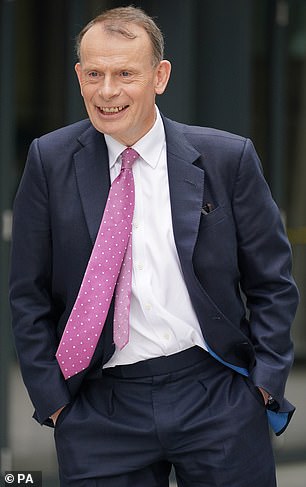
Another news item broke this week, one that many of us have been looking for. Andrew Marr, the BBC political broadcaster, whom we regularly watch with a Sunday Sofa breakfast, said he may leave the corporation so he can share his true views on politics. Speaking in Glasgow with the Scottish journalist Ruth Wishart, he said, ‘At some point, I want to get out and use my own voice again. How and when, I have no idea …. There are many privileges of working at the BBC, including the size of the audience and all of that, but the biggest single frustration by far is losing your own voice, not being able to speak in your own voice.’ Constraints such as this are a knife edge that all paid journalists must traverse, admitting the constraints is another.

Andrew Marr – smiling

For eight days and counting we have watched Israeli airstrikes and Hamas rocket barrages that have killed over 200 hundred people, the vast majority of them Palestinian women and children. Hospital buildings, schools and media centers have been bombed to rubble with Palestinians running, searching for their dead children. The heavy metal disparities are impossible to ignore. Prime Minister Benjamin Netanyahu gave no justification for targeting the 12-story press building in Gaza, though later claimed that Hamas had an intelligence unit inside. No news organization using the building had seen evidence of Hamas presence. He went on, “Israel’s military operation against Palestinian Hamas militants in Gaza will continue with full force. We are acting now, for as long as necessary, to restore calm… It will take time,” Mr Netanyahu warned. Time, to right which wrong?

Vanessa Redgrave in Julia

1978 was the awards season for the film Julia, directed by Fred Zinneman and staring Vanessa Redgrave, Jane Fonda and Jason Robards. Julia was up for eight nominations including for best editor and so we were there that night. Sitting aways away, (Walter’s chances of winning were not considered high) Vanessa looked very young, and alone as she scampered up onto the stage to be greeted by an even bouncier John Travolta. Graciously she accepted her Oscar and then spoke: quietly, politely but with great purpose, her memorable speech denounced what she saw as the Zionist disturbers of that time. That speech cost her a full blown career in Hollywood, thus allowing all of the richness of her work in the cinematic and theatre arts to flow through different channels. Listening again to that speech from 1978 while looking to the now scant news screens, tragically darkened by this new wave of Israeli and Palestinian bombing of the land that is Gaza and Holy – I wonder when will the world be able to bow our heads in prayer – together again.

This has been a Letter from A. Broad. 
Written and read for you by Muriel Murch 
First aired on Swimming Upstream – KWMR.org.
Web support by murchstudio.com

It’s Raining Again

Recorded and Knit together by WSM

Being in England it seems only polite to speak of the weather. Now autumn has arrived with its mixture of rain and sunshine. The leaves on the Plane trees in the park are bright yellow and glistening with the steady rain that has fallen. These leaves will not fade to brown but drop with the next wind, leaving a carpet of yellow on the grass which itself is shining a brilliant, verdant green.

On Sunday we crossed town in an Uber. The rain fell steadily. The city is quiet and some roads were blocked off as the London Marathon was run by the chosen elite runners in the city. Around the country and the world, runners clocked in and up their twenty-six plus miles while raising money for their chosen charities. Looking out of the car window, we saw a city on hold. As if in a doctor’s office, nervously waiting for a diagnosis. Will the city live or die? What is its life expectancy and how will it need to adjust to the next new reality?

London street in the rain. Photo by Anjana Menon

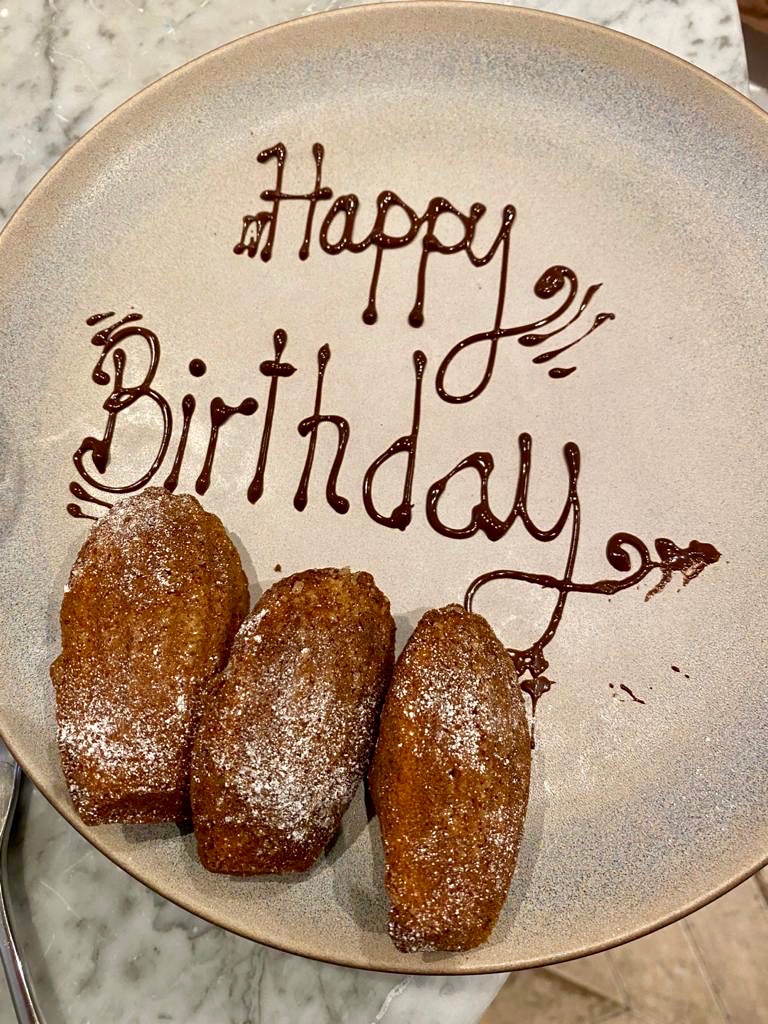
Mindful of the rule of six we are celebrating old friendships as the youngest of us passes her ’77 Sunset Strip’ birthday. We laugh about it, with a toast of wine this Sunday lunch time. We are grateful that we are still a foursome and we don’t – at the table – discuss most of the ways that our bodies are beginning to show their limitations. The restaurant, Lorne in SW1, is small, modern and delightfully European. The food is elegant, the wait-staff all family and there is no bread on the menu or table. But there is wine and we drink with a fair amount of abandon and not a lot of caution. Sunday luncheon is a lingering meal and we are not alone in the lingering.

Three of the four birthday bites. Photo by WSM

Eventually the meal winds down into spearmint tea served in the tiniest of tea pots, and more of the owner’s family arrive for their meal. They bring the youngest member of the family, a little toddler girl. Already she is gently pulling things out of her mother’s bag and looking at ladies items. There is a zip closure, which will only take a few days more to master. Missing our own grandchildren, we beam at this little one and she looks up at us as we leave. Some of her family are still masked, we are putting our masks back on, and suddenly I’m trying to understand what this third of her life in masks could look like to a toddler. It is only our eyes that can shine love and laughter to her. But she gets it and smiles back, still clutching her mother’s unopened case.

This has been a welcome break from the confinement we continue to observe, and the news which spins through our minds as it unfurls.

The stand-off in Belarus continues. On Saturday, Belarus withdrew the accreditation of all foreign correspondents. The internet went down on Sunday. Aljazeera news is the only outlet still able to report. On Sunday, water cannons were used against the protestors marching towards the detention centers where at least 77 political prisoners are being held.

But on Friday, the United States and the European Union hit Belarus with sanctions for rigging the vote and orchestrating the crackdown on protesters, targeting key officials – but not Lukashenko himself. Russia has backed its long-standing ally Lukashenko, offering financial backing and promising military support if events turn against him. Unless you are paying minute attention it is hard to tell what is happening where.

On Sunday we saw again how the U.K. government’s knee rests on the BBC’s neck as Prime minister Boris Johnson deigned to be interviewed by Andrew Marr on Marr’s Sunday morning political program.

Public Health England has admitted a cock-up. In one week 15,841 positive Covid cases were not included in reports at the time, and not passed on to the contact tracing system. On Monday Health Minister Matt Hancock took the fall in Parliament blaming a computer malfunction, sort of like – the dog ate my homework.

Johnson warns that the UK faced “a very tough winter” with the virus. Truthfully, though, most governments are struggling, each searching for the right approach for their country. But watching this program every Sunday morning is wearing and I need a seriously good cup of tea to get through it. At first it seemed there was a restraint on Marr with his questions about the missing 16,000 cases, and then, as sometimes happens, the Scot in him rose to the fore. It takes a half squint of my eyes to see him strip off his Sunday suit, toss his shawl over his shoulder, twirl in his green plaid kilt and brandish his sword – at Boris.

When a patient leaves a hospital on their own volition it becomes ‘an incident’. There are nursing notes to be written, forms to be filled out and passed up the chain of responsibility until it reaches the top. But who is that person in the Walter Reed Memorial hospital? It may well be the commander in chief, who took the insane joy ride to wave to his people.

I could not take in the news when I first hear it.
“He’s mad.” I say.
“And scared.” Came the reply. And this may well be the truth. A memory of Saddam Hussain, stripped of his uniforms and ready for execution now twins with that of a masked man in a black armored car, waving before he takes his final ride home.

This has been A Letter from A. Broad.

Written and read for you by Muriel Murch

A Month in Lockdown London

A month in Lockdown London

Early morning walkers are wrapped up warmly against the nipping wind that dances below the sun and tosses infrequent April showers across the country. The warm winter has brought green aphids out to suck on my roses. Every morning I brush them off and say thank you to the ants who are trying to devour them as quickly as they appear.

Walking past our local supermarket, the wind added to the chill of watching the long line of one-person one-cart each distanced apart, shuffling along the wall around to the waiting guard at the store’s entrance. It still feels too dangerous to shop there and not all right to ask someone to go for us. So we stay close to home shopping in the village and getting used to doing without the simplest things. It has been two weeks since I saw Philadelphia creme cheese in the dairy cooler. This week there is no mayonnaise and I pluck the last bag of risotto rice from the shelf.

Listening to the daily news bulletins from the government it is clear that they are not ‘telling the truth, the whole truth and nothing but the truth.’

Health care workers, transport, postal, delivery and essential service personnel are becoming increasingly distrustful of, and frustrated by, the government. There are no state governors here to overturn and bring clarity to the federal shambles. The major of London, Sadiq Khan, the son of a bus driver, needs union pressure to catch up, trying to make all transport workers safer and promote the use of face masks for public places where the correct social distancing cannot be kept. His frustration is palpable on the news clips where he is seen. Since before the weekend a shipment from Turkey of Personal Protection Equipment for medical personnel had been promised. Today we learn that it was only officially asked for on Sunday! and is now due (again) to arrive today. Turkey – the country once demonized to help win the Brexit vote.

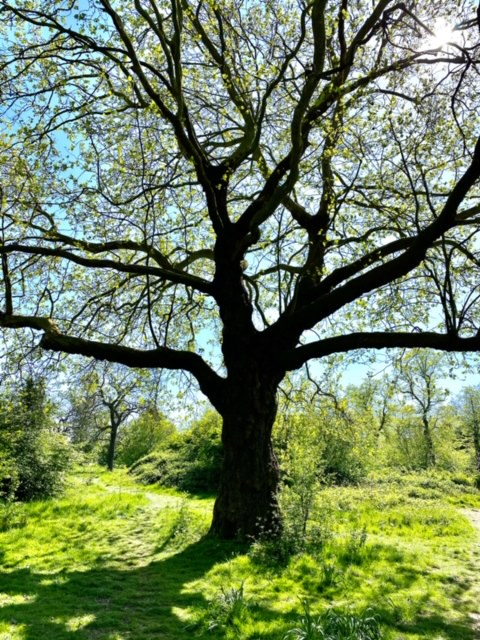
Beech Tree in the Wilderness of Regent’s Park

This is week four of our London shelter in place and the government has decreed at least three more weeks. But over this weekend with the Spring sun shining and the air warm, there was a casual feeling from people that this will not affect them. We walked through a wilderness area of Regent’s Park, where couples and families were picnicking under the trees, hanging out where old London tramps like to make their camps. Impromptu soccer games were played, though the goal posts and nets are all put to one side of the pitches. Hardly anyone was wearing masks but we were. The last of our table napkins have been turned into masks. A bag on the front door holds more fresh napkins from friends. They are waiting, cocooned like caterpillars to metamorphose into white butterfly masks.

From Table napkins to Face masks Photo by WSM

Mr Habtu works for Addison Lee the car hire firm. His hours are rough and spontaneous and he is still working. Who are the people who need his services? He has a wife and three growing boys to support. Every time I see him drive away I worry more than a little and yet am grateful for him that he has a job, is able to work and provide for his family.

This morning another book arrived through the letter box. ‘The Great Influenza’. Written by John M. Barry published in 2004 and picked up as one of the three books by G.W. Bush as a vacation read in 2005.

On opening it up I am immediately caught and it looks like Thomas Cromwell’s death in ‘The Mirror and the Light’ may have to wait a little longer. Glancing through The Great Influenza I am stopped by the end. Though one is not supposed to quote from books the two concluding paragraphs bear repeating at this moment in time.

“Those in Authority must retain the public’s trust. The way to do that is to distort nothing, to put the best face on nothing, to try to manipulate no one. Lincoln said that first and best. A leader must make whatever horror exists concrete. Only then will people be able to break it apart.”

And there is hope in the world as we read of Jacinda Ardern, the Prime Minister of New Zealand managing her country through this crisis followed by the delicious news that the governments of Poland and Denmark are refusing to give financial aid to companies that are registered off shore.

Primrose Hill is embraced on three sides by The Regent’s Park, the Canal and then the railway heading away from the city center. Walking home through the park we paused on the bridge over the canal. In these last few weeks the canal water has become so clear that the shallow bottom was visible. The sunlight was strong and sparkled through the trees while the ducks flew in pairs along its path. Such is the stillness of the air that for the first time in twenty years we can hear the trains clatter quietly by – leaving us all behind.

The has been A Letter from A. Broad. Written and read for you by Muriel Murch.

Week Two of UK Lockdown

And it continues. We listen to the wireless almost hourly for news and watch the BBC ten p.m. evening broadcasts each night for updates on the UK Corona virus figures. And with such intense scrutiny it is clear that something is happening at ‘Auntie’. Over the last two years the BBC has seen budget cuts of up to 80 million pounds. This has caused the loss of 450 jobs from its news and story departments. Those BBC executives who still have their jobs warn that the corporation is facing an unprecedented threat to its future. The National Union of Journalists has said the BBC was facing an “existential threat”, while the sharing of radio bulletins across the BBC will result in further job losses. Newsnight, a nightly, popular political program will lose a dozen personal, production of its in-depth films will be halved, and its investigative journalism diminished.

There is also an effort to reduce the number of on-screen news presenters, which brings up the question of where is Huw Edwards, the main BBC News anchor? Even beloved Clive Myrie is rarely seen. The news presentation team is now almost entirely women and that raises another question of pay scale equality.  Commenting on changes due to the Corona Virus situation a memo reads… “We’ve tightened hygiene and safety measures. Our presenters are now doing their own make-up.” And it shows.

On Friday Sir Keir Starmer was elected the new Labour Party leader. He gives his speech trying to be as passionate as he can, (not his strongest suit) and with the transmission through one microphone to another and then to the airwaves his words loose a certain panache. Thankfully his somewhat swept hair will be a change for the cartoonists who are getting a little bored by Boris’s haystack haircut. But we wish Starmer luck with uniting the Labour party and in the parliamentary collaboration with the conservatives that must come at this time. 

For my allotted daily exercise I alternate between riding a rental bike and walking in Regent’s Park. A four mile cycle around the outer circle is pretty good. I am alone and not so nervous as there is less traffic and the car drivers and fast bikers now travel with a little more consideration. At the North West corner of the park sits Grove House, the first of the six gated, fenced and locked villas built by Quinlan Terry between 1988 and 2004. All of them are owned by one Sultan or another to be close to the mosque, while in town. Before Grove House there is a small stretch of parkland. The daffodils have begun to fade here and an old elm tree lies fallen on its side. A pair of lovers, wrapped in their winter scarves are standing close. She is hesitant but he pulls her towards him. He wants to feel her body through the rough wool of their heavy coats. I can’t help but smile as I see them. He, ever watchful, catches my eye and with an almost apologetic grin asks that I understand. And I do.   

It is a sunny Saturday morning but I am missing lemons and cumin. Risking the disapproval of our neighbors, I walk to Shepherd’s Market in the village. Regent’s Park Road would normally be bustling with activity but this Saturday is different. There are only a few people out on the street and those that are zig-zag across the road to keep at a distance. Two young people almost take themselves off of the pavement as they pass close to me and we smile. I can’t tell if they are being considerate of me or careful of themselves. At the market, a notice reads that only one customer is allowed to enter the shop as another one leaves. I stand behind a middle-aged man who is struggling to be patient with the older gentleman balancing a cane and two bags of groceries while climbing into his motor buggy. There is another queue outside of the butcher’s shop with people standing a discrete distance from each other. They are silent. There is no chatting for that would necessitate people leaning closer to each other.

It has been over a week since I was in the chemist’s shop. Another older man is standing outside the door, gathering himself as he slowly leans on his cane to walk home. Inside the chemist’s there is now a big wood framed plastic partition across the counter which it is clear will stay long after the virus leaves. I wonder about these solitary men, for now that the pubs are closed they have no place to belong, alone within the company of others. In London it is easy to half-close your eyes and see Hogarth’s England with all of humanities foibles etched on our faces. The experts say we are still two to three weeks from the peak of this virus. Tonight on the television and radios around the country the Queen will speak to the nation, gathering us all to a greater unity of purpose. And within the silence of the street maybe there is hope as we listen to the robin calling out for love once more.

This has been a Letter from A. Broad written and read for you by Muriel Murch. 

  • Huw Edwards surfaced again via Twitter on Monday. Thanking the National Health Staff for all of their care while he was ill with pneumonia.
  • And as of this posting Boris Johnson is stable with oxygen in St. Thomas’s Hospital, London.

Keeping Calm in London Town

“You ol’ rite?”
“Yes, thank you.”
“Not coughin’?”
“No Maddy, not coughing.”
And Maddy gives me a thumbs-up sign before she scurries away to catch an overland train to Battersea and visit her ailing mother.

Thank you Zine

“Do you need anything? Can I shop for you?”
“Thank you Sinder. We are ok at the moment.”
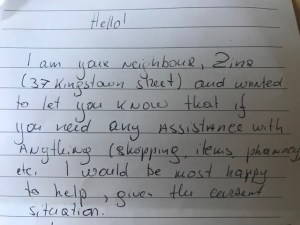
A note is slipped through the letterbox from Zine our neighbor at # 37. “… I would be most happy to help”.
“Aggie, Aggie.” Mr. Habto has returned from his early morning taxi run and is standing by his cab. 

“Anything we can do to help. Please let us know. Knock on the door or leave a note.”
Maddy is probably London born and bred, Sinder is Hindu, Zine is from Eastern Europe, and Mr. Habto a Coptic Christian from Africa. This is the mix of the little community at the bottom of our street. They all have families to care for and yet are finding moments to be watchful over us. We have become the “old folks” on the street. Thus neighbour cares for neighbour in our little corner of London. And we are grateful.

It is Sunday afternoon. The sun will not come out again today. The wind is blowing and the raindrops seem hesitant and unsure where to fall. Families are walking home from their ‘fresh air and exercise’ moment in the park. Football games are still scrubbing along in the mud. White shorts are streaked with brown, hair is windblown and there is quiet laughter coming across the pitches from the players. Out there – the city, London, – is very quiet.

Boris Johnson and his lieutenants appear very old school serious as they stride to the podiums set up in the State dining room at Number 10 Downing Street, while trying to cover up the fact that Number 19 Coronavirus may be beyond their abilities. This may be the first time in his life that Johnson gets really serious, and not everyone is convinced he knows how to do that. We can only hope that he might in fact be growing into the role of Prime Minister and treating this with all with the gravitas it deserves. One does suspect that upsetting the populace is as an important part of the equation as is protecting the insurance companies. Another supposition is that this is seen, by Johnson at least, as his Churchill moment. One can be grateful though that he has these two lieutenants: England’s Chief Scientific Advisor, Sir Patrick Vallance, and the chief medical officer, Professor Chris Whitty by his side. Whitty, or is it Vallance, produced graphs on a large board and pointed away so that the journalists in the room, sitting as close together as ever, could understand what was trying to be accomplished and then relay that information to us, the presumably less well-educated public. Vallance and Whitty are both, in their English way, considerably more competent than the school-yard gang that surrounds Donald across the water.

Daily updates from the government will now come from Number 10 Downing Street as the situation changes every twelve hours with more confirmed cases and deaths. Johnson and his team are putting some guidelines in place while they wait to come down with a heavy hand. It’s a gamble for sure. Health Secretary, Matthew Hancock, sputtered and muttered on the Andrew Marr Sunday morning show about ‘Doing everything we can and self-isolation’. Manufacturers have an opportunity to make millions of Pounds Stirling and ventilators. “Other countries in the world will be needing them too.” Mostly though it is businesses, sports centers, and banks (!) that are leading the way, encouraging working from home, canceling big matches (though not the Cheltenham Race meet last week), and encouraging self-isolation.

And now, on Monday morning, there are more shutters coming down. Museums have already closed, special openings have been postponed, and the British Film Institute team all work from home, strategizing what this means for the film industry in England. We withdraw too, canceling lunch dates with friends and family. Being well over a certain age, 70, we are all ‘vulnerable.’ and many of us have at least one strike hitting our general health. We are being encouraged to self-isolate. What will happen then to the organizations run primarily by older volunteers who serve their communities? As I write an email comes through from one such trusted leader: ‘The Library is closed for the foreseeable future’. What will happen to those books? Sitting on their shelves so lonely and unread. Theatres, cinemas, concert halls, hotels, and restaurants are all growing dark as their lights dim. Today all religious leaders united in asking their followers to pray at home.

Hand sanitizers are out and visible – where they are available. Otherwise, it is serious and constant hand washing – by those who do that sort of thing. Shop-keepers and checkout folks wear rubber gloves to handle the £ coming in. And £s are rolling into supermarkets as folks panic buy and buy. That may have begun to calm down now with ‘assurances’ that the stores have enough of what we need stock-piled somewhere. This morning the pharmacy was full even as folks tried to stay apart from each other. The doctor’s office is closed with a notice on the door saying that appointments will be by phone for the near future! The local Deli and other coffee shops on the street are almost empty. Can they hold on for those over-70s for whom a little sandwich at the coffee shop is their main meal?

Daffodils from Taghi A’s Morning walk

We are grateful for the Hill and Regent’s Park where we can walk in isolation. Wild primroses rise from the soil to shine close to the ground. The daffodils are reaching their peak, staying upright through the foul weather of the last weeks. But the plum and pear trees lining the street are beginning to loosen their soft blooms and whisper in the breeze for us to keep heart. Our Robin Red Breast hops down to check my worm count as I work in the little garden. She too tells me to let the warming soil soothe my soul.

Primrose in St. Mark’s Church garden Wall. Photo WSM

‘Our’ Robin checking my work

Happy New Year 2016

New Year’s Eve Walk

Happy New Year.

We all say it. We begin around Solstice when we are adding ‘Merry Christmas, Happy Holidays,’ for all the winter celebrations that happen in most religions through to dear old Robbie Burns Night, this year on January 25th,

“Happy New Year to you.” “And to you too.” And we mean it. We smile as we pass each other on the street, wishing each other well, peace and health in our lives and even possibly a little prosperity thrown in. For in these days all angst between us is forgotten.

Paolo and his sign

This year there is a longer than usual lull between Christmas Eve with the ‘back to work’ week starting on January 4th. The weekend of January 2 and 3 has given us extra Twixmas days, as those days between Christmas and the New Year have been named in England. These are days are free days, as if in an Egyptian calendar of old. The Egyptians would take five days off prior to the summer Solstice (June 21) in their calendar year otherwise their agricultural rhythms would quickly become muddled. And somehow this falls, loosely in winter, into a pattern for modern Europe. Stores and galleries that could be open have closed shut.  Even Philip the Greengrocer at Yeoman’s has drawn his blinds and stuck a sign on the door, “We will reopen on January 4th.” Good for them. Paolo in his coffee shop on Delancy Street moves slower though his days. Maybe he is taking the extra cup of coffee for himself before facing us trending or grumbling old customers on Christmas Eve.

For some people these are days of total winter peace and contemplation or escapes to warmer climates. For young parents with families they are days of adventures or hanging out with the children while grandparents build memories that will become traditions. For others, the young and not so faint at heart, the days are filled with shopping in the crazy winter sales that beckon buyers in to lay down that credit card just one more time. But wherever and whatever we do we add, “Happy New Year.” to our daily greetings.

The Muslim grandmother who runs our local deli is dressed in her black hijab with a touch of cream here and there peaking through her headscarf. Her hair has turned from deeply black to hold wisps of grey since we have come to know her and she now rings up a senior discount for us both. She knows us all, our types, our styles our needs. “A Happy New Year to you my dear.” “And to you too.”

Crossing the bridge into Regent’s Park a young African woman is taking a selfie and seeing me smile laughs aloud at herself. She is athletic and out for a winter workout. Dressing in bright blue running gear, her hair up in braids she is sunny and beautiful. “Happy New Year,” She laughs at me. And I laugh back to her, “And to you too.”

It is quiet at the Newsagents and finally the Hindu gentleman left in charge on New Year’s Eve has time to ask me, “Are you married? Do you live here?” and more. We take the time he needs as I answer the questions that he may have held for the past ten years of our fifteen year time in the village. Finally another customer comes to the counter and we exchange a newspaper for coin and part. “Happy New Year.” “And to you too.”

Maddy is bustling with her dogs. Never without one to four dogs she walks out three times a day with them while her husband with his new middle-aged dyed beard occasionally goes to the store. Maddy doesn’t have time for the supermarket, she is too busy with the dogs so a grocery delivery van comes down the street for her once a week. Slowly, over the years, we have become friendly over dogs. Her beloved Lucky was in love with our Hana and the feelings were reciprocated with frenzied barking affection whenever they met on the street. She is smiling, “Happy New Year,” we laugh it together. Both happy to see each other and knowing there will be another time for a catch up chat.

After a film at Leicester Square, we walk around the corner into Chinatown on the edge of Soho. The streets are all a bustle and hustle, restaurants full and yet beckoning. A little Chinese supper would be nice. We eventually chose a restaurant where a smiling young woman, wrapped up in her winter jacket, hat and gloves welcomes us inside. The restaurant is full, happy Chinese, Arab, and European customers devouring an early supper. The young wait staff are dressed in black and serious. They have to keep everyone moving, and us particularly as we are a cheap-vegetarian-disappointment. The young men are all hooked up to black ear buds and phones. The food comes quickly up the dumb-waiter and the dishes passed along to us. The fortune cookie and the bill arrive together. We pay the bill and though my cookie tells me “You will make a good investment.” I’m not sure what that will be. Back down on the street the same young woman is smiling and beckoning passers-by inside. But as we leave and smile at her once more she bobs her bow, “Happy New Year, Happy New Year to you.” “And to you too.”

Girl at a bus stop

Returning home, we meet Stan who is heading out to The Queens Pub on the corner walking slowly with his beloved old dog. Though rarely with his teeth, Stan steadfastly walks his dog twice a day. He too has come to know something of us and when I greet him, “Happy New Year Stan.” it is to the boss, my husband, that he relies, “Appy ‘ew Year to you too Sir.”