Storm Bert

Written and read for you by Muriel Murch with WSM by my side

It took two weeks for the leaves on the elm tree that bows over the entrance to Kingstown Street to turn from khaki to golden then crimson before falling. Now the branches are bare, showing their stark beauty with the strength that comes from age. The grass below is now covered in a soft mulch of leaves from which will come the renewal of spring in the new year.  Across the street, though, the younger ornamental prunes is in a complete muddle. The first chill of autumn crushed the leaves but then a slight shift brought a warm spell and the buds began to swell. Now there are small pink blossoms peeking through dying yellow leaves. 

The second storm of the season – named Bert – pushed into London from Wales but still on Sunday a walk was called for and, wrapped up against the wind, I ventured out. Turning the corner onto Regent’s Park Road a blast of wind hit me and I buckled, tottering like the old lady I have become, before carefully crossing the road. Though it is the first time I have ever seen this, it is no surprise that there is a notice on the closed park gates: ‘The Park is closed today. All being well it will reopen on Monday. We apologize for any disappointment’. Who chose that word? Disappointment rather than the usual ‘sorry for any inconvenience.’ It almost sounds sincere, a touch of kindness and as I walked past the gate a young family came and paused and they were indeed, disappointed. Storm Bert is the second storm to hit these islands. The first was a snowstorm called Ashley while Conall has yet to arrive. Bert hit Wales, Devon and the South West coasts hard, moving into London and the news and, rough as it is, it is nothing compared to the deluge that overtook Valencia in Spain. It was in 1953 that the World Meteorological Organization in the US began giving women’s names to storms and hurricanes. It wasn’t until 1978 that they began to accept that many of the gods of the sea and winds were male and also lose their temper. In 2014 the UK Met Office began to do the same. So here we are at the tail end of Bert, who, like a flat-capped boozer, is weaving about, losing his way going home across the North Sea.

Storm Bert from The Independent

The budget has caused a stir. Well of course it has. Rachael Reeves is the first woman Chancellor of the Exchequer, presenting the first Labour budget in twelve years, and she has gone after the wealthy. Not so much of a problem but she has included the wealthy who do not pay inheritance tax. Through the years of history business men and women have become land owners choosing to pop their pennies into the soil, growing their wealth now along with too much monoculture and wheat, while avoiding their taxes. These are the farmers for whom the land is the investment. Occasionally they can be seen striding about in their Wellington boots pretending they don’t have a bean to rub together. For the small farmers things are different – making a living from mindful farming and husbandry remains as harsh here as in any country. I don’t understand it all and realize that neither I nor the small farmers are supposed to.

This week Kim Leadbeater, the Labour MP for Spen Valley, that follows the river Spen in the West Riding area of Yorkshire is presenting a bill on Assisted Dying. The arrival of Kim as the northern MP was a welcome and resounding relief after some years with Sarah Wood of Reform UK and Laura Evans  a Conservative before her. Kim has brought forward a new and improved bill on Assisted Dying for debate. There are activists and protesters on both sides of this issue, they are heartfelt and driven by strong emotions of fear and love – and yet – past Prime Minister Sir Gordon Brown is calling for a commission on end-of-life care. At four days of age, Gordon and Sarah’s baby girl had an immense brain hemorrhage and died a week later. In a recent article for the Guardian Gordon Brown wrote –     

Sarah and Gordon Brown after the death of their daughter. From the Daily Mail.

“But those days we spent with her remain among the most precious days of my and Sarah’s lives. The experience of sitting with a fatally ill baby girl did not convince me of the case for assisted dying; it convinced me of the value and imperative of good end-of-life care. We were reassured that she was not in pain.”

At this time, as the National Health Service still struggles from the residue effects of the Covid pandemic and twelve years of Tory government what this debate is showing more than ever there remains a huge difference in health care when defined by your post-code address –  once again playing wealth against poverty.

As autumn dons a winter cloak and storm Bert takes itself out into the North sea, these days have led us into musical adventures. I think of Herman Hesse’s short story, Old Music, where he ventures from his woodland cabin – first on foot, then by tram into the city center to hear a cathedral concert of Bach and what it means to him.

These last ten days have given us similar adventures but the music we have been led to is new to us, not familiar and yet all absorbing reaching me in a new way. This is exciting as with age I’m getting a little iffy I don’t hear music in the same way – and yet from the first concert – the last of the Rolex Arts Initiative series – with jazz vocalists Diana Reeves and Song Yi Jenn from South Korea and the New Dot drummers, my heart and body responded. A complete switch around took us to Abbey Road and a film screening of ‘Standing on the Shoulders of Kitties’ joyfully full of Rock and Roll and country music.

Ticket invitation to the screening 🙂

Gently the week ended at a Musical Salon and an Italian Armenian duet of Viols and Voice from Intesa sharing a musical journey through the stages of love. Each concert was so different yet as the drummers marched onto the stage at the Queen Elizabeth Hall they brought the universal dreams carrying the same searching to be heard and I marvel at the music that speaks to us across the world.

This has been A Letter From A. Broad – Written and Read for you by Muriel Murch 

And as always supported by murchstudio.com
One Memory Leads to Another

Written and read for you with WSM by my side

A book to read – one I had hoped would be more satisfying. So at 2 AM I lie awake and fuss wondering what – if anything I can say to the author. And how to calm myself? In times of unease, poetry always helps. Michael Ondaatje’s ‘A Year of Lost Things’ is on my nightstand, poetry with just a page or two of prose remembrances slipped between the stanzas. It is enough and for the next few nights I am lulled to sleep with the beauty of his words. In one section of remembrances, he writes of a friend who becomes the muse for a brother in ‘Anil’s Ghost,’ first published in 2000 and – as one thing leads to another – I search for the book in our local community library. There it is, I take it home and turning the pages am taken back to our 2004 visit to Sri Lanka. 

Our visit had fallen easily into place after Walter’s teaching for ten days at the Indian Film School in Pune. Walter had long wanted to go Sri Lanka to visit the Green Memorial Hospital in Jaffna where his maternal Grandparents, Thomas Beckett Scott and Mary Elizabeth MacCallum Scott had, from 1893-1913, worked as medical missionaries.

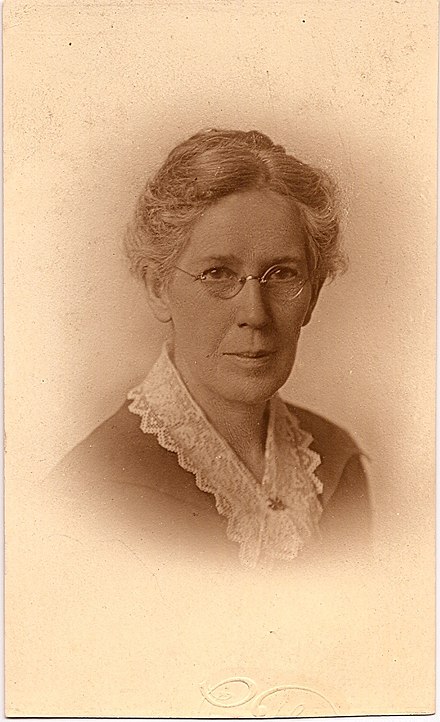
Mary Elizabeth MacCallum Scott

Mary Elizabeth was the first female doctor to work in Jaffna, while at the same time she birthed seven children and started the first nursing school in Manipay which is still in existence today. I wonder about her story, for Mary was the child of deeply Christian parents. She first trained as a teacher, then as a nurse before completing a medical degree in Kingston, Ontario, repeating exams at the Bellevue Hospital in New York. She was one of the first five women to receive a medical degree in America, but maybe getting a degree did not equal getting a job. Did that play a role in their decision to become medical missionaries? She reminds me of another exemplary woman physician, Dame Cicely Saunders, who founded the modern day Hospice movement. Dame Cicely also began her adult life as a nurse before becoming a social worker and then a physician.

Edwardo stops us for a snack of Water Buffalo yogurt and honey

But the Green Memorial Hospital is in the Northern province of Jaffna, a strong Tamil district and during out time the war was still active. Michael had guided us to the Kandalama Hotel, designed by his friend the architect Geoffrey Bawa and built into the hillside outside of Kandy. Edwardo drove us for five hours and that was as far as we got.

Everyone was very polite but clear, explaining as gently as they could that the troubles precluded them sending anyone with us to Jaffna and certainly not allowing us on the trains where murder was not uncommon. The Civil War that had begun in 1983 was ongoing and didn’t settle until 2009. We didn’t take it in – and in our ignorance remained enjoying the peace, the water, the birds, and the Buddhas, those hidden in caves, sitting or lying about – though never standing, and the Golden Buddha in Dambulla shining from the hillside across the lake. The Seven Kingdoms of Sri Lanka had been beaten almost into one, the two languages of Sinhala and Tamil remaining the tear in the Island’s fabric. The Portuguese arrived first, then the Dutch to harvest cinnamon and other spices before the British came trading Christianity for tea. It was all rather messy. This week, Sri Lanka welcomes Anura Kumar as their new Left of Center President. Namaste we say to you.  

Bell from Kandalama Hotel in Sri Lanka

But we didn’t know much about this then. We were immersed in a new culture and beyond grateful for the opportunities and understanding that this time had brought to us. It wasn’t until now, re-reading ‘Anil’s Ghost’ that I came to a glimmer of understanding about what was happening, never mind why and to whom in this country. In an interview, Hilary Mantel, when speaking about history said, “I think novelists are alert for everything historians can find and verify, but also for something different, and extra; history’s unconscious, if you like. You try to grasp an individual’s moment-by-moment experience, as the tides of the past and present wash through them.”

And maybe that is partly why I feel so lost looking about me now. The wars that we are shown remain in the present tense. In Ukraine it is the old women well into their 80’s being packed up to leave their village homes. What can they take with them? Not the last of the harvest from their cottage gardens, the chickens still raising a brood of chicks, but maybe a blanket, a change of clothes, a photograph or two. In Gaza, Israel, Lebanon and Palestine urban rubble with shards of clothes caught on rebar are all that some survivors can find. The Israeli and Hamas leaders, lunging forward like attack dogs straining and then retreating, have been unleashed and given over to the pure fury of warfare and this latest weapon, of first thousands of pagers and then the walkie-talkies blowing up in pockets and hands. There will be over 500 dead in Lebanon before this letter reaches you. These are the things that weigh the heart down. 

But meanwhile in our small country, the Annual Labour Party Conference is happening in Liverpool. The Prime Minister assured us last week that “I’m in Control.” We begin to wonder what exactly is he in control of? There is the matter of Sue Gray, his Chief of Staff having a higher salary than him. If she can keep everyone playing by an honour code of written and unwritten rules then good for her she has earned it. But can she? Digging for dirt the media finds that Sir Keir has a new box of tickets for the Arsenal Football season and a very nifty and expensive pair of glasses. The glasses follow his ‘I’m a serious fellow’ style but don’t look a whole lot better than my husband’s from the local pharmacy that cost £7.50. Then there are the clothes for the girls. Wife Victoria in a dress and Deputy Prime Minister Angela Rayner in a billowing too-bright green trouser-suit, both from the new up and coming English fashion house MEEM, look quite smart. But the women beside Sir Keir, Deputy Prime Minister Angela Rayner and Chancellor Rachael Reeves, also looking very smart, need to learn to say their lines without glaringly staring at the teleprompter, widening their mouths with animated articulation. They look like a python getting ready to swallow a sheep, and it could be that ‘we the workers’ are the sheep. They are pushing their vocals in a bid for political authority afraid that any other womanly tone will sound weak.   

In Fred Zinnemann’s 1966 film ‘A Man for All Seasons’, Paul Schofield who plays Sir Thomas More, converses with Richie Rich played by John Hurt. Earlier Richie had asked More for a place in Court. More declined, suggesting Richie become a teacher. But Richie gets his place and a golden Goblet. At the river’s edge, More sees the Goblet, looks up to Richie “For Wales Richie, For Wales?” Richie’s shame and humiliation are clear on his face. The cup is dropped into the river.

I don’t see football tickets being returned but maybe fewer parcels, with the compliments of …  will be accepted or signed for on the steps of number 10 Downing Street.

This has been A Letter From A. Broad. Written and read for you by Muriel Murch 

And always supported by https://www.murchstudio.com

Green is for Grenfell

Written and read for you by Muriel Murch with WSM by my side

One evening last week, four mid-sized yellow ambulances screeched to a halt in the little parking cul-de-sac which serves this side of the Auden Place Council housing apartment blocks. The ambulances were left with engines running and lights flashing as the paramedics carrying their bags, searched to find where they needed to go. They were gone a long time and when later I finally looked out of the window the parking lot was empty. There had been no blue lights flashing or blaring sirens signaling their departure. The next day I learnt that Sylvie had fallen downstairs and had not recovered. Those who knew her went about the day sobered and reflective.

Capitalism lives on in buttons

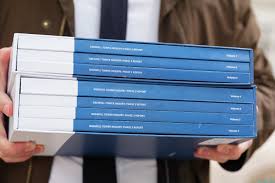
Last week the second volume of the Grenfell Inquiry report was finally published and made available to the survivors of the tragedy, and today’s government ministers. On the evening’s broadcast, the news-anchor standing in front of the Grenfell Tower, bathed in moonlight and cladding with its green heart wore a bright green coat as she spoke. Green-heart buttons are worn by Prime Minister Sir Keir Starmer and London’s Major Sadiq Khan seen standing on the right side of this event. 

Ministers leave the benches in a hurry

The daily Parliamentary schedule allows that after the morning’s Prime Minister’s questions there is a pause for those who have meetings to attend – to leave. On the morning when the report was to be presented the choking exodus of Members of Parliament was sobering to those who remained seated and disgusting to those survivors watching. Sir Keir turned to face the gallery as he gave his heartfelt apology, acknowledging that on every level – regulatory, council care, business and responsibility – the Government had let them down. The report left no doubt that the 72 deaths from the Grenfell fire of 2017 were avoidable.

The living community that had existed within that tower block, that exists in all housing estates and neighborhoods to a degree, has become one of bereavement for the Grenfell survivors while they remain physically misplaced in temporary housing. ’We want Justice’, read the banners at Grenfell but what is justice, what would it look like? Now the buck of blame is sliding from the place of government regulation, to counselors who did not listen to their citizen’s concerns and onto leaders in businesses. Tracking those responsibile is like following a river to its source, as a hidden stream emerging from the earth that may yet come to rest outside of the garden shed of the Prime Minister of the time, the Rt Hon Lord David Cameron who so eagerly started his ‘bonfires of red tape’ hoping to free businesses of unnecessary regulations. ‘For every new regulation cut three’, was the guideline while each and every one of the construction firms with government contracts took advantage of the burnt red tape. Once all 1,700 pages of the Inquiry documents have been read, surely there will be some firms will be highlighted and named. Sir Keir Starmer calls for the companies involved in the disaster be banned from receiving government contracts, and that the government would support the Metropolitan Police’s investigation into the fire, saying it was “imperative that there is full accountability, including through the criminal justice process, and that this happens as swiftly as possible”. But the Metropolitan Police are stalling, shuffling papers to be read in detail by lawyers – before proceeding with any prosecutions. It will be at least two years before charges are brought against anyone deemed at this time to be responsible.

The report – all of it. Image: Ben Gingell via Dreamstime.com

While the inquiry has been bound together, distributed and read, the criminal courts have been unusually busy for August, as the far-right activists who erupted with violent anti-immigration protests in cities across the country a few weeks ago were rounded up and swiftly brought to trial. It was nasty. Sir Keir – again – expressed his determination to crack down hard on the rioters, and so the courts have been working overtime and in quick succession jail sentences have been handed out like military call-up papers. But there is another problem. England’s jails are reportedly ‘not fit for purpose’. Last week’s count showed only 500 places out of 88,000 were left, 400 being quickly taken up by the far-right rioters, leaving only 100 places, either to be given to more rioters or – possibly saved for those who took advantage of the Tory government’s bonfire of red tape. It is noted but not yet spoken how quickly some prosecutions can occur, while others linger in old manila folders. A jail-house solution is being acted on as I write. 1700 ‘low risk’ prisoners are being released across the country today. We are assured ‘High risk prisoners are not being released’. But that depends on your point of view, who is high risk or low risk, to whom? Prison staff are already struggling with this new check-list of red tape with things to be done to get those lads and lassies out of the prison gates. There is no time to wonder who will receive them, where they can go, who will support them, or will they just find it safer to return to lock-up. Will they leave enough room for the Right Honorable gentlemen and business leaders to maybe one day sit on benches beside them?

This afternoon the government just approved Chancellor Rachael Reeves’s bill to cut the fuel payment allowance given to pensioners last year. Not many people are saying the obvious – that the allowance was a double-hitting ‘take that’ act from the past Prime Minister, Rishi Sunak, first as a sop to mop up any old voters who might have put an x in his box on election day, and secondly to skewer the next government with less money in the kitty and an unpopular choice to make. But Sir Keir and the labour party still have some political support from raising pay for essential workers in the National Health Services and then to the train-drivers, thereby keeping that union at bay – for the moment.  

Sir Keir has not traveled far this summer. He’s been busy reading the manual and fixing the government’s old bike whose chain keeps falling off and brakes need new pads. In Ireland he met the Irish Prime Minister Simon Harris to ‘reset the UK’s relationship with Ireland’. There was also a visit to Paris renewing his friendship with France’s new Prime Minister Michel Barnier. Both are detail-oriented men, and keen to connect rather than disagree. French government being what it is at the moment, Emmanuel Macron’s appointment of Michel Barnier as the new Prime Minister makes England look relatively stable and calm.

And so for excitement – rather than war – we ready ourselves for the upcoming US presidential debate which will have happened by the time this letter airs. It is more nervous-making than any football match with the stakes high for the US and the world. Even those who are not counted will feel the waves of power as they settle in November. 

This has been A. Letter from A Broad. Written and read for you by Muriel Murch.

Supported by https://www.murchstudio.com