One evening last week, four mid-sized yellow ambulances screeched to a halt in the little parking cul-de-sac which serves this side of the Auden Place Council housing apartment blocks. The ambulances were left with engines running and lights flashing as the paramedics carrying their bags, searched to find where they needed to go. They were gone a long time and when later I finally looked out of the window the parking lot was empty. There had been no blue lights flashing or blaring sirens signaling their departure. The next day I learnt that Sylvie had fallen downstairs and had not recovered. Those who knew her went about the day sobered and reflective.

Last week the second volume of the Grenfell Inquiry report was finally published and made available to the survivors of the tragedy, and today’s government ministers. On the evening’s broadcast, the news-anchor standing in front of the Grenfell Tower, bathed in moonlight and cladding with its green heart wore a bright green coat as she spoke. Green-heart buttons are worn by Prime Minister Sir Keir Starmer and London’s Major Sadiq Khan seen standing on the right side of this event.

The daily Parliamentary schedule allows that after the morning’s Prime Minister’s questions there is a pause for those who have meetings to attend – to leave. On the morning when the report was to be presented the choking exodus of Members of Parliament was sobering to those who remained seated and disgusting to those survivors watching. Sir Keir turned to face the gallery as he gave his heartfelt apology, acknowledging that on every level – regulatory, council care, business and responsibility – the Government had let them down. The report left no doubt that the 72 deaths from the Grenfell fire of 2017 were avoidable.
The living community that had existed within that tower block, that exists in all housing estates and neighborhoods to a degree, has become one of bereavement for the Grenfell survivors while they remain physically misplaced in temporary housing. ’We want Justice’, read the banners at Grenfell but what is justice, what would it look like? Now the buck of blame is sliding from the place of government regulation, to counselors who did not listen to their citizen’s concerns and onto leaders in businesses. Tracking those responsibile is like following a river to its source, as a hidden stream emerging from the earth that may yet come to rest outside of the garden shed of the Prime Minister of the time, the Rt Hon Lord David Cameron who so eagerly started his ‘bonfires of red tape’ hoping to free businesses of unnecessary regulations. ‘For every new regulation cut three’, was the guideline while each and every one of the construction firms with government contracts took advantage of the burnt red tape. Once all 1,700 pages of the Inquiry documents have been read, surely there will be some firms will be highlighted and named. Sir Keir Starmer calls for the companies involved in the disaster be banned from receiving government contracts, and that the government would support the Metropolitan Police’s investigation into the fire, saying it was “imperative that there is full accountability, including through the criminal justice process, and that this happens as swiftly as possible”. But the Metropolitan Police are stalling, shuffling papers to be read in detail by lawyers – before proceeding with any prosecutions. It will be at least two years before charges are brought against anyone deemed at this time to be responsible.
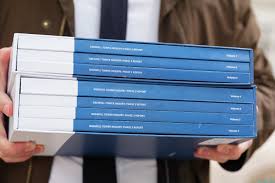
While the inquiry has been bound together, distributed and read, the criminal courts have been unusually busy for August, as the far-right activists who erupted with violent anti-immigration protests in cities across the country a few weeks ago were rounded up and swiftly brought to trial. It was nasty. Sir Keir – again – expressed his determination to crack down hard on the rioters, and so the courts have been working overtime and in quick succession jail sentences have been handed out like military call-up papers. But there is another problem. England’s jails are reportedly ‘not fit for purpose’. Last week’s count showed only 500 places out of 88,000 were left, 400 being quickly taken up by the far-right rioters, leaving only 100 places, either to be given to more rioters or – possibly saved for those who took advantage of the Tory government’s bonfire of red tape. It is noted but not yet spoken how quickly some prosecutions can occur, while others linger in old manila folders. A jail-house solution is being acted on as I write. 1700 ‘low risk’ prisoners are being released across the country today. We are assured ‘High risk prisoners are not being released’. But that depends on your point of view, who is high risk or low risk, to whom? Prison staff are already struggling with this new check-list of red tape with things to be done to get those lads and lassies out of the prison gates. There is no time to wonder who will receive them, where they can go, who will support them, or will they just find it safer to return to lock-up. Will they leave enough room for the Right Honorable gentlemen and business leaders to maybe one day sit on benches beside them?
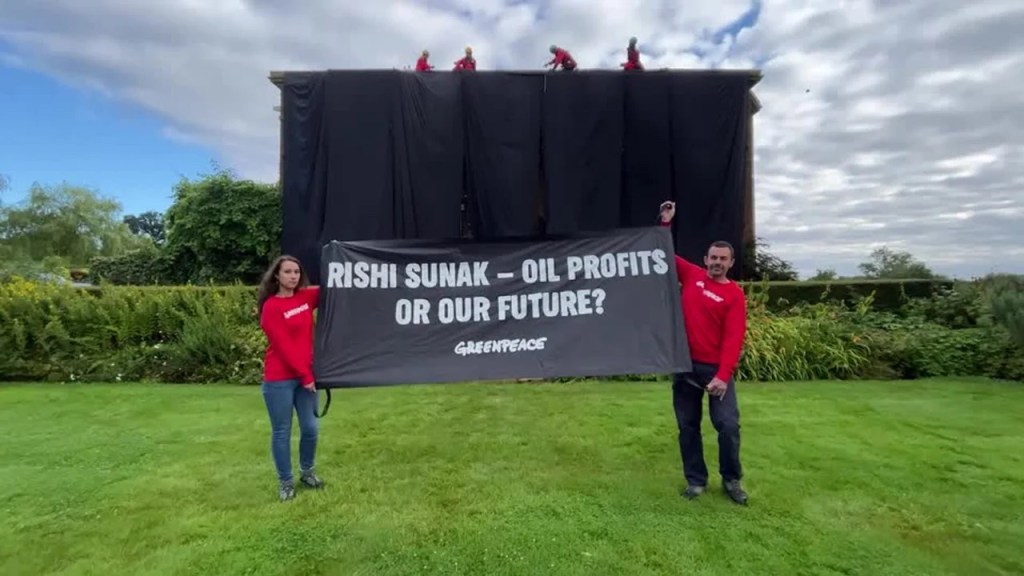
This afternoon the government just approved Chancellor Rachael Reeves’s bill to cut the fuel payment allowance given to pensioners last year. Not many people are saying the obvious – that the allowance was a double-hitting ‘take that’ act from the past Prime Minister, Rishi Sunak, first as a sop to mop up any old voters who might have put an x in his box on election day, and secondly to skewer the next government with less money in the kitty and an unpopular choice to make. But Sir Keir and the labour party still have some political support from raising pay for essential workers in the National Health Services and then to the train-drivers, thereby keeping that union at bay – for the moment.
Sir Keir has not traveled far this summer. He’s been busy reading the manual and fixing the government’s old bike whose chain keeps falling off and brakes need new pads. In Ireland he met the Irish Prime Minister Simon Harris to ‘reset the UK’s relationship with Ireland’. There was also a visit to Paris renewing his friendship with France’s new Prime Minister Michel Barnier. Both are detail-oriented men, and keen to connect rather than disagree. French government being what it is at the moment, Emmanuel Macron’s appointment of Michel Barnier as the new Prime Minister makes England look relatively stable and calm.
And so for excitement – rather than war – we ready ourselves for the upcoming US presidential debate which will have happened by the time this letter airs. It is more nervous-making than any football match with the stakes high for the US and the world. Even those who are not counted will feel the waves of power as they settle in November.
This has been A. Letter from A Broad. Written and read for you by Muriel Murch.
Supported by https://www.murchstudio.com






 Muriel Murch