The Salon Season

Written and Read for you by Muriel Murch with WSM by my side

The Salon Season is here.

Storm Amy came and went, whipping the wind high and hard through London bringing down the first autumn leaves, but walking our mile canal loop the water was dark, clear, the overhanging trees holding their gold and russet leaves hidden for a little while longer. But other great trees have fallen. The quiet passing of Jane Goodall while still working was as if she left on a broomstick, while telling us to get on with it. Jillie Copper, an author known as the queen of the bonk-buster, gathered up her skirts as she swirled out the door. Diane Keaton quickly followed after them. These women, so dissimilar in work, all shared their passionate love of dogs. Surely a light example to find that which unites us.

Sarah Mullally photo from Wikipedia

Another woman has been called forward. Sarah Mullally has been voted as the new Archbishop of Canterbury in a church that still is allowed to teach that men should have authority over women. It has been six months since the Right Reverend Justin Welby resigned over not paying due-diligence to the problems of the church. Due-diligence to problems; something that all heads of church, state, and police struggle to maintain. But Sarah Mullally is also a nurse, and as she moved to further embrace her faith, taking up the role of priest, then bishop, she is mindful of the division her appointment as Archbishop of Canterbury and head the World Anglican Church will bring. As devout a feminist as she is a Christian, Bishop Mullally has a hard row to hoe and many priests and bishops under her care will resist her as she struggles to unite this wide-bodied church, weaving a bobbin through its warp, joining  the threads of communication. Maybe between a woman like Bishop Mullally and the Venezuelan María Corina Machado, the winner of this year’s Nobel Peace Prize, some world shift can occur towards peace in our time. 

This past weekend the Israeli attacks on Gaza have halted but there is no end to the dying. While trucks have begun to roll into the bombed streets, cleared only enough to allow them through, they move slowly, allowing the near starving to seize whatever sacks they can off the flat beds. Stalls are set up and, even in this mayhem, sellers are trading to those with money while those that don’t must resort to theft. Medical supplies and nowhere close to sufficient. 

Driven in Toyota trucks, 20 living Israeli hostages were returned to Tel Aviv while 2000 Palestinian captives were bussed from Israel into and released in Gaza. While the Israeli hostages mostly had families and homes to return to the Palestinians returned to bombed homes and decimated families. Their return must be soaked in deep grief pouring into anger. 

Omar Al-Qattaa AFP Via Getty Images

The American President flew into Tel Aviv to address the Israeli parliament. He was greeted with a standing ovation which guaranteed to feed his hunger for a while. At the peace summit held in Egypt with his counterparts lined up behind him he declared “The prayers of millions have finally been answered. At long last, we have peace in the Middle East.”

At the photo shoot a back drop of European and Arab leaders stood behind him. Sir Keir Starmer looked puzzled, Emanuel Macron stoic, and the Italian Prime Minister, Giorgia Meloni, completely bemused. Later that day, perched on a suitably serious chair in a ‘for the press’ moment, the King of Jordan blinked furiously and frantically into the hot lights as he tried to be diplomatic, positive, and truthful with his thoughts and concerns for future peace in the Middle East. It was not easy. Can the American President stay focused enough to go through with meetings to implement the 20 point Peace plan?

Peaceful protests in London

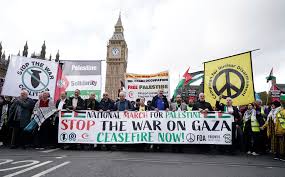
During these last two years of this conflict, peaceful rallies for Palestine to be recognized as a sovereign State have been held throughout Europe and the Western world. Beyond thousands have gathered in the major capitals of Italy, France, Spain, The Netherlands and more. And here in the United Kingdom, London, Manchester and other big cities have been holding huge gatherings of silent, peaceful protests for the freedom of Palestine. But in the United Kingdom is it considered a crime, the government having designated the Palestine Action organization a terrorist organization. Last week in Manchester a single terrorist attacked a Jewish Synagogue. Amidst a mess of gunfire three people are dead and Manchester is wounded. Despite the Prime ministers pleas – never a good sound bite – for the weekend Pro-Palestinian demonstration at Parliament Square in London to stop – it didn’t – and the police moved steadily through arresting nearly 500 silent protesters aged between 18 and 89. England seems too small, in geography and spirit to allow its people to protest in peace for peace.

As Michaelmas passes and the autumn evenings shorten and lower its lights, the London salon season begins. Friends gather together for evenings of art and friendship. A dear friend, a Chinese artist, who has lived and performed her life and work mostly in England and Europe hosts the first: a music and poetry Salon at her home tucked away at the top of the Heath. We are in London but not – at this moment – of it. There are no tall ceilings with giant chandeliers hovering over us, nor gilt-edged velvet chairs as in a castle. But there is soft lighting, a comfortable sofa, mixed chairs and the floor to sit on. The rooms fold away from each other, one behind the grand piano and the others concertinaing back into the warmth of the kitchen. Old and new friends come together – catching up on the year past – no time for future dreams before the poetry and music about to be shared. Everyone is nervous. The friends she has gathered are for the most part just that – friends – most are artists with a small a. As the evening unfolds, poetry mingles with music. The grand piano gets its longed-for work out, Tang poems from the 1700s are read in Mandarin, Cantonese, Russian, Latin, Japanese, French, German, Esperanto, Polish, Italian, Danish and Spanish. A poem translated from its original Italian prose into English poetry captures a brief moment in China. All are blended between theatre, mime and the music.

Poetry read by Walter Murch

The evening lifts us and for a few hours we are gathered together in the womb of art and beauty that sustain us, giving us strength to walk back into the dark night and return to the world.

This has been A Letter From A. Broad. Written and read for you by Muriel Murch 

As always supported by https://www.murchstudio.com

Extracts of Xi’an of Eight Rivers written by Curzo Malaparte and read by Walter Murch. Music from Keith Hammond and Katrine M. Lehmann

Correction in the audio. Tang poetry is from the 700s not 1700s.

Dining Out

Written and read for you by Muriel Murch with WSM by my side

I was nervous that he wouldn’t like it – and might get grumpy at the thought of going to Veeraswamy’s Restaurant on Swallow Street, the site of our first date 61 and 1/2 years ago. Veeraswarmy’s has been tucked into this little street, changing ever so slightly but ever so cleverly in style and food for its 99 years and remains the leader in Haute cuisine of Indian food. I need not have worried: he was happy and relaxed as we sipped their modern day cocktails, a Wimbledon Pimms for him, and Kir Royal for me while we enjoyed reading the menu.

“We sat over there,” we remembered, smiling while looking at the little table tucked in a corner while thinking back on that time. And that we had returned for Walter’s 60th birthday party. Now is is just us again, and he is 82. 

Veeraswamy’s Restaurant, Swallow Street, Piccadilly

Though we were dining early, the restaurant was filling up. A younger couple was seated beside us and as we smiled at each other I blurted out – because that is what I do – that we had our first date here 61 years ago and we were here for my husband’s Birthday. “Us too” the woman replied. We were both dressed specially for this evening out for our menfolk. She wore a black fitting maxi dress with an assortment of gold necklaces. Her diamonds were expensive and this evening was her treat to him. After our meals were eaten both tables were served with the obligatory delicious chocolate birthday deserts.  We smiled again. 

“How old are you?” I asked, 

“40” He replied and I looked at him again.

“Where are you from?” 

“From Florida. She’s on a work trip.” (Not ‘my wife’ but ‘she’.) And again because I truly can’t help it – I laughed and said:

“Florida, I could never go to Florida, the alligators frighten me.” And then even before I had finished speaking, my awareness shifted and my prejudices immediately leapt into my imagination – they are from ‘that’ Florida and ‘She’ is on a reconnaissance trip for the American invasion that is about to happen this summer. I felt my heart freeze. The birthday gentlemen finished their chocolate cake with just the smallest help from the wives. As the last forkful was finished she learnt over to me and said, 

“Can I ask you?” Of course, “We have a two-year old at home and apart from Paddington Bear what else could I bring her?” Ah, now I was on home Granny ground and launched into the thrills of “Ant and Bee,” showing her the books on her phone. And even as I explained:

“They are different, but friends, you see.” I wondered if that idea would sit comfortably with her – different but friends. The conversation quickly went to families, they are both from large families with lots of siblings, and were worried about raising an only child. She was hungry for any knowledge she could gleam from this obviously comfortable English Granny – who was also wearing the appropriate amount of bling. I told her which bookshops she could go to and even brought up.

‘Harvesting History while Farming the Flats’ on her phone before wondering if that might not be the wisest thing to have done.

They were staying in Mayfair which helped confirm my imagination of them here to prepare for the American political invasion that is coming to England this summer. 

The American President starts his trip in Scotland where security will try to preclude the Mexican marching band that greeted him on his golf course a few years ago.

Paddy Power descended on Glasgow Prestwick Airport (? 2016) to greet US presidential hopeful and golfing entrepreneur Donald Trump with a live performance by a Mexican mariachi band, “Juan Direction”, armed with a wheelbarrow full of bricks

Meanwhile ‘Me too Me too’ cries JD Vance who does’t want to be left at home to take care of America and has taken a holiday home in Chipping Norton for his family and a month long summer break. But who is minding the shop, if DT is in Scotland before spending two nights at Windsor Castle -a stiff nightcap whiskey or two will be needed that weekend – and JD is in the Cotswolds? Security is going to be tight, there will be grumbling down at the pub and it is quite possible that more than one antique Ford Major tractor will trundle along spitting manure off of their tire tracks in front of the large black SUV’s that will incur scratches if they are not careful on those narrow country lanes. This is not going to be a happy time. What of the hidden politicians who take refuge in the Cotswolds? Will David Cameron have JD over for drinks, even Nigel Farrage? Will Boris lumber up from Oxford bringing his brood with him? It doesn’t look good. The country lanes are not the only pathways going to be blocked. 

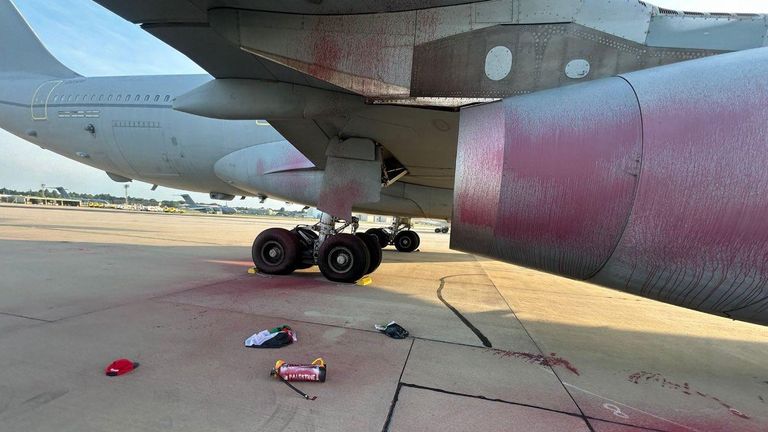
Just a small paint job

All this on top of June’s embarrassment when a handful of pro-Palestinian activists popped through a preexisting hole in the chain-link fence surrounding the Oxfordshire airbase and sprayed two RAF military planes with red paint. The Prime Minister, Sir Keir Starmer, said it was “disgraceful” and an “act of vandalism”.

Well of course it was. But whose grace was disrespected while the planes remained in working order? Not Palestine’s. Quickly a law was written and passed that support of the Palestine Action organization was now an act of terrorism.

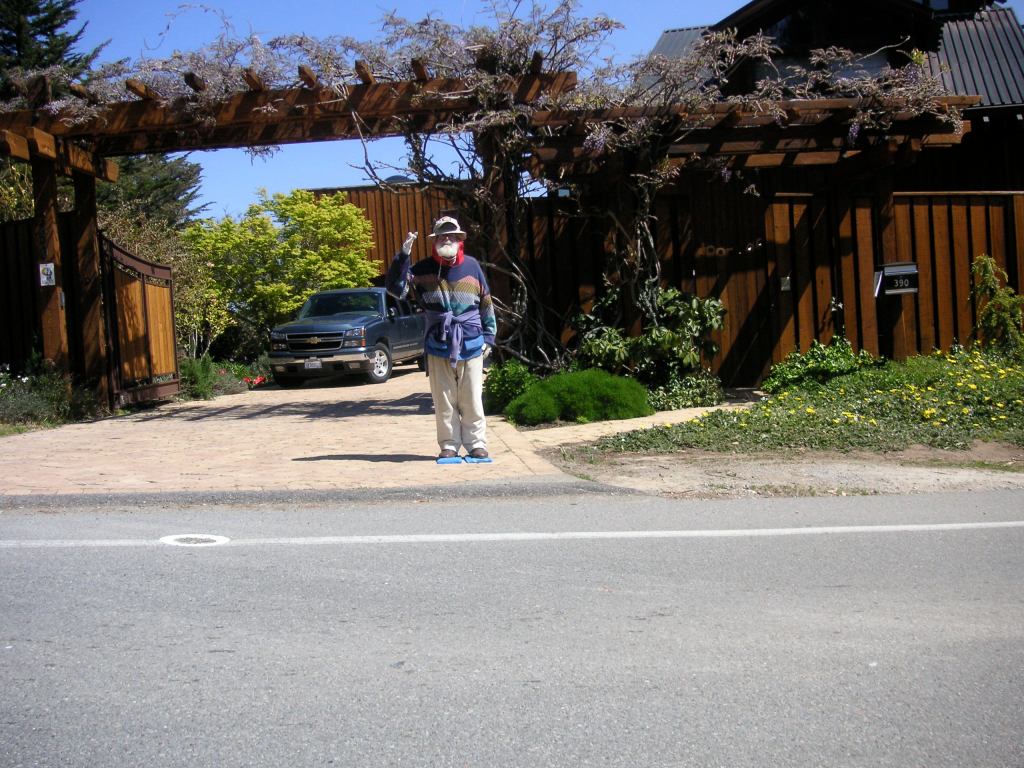
So where does that leave someone like Mill Valley’s John the Waving Man from 2008, and now England’s 83-year-old Reverend Sue Parfitt, and Laura Murton.

Nightly we see pale gruel, with a few floating vegetables scooped from big metal vats into small plastic containers held by old men, women and children while sacks of flour are hoisted onto the backs of young men just still strong enough to carry them as they scurry away zig zagging trying to avoid the bullets fired in panicked fear by young Israeli boy soldiers.

‘Please,’ begs one minister in Parliament ‘Can we acknowledge a Palestinian state while there is still a state to acknowledge?’ Last month, Emmanuel Macron addressed the English Parliament saying again that a two state solution was the only way to build stability in the region. It is unbelievable  and heartbreaking that resistance still comes from the British government, though cracks are beginning in the less-united labour party. The UK foreign secretary, David Lammy, told the BBC that he felt appalled and sickened by the scenes of starving Palestinians being shot as they sought food.

“We said we wanted to be part of a process. But we have had no process. What we have had is mayhem and conflict. There has been no process to attach that recognition to.” The Newsnight numbers of dead are now given twofold: those killed by the shootings, and those dying of starvation.

This morning ants are coming into the kitchen through the open window. They have finished their meal of nasturtium-clinging aphids and are searching for fresh compost for dessert. A stray buddlia plant is blooming in the parking lot and a dozen or more butterflies are enjoying its nectar while the bees harvest from our fuchsia blossoms. As I prepare a breakfast of applesauce made with early windfalls from a friend’s country garden, I bow my head in gratitude and sorrow understanding that no windfall is falling yet on Palestine and its people.

This has been A Letter from A. Broad written and Read for you by Muriel Murch.

As always, supported by murchstudio.

Half a Life-time Ago

Written and produced by Muriel Murch with WSM by my side

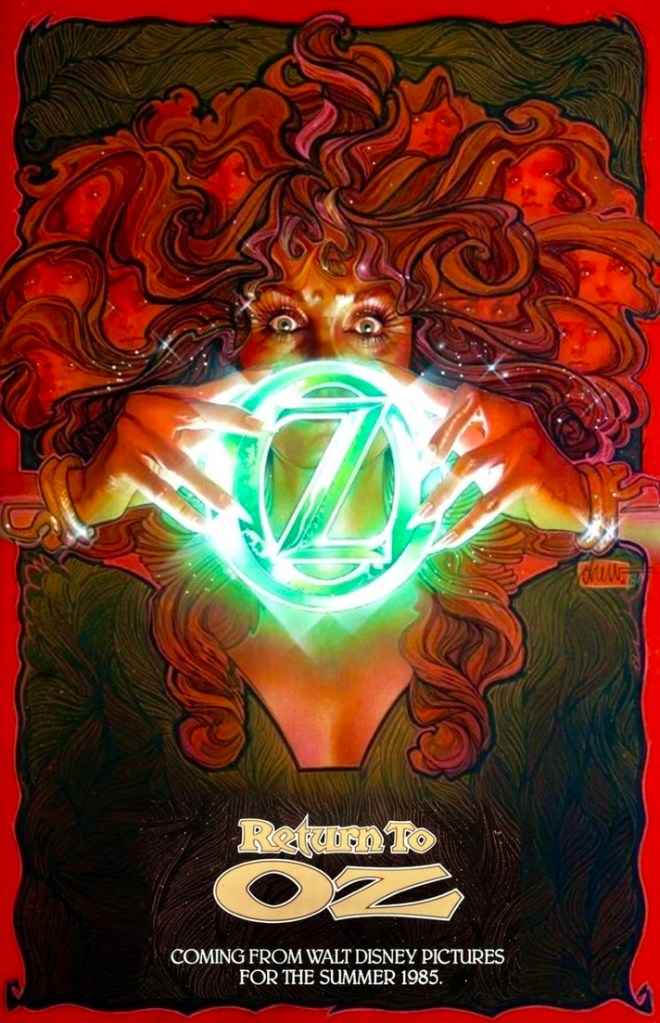
Forty-one years – half our life-time – ago we packed up our bags and the family and said goodbye to our home, leaving for two years in England to begin making ‘Return to Oz’ for Disney studios. In our inexperience and naiveté we didn’t know what was ahead for us or the film, and it was an intense two years full of more adventures than we had bargained for. We returned bruised but not broken though the film had a harder time of it. Abandoned by the studio whose revolving doors had spun executives in and out approximately every six months ‘Return to Oz’ was not given a good send-off as it was threaded up in cinemas around the country. Many years later Sydney Pollack, a film director, producer and friend, when battling the same issues with ‘The Talented Mr. Ripley’ said that “you can take an audience to hell and back, but you have to let them know where they are going.” Disney was not prepared to do that with Oz and neither was Paramount with Ripley. Both films felt the force of those non-decisions. But eventually both found their audiences and have a strong following to this day,
Return to Oz Poster by Drew Struzan that was never used.

On Saturday morning we were driven across London – never a smart thing to do on a Saturday morning – to the British Film Institute – on the South Bank of the Thames River. The driver dropped us off – as they do – somewhere in the back of the vast South Bank complex – and it took us awhile to find our way to the BFI entrance. We were late. ‘Return to Oz’ had already started, Dorothy had just found the key to Oz, showed it to Aunt Em and was about to be taken off to Dr. Worley’s. My friend Tansy as Toto was putting in a star performance. We were ushered to our seats in the back and as we slowly got used to the dark we saw that this large theatre was almost completely full of families and fans glued to the screen. They were laughing at the jokes, and following along, even staying silent and alert when the film froze as the projectionist missed the final breath-holding reel changeover. As the lights came up the audience of some film makers, film buffs. and children settling in for the Q and A. A young girl who had participated in the fun children’s hour hosted before the film asked Walter “Is Oz real?” and he answered, “Well that is the question isn’t it?” 

Thames in spring – photo by Beatrice Murch

Eventually we left the BFI, going out into the bright sunlight and joined the weekend folks along the South Bank of the river. The tide was in, the wind was up and the tourists were thick, walking and pausing to see the street artists with their puppets, music, youthful energy and hope. Strolling along we were bemused and touched that the work of 41 years ago still lives in the minds and hearts of these families. Crossing the Westminster Bridge I thought of the Nome King’s destruction by a plucky girl, her Army, the Gump, a squishy pumpkin, a chicken and an egg. For this afternoon moment we were relieved of thinking of the current Nome King who is destroying the Oz of Frank Baum’s world and dreams, the new age of invention as it was then in America and continued to be – until this time.

It’s pretty steady, each and every day a new decree is published from the Emperor who – although despite falling asleep while wearing a blue suit at the Popes Funeral – seems not to have any other clothes. He is moving on, already bored with the finer details of making a deal with Ukraine’s President Zelensky – gouging out huge mineral reserves in exchange for a paper-thin promise of more weapons, a cease-fire with Russia and some small print saying which countriy’s mayors, Russia or the Ukraine, gets to sit on which city council. President Zelensky has signed away half of his countries mineral wealth to this US President, betting that he won’t last his full term and hoping that eventually some calmer heads might prevail. For the moment the word from one of many Ukrainian women who have sheltered in Europe, finding work where they can is that ‘We are running out of men’.

It is as if the US president is no longer content with the swing of his golfing driver but has taken to fishing, wading in over his knees as he casts his rod and line out into the waters. He is moving on from the river bank of Gaza – leaving his pal Benjamin Netanyahu to finish mopping up the remains of that invasion. Hamas will burrow deeper into the sands of the desert that will indeed become deadly.  

photo by Faith Ninivaggi for Reuters

He is even more dangerous with a fishing rod, spinning it back and then out with too heavy a lure on the end. While we watch, Vice President Mike Pence received a Kennedy Medal of Honor and pause to take in the meaning of that award, for him and the country. 

Last week Public Broadcasting was threatened and ‘Films not made in America’ are on this week’s hit list as he called them a “security threat”, saying that “Other nations have stolen our Movie industry” The thought that art forms of any kind are like cats not owned by anyone but casting their lot with whoever gives them the best deal has not crossed the minds of the minions in the White House. Or maybe it has? Is the film industry to be reeled in with all the creators of all art to be marinated with the a new sauce before being tossed into the scorching barbecue pit of Great America. 

Spring has balked at heralding summer. The clouds are heavy with gun smoke as Israel attacks Yemen, Lebanon, Syria and Gaza all in one day. The blame lies elsewhere they say. And so far there are no children with a magical army of peace to stop this.

Here in Great Britain council seats were contested across the country splitting the United Kingdom into disarray. The Reform party led by Nigel Farage has taken a bold lead, sending the Conservatives tumbling to sit below the Lib Dems, whose leader, Ed Davey, MP for Kingston and Surbiton, is busy celebrating by playing village cricket and serving up just-out-of-the oven warm scones smothered in cream and strawberry jam at the tea break. Sir Keir Starmer looks rather shell-shocked and is almost pleading with the people to ‘give him more time.’ before he, too, dutifully served tea at the long table laid out along Downing Street for the 80th VE celebrations for the end of WW II.   

Princes George and William listen to a Veteran at Tea time in Buckingham Palace

Monday was the beginning of England’s week long celebrations. The Royal family were dutifully out on display, paying tribute to the soldiers, sea and airmen who fought then, and those who continue to serve. As in other countries that celebrate this day, there are fewer and fewer active service personal alive to be wheeled out and thanked, while each country continues to prepare for war.

This has been a letter from A Broad written and read for you by Muriel Murch. 

Supported by murch studio.com

It’s the Trees

Written and read for you by Muriel Murch with WSM by my side.

The tail winds bring the plane into London fifteen minutes early and so we circle the city, sometimes dipping low over Windsor Great Park then rising over Queen Alexandra’s Palace before eventually fitting into our designated time slot – diving down and bump, bump, bumping to the runway. The afternoon sun is shining brightly by the time we pile into a taxi. 

“We have a lot of luggage.” “Sit yourselves down and I’ll pack it around you.” and with that instruction and in charge tone we are welcomed back. The traffic is light as between a waitress shift – after lunch and before dinner – as we head out around the roundabout onto the M4 Motorway which is still bordered by the scruffy fields holding a couple of caravans and the travelers piebald ponies half-hidden by the tall hawthorne hedgerows that are coming into leaf. The motorway dips to the city, passing the hat-tip of industry and settling onto the highly packed houses of Hounslow and Acton. The grass verges are left un-mowed, the dead daffodil blossoms are allowed to recede into the soil for next year. Dandelions take this opportunity to stand up and offer their yellow heads to the emerging bumble bees, and for a moment before the council can attack there is harmony in these narrow strips of roadside grass. This road into the city is deeply familiar and, bathed in the afternoon the sunlight, is welcoming. Turning the corner onto Prince Albert’s Terrace I see the newly worked hawthorne is sprouting as the bent branches form a hedge tough enough for sheep and cattle, and well able to hold the children climbing and swinging in the playground. Tired as we are the sight lifts our spirits. Sunlight can do that.

Sprouting Hedgerow on Primrose Hill

Our in-charge taxi driver sets about unloading all the luggage, knowing that small as our home is there will be a big tip. We are grateful for his help and unlocking the door we are even more grateful to enter our clean and welcoming cottage. It is small, and for now a safe haven from that world we have left.

We make it to the first evening, turning on the BBC news and to our dismay find that far from having left it, the American political scene is playing out on our screens. I have to remember that the same scene is being played out on news channels across the world in different languages – both verbal and body – as the news-casters try their utmost to report the news of American tariffs on their and other countries. Reeta Chakrabarti can hardly keep a straight face as she reports on the pending cutting down of the nearly 200 year old Magnolia Tree on the White House south lawn. It was planted by Andrew Jackson to honor the memory of his late wife, who died before he took office in 1829. The current US president said that wood from the tree, known as the Jackson Magnolia, will be used for “Other high and noble purposes”. He went on to say the tree was a safety concern and would be replaced by another ‘very beautiful tree’. I tend to worry when this US president uses the word ‘very’ – as in very beautiful, very nasty, very bad. And saddened that a tree, with such history is being killed on a whim.

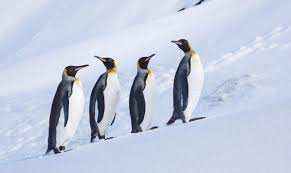
Penguins on Norfork Island are confused by Liberation Day. Photo from Dales Radio.

Reeta then took a deep breath as the news continued with the American President holding up boards with columns and numbers – this is, after all, a business meeting presentation, though his hair is too slicked down at the sides leaving the sparse top fluffing in the wind, showing where tariffs would be imposed when the scene suddenly cuts away – shifting from the President holding up his board to the Norfolk Island Penguins, who presumably have just seen it –  waddling along as fast as they can, no doubt worrying about the 10% tariffs being imposed on their guano that is carried out to sea. Heard Island and McDonald Islands, which form an external territory of Australia, are among the remotest places on Earth, accessible only via a two-week boat voyage from Perth in Australia. Anthony Albanese, the Australian Prime Minister, was as surprised as the penguins by the announcement saying “Nowhere on Earth is safe.” 

And I wonder about that. Even if everything was reversed, right now this minute, lives have been altered, some destroyed, there is more than one death that can be attributed to the maniacal behaviour coming from Washington D.C. 

Even here in this quiet corner of London we feel it, the head-shaking from our neighbors, the decisions not to visit America – the US president is on every newscast in this country and around most of the world and that is possibly a Very Important Thing for him.

We have been back almost a week and still every night the President is front and center of the newscasts. The protests that we know are happening all over the American coastlines get very little coverage. Each country is more concerned with this storm across the global markets and has little time or energy to think of the American people who voted for or against this President. The Universities, medical research, the arts and even in the heartland farmers will feel the swish of his scythe. 

The Israeli Prime Minister popped into to Washington for a visit. The two men sat at the head of a table, which holds a large model plane that looks to be waiting for one of them to pick it up and run around the room playing like a five-year-old, making whoosh plane noises as they dive bomb the nodding heads, sitting suited in uniform, turned to face their leaders. Maybe this is where the plane turns and lifts off, flying beyond America hovering over China, Europe and Iran, spoiling for a fight with real blood.

Poor Sir Keir Starmer looks out of his depth as he goes out to meet the people and leaders in UK industry. Yesterday he was at the Jaguar Land Rover factory, a heavyweight plant of Industry whose CEO, Adrian Mardell, has said they are pausing exports to the US for a month. He is giving Starmer time to do something but Sir Keir’s earnestness is not very convincing and Rachael Reeves is getting shrill – never a good sign.

On our first full day we walk up the Broadwalk in Regent’s Park, determined to see the cherry trees in bloom. The air is warm but the wind is strong and early falling petals carpet the road. People of all ages, colors and persuasions have come to admire and to take pictures of the young trees. We have watched them since their planting and now in their three-year-old adolescence they are giving us courage while bringing joy with their beauty. May it always be so.

Regent’s Park Cherry Trees in bloom

This has been A Letter from A. Broad. Written and read for you by Muriel Murch, and as always supported by murchstudio.com

Harvesting History

Written and read for you by Muriel Murch with WSM by my side

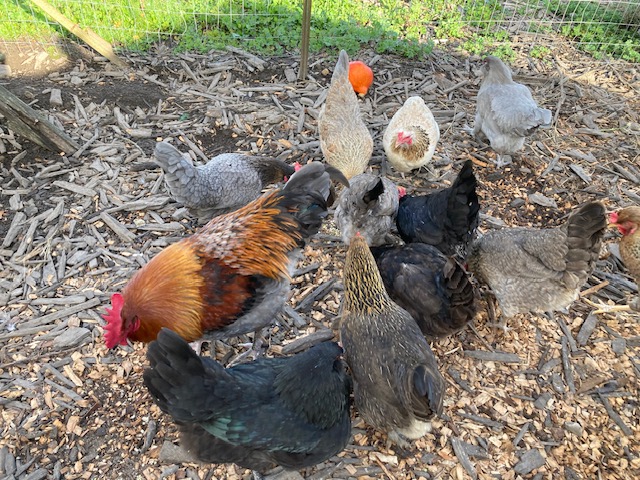
The sun was shining as I finished refreshing the chicken house. Blue, the rooster, led his ladies milling around, happy as they checked out the new straw and shavings. And then, out of the silent sky came the roar and rumble. Looking up, I saw nothing, but heard and felt it deep in my body. I know that sound, it was a fighter jet, flying low overhead and I thought – the war has begun. 

Breakfast in the safety of the Hen house

The news media bombards us and, like the chickens scratching in the orchard, we are half-primed for the pounce of a predator coming from the surrounding underbrush. For the moment, the chickens are safe from a resident bobcat on the hill as I will not let them into the orchard, but we may not be so lucky.

With each item of news about the shenanigans happening in the Happy House in Washington DC, everything we treasure about the Constitution is under attack and it takes more strength than I have not to be afraid of, and for, America. We can hardly glance at Gaza, the Sudan, and the world. But Europe, though teetering on waves of militant bravado has woken up. Germany has just elected a Conservative government – but the seemingly strong right-wing factor is licking its electoral wounds. Even Nigel Farage has toned down his bombastic spittle. A beloved friend in England who was beginning her new life in Scotland now thinks that her old home in the Australian Outback looks safer.

Thinking back into European and American History of less that a hundred years ago is like turning the pages on an old photo album. History, behaviour, and human nature mixes and re-emerges as a sea thrusting the waves of an ocean storm circling us again.

I’m thinking of young Vladimir Putin as a keen and dedicated KGB officer, committed to keeping all the surrounding principalities  herded into the USSR and then, under Putin’s watch, for it all to be upset by Mikhail Gorbachev giving back Ukraine and breaking up the Union of Russia so tightly bound by Stalin. An attempted coup – here is that word again – led to the dissolution of the Communist party in Russia and the USSR four months later. Heady and searing times for a young, ambitious KGB officer. At the same time another ambitious yet nervous young New York business want-to-be was struggling with paternal authority issues. Slipping into real estate with a million dollars, and the advice, “you’ve got to be a killer”, from his father Fred, he began. Among his successes were failures, both moral and financial but he kept playing the part until he became the business man he wanted to be.  But this smiling blustering crook took more than one serious tumble and that was captured and understood by an equally ruthless and ambitious, but more serious President across the continent of enemies. While Putin’s early bruising was from Gorbachev, and remembered for the rest of his life, the US President’s crushing bruising came later, in 2011 when an African-American president, Barak Obama, returned his fire at the White House Correspondents’ Dinner – these personal insults were never forgotten and maybe this was the night that redemption and revenge became the main drive of Donald Trump to rule the universe he knew.

Now these two men are playing on the world stage, ruthless killers and unrepentant deal makers. It is not a good combination for democracy.  Ukraine’s President Zelenskyy may be bold, clever, quick and right but crushing him and regaining Ukraine to Mother Russia remains an objective, with the candy cane of minerals and wheat for the taking. We who are older and watching what is playing out see a repeat cycle on the world stage and know that deep down all of this dog-fighting is personal. There are other young European leaders taking up the helm for Zelenskyy and Ukraine. Emmanuel Macron flies to Washington DC, sits at the right hand of the Emperor and gently laughs, humors and says ‘Ah but no no, it was like this’. The Emperor laps it up, enjoying the adulation of the younger man but will probably pay no heed to his words. Next will come the British Prime Minister, Chief Prosecutor for the Labour Party, Sir Keir Starmer, as devoid of humor and charm as Macron is full of it. He will play another hand, appearing to be ‘taking the President seriously’ while – maybe – we can never be sure with Sir Keir – again trying to guide the US president away from his deal making with Russia.

From The New Statesman

Zelenskyy, Macron, and Starmer are young men, hard working and dedicated to Democracy and a Free Europe but they may not be strong enough to turn the US President away from the skull crushing grasp of the Russian bear Vladimir Putin.

We watch the world stage from our rural corner of California, while looking at the effects of the games played by the boys in the Oval Office. What affects us close to home? What are the things we care about? Hard working families in fear of being torn apart, rangers from the National Parks fired, books banned from Libraries and Schools. 

We are older and need to tidy up our lives. We are not cleaning out the cupboards and barn stalls as we should be, instead have been writing of our work, our lives and worlds together and apart. There are family stories to repeat, cinematic history and community evolution to record. And for some lucky reason both Walter and I are managing in our own ways to remember, to write and to share our lives. Walter’s new book ‘Suddenly Something Clicked’ from Faber & Faber will be on bookstore shelves and Amazon in the UK in May and the US in July. My ‘Harvesting History while Farming the Flats’ will be scrolling out in a digital format for your Kindle in March, followed with a print version a week later. And even an Audio – as soon as I can get to it. Here is a little glimpse in the prologue of our life stories as they moved separately through the decades of our existence together.


After my husband delivered a lecture to a group of Danish Film makers and students Philip calls out, “The last question please,” and a young man stands up.

“Mr. Murch, with your work schedule and the traveling, how do you manage a home life?” then he sits down. Suddenly there is a deeper quiet in the room. Philip nods and raises his eyebrows, which always look striking with his large, round, smooth bald head. He nods as if to say, “yes this is a good question” and looks over at Walter. Walter pauses, not rushing, as he can, to answer with overflowing ideas. Then he responded.

“Truth be told I don’t. I am often on a project for a year, maybe longer, sometimes eighteen months, even two years – and in that time I may not know where I will be six weeks ahead. You will have to ask Aggie that question.” He smiles and looks up briefly before Philip calls out, “Lunch. We will reconvene in an hour.”

‘Harvesting History while Farming the Flats’ is my answer.

Available March 7 2025
as an ebook ISBN 9781960573544
Print ISBN 9781960573698
www.sibyllinepress.com

This has been A Letter From A. Broad, written and read for you by Muriel Murch. 

As always supported by https://www.murchstudio.com

A Week Ago

A week ago on Wednesday.

Written and produced by Muriel Murch with WSM by my side

There was a stillness in the air – The cloud-shielded sky was hiding its sorrow that the world it was covering could well now begin to die. Conversations at the corner cafe were subdued and somber. Nobody was smiling, not even in greetings. Our American friend and neighbor and I sat together nursing our long overdue coffee moment. As we took time to catch up, he spoke of waiting for his Lithuanian passport. What in the world has changed that he is looking forward to a Lithuanian passport? 

Image by Urszula from Pixabay

A lumbering beast has come into the room, lurching forward, knocking against the chessboard where a game is forever in progress. The King has been moved and there is a new guard surrounding him. As the board shudders to a halt, the pawns in the front row of defense are jostling about, each seeking a square of safety. But there is little to be found. Even those soldiers who surround the new King will be knocked off the board before this game is over. 

Prime ministers and presidents across the world pick up their phones and press numbers stored on speed-dial. Who will they phone first, the incoming King or the outgoing President? They will make more than one call, many to be denied later in the press, for there are many corners of the board to be covered. For those – like the Taliban – who don’t have phone access, they can always post a tweet on the public notice board marked X.  Photographic coverage of war leaders shows a smiling Netanyahu and a serious Zelensky. Putin can’t keep the sly smugness out of his eyes while communication with President Zelensky is paused as support is reconsidered. The UK’s chief of defense staff said approximately 1,500 Russian troops were being killed or injured every day, while the 10,000 soldiers sent from North Korea are already suffering casualties. Now the United Kingdom is looking at its options. Possibly how to honor its word with support while changing what that support could mean. A bribe perhaps? Money rather than weapons – but there is no time for funds to become weapons.

In Gaza there are collapsed corridors of rubble where streets and buildings once stood, leaving families to scrape with their bare hands to retrieve the bodies of their loved ones. While the ‘surrender or starve’ policy has been denied by Israel, earlier this week a military official told BBC reports it had “no intention” of allowing Palestinians to return to their homes in Northern Gaza. There will be no cease-fire in Gaza. Israel will continue with its annihilation of that country.

That was the week that was – or was not – depending on your frame of reference. The English news media continue writing and scurrying around words and projecting policies while the politicians, in England and all over Europe, are shifting their papers and policies as fast as they can. The moral high ground seems to be sinking. 

I spent Wednesday and Thursday gnawing on my nails, shredding them to jagged uneven tops. Turning to the drinks cupboard, it was an easy finish of the almost empty sherry, whiskey, and gin bottles. There was not much in them to start with, but upending all three bottles of their dregs was telling. We look around and can only console ourselves with caring for each other.

Neal’s Yard Cheese shop in London by Frank Fujimoto

While politics plays out on the world stage, England continues to play out a mix of lorry-like thievery and home-grown purity. The world famous cheese market of Neal’s Yard Dairy was cleanly relieved of 22 tons of cheese in 950 wheels of cheddar valued at £300,000. While the police seriously consider deliveries to Russia or the Middle East, chef Jamie Oliver was more down to earth tweeting, “There has been a great cheese robbery. Some of the best cheddar cheese in the world has been stolen,” and added “If anyone hears anything about posh cheese going for cheap, it’s probably some wrong’uns.” 

Ah yes, Some of those wrong’uns for sure. But then there are the 5 % good ‘uns such as Paul Horton, the owner of Apidae Honey in Lincolnshire. Paul sells ‘proper honey’. Not like 90% of the honey tested from retailers selling to supermarkets – all considered suspicious by the British branch of the Honey Authenticity Network.

King Charles III at the Remembrance day Service. The Princess Royal next to him.

This weekend is Remembrance Day Weekend. For the first time in a  week the sun is shining. Whenever the date falls, the weekend Friday brings a ‘Festival of Remembrance’ at the Royal Albert Hall with the senior royals all in attendance. The service, filled with traditional music, ends with the first of the two minute silences as paper poppy petals fall on the audience of armed forces and civilians all standing to attention. On Saturday morning the Family comes out once more, leading the nation in remembering those who fought and died in the continued wars we fight. While we follow this remembrance here in England, it is played out in all corners of the British Isles and in Europe.

Sir Keir Starmer joined President Emanuel Macron for the Armistice Day Remembrance in Paris

For the first time since 1944, when Churchill was in Paris, Sir Keir Starmer joined the French President Emanuel Macron for the Armistice Day Remembrance in Paris. They stood together, Sir Keir with his red poppies, Emmanuel with his Blue cornflowers, both symbols of their country’s losses during the wars beyond the first. And in summer, in the cornfields of France and England, those two flowers, the red poppy and blue cornflower grow together, side by side amidst the wheat which is cut down in the harvest of bread and blood. The two minute silence was repeated in at 2 minutes to 11 on the 11th day of the 11th month.

This has been a Letter from A. Broad. Written and Read for you by Muriel Murch 

And as always supported by murchstudio.com

One Memory Leads to Another

Written and read for you with WSM by my side

A book to read – one I had hoped would be more satisfying. So at 2 AM I lie awake and fuss wondering what – if anything I can say to the author. And how to calm myself? In times of unease, poetry always helps. Michael Ondaatje’s ‘A Year of Lost Things’ is on my nightstand, poetry with just a page or two of prose remembrances slipped between the stanzas. It is enough and for the next few nights I am lulled to sleep with the beauty of his words. In one section of remembrances, he writes of a friend who becomes the muse for a brother in ‘Anil’s Ghost,’ first published in 2000 and – as one thing leads to another – I search for the book in our local community library. There it is, I take it home and turning the pages am taken back to our 2004 visit to Sri Lanka. 

Our visit had fallen easily into place after Walter’s teaching for ten days at the Indian Film School in Pune. Walter had long wanted to go Sri Lanka to visit the Green Memorial Hospital in Jaffna where his maternal Grandparents, Thomas Beckett Scott and Mary Elizabeth MacCallum Scott had, from 1893-1913, worked as medical missionaries.

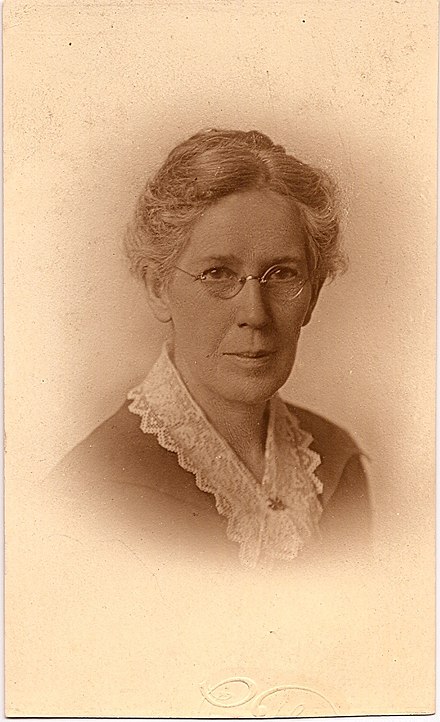
Mary Elizabeth MacCallum Scott

Mary Elizabeth was the first female doctor to work in Jaffna, while at the same time she birthed seven children and started the first nursing school in Manipay which is still in existence today. I wonder about her story, for Mary was the child of deeply Christian parents. She first trained as a teacher, then as a nurse before completing a medical degree in Kingston, Ontario, repeating exams at the Bellevue Hospital in New York. She was one of the first five women to receive a medical degree in America, but maybe getting a degree did not equal getting a job. Did that play a role in their decision to become medical missionaries? She reminds me of another exemplary woman physician, Dame Cicely Saunders, who founded the modern day Hospice movement. Dame Cicely also began her adult life as a nurse before becoming a social worker and then a physician.

Edwardo stops us for a snack of Water Buffalo yogurt and honey

But the Green Memorial Hospital is in the Northern province of Jaffna, a strong Tamil district and during out time the war was still active. Michael had guided us to the Kandalama Hotel, designed by his friend the architect Geoffrey Bawa and built into the hillside outside of Kandy. Edwardo drove us for five hours and that was as far as we got.

Everyone was very polite but clear, explaining as gently as they could that the troubles precluded them sending anyone with us to Jaffna and certainly not allowing us on the trains where murder was not uncommon. The Civil War that had begun in 1983 was ongoing and didn’t settle until 2009. We didn’t take it in – and in our ignorance remained enjoying the peace, the water, the birds, and the Buddhas, those hidden in caves, sitting or lying about – though never standing, and the Golden Buddha in Dambulla shining from the hillside across the lake. The Seven Kingdoms of Sri Lanka had been beaten almost into one, the two languages of Sinhala and Tamil remaining the tear in the Island’s fabric. The Portuguese arrived first, then the Dutch to harvest cinnamon and other spices before the British came trading Christianity for tea. It was all rather messy. This week, Sri Lanka welcomes Anura Kumar as their new Left of Center President. Namaste we say to you.  

Bell from Kandalama Hotel in Sri Lanka

But we didn’t know much about this then. We were immersed in a new culture and beyond grateful for the opportunities and understanding that this time had brought to us. It wasn’t until now, re-reading ‘Anil’s Ghost’ that I came to a glimmer of understanding about what was happening, never mind why and to whom in this country. In an interview, Hilary Mantel, when speaking about history said, “I think novelists are alert for everything historians can find and verify, but also for something different, and extra; history’s unconscious, if you like. You try to grasp an individual’s moment-by-moment experience, as the tides of the past and present wash through them.”

And maybe that is partly why I feel so lost looking about me now. The wars that we are shown remain in the present tense. In Ukraine it is the old women well into their 80’s being packed up to leave their village homes. What can they take with them? Not the last of the harvest from their cottage gardens, the chickens still raising a brood of chicks, but maybe a blanket, a change of clothes, a photograph or two. In Gaza, Israel, Lebanon and Palestine urban rubble with shards of clothes caught on rebar are all that some survivors can find. The Israeli and Hamas leaders, lunging forward like attack dogs straining and then retreating, have been unleashed and given over to the pure fury of warfare and this latest weapon, of first thousands of pagers and then the walkie-talkies blowing up in pockets and hands. There will be over 500 dead in Lebanon before this letter reaches you. These are the things that weigh the heart down. 

But meanwhile in our small country, the Annual Labour Party Conference is happening in Liverpool. The Prime Minister assured us last week that “I’m in Control.” We begin to wonder what exactly is he in control of? There is the matter of Sue Gray, his Chief of Staff having a higher salary than him. If she can keep everyone playing by an honour code of written and unwritten rules then good for her she has earned it. But can she? Digging for dirt the media finds that Sir Keir has a new box of tickets for the Arsenal Football season and a very nifty and expensive pair of glasses. The glasses follow his ‘I’m a serious fellow’ style but don’t look a whole lot better than my husband’s from the local pharmacy that cost £7.50. Then there are the clothes for the girls. Wife Victoria in a dress and Deputy Prime Minister Angela Rayner in a billowing too-bright green trouser-suit, both from the new up and coming English fashion house MEEM, look quite smart. But the women beside Sir Keir, Deputy Prime Minister Angela Rayner and Chancellor Rachael Reeves, also looking very smart, need to learn to say their lines without glaringly staring at the teleprompter, widening their mouths with animated articulation. They look like a python getting ready to swallow a sheep, and it could be that ‘we the workers’ are the sheep. They are pushing their vocals in a bid for political authority afraid that any other womanly tone will sound weak.   

In Fred Zinnemann’s 1966 film ‘A Man for All Seasons’, Paul Schofield who plays Sir Thomas More, converses with Richie Rich played by John Hurt. Earlier Richie had asked More for a place in Court. More declined, suggesting Richie become a teacher. But Richie gets his place and a golden Goblet. At the river’s edge, More sees the Goblet, looks up to Richie “For Wales Richie, For Wales?” Richie’s shame and humiliation are clear on his face. The cup is dropped into the river.

I don’t see football tickets being returned but maybe fewer parcels, with the compliments of …  will be accepted or signed for on the steps of number 10 Downing Street.

This has been A Letter From A. Broad. Written and read for you by Muriel Murch 

And always supported by https://www.murchstudio.com

Green is for Grenfell

Written and read for you by Muriel Murch with WSM by my side

One evening last week, four mid-sized yellow ambulances screeched to a halt in the little parking cul-de-sac which serves this side of the Auden Place Council housing apartment blocks. The ambulances were left with engines running and lights flashing as the paramedics carrying their bags, searched to find where they needed to go. They were gone a long time and when later I finally looked out of the window the parking lot was empty. There had been no blue lights flashing or blaring sirens signaling their departure. The next day I learnt that Sylvie had fallen downstairs and had not recovered. Those who knew her went about the day sobered and reflective.

Capitalism lives on in buttons

Last week the second volume of the Grenfell Inquiry report was finally published and made available to the survivors of the tragedy, and today’s government ministers. On the evening’s broadcast, the news-anchor standing in front of the Grenfell Tower, bathed in moonlight and cladding with its green heart wore a bright green coat as she spoke. Green-heart buttons are worn by Prime Minister Sir Keir Starmer and London’s Major Sadiq Khan seen standing on the right side of this event. 

Ministers leave the benches in a hurry

The daily Parliamentary schedule allows that after the morning’s Prime Minister’s questions there is a pause for those who have meetings to attend – to leave. On the morning when the report was to be presented the choking exodus of Members of Parliament was sobering to those who remained seated and disgusting to those survivors watching. Sir Keir turned to face the gallery as he gave his heartfelt apology, acknowledging that on every level – regulatory, council care, business and responsibility – the Government had let them down. The report left no doubt that the 72 deaths from the Grenfell fire of 2017 were avoidable.

The living community that had existed within that tower block, that exists in all housing estates and neighborhoods to a degree, has become one of bereavement for the Grenfell survivors while they remain physically misplaced in temporary housing. ’We want Justice’, read the banners at Grenfell but what is justice, what would it look like? Now the buck of blame is sliding from the place of government regulation, to counselors who did not listen to their citizen’s concerns and onto leaders in businesses. Tracking those responsibile is like following a river to its source, as a hidden stream emerging from the earth that may yet come to rest outside of the garden shed of the Prime Minister of the time, the Rt Hon Lord David Cameron who so eagerly started his ‘bonfires of red tape’ hoping to free businesses of unnecessary regulations. ‘For every new regulation cut three’, was the guideline while each and every one of the construction firms with government contracts took advantage of the burnt red tape. Once all 1,700 pages of the Inquiry documents have been read, surely there will be some firms will be highlighted and named. Sir Keir Starmer calls for the companies involved in the disaster be banned from receiving government contracts, and that the government would support the Metropolitan Police’s investigation into the fire, saying it was “imperative that there is full accountability, including through the criminal justice process, and that this happens as swiftly as possible”. But the Metropolitan Police are stalling, shuffling papers to be read in detail by lawyers – before proceeding with any prosecutions. It will be at least two years before charges are brought against anyone deemed at this time to be responsible.

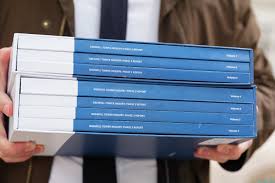
The report – all of it. Image: Ben Gingell via Dreamstime.com

While the inquiry has been bound together, distributed and read, the criminal courts have been unusually busy for August, as the far-right activists who erupted with violent anti-immigration protests in cities across the country a few weeks ago were rounded up and swiftly brought to trial. It was nasty. Sir Keir – again – expressed his determination to crack down hard on the rioters, and so the courts have been working overtime and in quick succession jail sentences have been handed out like military call-up papers. But there is another problem. England’s jails are reportedly ‘not fit for purpose’. Last week’s count showed only 500 places out of 88,000 were left, 400 being quickly taken up by the far-right rioters, leaving only 100 places, either to be given to more rioters or – possibly saved for those who took advantage of the Tory government’s bonfire of red tape. It is noted but not yet spoken how quickly some prosecutions can occur, while others linger in old manila folders. A jail-house solution is being acted on as I write. 1700 ‘low risk’ prisoners are being released across the country today. We are assured ‘High risk prisoners are not being released’. But that depends on your point of view, who is high risk or low risk, to whom? Prison staff are already struggling with this new check-list of red tape with things to be done to get those lads and lassies out of the prison gates. There is no time to wonder who will receive them, where they can go, who will support them, or will they just find it safer to return to lock-up. Will they leave enough room for the Right Honorable gentlemen and business leaders to maybe one day sit on benches beside them?

This afternoon the government just approved Chancellor Rachael Reeves’s bill to cut the fuel payment allowance given to pensioners last year. Not many people are saying the obvious – that the allowance was a double-hitting ‘take that’ act from the past Prime Minister, Rishi Sunak, first as a sop to mop up any old voters who might have put an x in his box on election day, and secondly to skewer the next government with less money in the kitty and an unpopular choice to make. But Sir Keir and the labour party still have some political support from raising pay for essential workers in the National Health Services and then to the train-drivers, thereby keeping that union at bay – for the moment.  

Sir Keir has not traveled far this summer. He’s been busy reading the manual and fixing the government’s old bike whose chain keeps falling off and brakes need new pads. In Ireland he met the Irish Prime Minister Simon Harris to ‘reset the UK’s relationship with Ireland’. There was also a visit to Paris renewing his friendship with France’s new Prime Minister Michel Barnier. Both are detail-oriented men, and keen to connect rather than disagree. French government being what it is at the moment, Emmanuel Macron’s appointment of Michel Barnier as the new Prime Minister makes England look relatively stable and calm.

And so for excitement – rather than war – we ready ourselves for the upcoming US presidential debate which will have happened by the time this letter airs. It is more nervous-making than any football match with the stakes high for the US and the world. Even those who are not counted will feel the waves of power as they settle in November. 

This has been A. Letter from A Broad. Written and read for you by Muriel Murch.

Supported by https://www.murchstudio.com

Remembering the First Time

Remembering the First Time

Written and produced for you by Muriel Murch with WSM by my side

It was 1948 and I was 5 years old when, with my mother and Brett, my nanny, I stood on the side of The Devil’s Punch Bowl. As each horse came to the crest of the gully, they paused, taking in the drop, collecting three strides down, before a leap over the solid tree-trunk above the deep ditch then galloping up the other side and away onto the rest of the course. As a big grey horse thundered past, my mother and Brett let out a cheer for the Swedish rider. Brett was from Sweden and this was the first Olympics after the Second World War. The equestrian events at the 1948 London Olympic Games were all held close to home at the Tweseldown Racecourse by Aldershot – a military town and at a very early age we were taught, “Never talk to the soldiers”. The American team won the eventing, the Swedish team placed second, with Mexico taking the Bronze medal. The changes in the political geography of countries can often be seen at the Olympics. In those days Mexico and Argentina sent successful equestrian teams all over the world. I never got over the thrill of seeming that grey horse leap into and over the Devils Punch Bowl.

Tweseldown Racecourse from Wikipedia

I was hooked and it would be less than ten years before Taffy and I were galloping through those same forests and over any obstacle I found in the secret freedoms that lay on those moorlands. 

We remember those first times, and now as this year’s Olympics play out in Paris we watch the athletes perform, many for the first time for their country.

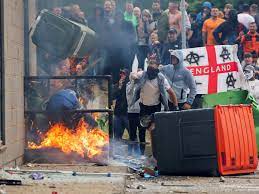
Sir Keir is a serious man and treating his new premiership with appropriate gravitas, and while the Labour Government was seriously going about getting settled in, they too felt they could breathe gently and watch our athletes in Paris giving their very British best. But if he had hoped for a longer honeymoon period it was soon cut short as we watched the riots break out in a fire storm over the killing of three little girl children finishing a dance class in Southport. An unnamed seventeen year old boy – incorrectly rumored at first to be a Muslim refugee – is being held in custody. Rumours – spreading as fast as the wildfires of Canada and California, have sparked violence in cities across the country. Far-Right nationalists fuelled by the disinformation from social media, are following a pattern discernible in North America, Israel and Hungary, among other eruptions around the world. Gray headed grannies holding signs for ‘Nans not Nazis’ are in danger of being knocked to the ground by the boys in thier street that they may have helped raise.

Far right rioters attack asylum seeker hotels in Tamworth. Photo for Al Jazeera

From Southport in the north to Aldershot in the south, towns up and down the country that hold deep pockets of poverty and unemployment are fuelled with anger and rioting in an all-too-familiar manner. Sir Keir Starmer is facing his first time as Prime Minister with this storm battle and our country’s worst elements. Nigel Farage barely makes an effort to keep a neutral face while he sits in Parliament and no one can believe that he is not chalking one up for the far-right team. The Police have been given ‘extra powers’, more prosecuting lawyers have been called in, though from where and where to it is hard to tell.  ‘The rioters will feel the full force of the law,’ promises Sir Keir, but some of us wonder if those said rioters will care, and what the law stands for – for them and for us all. It just took one incident – no matter that misinformation was spread – lines are drawn across the streets of neighbors, with those leaving flowers for the children and their families, and those rioting for an England they never knew, each side is screaming to be heard.

Certainly other government leaders are not concerned about the internal laws of their own country or the international laws that loosely hold the global community together. The recent swap of Political prisoners, brokered by Germany, Norway, Slovenia, Poland, North America, and Russia that took place in Turkey was the largest game of checkers since the Cold War. 16 Russian dissidents, Germans and US prisoners were returned for 8 Russian undercover spies and agents. But there are still hundreds of political prisoners left behind in Russian prisons, and who knows how many Russian prisoners are also still in European and American jails. When the talks first started, Navalny’s name was among those put forward for release, ‘Sure, no problem,’ said Putin in the Russian political way. During the months that the final arrangements fell into place and the talks continued the ‘Sure no problem’ line was repeated, but Navalny died in prison on February 16th.  Bait and switch. Check mate. Putin never intended for Navalny to go free. 

It was 1992 when at KPFA Pacifica, I was handed ‘Time and Tide’ a new book by Edna O’Brien who was coming to California for an extensive book tour. This was to be my first book interview. As I picked up the book and turned it in my hand, the portrait of a sensual and defiant Edna stared out at me from the back cover. Edna was a woman who – if she took to your husband at a dinner party might – or might not – return him for breakfast. This I knew to be true. ‘Time and Tide’ was not an easy book, even if you were a follower of Edna’s writing. But I understood Nell, her heroine, even as I cringed at all the troubles that beset her through the pages. 

Edna O’Brien at that time. Photo from The New Yorker

Edna arrived at the radio station in a fuss. Her plane has been delayed and her luggage was lost. She was as tiny and Irish as I was tall and English but quickly I saw that we were both nervous. Edna upset at the loss of her luggage and the fact that her silver pendant had rubbed a stain on her white jumper. I was terrified of her intellect and sexuality. But as we sat down, locked together in the recording booth, and began to talk, she relaxed, answering my questions with eagerness and generosity and the conversation began to roam as she remarked “Well, Ulysses is difficult isn’t it?” Then we slipped into film as both of us had been knocked sideways with ‘Raise the Red Lantern.’ by Zhang Yimou. It was clear we shared a mutual concern for the plight of young women and that, as well as my thorough preparation, softened Edna and she recommend me for the publishers next author, Susan Sontag.  Now Edna has died at the age of 93 after a long illness and I wonder what was the illness that took her away from this world at the beginning of this late summer time. Edna was my first Author Interview and I will never forget her.
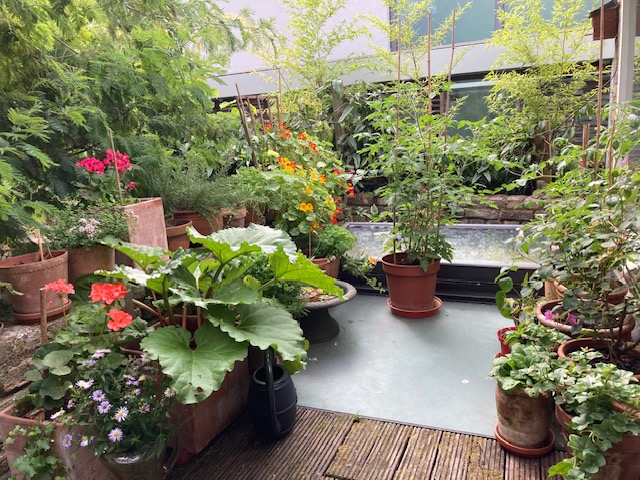
Apart from the riots and the Olympics there are the perennial editorial concerns about the decline of wildlife and insects. Our little terrace is less than 150 square feet and is now full of summertime beauty. We get excited when we see the honey, bumble and mason bees, and then a cabbage white butterfly, an orange tiger moth, and a blue dragonfly also come by. Their first arrivals let us know we are doing the right thing on our tiny patch of heaven.

A little London Terrace MAM

This has been a Letter from A. Broad. Written and read for you by Muriel Murch, and supported by murchstudio.com

A correction from the audio to the text. In the audio I say Stockport when it should be Southport.

Behind Closed Doors

Written and read for you by Muriel Murch with WSM by my side

The Piazza Santissima Annunziata is almost empty with only a few tourists bearing the late afternoon summer heat while seeking refuge in the churches and museums. Idanna drives straight into the empty Piazza and parks the car. We get out and look around. In the center sits The Grand Duke Ferdinand (from 1608) astride his horse. The horse is facing the little telescope alleyway that leads directly to the Duomo, but the Duke’s eyes, if you look carefully, seem to glance up to two windows, three stories high, on a red building. The shutters remain open so that through the centuries he can look to, and be seen by, his mistress behind them. His arm is raised in salutation to the Pope of the day, or to her – it is left to the onlooker to imagine. On another side is the hospital of the Innocents, an orphanage and museum still run by the nuns from the Sisters di Maria. A small grilled window sits facing the square where – at night time – a mother could – between 1660 and 1875 – raise the grill and lay her new-born babe on the rota where friars, on their night-time shift, sat waiting for a delivery, not as midwives for a wanted child, but as caretakers receiving the fruits of enslaved and then abandoned love. These are the buildings and stories we take in as we make our way to the side door of the Church of Santissima Annunziata, for our friends, Idanna Pucci and Terence Ward have something to show us.

The Key to the door.

“It is a surprise,” says Idanna after we had stopped at the Palazzo Pucci to pick up the ancient key that would have weighted heavy on the twisted cord belt of a monk’s cassock. Again, her face lights with that impossible grin she has when holding a happy secret. The door is thickly double paneled, over eight meters tall, and the strong wood is sun-cracked. Terry takes the key from his pocket and places it in the single lock.

In the bright late afternoon sunlight the key is reluctant to turn and it takes several wiggles before it catches and the door is opened. We enter the tall cool space of this chapel dedicated to St. Sebastian and now lovingly restored by Giannozzo and Idanna Pucci with the help of World Wide Friends of Florence.

WSM and Terence Ward look up to St. Sebastian.

Terry gathers the three red velvet chairs placed in the chancel for musicians together and we gather around as Idanna tells the story. Her lilting voice takes us back to 1082 when a little house of prayer was dedicated to St. Sebastian, then leads us down the path of history through the Middle Ages, the building of this church of the most Holy Annunciation and this chapel, to the paintings commissioned, sold (by one of the unscrupulous relatives) and now lovingly replicated through the guiding hand of her brother Giannozzo. Her voice sings with the joy of the story, coming to when the chapel was reopened and rededicated in May of this year. Idanna is grinning with the happiness of sharing their gift to the city with us. They then lead us around the three major paintings of Saint Sebastian hanging above the alter sanctuary while underneath there are sculpted reliefs of Pucci ancestors, the good and the maybe not so good. Finally we look up at the breathtaking cupola. As we lingered in the beautiful sanctuary a guide from the main church brought in two more visitors to see this sidebar of history. Taking our leave, we walk over the moveable stones that cover the crypt holding Puccis and maybe even a Medici or two. “Have you been down there?” I ask Terry, and he firmly shakes his head. “I have looked. It is a jumble of bones all tossed about, from the flood’. In 1966 the Arno river flooded and swamped Florence ravaging much of the art and bibliotic heritage of the city. The Pucci crypt would be one among many holding places of the dead to be tumbled into confusion and dust. Leaving, Terry turns the key once more in the lock. Walking to the car in the still almost-empty Piazza, I silently said goodbye to the orphanage museum, the Convent of the Sorelle di Maria and the old Duke with his arm raised in salutation.

The Hospital of the Innocents – Orphanage and Museum – Photo by WSM

With our time in Italy we missed the final run up to the UK general election and returned only in time to watch Ukrainian Prime Minister General Zelensky meet his Hungarian counter part, Victor Orbán. Orban, who for six months more is head of the European Union, then went on to chat with his pal Vladimir Putin.

Orbán and Zelensky meet

The countries that make up the EU cried ‘Foul, He is not speaking for us,’ but Orbán merely shrugged, figuratively speaking, saying he was just going to listen and hear what each side has to say. He may be dreaming to broker a peace deal – always a good thing to have noted – but his hand is more eager to grasp Putins’ than Zelensky’s. As each Eastern European leader swims across the tides of history pulling and pushing the boundaries of their country it is within our memory to recall Hungarian refugees arriving in England while fleeing their own county’s oppression.

As July 4th – the UK polling day ended – TV screens lit up like a game show as presenters pointed out which constituencies were turning from blue to red with touches of amber for the Liberal Democrats and green for – well – the Green party. But it is the red of a Labour takeover of the country that has prevailed. As Dishy Rishi drove off to hand his resignation to the King, the movers were quickly packing up the Sunaks’ plates and cutlery, curtains and bed linens to take out of the back door. An hour – or is it two –  later, steady Sir Keir Starmer was off to Buck House, asking the King’s permission to form another government. The handover has to be quick so the country is not left to its own devices. The moving vans are as quick in and out which is rather lovely, for #10 Downing Street is just an old run-down city house in constant need of repair. The inconvenience of any refurbishments only heightens the impermanence of the position, as power comes and goes and hopefully, while you have it, you can do more than change the curtains.

Sir Keir Starmer has not been idle. The smell of Pledge furniture polish was barely cleared from the cabinet room before he gathered his new team around the oval table and gave them each their work orders for the weekend. There was not an old Etonian among them and there would be no potting shed moments. For some, their bags were already packed to fly out, meet and greet, and start work. The weekend saw Keir begin his trip around the British Isles meeting the other UK government leaders. While with the First Minister of Scotland, Sir John Prescott, the chants from protest marchers could be heard through the ministerial walls before Sir Keir was whisked away past the waving Pro-Palestinian flags to meet the First Ministers of Wales and Northern Ireland. On Monday, he arrived in Washington DC, attending the two day Nato conference, filling his movable dance card with more meetings of world leaders, some who are uncertain about their political future. As Sir Keir enters the stage, others are exiting, stage left or right or hovering in the center holding an unenviable heavy portfolio. While Zelensky can be assured of continued support from the UK, the State of Israel, Gaza and the Palestinians remains out of balance. The elections in France have handed Macron a mixed plate but there is relief that, for the moment, the Far Right parties of Farage in England and La Pen in France, though now more visible than ever, have been contained – but only just.

When thirteen of us gathered together at a Palestinian restaurant on the Marylebone Road, for a Coup 53 reunion and an early celebration of Walter’s 81st Birthday, I looked around the table counting our birth-countries: Sweden, The Caribbean, Finland, Iran, North America, Ireland, and England, and am grateful to break bread in a place of such multiplicity.

Taghi Amirani and team. Photo by Taghi

By the closed door of the ladies, I stood with a tall, young, beautiful Palestinian woman just back from the day’s march. “How was it?” “Really good, we were over 100,000 strong.” Smiling together we know that however dissimilar we appear our women’s hearts beat in one accord. 

And always supported by Beatrice @ murchstudio.com