The Holiday Season

Machiavelli to the Death

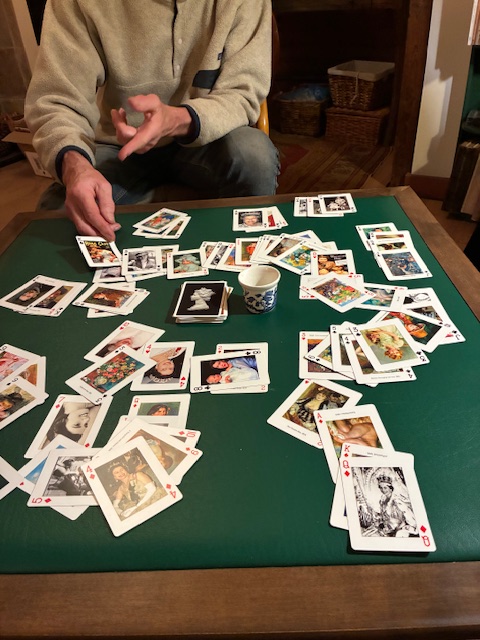
The card table is balanced on the old coffee table – giving us a square surface on which to play. The fire is on, we are warm. Crumbs from the Dundee cake land on the table and the cards and we brush them to the floor. There are two egg cups perched on the corners of the table. They each hold an ounce of Jameson Whisky. We are poor drinkers and card sharks. But we will play Machiavelli to the death. 

The rain has been falling steadily all week but the wind is quiet, not ready to push the rain or us around. The roadsides are splashed with yellow. Some call the big loose bushes Mexican Marigolds but they look almost Indian in their brightness. There is another swatch of yellow and green along the roadside – a succulent who is claiming this climate as its own. Three times I have seen rhododendrons pushing purple and crimson buds into the New Year. No one can tell them to stop.
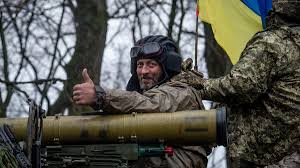
A member of the Ukrainian military rides on top of an armored fighting vehicle. Ukrainian Ground Forces/Handout/Reuters

And no-one can tell the soldiers to stop either.

While the news reporters focus on Christmas lights, spontaneous angry killings alternating with acts of kindnesses they have withdrawn from the horrors that continue in Gaza, The Sudan and Ukraine to name just those we have carried through this last year. Now the Unites States President has turned his watery unfocused eyes on Venezuela with its oil. He is trying for a replay of the British taking over the Iranian oil fields in the 1950s. Someone must have been watching Taghi Amirani’s film Coup 53 and suggested that America could have another crack at this kind of takeover. We are blinded in the headlamps of this US government administration’s decisions that come tumbling out of the revolving side door of The White House. Last week, off-shore energy windmills were cancelled and more American jobs were lost. In Kentucky the Japanese-owned Jim Beam bourbon whiskey company will halt production at its main site for all of 2026. Halt – not yet close down – but still there are more American jobs lost, families that will go hungry, get sick and even die because of the government tariffs that effect all American industries. This week came the recalling of career ambassadors from around the world. They are to be replaced with new ‘loyal diplomats’  to the agenda of this administration over and above that of the American people. That is a strange sentence to write but becoming more true with every decision coming through the revolving door. First out the door – or into the ring – is the special envoy sent to Greenland to place it ‘under US control.’

With trade and educational wheeling and dealing Sir Keir Starmer is clawing Britain’s way back closer to Europe in a desperate bid for some safety. While Europe has promised Ukraine 90 billion Euros in funds to continue the war with Russia, alliances need to be stronger as Europe faces off openly with Russia and the US putting in place loyal  – to the president – diplomats.

It is the Christmas Holiday and in Northern California it is raining steadily, the water soaking into the dry ground making mud, rivulets and drawing nourishment from the soil to turn the hills a deeper, richer green. A Loveliness of Ladybugs has come inside our hayloft home. They crash into the paper lanterns and settle on the window ledges waiting for this storm to be over but the rain continues to fall. Outside the sheep seem not to care, though the chickens return to their pens to wait the weather out. I go into the vegetable garden and hunt for sorrel. The first starter was given to me by a tough midwestern pal of Northern European decent. The sorrel, with a deep tap root is tough too, and thrives with total neglect though the year. It drinks up the rain and now the leaves are ready for my harvest. Sorrel leaves, a potato, maybe a leek and there is soup to warm the family this winter week. At this time of the year, in all our traditions, for a brief time we close our minds to the outside world to focus on our families and yet I cannot but picture the grandmothers in the Ukrainian countryside searching their small patch of land for some sorrel, a potato and maybe a leek. I hope that they can find them. 

Some sorrel, a potato and maybe a leek

This has been A Letter From. A Broad Written and read for you by Muriel Murch with WSM by my side and as always supported by Beatrice from MurchStudio

Thank you Jesus

Written and recorded by Muriel Murch with WSM by my side

‘Use a Wheelchair’ enough friends and family said that, that it became another ‘if three Russians tell you you are drunk you might want to lie down’ moments. And so, feeling immensely foolish and embarrassed, I did. And each wheelchair led to another brief encounter of sweetness. First up there was Chris at EuroStar. “It’s your lucky day, I’m with you all the way.” And he was – and he easily took on more than just us. Chris was watchful and would spot others who seemed lost and as if they needed more help and guidance. For them too he would quickly point out their way forward.

Feeling foolish in Amsterdam. Photo by BL Murch

It took only a few hours before we were safely tucked into our daughter’s home in Utrecht. The little overnight case holding Beano comics and Cheddar cheese along with the toothbrush was unpacked and we settled into the now ritual Sushi takeout supper the family orders for our first night with them. The Dutch, along with the rest of Europe and the world, do not celebrate the American Thanksgiving holiday, though a different form of Thanksgiving from America may eventually come to pass. A Thanksgiving to be free of the yanked choke-hold that is oozing out of the United States. As I write, motions are being written and presented to the senate that American citizens may not hold more than one passport and visitors to the United States should show five years of email correspondence and social media activity. There goes the United States airline industry for a start.

This little family holds all its traditions dear, those from Argentina and those from America. Assados and barbecues, soccer and football alike and so that weekend the Thanksgiving meal was a lunch on Saturday. Swedish friends with their two children and an American couple who had just recently moved from Ireland to the Netherlands gathered around the table. My Granny jobs had me thinking back to Mudda, my oldest friend’s grandmother, sitting at her daughter’s kitchen table, slicing beans. She would slip me half-a-crown with instructions to bicycle down to the tuck shop at the end of the road and pick up a packet of Craven A cigarettes for her. There would be sixpence left over which she would slip back in my pocket to buy sweets for us later. During those childhood years Mudda fed me my first cigarette. As I took my Granny place with the beans I felt quite virtuous, knowing I had only given David comics. It felt good to sit at the table topping and tailing green beans before peeling the potatoes. 

Saturday’s meal was fabulous as was the company. Beatrice has mastered mashed potatoes like I never could. The beans were served with a shallot and balsamic dressing and the turkey – well of course it was perfect – and then there were pies.

Pumpkin Pecan and Apple Pie. Thank you Beatrice.

The conversations flowed over and across Kim’s Game – another Thanksgiving tradition Bea had brought forward from her childhood when we joined friends in Inverness. Animated talks continued until someone picked up the brochure that had been mailed to every household in the Netherlands that weekend. The cover was eye-catching purple and the cartoon figures stood out in relief, as through the pages they showed what to do in case of a drone attack. No enemy was mentioned but the recent Russian drones flying into the airspace of the Netherlands, Poland, Germany, Estonia, Sweden, as well as Ukraine leaves the whole of Europe nervous and jittery – which is just the fun of it for the Russian President. As winter sets in to Northern Europe another country’s president, too far out of reach for those drones, tosses off instructions and memos to President Zelensky. While Ukraine’s President repeats that he will not cede any territories to Russia the infantry troops must hold the ever-increasingly dangerous line while under such constant attacks.   

On Sunday our bags were packed in the car and we left Amsterdam for an overnight in Dublin before flying back to California. Both the Irish attendants, for those in need of assistance, in and out of Dublin Airport, were so young and had perfect capped white and even teeth – and I wondered – why. I couldn’t help thinking that once – like young race horses – they had been promising young boxers and that maybe injury had set them aside to languish and grow bald working for Air Dublin at the airport. The tips could be good and it is almost healthy work with all the walking and maybe a better life than working in construction or the restaurant trades. 

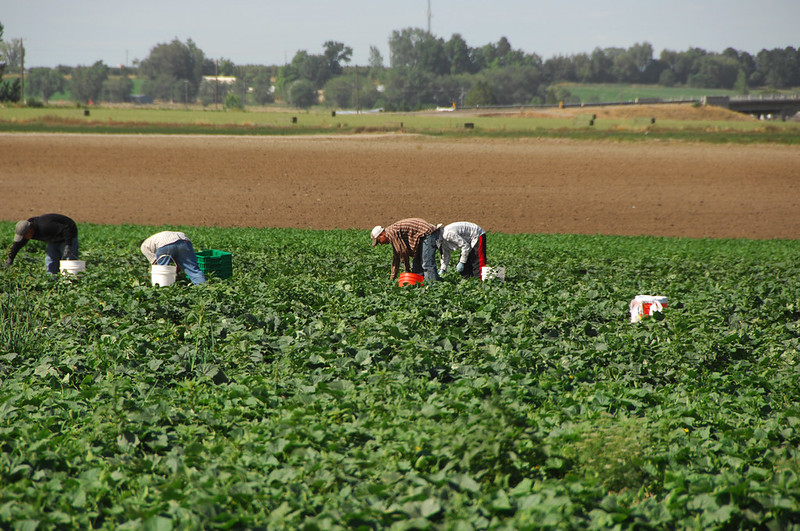
Flying our bodies 6000 miles across land, sea and any remaining snow-capped mountains leaves them shaking and in turmoil. For the first few nights back in the Hayloft there is a strong full moon over the lagoon and farm. Dawn has barely broken as I lie awake and look out of the glass doors to the fields beyond. The tall eucalyptus trees are only just outlined against the sky. A faint light flickers up and down as a small converted golf cart is driven slowly along the rows of vegetables growing in the fields beyond. The light bobs and then pauses for some minutes before carrying on along the row. The cart is idled and I imagine the Jesuses and Josés of the world wearing thick jackets and pulled-down caps over stained jeans climbing down, knives in hand as they each pull an empty crate from the back of the golf cart before bending down and harvesting from another row of chard. The work and rhythm is repeated as the dawn lightens until the cart is full and they return to the office and waiting truck ready to accept these gifts. For this harvest, working though it is, is a gift to us all. I watch the bobbing light, the dawn rising and even with some early morning kisses I do not fall back to sleep. I must honor the work of Jesus and José with my words –  and I do.

Workers mannually harvest ripe produce on Rick and Robyn Purdum’s farm. Fruitland, Idaho. 7/20/2012 Photo by Kirsten Strough via USDA

This has been A Letter From. A Broad Written and read for you by Muriel Murch with WSM by my side and as always supported by Beatrice from MurchStudio

Feet in the Fridge

Writtten and read for you by Muriel Murch with WSM by my side.

Sally came back from across the street, “Granny Turriff has pulled up a chair and has her feet in the fridge.” 

“Well that seems sensible. It is hot today.” replied her mother summing up the family consensus from their kitchen on the small street in the village where I grew up. The temperature must have reached the mid 70s at that time in the early 1950s. Granny Turriff was not my Granny, but she was one of the grannies who lived all around, in the house, or across the street at a time when families stayed close and watched out for each other. There was no air-conditioning then – maybe a breeze from an open back door would rise – stirring the still air – and putting your feet in the fridge was a pretty reasonable way for an elderly lady living alone to stay cool.

London Temperatures for Saturday June 28th

This last week with the heat wave now official – three days of temperatures above 30 degrees celsius, the mid-80s Fahrenheit – I’m remembering Granny Turriff  as I open our fridge door to reach for the freshly made jug of iced tea and the cool air swirls out towards me. The temperature rests in the mid 80s and is 10 degrees hotter that when Granny Turriff put her feet in the fridge. Low level fridges are long gone so no one will see this piece of eccentricity – when practical might be considered just beyond sensible – and such actions could be judged as inappropriate behavior. There are warnings of the ‘extra’ deaths that this heatwave will bring to the vulnerable; the very young, the elderly and the infirm. The news details the pressures this will put on the already stressed health service and we, the very young, the elderly and the infirm, are advised to stay at home, rest and drink plenty of water. It is almost our duty to do so. We will keep the curtains and blinds drawn down to keep out the sun. We will water our plants in the evening time and we will rest. 

The heat wave crosses Europe and given these times an almost manageable concern – what is it that puts global warming into manageable while Palestinian families are bombed, Ukraine battles on struggling to reclaim land stolen by Russia and now the mad man in American makes Dr. Strangelove look sane? 

War, once again there is war. War for The United States of America is almost as big an industry as the entire US agricultural section. With these blasts, like aggressive bowel evacuations, of another attack on a sovereign country – whether one likes the regime or not – I look around searching for a place of reason. There are the “No Kings” demonstrations around the United States and even in Europe and other countries. The leaders of Canada, Mark Carney and Mexico, Claudia Sheinbaum cradle us in hope while the American Democratic party sits about pinging their phones and deleting emails. The American barrel of sanity looks pretty empty.

But this week, in a small organization, I found a firm steadfast remembrance of the horror of war. 

Nurses, old, ofttimes retired are joined by young ones as they group together, state by state to form Nurses Honor Guards. The NHG now has over 300 chapters in all 50 states and continues to grow. Jeanie Bryner is a nurse, a friend, a poet and a power-house member of the Nurses Honor Guard of Eastern Ohio. When asked, the honor guards gathers to perform Nightingale Tribute services for nurses. Like in the military, it consists of the Final Call to Duty. The Nightingale Lamp is lit in the nurse’s honor and when a triangle is rung the nurse’s name is called out three times as a request to report to duty. With the last silence, after her name is called, the nurse is announced as retired and the lamp’s flame is extinguished. She is relieved from Duty. 

Relieved from Duty Display from an Honor Guard.

Last week three chapters of the Nurses Honor Guard from Ohio took buses to Washington D.C. where they had been invited to place a wreath on the Tomb of the Unknown Soldier. And that makes some kind of sense. The little I know, but something, from the strength of the grass-rooted down to earth poetry of Jeanie Bryner – the poetry of rural people, the patients, the nurses who care for them from the heartland of America – these are people who know the loss of war. It is probable that at least half of those women nurses have suffered some deep loss from the wars fought within their lifetimes – never mind their fathers before them. I found the video of the wreath laying ceremony on line – of course I did – and like so many at that ceremony there were tears in my eyes watching these nurses, there for their fellow fallen sisters and brothers, lovers and fathers.

Ohio Chapter of the Nurses Honor Guard at Arlington Washington D.C.

In 1995 Ohio State University published the first of a series of Anthologies on Nursing. ‘Between the Heartbeats Poetry and Prose by Nurses’ was edited by Judy Schaefer and Cortney Davis. As many of us as could traveled to Washington DC. where The American Nurses association was holding its annual meeting. But the ANA refused us permission to present or read at the convention. Instead we found a bookstore that took us in. I don’t remember how many other people came to that reading but we were an enthusiastic and proud group of nurse writers. As we gathered after the reading, mostly meeting each other for the first time, there was one nurse I particularly remember. Above her slacks she wore a brown, checked, gingham, short sleeved shirt. She had read her poem about Vietnam. We asked her if she had visited the new Vietnam Memorial wall. “Oh no.” She replied. “It is too soon.” In our silence we understood we would never know the horror she had witnessed. While the Ohio nurses gathered at the tomb of the unknown solder we all hold the world closer, praying for peace and the seeming unceasing wars to end.

This has been A Letter from A. Broad. written and read for you by Muriel Murch.

Always supported by https://murchstudio.com

Half a Life-time Ago

Written and produced by Muriel Murch with WSM by my side

Forty-one years – half our life-time – ago we packed up our bags and the family and said goodbye to our home, leaving for two years in England to begin making ‘Return to Oz’ for Disney studios. In our inexperience and naiveté we didn’t know what was ahead for us or the film, and it was an intense two years full of more adventures than we had bargained for. We returned bruised but not broken though the film had a harder time of it. Abandoned by the studio whose revolving doors had spun executives in and out approximately every six months ‘Return to Oz’ was not given a good send-off as it was threaded up in cinemas around the country. Many years later Sydney Pollack, a film director, producer and friend, when battling the same issues with ‘The Talented Mr. Ripley’ said that “you can take an audience to hell and back, but you have to let them know where they are going.” Disney was not prepared to do that with Oz and neither was Paramount with Ripley. Both films felt the force of those non-decisions. But eventually both found their audiences and have a strong following to this day,

Return to Oz Poster by Drew Struzan that was never used.

On Saturday morning we were driven across London – never a smart thing to do on a Saturday morning – to the British Film Institute – on the South Bank of the Thames River. The driver dropped us off – as they do – somewhere in the back of the vast South Bank complex – and it took us awhile to find our way to the BFI entrance. We were late. ‘Return to Oz’ had already started, Dorothy had just found the key to Oz, showed it to Aunt Em and was about to be taken off to Dr. Worley’s. My friend Tansy as Toto was putting in a star performance. We were ushered to our seats in the back and as we slowly got used to the dark we saw that this large theatre was almost completely full of families and fans glued to the screen. They were laughing at the jokes, and following along, even staying silent and alert when the film froze as the projectionist missed the final breath-holding reel changeover. As the lights came up the audience of some film makers, film buffs. and children settling in for the Q and A. A young girl who had participated in the fun children’s hour hosted before the film asked Walter “Is Oz real?” and he answered, “Well that is the question isn’t it?” 

Thames in spring – photo by Beatrice Murch

Eventually we left the BFI, going out into the bright sunlight and joined the weekend folks along the South Bank of the river. The tide was in, the wind was up and the tourists were thick, walking and pausing to see the street artists with their puppets, music, youthful energy and hope. Strolling along we were bemused and touched that the work of 41 years ago still lives in the minds and hearts of these families. Crossing the Westminster Bridge I thought of the Nome King’s destruction by a plucky girl, her Army, the Gump, a squishy pumpkin, a chicken and an egg. For this afternoon moment we were relieved of thinking of the current Nome King who is destroying the Oz of Frank Baum’s world and dreams, the new age of invention as it was then in America and continued to be – until this time.

It’s pretty steady, each and every day a new decree is published from the Emperor who – although despite falling asleep while wearing a blue suit at the Popes Funeral – seems not to have any other clothes. He is moving on, already bored with the finer details of making a deal with Ukraine’s President Zelensky – gouging out huge mineral reserves in exchange for a paper-thin promise of more weapons, a cease-fire with Russia and some small print saying which countriy’s mayors, Russia or the Ukraine, gets to sit on which city council. President Zelensky has signed away half of his countries mineral wealth to this US President, betting that he won’t last his full term and hoping that eventually some calmer heads might prevail. For the moment the word from one of many Ukrainian women who have sheltered in Europe, finding work where they can is that ‘We are running out of men’.

It is as if the US president is no longer content with the swing of his golfing driver but has taken to fishing, wading in over his knees as he casts his rod and line out into the waters. He is moving on from the river bank of Gaza – leaving his pal Benjamin Netanyahu to finish mopping up the remains of that invasion. Hamas will burrow deeper into the sands of the desert that will indeed become deadly.  

photo by Faith Ninivaggi for Reuters

He is even more dangerous with a fishing rod, spinning it back and then out with too heavy a lure on the end. While we watch, Vice President Mike Pence received a Kennedy Medal of Honor and pause to take in the meaning of that award, for him and the country. 

Last week Public Broadcasting was threatened and ‘Films not made in America’ are on this week’s hit list as he called them a “security threat”, saying that “Other nations have stolen our Movie industry” The thought that art forms of any kind are like cats not owned by anyone but casting their lot with whoever gives them the best deal has not crossed the minds of the minions in the White House. Or maybe it has? Is the film industry to be reeled in with all the creators of all art to be marinated with the a new sauce before being tossed into the scorching barbecue pit of Great America. 

Spring has balked at heralding summer. The clouds are heavy with gun smoke as Israel attacks Yemen, Lebanon, Syria and Gaza all in one day. The blame lies elsewhere they say. And so far there are no children with a magical army of peace to stop this.

Here in Great Britain council seats were contested across the country splitting the United Kingdom into disarray. The Reform party led by Nigel Farage has taken a bold lead, sending the Conservatives tumbling to sit below the Lib Dems, whose leader, Ed Davey, MP for Kingston and Surbiton, is busy celebrating by playing village cricket and serving up just-out-of-the oven warm scones smothered in cream and strawberry jam at the tea break. Sir Keir Starmer looks rather shell-shocked and is almost pleading with the people to ‘give him more time.’ before he, too, dutifully served tea at the long table laid out along Downing Street for the 80th VE celebrations for the end of WW II.   

Princes George and William listen to a Veteran at Tea time in Buckingham Palace

Monday was the beginning of England’s week long celebrations. The Royal family were dutifully out on display, paying tribute to the soldiers, sea and airmen who fought then, and those who continue to serve. As in other countries that celebrate this day, there are fewer and fewer active service personal alive to be wheeled out and thanked, while each country continues to prepare for war.

This has been a letter from A Broad written and read for you by Muriel Murch. 

Supported by murch studio.com

The Limit

Written and read for you by Muriel Murch with WSM by my side.

When Winifred Forsyte’s husband, Montague Dartie, stole the pearl necklace that her father had given her for her wedding and then gave it to his mistress before setting sail to South America, she said to her brother: “It’s the limit!” And now, across the country, Americans reacting to the nine weeks of this new government administration, are reaching the same conclusion, with all the bombastic fireworks and scrawled penmanship erupting from the Oval Office at the same time. At first it was hard to see where to focus – which was the point of the mass display of bogus authority. As we each tried to settle on something that meant America to us: immigration, freedom from persecution, a land of opportunity, many people returned to The National Parks that display the majesty of all that this country can offer.

Protest at the Bear Valley Visitors Center in Pt Reyes, California

The Parks belong to the people of America and the people who work in them, coming from all walks and persuasions of life, work for the American people. The wild actions of the President and his puppeteer Elon Musk are enraging ordinary folks from the Rockies to the Mid-West plains and the rivers that join them. The limit may not yet have been reached but it is getting close. The forests and parks are the American Jewels, beloved by peoples of all parties, persuasions, income levels, rural and city dwellers alike. And they – we the people – are coming together, supporting where we can the rangers and Park personal dismissed out of hand by the playboys in Washington.   

What are they thinking, strutting around the corridors, cruising into conference and press rooms, wandering along halls leading to nowhere in particular? They are plucking what seems like easy pickings off of the laden fruit of America. Things that they don’t use. When was the last time Elon drove a Tesla into Yosemite National Park? Was there even a first time? It is more than doubtful. Up one aisle and down another he trolls with his shopping cart, as if in a giant supermarket of cheap value. The park service here, an unforgivable rudeness to another nation there, a Palestinian immigrant kidnapped. It is enough to shake up America to join together in saying ‘This is the limit’ But when and how will that be reached? The display of bad manners – the politest words I can find – shown in the Oval Office last week for President Zelensky’s visit was another limit reached.

And this one – that one – has left lasting damage to how North America, not Central or Southern America, is seen across the world. ‘No taxes to Kings’ was the battle cry of the first republic but now this America is being ravaged by a despot and his henchmen. 

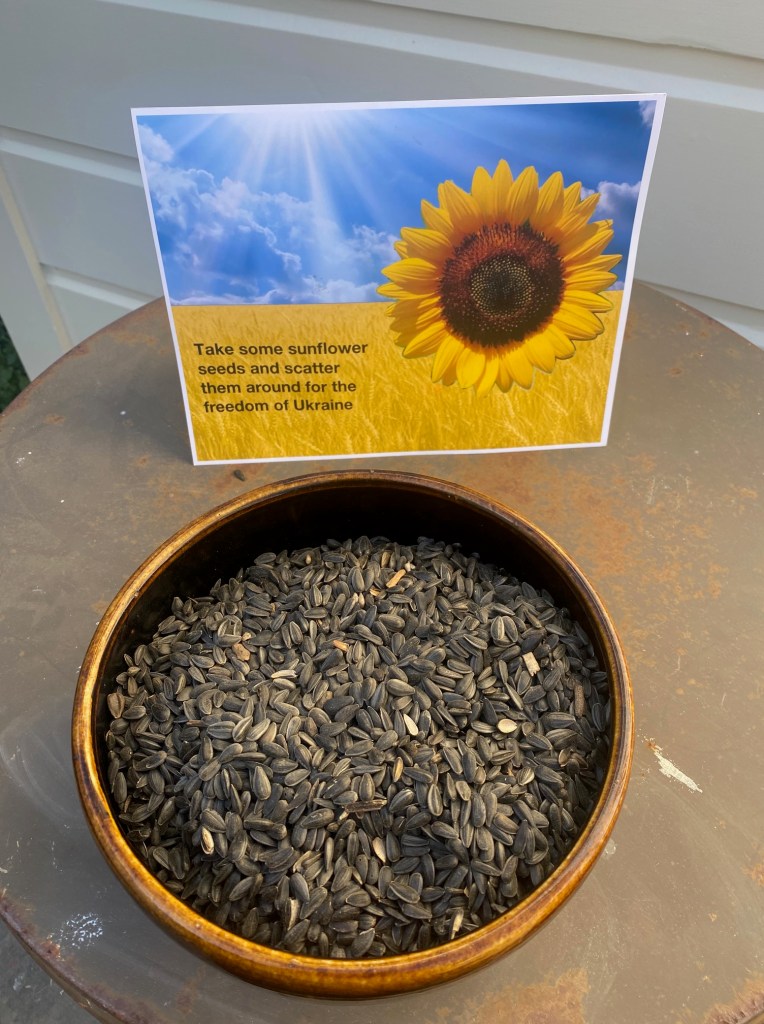
Sunflower Seeds at an event for guests to take and spread in support of the Ukraine.
Photo by WSM

Meanwhile across the Atlantic, on the boarders of Europe, a real King is welcoming President Zelensky as he should be welcomed, with good manners and concern for his well-being, reminding us all it’s not the title – it’s the person. King Charles III is joined by his Prime Minister and the leaders of a still free and Democratic Europe. Which is poised – understanding that the rise of fascism starts with a slow simmer before reaching a boil. And then it can boil over, like an unwatched  pot of soup to be mopped up – or not – by those left in the kitchen that is Europe. The Ukraine, sits boiling on the stove rising to a boil in the kitchen that is Europe, the heart-beat of any home. And America is a home to those who were here before the rest of us who arrived – in free will or slavery. For we all came as immigrants, some in fear, struggling from persecution, some in greed seeking opportunities and some with good heart looking for a better life without the need to hurt another. 

As we live, around the block, up the street, in the cul-de-sac or along the lonely highway that weaves from farm to farm our families grow together in community. We celebrate, mourn and disagree together. These times make us who we are. And when some outside force threatens the community – disease, natural disasters, governmental bureaucracy and corruption – then we put aside our differences and come together, clustering like bees to protect our queen, in this case the integrity and sanity of North America who is in danger. The people know that a killer wasp has entered the Bee hive and is threatening all that work there. 

It is beginning, the gathering of small groups leading to larger ones, coming together forming bigger and stronger communities and blessed Bernie Sanders out there stomping around in the midwest states. So far it has the smell of “We’re right behind you,” not too many daring to stand along side or step up to the lead. Sanders is a Truth Bomber. He has nothing to lose by speaking out. And as Rep. Alexandria Ocasio-Cortez, said of Sanders’ efforts. “You look around — who else is doing it? No one. My hope is that the dam will break in terms of Democrats going on the offense … We need to take the argument directly to the people.” “It’s not about whether Bernie should or shouldn’t be doing this. It’s about that we all should,” she said. “He is unique in this country, and so long as we are blessed to have that capacity on our side, I think we should be thankful for it.” Ocasio-Cortez said she will join him on the road in the coming weeks planning solo appearances in Republican-held congressional districts in Pennsylvania and New York — as now local House Republicans are reluctant to face the angry questions coming at them in their Town hall meetings. Rather than blame the chap sitting in the swirling chair in the Oval office they are turning on Elon Musk and that is a good start.

Found in NW1 London Photo by Steve Wax

At this time we feel the threats coming at us nationally and globally and cluster even closer. Each national park is holding rallies that are growing each week and beginning to unite in mass gatherings. Citizens march and protest outside of Tesla Dealerships. Decals are stuck on parked Telsas in America and Europe. They are saying no – and at some point that no could overflow into a protest that will rise from a simmer to boiling point giving this government the excuse to bring in the national guard, pitting Americans agains Americans. 

It is called Civil War.

This has been A Letter from A. Broad. Written and read for you by Muriel Murch.

And as always supported by https://www.murchstudio.com

Morning Moments

Written and read for you by Muriel Murch with WSM by my side.

Across the high street from the general merchants, Wainwrights and Sons  – when general merchants sold everything from coal, lumber and rabbit food – was a small glass-fronted, with green trim, coffee and pastry shop. It was run by Madame Max and painted above the door, in curly blue writing ‘Mrs Max’s Café’. She must have been a refugee from the war and somehow had landed in our small town in Fleet in Hampshire. I like to think there may have been a story from a returning army officer giving her a helping hand to start her life once more. There are stories we never know. Lady Pechell was a daily customer, riding her bicycle from the two miles from the rhododendron shrouded Denorban Avenue into the village. Lady Pechell was older than the young mothers making do with their ration books, trading eggs and butter from small holdings for gin from goodness knows where. On shopping days during the week they came to Mrs Max’s Café, to be together for an hour. To commiserate about all and everything, trying to put their lives together as the war continued, while Lady Pechall quietly fed me lumps of sugar. She pocketed more lumps of sugar for her ponies. Though sugar was also rationed and because she was a little eccentric and her husband had fought in two world wars, nobody minded. A mystery surrounded her, her husband Sir Paul, that maybe included Madame Max and her café. 

Hampshire countryside then and now

I’m thinking of those times after reading Emma Beddington in the Guardian last week. Her article was about Starbucks, now getting people out of their U.S. coffee shops with a new “Coffeehouse Code of Conduct,” making people buy something or leave. Someone has been scratching their corporate head wondering how, in the words from ‘The Loved one’ “To get those stiffs off of my property.”

This attitude has caused quite a stir-up in the brew that makes up coffee house culture in the U.S. and Europe. It’s a big thing in all cultures and wouldn’t you know it it is America that can’t quite handle the slow soothing pace of sipping. There are all sorts of reasons, the economy being the main thrust driving Starbucks which, really isn’t failing but has always seemed to be on overdrive. I’m remembering European workmen, standing at coffee bars in Rome and Paris, taking an expresso hit before their day started and women pausing for a refresher mid-morning to get them through the day. I’m thinking of Bianca, who I met 30 years ago in the Piazza San Lorenzo, our dogs yapping at each other leading to a conversation, a visit with homemade raspberry sorbet and a postcard from Puccini. 

KHARKIV OBLAST, UKRAINE – NOVEMBER 20 2023.
(Photo by Diego Herrera Carcedo/Anadolu via Getty Images)

Soldiers stand about – taking their coffee before heading back out on patrol. How is it now for the Russian and Ukrainian solders in Northern Europe slogging on in February where the war between them has wearied both the soldiers, the politicans and those of us who are watching from thousands of miles away. They have no comfort, barely some companionship that may or may not be with them at the end of the day. February for foot soldiers in war is the month of mud, spring and relief seems far away. Russian troops are killing more Ukrainian war prisoners and The new US President is doing his ‘gimme gimme’ routine with Ukraine, asking for ‘Rare Earth’ in exchange for weapons. Rare Earth that would be better used for rebuilding a war torn country when all of that stops. 

And as for the old fella’s tariffs on Canada and Mexico, well they may have slid backwards or even backfired. The Mexican President Claudia Sheinbaum said she reached an agreement with the US president to pause tariffs for a month as Mexico sends 10,000 troops to the border to stop migrants crossing into the US and address drug smuggling. And after talks with the Canadian prime minister, Justin Trudeau, there is a month’s pause going north as well. Both these agreements were apparently all in place before they were ‘renegotiated’. But it is too late for the Kentucky Bourbon now being pulled off of the Canadian Liquor store shelves. Meanwhile China responds in its own way.

In Europe Sir Keir Starmer has been to Brussels and managed to say pretty much nothing as he walked the gymnastic balance beam in front of the whole European school. He made it to the end – without falling off – but only just. A journalist from the BBC no less – called out that surely these were not ordinary times in the political arena. That the Orange one is rather upsetting the apple cart. Standing beside Sir Keir Starmer in a joint conference, Mark Rutte the former prime minister of the Netherlands and now the Secretary General of NATO said that “I am absolutely convinced that we can deal with these issues, and there are always issues between allies, … sometimes bigger, sometimes smaller. But I’m absolutely convinced that will not get in the way of our collective determination to keep our deterrence strong.” They looked very alone standing in their joint conviction of collective peace in our time. 

Sir Keir Starmmer and Mark Rutte standing together in Brussels

Tariffs tossed out across borders, gutting of American government bodies is keeping the president busy and he will get hand cramp if he is not careful signing away the country in a Coup. This weekend sees BB Netanyahu sitting in DC having photos taken, and a chat about Gaza – or what to do with the rubble that is left of the state. It is doubtful that they will talk about the people. But there will be a statement about something ‘definitely happening’.  But as we doubt those ‘definitely happening’ statements we worry and need to share those thoughts; the effects of this new global bickering and power plays that is costing lives, along with worries about our communities as the trickle-down effect of this new reality takes hold, our friends getting older and our families. 

It is seriously raining outside but our need for companionship in another place, neither work nor home, calls us out. And so we come together, meeting in town for an hour to sit at Toby’s with our cups of coffee. Chris Giacomini is moving the chairs back into the feed barn so that we are dry. He understands more than most that the need for companionship – sharing our worries and the world’s troubles with a friend are served best – in that other place – slowly sipping a cup of coffee.

This has been A Letter From A. Broad. Written and read for you by Muriel Murch.

As always supported by murchstudio.com

666 Days and Counting

Written and Read for you by Muriel Murch with WSM by my side.
Stinson Beach from the Airplane, photo by WSM

Bump bump bump goes the United Airlines plane as we fly across the mid-west and over the Rockies, it is as if the plane is no longer sure what is United, and as for ‘flying the friendly skies’ that went the way of all bombers. We bumped until we didn’t – descending like a glider over the Point Reyes Peninsula, seeing our home stretch of California before heading back to land. 

As we were a week later than planned, there was no time to slowly unpack and settle in before the appointments all lined up. Day one, Doctor in the city, check. Day two, doctor in the country, check. Day three, The Department of Motor Vehicles, check, an Xray here, a medication pick up there and we are check, checked again – now hungry and exhausted. But it is barely late afternoon and as we are a little ways north we gratefully pull up at the Rancho Nicasio Bar and Restaurant which quietly stays open for those like us, coming home too tired and hungry to cook. It’s a small row, really all one building, and looking at it, it is always strange to think that this was going to be the center seat of Marin County. How would the county have emerged if that had happened instead of San Rafael? The bar restaurant is the biggest holding here, tucked beside it is the grocery store that was out of milk, and almost hidden by an overhanging oak tree in the corner is the post office. As we pull up and the boys walk towards the bar door, another car pulls in and smiling through her window is a dear friend that I haven’t seen for a year. She is here to get her mail – at the post office. And I too have letters to post. Another gentleman, whose name I can’t remember, also smiles hello to me, and I am reminded that this is what the postoffice does – weaving a vital thread through the community as folks come and go checking for their mail and on each other, even more than community libraries, they are places of and for community.

Our town, Bolinas – there, said it out-loud – has been without its post office for 666 days and counting. And we are counting, and marking it down, writing letters, going to meetings, in public and in private and hustling, trying to right this wrong. This town, and others around the country like us, little ones, with not too many people, may not be considered worth the time and effort needed to put things right. After all – how many votes are we? Though adding up a few thousand here and a few thousand there could make a difference. Meanwhile our long-suffering nearby neighbors make room for us at their post offices, where we take up space, make the queues longer at their counters, and mingle with their friends. 

The famous Bolinas 2 Miles road sign memorialised as an ornament.

As we drive home at dusk through the soft falling rain we can stop rushing. I can take in the twisted limbs, fallen trunks and greening pastures, the trees are shiny with their sparse autumnal beauty. The mud in these fields is not so dense and thick as that of small farms in England. The weather is not so raw, and the cattle are calving well on their own. The roads are glistening as streams cross them in a hurry, there are clusters of mushrooms sitting brazenly on the verges, tempting one to stop and venture into the woodlands. But we carry on home, grateful to have finished our day and be able to light a fire for warmth.

It is in the gratitude of sitting by the fireside that I think of those I have left behind in England for these months of relative comfort. The wars still being waged, erupting like bubbling volcanos, The Ukraine, Gaza – is there anything left of Gaza? and now the rock pulled away from the oppression by the Assad regime in Syria uncovering more cruelty than we know how to absorb. How can it go on? So many of us ‘of a certain age’ turn away in depressed horror and despair. A reader had asked Johnathan Freedland of the Guardian “How do we live in this terrible world?” and he tries – at quite a few column inches – to answer. But it is not easy – It is hard to put your faith in the goodness of our fellow human beings when we read of the horror of cruelty and the greed of those in power.

Catching up on old copies of ‘The Week’ I found a quote from President Barack Obama which seems to help. “At the end of the day, we’re part of a long running story. We just try to get our paragraph right.”

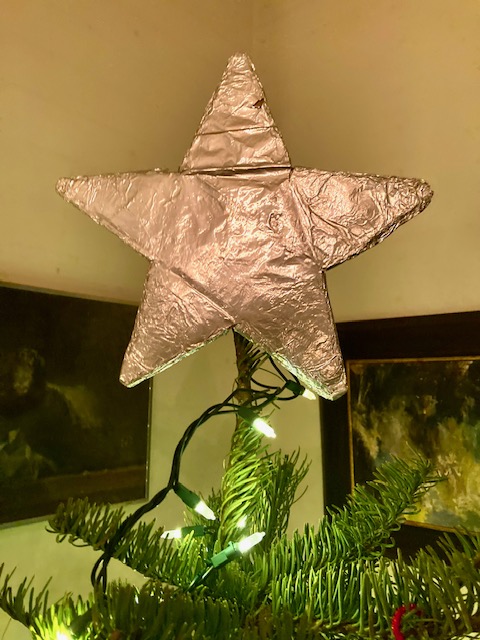
Our family Christmas tree star, going on 40+ years now

So with my paragraph I am sending out a prayer of gratitude for all the good people and things I know are here in our world.

Thank you for those who are trying to bring back our local post office. Thank you to those who are growing our food, caring for each other, those who are helping the sick, the family and friends who are suffering with illness and loss. Thank you to artist friends we know who  have risked so much to bring truth through story into our lives. Thank you.  

This has been A. Letter From A. Broad written and read for you by Muriel Murch

And supported by murchstudio.com

I ain’t’ done nothink

Written and recorded by Muriel Murch with WSM by my side
Eurostar from Rotterdam Station – photo by Beatrice Murch

Though paused along the track, the Eurostar train to St. Pancras arrived on time and we disembark. It seems to have been a full long weekend away in Amsterdam for musicians and young families. We had joined the train at Rotterdam after our grandson David’s 9th birthday and the best Dutch birthday cake ever, homemade by David and his mother. On the platform, those of us who are older, the grand-parent tribe, and the wandering poets are quickly passed by the young musicians and even the families struggling with all their stuff to gather and bundle up. By the time we reach the last turn into the exit there is hardly anyone with us as we pass the four customs officers standing together. They seem to be hanging out, just chatting, but as I look at them – and they don’t meet my eyes – I realize they have been looking at us all. First I wonder what on earth do they think we are carrying, and then I realize they are also looking at whom we might be carrying.

Slavery – indentured servitude – is still alive and well in Britain and Europe. The German far right politician Jörg Dornau employs political prisoners from the uprising against Aleksandr Lukashenko’s political re election in 2020. Dornau owns an onion farm in Belarus where around 30 prisoners work, many of whom, like Nicole who told the story, had been jailed on political grounds and for “liking” old social media posts from 2021. The prisoners sorted onions for roughly £4 a day on what Nicole described as a strictly voluntary basis. And the onions tasted good. They are the lucky ones. But the customs officers waiting to see the passengers leave the Eurostar train were watching for those not so lucky.

Emerging into the station proper we pick up breakfast essentials before heading to the taxi rank. This evening the queue is not too long and we shuffle forward at a steady pace. Naturally everyone is tired, looking at their phones and not speaking. But suddenly there are quick soft running footsteps, and a child’s voice shouting “I ain’t’ done nothink.” More running footsteps, a longer stride and a uniformed youth catches up with the child, who is clutching a brown paper shopping bag and still yelling. “Let me go, I ain’t’ done nothing.” Faces lift from the phones and those in the taxi queue look as the young officer catches the barely clothed child wearing shorts and a very oversized t-shirt. Now there are more footsteps, heavier as in regulation police boots, and six uniformed security policemen, all under the age of thirty catch up with their young partner who is barely holding onto the child still crying out, “Let me go I ain’t done nothing.” Then suddenly the air goes silent and it is over. Taxis come to the curb, the line moves forward, and as we wait three patrol cars with lights flashing and sirens ringing come to a screeching halt beside us. I marvel at all the adrenaline rushing through at least nine men holding one child. And the silencing of the voice that echoes Oliver Twist in 1837 – led on by The Artful Dodger, used and abandoned by Fagin.  What really has changed in almost 200 years? Not so much. Hardship finds us along many paths.

Flying high over the carnival – photo by Beatrice Murch

On the autumn Sunday afternoon in Utrecht we visit a carnival. It has popped up outside of a Jumbo shopping center and is an easy distraction for small children, and some who are no longer so little. We’re cruising, grandson David passes the candy floss as he leads me to this fishing hall, that shooting range, all the time with his eye out for the bungee jumping trampoline that looks terrifying – to a Granny. Suddenly there is his best friend from down their street. The boys are thrilled to see each other, the bungee jump forgotten for the moment while the mothers chat together. The afternoon ends with a closing-time visit to the big public library which is institutional but welcoming and impressive. I am – as Grannies do – sitting, resting and waiting outside when the mother of David’s friend approaches me. Bea has sent her over.  “Mum’s a nurse, ask her.” “May I ask you something?” “Yes of course.”

She is from Ukraine and has three children, two boys and one girl. Her husband has left her and they are now divorcing. The afternoon carnival is a cheap distraction for them together. Her long hair is matted, her clothes look to have come off of the floor and her sneakers are – for want of a better word – inadequate. The children are hovering, watchful, a little distant, protecting her as best they can. They are nervous of her speaking with a strange woman, even from their friend’s family. The mother had a little accident on her bike and her thumb hurts. Is it broken? Should she go to the hospital? But that means a four hour wait in the emergency room and she has three small children. In her state the slightest upset blows into a potential disaster. Softly I ask if I can touch her hand and she nods. I take her hand in mine and begin to gently feel here and there, bend the hand and fingers this way and that. Quickly I know that it is not broken. There is a little warmth suggesting the thumb is strained. I continue to hold her hand, for with the act of touching and receiving her, she begins to calm. I tell her about arnica gel. Seeing their mother relaxing, the children creep closer to us as we retrace our steps to the pharmacy. Which is – naturally – at 5.30 on a Sunday afternoon – now closed. But the young mother is looking better, more purposeful and with a little smile. The children cluster closer still around her as we said goodbye. The eldest boy shakes my hand, the two little ones smile and wave. They are grateful that someone had listened and received their mother. This little Ukrainian family have been in the Netherlands since before the war began.  Maybe they knew what was coming or maybe they just got lucky. Now it makes no difference. They are adrift and broken in a foreign country. Hardship finds us along many paths.

The conflict – pick any red dot on the map – in the Middle East – has pushed the Ukrainian War off of the page and the screen. Cold mud and snipers are not as photogenic as nighttime rockets and buildings ablaze. Rubble and body bags are more prolific in any of the states at war in the Middle East than in the Ukrainian villages on fire. This war has a published start date of October 7 but that cannot have been the beginning. Israeli solders are schooled that attack is the best form of defense, but all of those red dots – in Gaza, in Lebanon and beyond – do not appear as the work of a country defending itself. Back, back we go into history, Europeans and their pens, pencils and rulers, drawing lines across the desert, pointing fingers and saying ‘That will do.’ 

This has been A Letter From A. Broad. Written and read for you by Muriel Murch  

And always supported by murchstudio.com

August Bank Holiday W/E

August Bank Holiday,

Written and read for you by Muriel Murch with WSM by my side.

‘Out of the Office’, automatic replies come bouncing in to anyone foolish enough to write a business letter in the month of August. Occasionally there is a head’s up – a note saying “I will be away on holiday until the ‘something’ in August. If this is urgent please contact – whoever the poor soul is who has been left to ward off intrusive calls.” Lawyers, bankers, publishers, doctors, stylists, and politicians all go away, usually taking a plane to Spain or even as far as Turkey, leaving delivery drivers and grocery clerks to carry on. Pete from the Primrose Hill market farm stand has taken his wife to visit her family in Croatia.  

Chugging along under Tower Bridge Photo by WSM

Over the weekend, the river is choppy as the wind battles with the sun to give the tourists a boat-ride to remember while cruising up and down the Thames to Greenwich where the Cutty Sark, along with the maritime museums and colleges waits patiently for them.

Returning to the city from their seafaring adventures the tourists pour into the street, across Westminster Bridge circling around the Palace of Westminster, the House of Parliament and Big Ben, now free of three years of scaffolding, and whose clock-face shines over the river.

But across the bridge from the Houses of Parliament is the wall that encircles St. Thomas’s Hospital and lines the walkway along the river.

Painting of St. Thomas’s Hospital at the Welcome Trust Museum

The Hospital was named after Saint Thomas Becket and first built in Southwark, possibly as early as 1173. The reformation of the monasteries caused its closure but in 1551- the young king – Edward VI – allowed the hospital to move up-river a bit while being rededicated to another Thomas – the Apostle. St. Thomas’s Hospital was first dedicated to serving the poor, the destitute and homeless and though it has become a world renowned teaching hospital it has remained open ever since. It is seeming and appropriate that the wall that cradles the hospital close to the Thames and faces the Houses of Parliament is still decorated with painted hearts and messages commemorating the thousands who died in the Covid epidemic that began in January of  2020. 

Within the Houses of Parliament, the green benches in the house of Commons and the red benches from the House of Lords are mostly bare. If Sir Keir Starmer, during his term as Prime Minister, finally has his way then those red benches, so bloated by gift peerages from previous governments – both Labour and Conservative – will become even more sparsely filled and those gifts of ermine robes in very short supply. Though most of the politicians have popped off on holiday the Prime Minister has cancelled his two weeks of family time in Europe and stayed at home. Sir Keir knows that there are things to attend to and if he is lucky he can get some serious work done – for he is a methodical and serious fellow – and have a look at the bookkeeping left by the previous government. What exactly is the state of the economy and the country and how much money is available in the kitty for all those reforms that he promised? Not a lot it seems. Like a new contractor coming in for your house repairs, there is some teeth sucking as he looks at the job before him. And like any English builder – there is fault to find with those who came before him. Instead of “They used the wrong paint love,” Sir Keir’s line is already “Things will get worse before they get better.” A version of Lord David Cameron’s “Hard times are ahead we are going to have to tighten our belts.” And we all remember how that went down. The £600 fuel allowance that was so freely given out last year has already been cut for the upcoming winter. There will hardly be a city and country household who will choose not to heat their entire house – however small it is.

Like many of us – not on holiday – in England – Sir Keir has been watching the wars as they continue to unfold. The Ukrainian army has popped a missile over into the Russian territory of Kursk, and captured a few Russian soldiers that it promptly swapped for 115 men of its own. Our screens light up with the flames from the Israeli and Hezbollah strikes at each other. Is it a game of fire and fury, a warning or wake up move? All is paused as each side ponders and watches the other.

Then there was the Democratic Convention held in Chicago last week, orchestrated into a fine piece of rousing theatre. Only the most cynical among us could not be flickered into a moment of hope that the homegrown terrorist among the American people could be held at bay. The concept of a  woman – a comfortable and pleasing shade of brown – with a steady coach beside her, may – with much luck and hard work – keep America safe for a few more years, is enough to make one giddy with hope. One could see this as a sea change of colour that comes with autumn, the maturing of the fruits of this season.

At the market the colours are changing too. Bright red berries are giving way to the blush of young apples, the green cream of pears and the dark purple of Victoria plums, while the deep black of hedgerow berries glisten with a shimmering autumnal hue.

With constant support by murchstudio.com

Somber June

Written and Produced for you by Muriel Murch with WSM by my side.

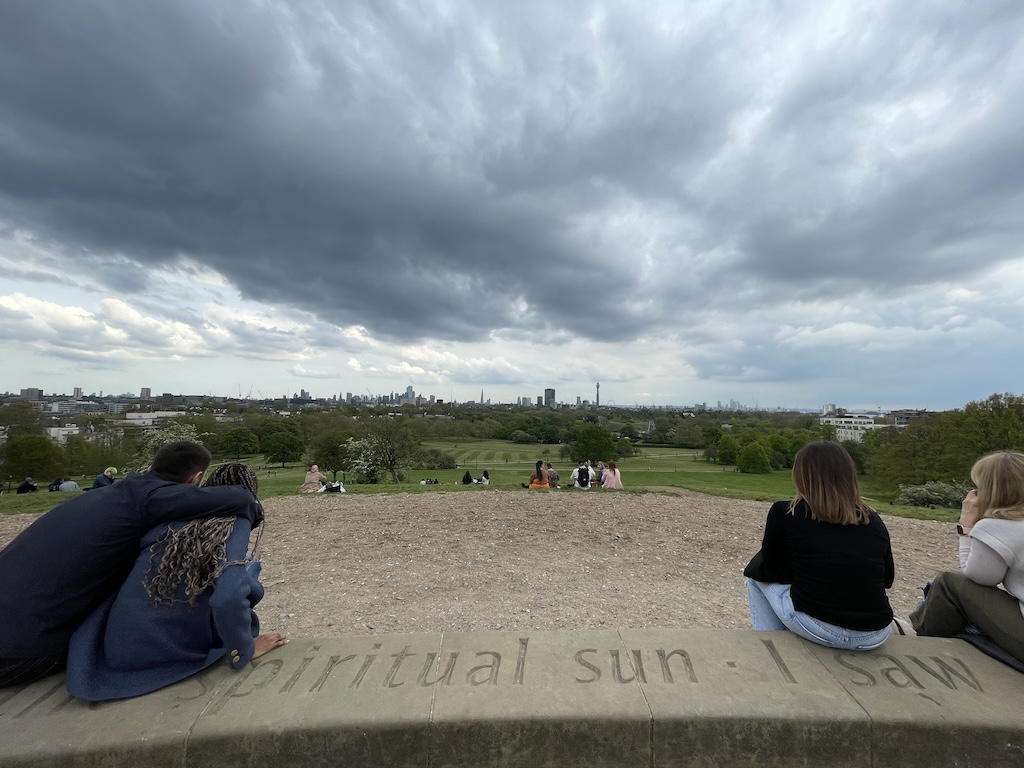
Grey skies and the London skyline over Primrose Hill by Beatrice Murch

The grey sky is pouting – there is no sun – just a half-hearted threat of rain. The London season is muted; the Chelsea Flower Show and Royal Ascot Race week do not shine as brightly in splashing colour across the weekly magazines. Even Queen Mary’s Rose garden in Regent’s Park – that in June is usually overwhelming with the attar of roses and a wild palette of colour – is subdued, while beds of favourite roses have been grubbed up and new adolescent bushes planted in their stead. On our little terrace the roses and geraniums that should be bursting with cheerful reds and yellows remain shy and closed, while the potted tomato plants stand nakedly to attention, seemingly condemned to a fruitless life. It is sobering. 

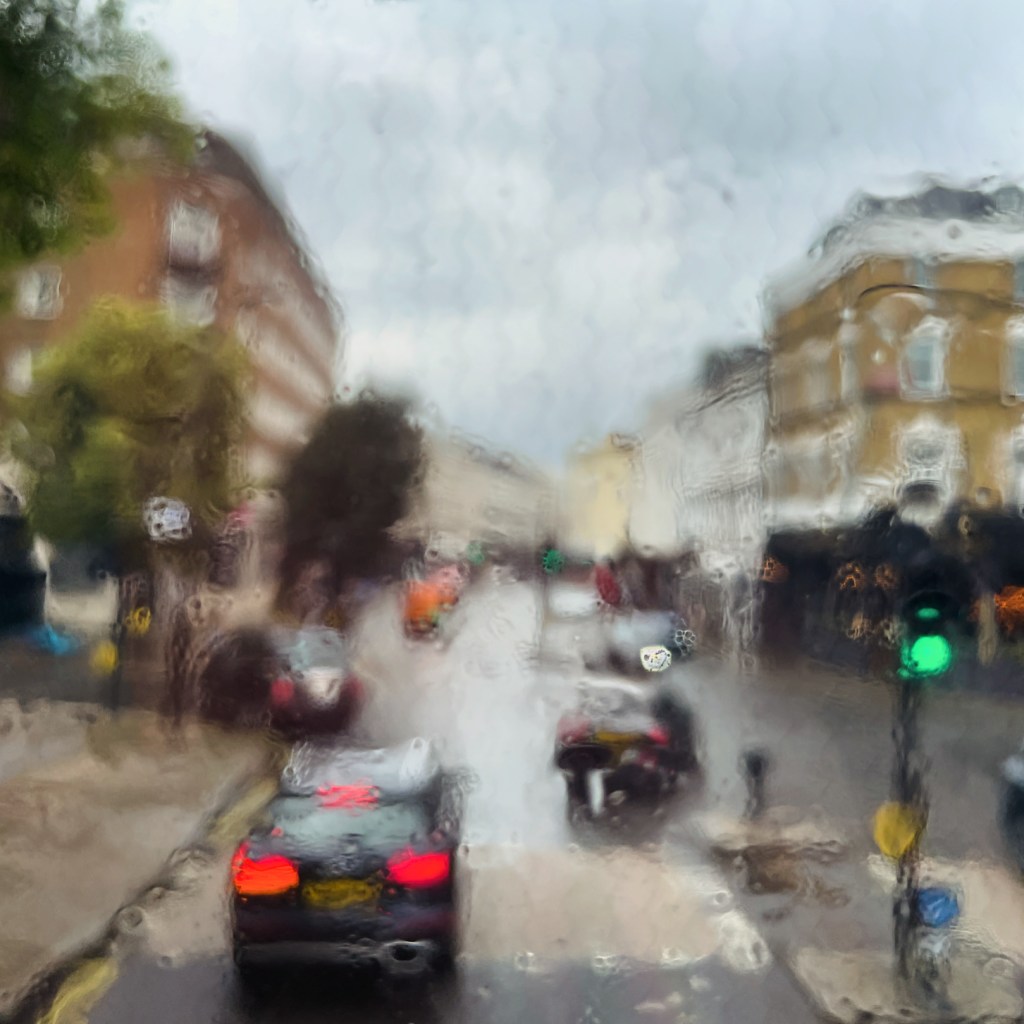
Rainy London from the top of a double decker red London bus by Beatrice Murch

At the bus stop on Thursday morning I join a small crowd waiting to catch the 31 that has gone missing from the Chalk Farm stop, “Not stopping here mate, you have to go back into Camden”. But I walked forward to Swiss Cottage – on past the road works overlooking the railway line that have been in progress for at least a year’s duration – and settled in to wait – looking as one does – for the big bright red bus to come around the corner. But it was hearing a sound I had not heard for years that had me turn my head. Sharp, fast hoofbeats and the King’s Household Cavalry came trotting smartly down the road from Primrose Hill on their way through North London to Hampstead. The traffic was stopped in all directions as the horses took over the streets – trotting in tandem, one rider with two horses. Keeping the Household Cavalry horses fit and quiet is only a part of the weeks of preparation that comes before next Saturday’s Trooping of the Colours which marks the Sovereign’s official birthday as it has for over 260 years. In April there was an ‘incident’ in London when a construction site’s sudden dumping of rubble down a roadside shaft spooked the horses and several bolted and soldiers were unceremoniously dumped on the road. It must have been quite a ruckus, as five horses  were injured along with three soldiers. Camera phones were clicking as the horses took off – galloping along the streets with blood streaming down their bodies. The incident was admirably ‘contained’ and progress information – first the horses and then the soldiers –  was metered out in the best British understated tradition.

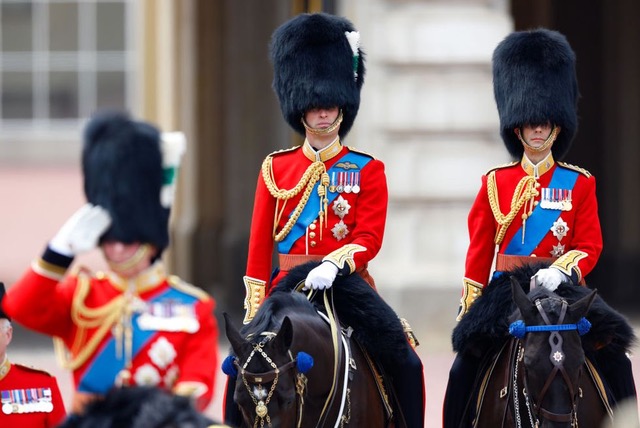
Prince William in procession photo by Getty

And so, on this upcoming Saturday the King will take the colours – not on horseback as he did last year – his first year as Monarch – but in a carriage befitting his health and doctor’s advice. And Princess Kate, the Duchess of Cornwall and the Colonel in Chief of the Irish Guards, whose honour it is this year to lead the trooping, was missing from this past week’s dress rehearsal. In a heartfelt letter to the regiment, she apologised and wished them all well and luck. As the nation does her. The silence around the princess’s illness is more sobering than the intermittent news of her father-in-law’s health, and underlines the rest of the news the country has to hear.

Not least is the snap election on July 4th called by Rishi Sunak. Standing at his podium outside of #10 Downing Street in a downpour of rain and unsuitable suit, the question of whether to raise an umbrella or not must have been a snap one, and as Sunak turned to retreat back inside – water dripping from his coat tail, he did truly look like a drowning rat, and one could not but help feeling just a little bit sorry for him. This week he was followed by the French President Emmanuel Macron dissolving the French parliament and calling for a snap election to be held within the next 30 days. The French president said the decision was a “serious and heavy” one, but that he could not resign himself to the fact that “far-right parties … are progressing everywhere on the continent”. He described it as “an act of confidence”, saying he had faith in France’s voters and “in the capacity of the French people to make the best choice for themselves and for future generations”. This is confusing to both the French people and the governing European bodies based in Brussels. How will it play out? Is it truly a bid for gathering up and solidifying a democracy that is crumbling over much of Europe and the world.

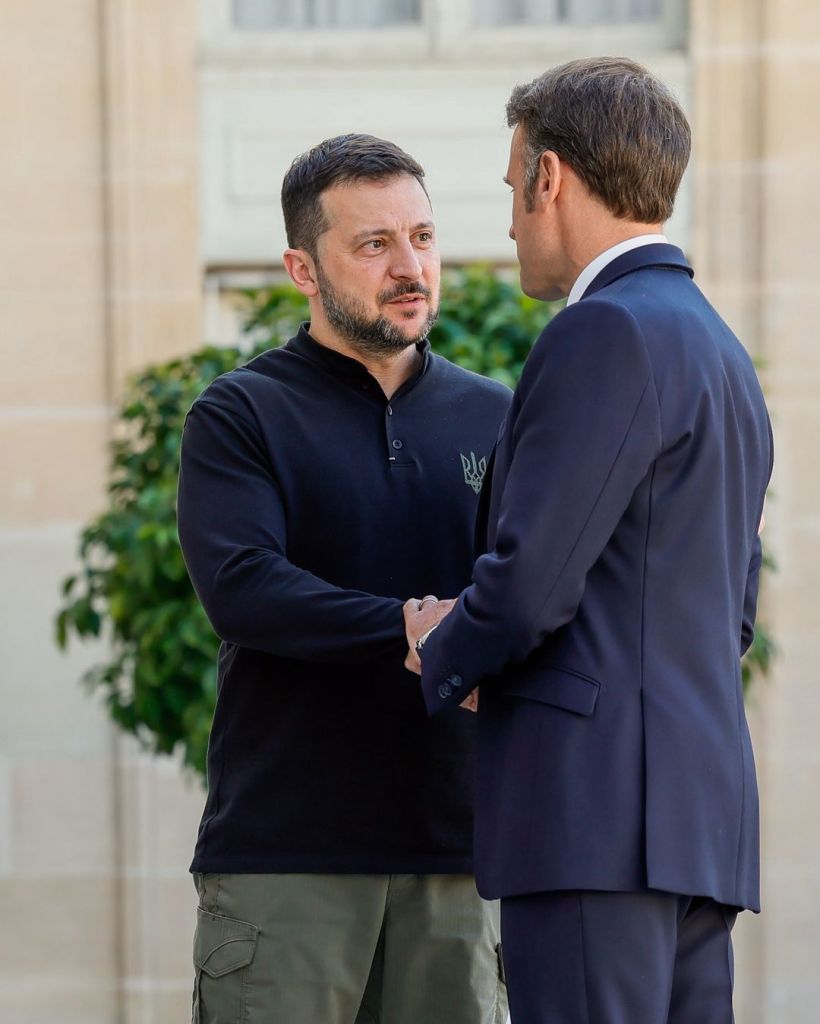
Presidents Zelensky & Macron in France June 2024 – photo courtesy of Macron Instagram

But before Macron called for his snap election – along with the leaders of the allied nations – among the Canadian, British and US, he attended the D-Day commemorations on Omaha Beach. This 80th remembrance brought together for maybe the last time, the mostly 100-year-old Veterans from all the Allied countries. A heavy dose of British royalties were also present to pay homage and show gratitude. This was also a time when the Ukrainian President Zelensky could say thank you while meeting and greeting and hopefully gathering more support for his country’s war. The Soviet Union lost more than 25 million lives in World War II and – though there have been Russian officials attending those ceremonies in the past – there were no invitations sent – or representatives present – in France this year. These wartime commemorations always bring a special pause in all countries – there are a lot of them and they do go on a bit, as they need to, because there is much that can happen there, in front of a camera or behind a closed door. President Zelensky has a lot of hustle to get through gathering the spoken, moral and physical support that he needs for Ukraine. Like chess pieces moved by an unseen magnet under the board, the world leaders who are present pick and choose which meetings and photo calls to attend. They circle each other, and the wars that they are fighting or funding. It is ironic that this commemoration, ending this war, is taking place as another war is embedded in the land that was to hold and heal the displaced people from 80 years ago. Each day – while Ukraine fights on – there is more news from the Middle East. After the carnage that killed 270 Palestinians to release four Israeli hostages, there is another US backed peace offering on the table endorsed by the UN security council – between Hamas and Israel. But there is little word of the others – refugees – otherwise known as Palestinians.

This has been A letter from A. Broad. written and read for you by Muriel Murch with support by WSM and as always overseen by – beatrice @ murchstudio.com