‘Yes Minister’ first aired on The BBC television in 1980 until it ended in 1988, possibly due to the fact that it was becoming harder to distinguish the comedy series from the nightly newscasts that followed. Among the many quotes attributed to the Cabinet Secretary Sir Humphrey is “Minister there is going to be an Inquiry” to which the reply from The Prime Minister Jim Hacker is “Oh good, then nothing will happen.” Well yes and here we are again –
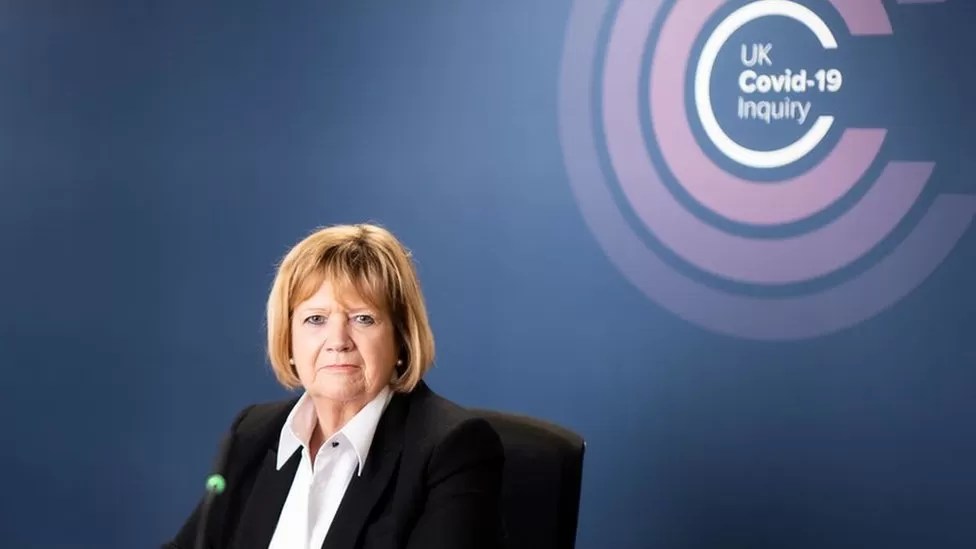
Last week saw the beginning of “Britain’s Public Inquiry” to understand the Conservative Government’s responses and handling of the Covid pandemic. But for the life of me, I can’t find out who is in charge of “Britiain’s Public Inquiry” and what – after the facts have hopefully been gathered – will happen? Will lessons have been learnt? Will those deemed responsible be held responsible? Will there be any retribution? Will anyone be called before a court of law or those pages of documents produced be filed away rather than read. Last week when Dominic Cummings gave his testimony he asked that the inquiry also focus on the broader failures of the system. Reading – for I can’t listen to them talking – it is clear that as blame is shuffled about like pearls under walnuts, the prize goes to the then Prime Minister Boris Johnson. Dominic Cummings likened working with Boris Johnson to driving a shopping cart with a wonky wheel.
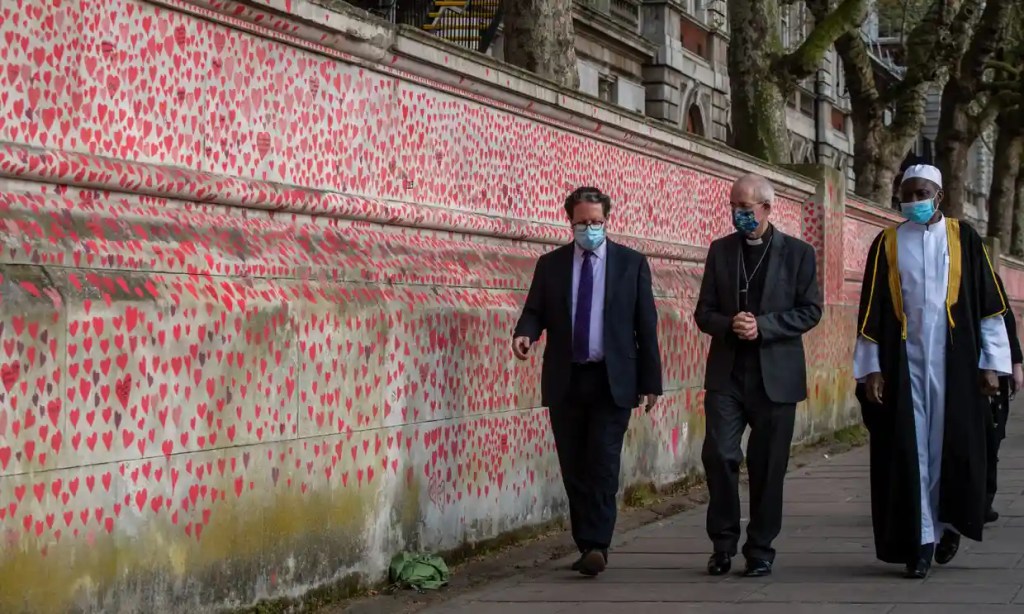
It is not without irony that the inquiry is taking place at Whitehall just across the river from the Covid Memorial Wall that was created and painted in 2021by people who had lost loved ones, or worked in the NHS, coming together with the good guidance of the group ‘Led By Donkeys’. Over 240,000 painted hearts cover more than a third of a mile alongside the Thames River outside of St. Thomas’s Hospital. During this time the public were afraid and looked in vain for leaders in the government where all the common sense had been bred and educated out of almost anyone in Westminster not yet of pensionable age. It was like putting drones in charge of the beehive to collect pollen and care for their queen, when all they could think about was kingship and sexual obsession.
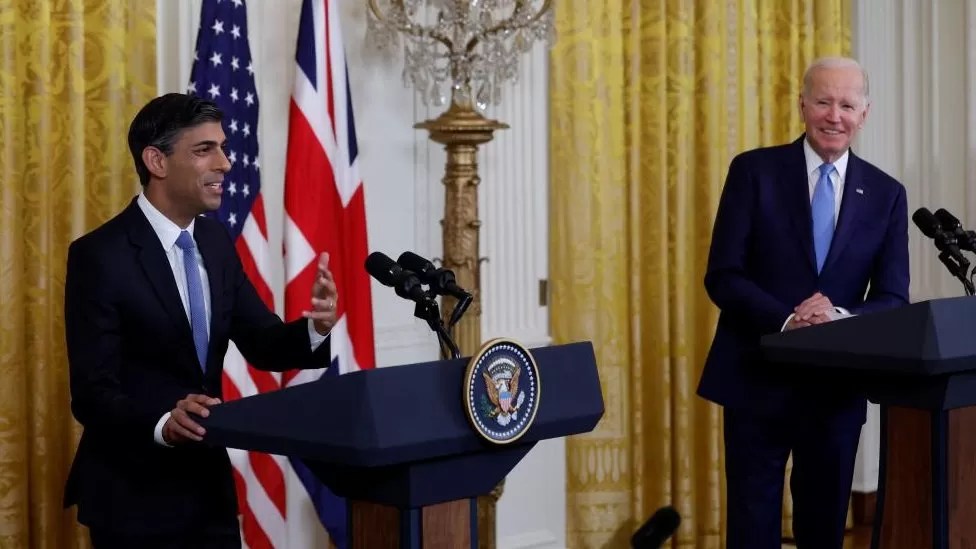
People are booking their theater seats. We follow the inquiry like a serialized Charles Dickens story in the magazines of the day. Up to testify next are the past Prime Minister Boris Johnson, his hovering henchman Matt Hancock, and the holder of the chair at the moment, Rishi Sunak. But it is the failings of one particular individual, Boris Johnson, who was ultimately responsible for directing the government, which will continue to be scrutinized in the months ahead. Johnson’s successor-but-one as prime minister, Rishi Sunak — who was U.K. Chancellor during the pandemic — also has questions to answer. All three men — Johnson, Sunak, and Hancock — are to appear before the inquiry in the same week at the end of November.

Sunak has thrown his dead cat into the ring – by hosting an international AI conference on safety issues that was held at Bletchley Park. The conference produced some back-patting for, and from, the UK, US, and European leaders who attended while getting a nod of approval from the United Nations. Elon Musk arrived to give a speech and chat with Rishi at Downing Street. Both men in their uniforms, Elon remains rumpled and a little unshaved while Rishi rolls up his pristine white shirt sleeves possibly looking for his next job opportunity after this gig is over. So will anything happen from this inquiry apart from “Lessons have been learnt”? The Infected Blood Inquiry – the Stephen Lawrence Inquiry – and the Greenfield Tower Inquiry – have each chipped away at this UK government, but not a lot has changed. Could this inquiry be the one showing that Britain’s democracy has really gone up in flames? I’m writing on Guy Fawkes night – our night of fireworks – celebrating the failure of the 1605 attempt to blow up the Houses of Parliament. We may be holding our breath and will it happen this time? I cannot watch the inquiries – it is too painful – so instead I read.
in an interview, the American thinking and writer, James Baldwin, said “You must realize that if I am starving you are in danger”. And in this simple truth, buried deeply, lies some of the reasons the wars are being fought all around us. Johnathan Freelander writes eloquently and with great heart in this weekend’s Guardian Newspaper, that no side of the Israeli, Gaza, and Jordan triangle conflict are searching for a peaceful conclusion – at this time. In Pulse “Stories from the Heart of Medicine,” I read a translated account from Hadar Sadeh, an Israeli youth psychiatrist working at a Medical Center, about twenty-five miles from the Gaza Strip. Then I open an email from our Palestinian friend and filmmaker, Annemarie Jacir. Each woman weeps at the death of children and physical destruction that they see around them. Each letter could have been written the other.
And see how the war in Ukraine gets roughly pushed to one side even as we know it continues? Old statesmen take planes from one capital city for talks then board another, exchanging their suit jackets for a flack vest as they land in a war zone to encourage young men to face death bravely for their country. Ukrainian President Zelensky rightly worries that this other war is distracting from support to his war – defending Ukraine from Russia’s invasion. How much can we carry in our hearts? And tucked away even further is the news that Russia’s President Putin’s arch-opponent Alexei Navalny’s three lawyers have been detailed. They are facing trial for participating in the so-called extremist group, Navalny’s Anti-Corruption Foundation. If they end up in jail then all contact to the outside world will be lost for Navalny. Each of these eruptions is bleeding like an aspirin-fed wound and all the pressure that is applied will not staunch or stop it any time soon.
This has been A Letter From A. Broad written and read for you by Muriel Murch.
 Muriel Murch