Covid, Coup Coo ee

Recorded and Knit together by WSM

To date, over nine million people in the UK have had their first Covid-19 vaccination. Now there is a scurry-hurry as testing is ramped up in flaring spots of the fast-spreading South African variant of the virus. The English like a good hunt and if foxes are off-limits then viruses can be the quarry. As the elderly residents of all UK care homes are now scheduled to receive their first vaccinations, Ireland, Wales and Scotland are also vaccinating the care-home staff but for some untenable reason, England is not.

The Covid virus remains indiscriminate and random in its reach. Age and health play a part but there are no guarantees of safety from the disease. This weekend Captain Sir Tom Moore who walked 100 laps of his garden before his 100th birthday, raising over 32 million pounds for the Nation Health Service, was hospitalized with pneumonia and a positive Covid-19 test, and he died on Tuesday afternoon. He and his family became a symbol of hope and inspiration for the whole country. We hear a lot about how the pandemic affects doctors and nurses on the front line. Today I am thinking about an anesthesiologist’s story of his first two intubations, back to back, for young women bedded in the same unit, both mothers with young families to care for. He writes of the panic in their eyes and in his heart and the moment when he has to switch from compassion to competent – and carry on. 

On Monday came the news of the military coup in Myanmar, formerly Burma, where Aung San Suu Kyi and 400 members of parliament have been detained by the army and remain confined inside their government housing in the capital. Police are inside the complex and soldiers are outside. Somehow a democratic election was held in 2015 and though the military never really gave up control, Aung San Suu Kyi – after spending nearly 15 years in detention – emerged as the country’s leader. Myanmar has never been known as a soft country and her harsh treatment of the Rohingya people has inked her time in the office with the United Nations. But under her leadership, the country has begun to open for the young people who have quickly seen its new possibilities. It is hard to think that they will allow that window to close again.

As hard line coups continue to happen, people throughout the Western world also continue with protests. Alexei Navalny is still in prison but the people of Russia are protesting in their thousands. Was it the video of Putins’ Palace, the gold-plated toilet brushes or Arkady Rotenberg stepping up to claim the palace as his own – Rotenberg, a known construction magnate, judo sparring partner, and close pal to Putin – that has kept the Russian people pouring onto the street to demonstrate? Even those who are not Navalny supporters have joined the protests and this weekend over five thousand were detained by the police. These protests may be as much about questioning the authority of Vladimir Putin as the imprisonment of Navalny. Similar questions as those posed in Belarus. 

Putin’s Black Sea Palace

Military and Police forces are the powerful tools used to protect or take over a government or country and control the media. The Iranian Coup of 1953 used the military and paid mobs to overthrow Prime Minister Mosaddegh and that model has been copied and refined ever since. We can fast-forward to the almost coup 2021 in the United States – which though it appeared unruly, was orchestrated. Photographs of rioters with handcuffs and ropes harks back to a chilling American history. 

NPR reported that nearly 1 in 5 of the American rioters charged has served in the military. This made me think of the Vietnam veterans I met in the mid-1960s while nursing in Hollywood, California when new teams of respiratory therapists marched onto the wards. They were young men, edgy, competent, and clipped and all were returning Vietnam Medic Veterans. They had been fast-tracked, retrained, to treat people after surgery or with cardiac and respiratory disease. 

In 1966 President Johnson read a report “Accidental Death and Disability”, stating accidental deaths as the leading cause of death in young people. And in 1969 came the first standardization of care and emergency training for “rescue squad personnel, policemen, firemen and ambulance attendants.” This program was a life-saver, not only for accident and cardiac victims but for returning medics from the Vietnam War. The program gave their adrenaline the same pump and release that war had given them, but just a little slower, and as they cared for civilian patients many of those medics healed too. So I think about the 1 in 5 rioters who stormed the US capital building being veterans of wars in Iraq and Afghanistan and maybe having no support when they returned to the US, the country they thought they had fought for.

Hello-eee calls out the Royal Society of Protection of Birds, waving for the ‘Big Garden Birdwatch.’ In 1889 Emily Williamson founded The Plumage League to protect birds killed for the decoration of hats. Across England, the last weekend in January is set aside for anyone who wants to count the birds in their garden for an hour. I choose my Sunday morning Andrew Marr breakfast time and, with a cup of tea in one hand, pen poised over notebook in the other, I waited. This weekend the weather was miserable, cold, and foul, and the birds mostly remained shivering in the trees. But eventually, they emerged in the pattern they have long-established. One robbin, followed by two blue tits, two coal tits, one great tit, all knocked off the feeder by a starling. A feral and wood pigeon strut across the terrace while the goldfinches, dunnock, and wren stayed hidden. Then it is a walk up to my friend Lucy’s wilderness garden where we put out more seed. We sit on suitably-spaced garden stools and take our masks off to talk. It doesn’t take long before the robin who lives in this hidden quarter of Primrose Hill comes down to feed with us.

St. George’s Terrace Robbin

This has been A Letter from A. Broad. 

Written and read for you by Muriel Murch 

First aired on Swimming Upstream –KWMR.org

Web support by murchstudio.com

Sunday Snow

Recorded and Knit together by WSM

It is almost time to mute Andrew Marr on Sunday mornings. The program is getting upsetting, not so much in the content but in the sharp delivery, so early and with breakfast on the sofa, and it is not good for digestion. When there was art, cinema, and theatre to discuss, Marr’s tone would soften and he would be coy like a schoolboy in a candy shop. But the politicians do not move him in the same way, while now some are figuring out how to defuse him. “Call me by my Name” is a book and a film of love, and to call Andrew by his name somehow takes a touch of the wind out of his sails. Matt Hancock has begun to do it, but it works best with the Shadow Foreign Secretary, Lisa Nandy, or Annelies Dodds, the Shadow Chancellor of the Exchequer, and best of all, with Nicola Sturgeon, First Minister of Scotland. They have also learned that other trick, to keep talking, and not let him interrupt. It takes practice and breath control and would be funny if some of the topics were not so serious and pertinent to our daily lives.

Matt Hancock is still working from his home office and needs to close the kitchen door. But there is a rare smile on Hancock’s face as he recited the rising numbers of those in England who’ve had their first vaccination, including 80% of those over 80 years old. But like the working terrier he is, Andrew has his nose on an important question. Originally the scientists recommended that the two doses of Pfizer/BioNTech and the Oxford University/AstraZeneca vaccines should be given three weeks apart for the maximum benefit. But now politicians and their statisticians, say actually no, the doses can be given up to twelve weeks apart. It seems some serious number-crunching is going on, trying to lower the number of people who would get sick enough to require hospitalization and further burden the National Health Service. But today, as the UK death toll from the Coronavirus tops 100,000, there leaks news of petty behavior from Boris Johnson to João Vale de Almeida the ambassador sent to represent the European Union in England. This rolls back to past behaviors and slights between brief-cased men and women over the last painful years of the Brexit negotiations and now rumbles on into questions of who holds how many doses of which vaccine, manufactured and stored in which country, and who is going to share, what, when.  

Boris Johnson in Trouble
The Independent

This brings back a shadow remembrance of the Ford Pinto number-crunching that went on from the 1970s to 1980s. After the gas tank misdesign was uncovered and Mother Jones published ‘The Pinto Memo’ that said the cost of recalling the cars would have been $121 million, whereas paying off the victims would only have cost Ford $50 million. ‘It’s cheaper to let them burn” in ‘the barbecue that seats four.’  For the moment the UK Government, The European Union, and medical scientists are at odds, as they wrestle with the numbers that may not be, how many lives will be lost, but whose.

The situation with the COVID-19 virus, vaccinations, questions about schools remaining closed, and with no end in this degree of lockdown in sight, have pushed even the American political changes under President Biden onto page two. News of other nation’s pandemics and war deaths are barely covered as if the continents of South America, Africa, and India are too big for us now to comprehend and explain.

Coverage of the protests in Belarus has given way to those in Russia over the arrest of Alexei Navalny. Before Navalny left Germany he made a video film, “Putin’s Palace: The $ Billion Dollar GRIFT” in which, at almost two hours long, Navalny also narrates in staccato bullet-point sentences. It is an amazing piece of work, gathering all of Navalny’s research over the last ten years as well as help from those who also see that things are not as they should be in Mother Russia. By the time Navalny returned to Moscow and was arrested, the film was already available to anyone on YouTube, and, at this point, remains untouchable by Putin. Even as the temperatures are well below freezing in Moscow, St Petersburg, and other Russian cities, the outpouring of demonstrators has filled the city streets and the protesters arrested number in the thousands.

The Russian police look like plated armadillos as they take on the protesters. The chain-mail effect as iron gives way to the sturdy plastic of their interlocking shining plates harks back to Tudor England and copied from the ancient armor held in the museums of Europe.

The harshness and speed of the clamp-down has been so severe that Western countries are ‘considering their next steps,’ as they watch Putin and the Kremlin close the fist of authoritarianism.

Back at the kitchen sink after our morning dose of politics, I look out of the window and the sky stares back at me. “Watch now,” it seems to say, and then slowly, thick drops of moisture begin to fall and, as they gathered in strength and courage they grew bigger, fatter, and fell covering the pavement, the cars, and shrubs outside with a solid blanket of snow. The old words return, none are better: solid blanket, silent night, or, in this case, day, as the snow fell for a sweet two hours, and we smiled with childlike excitement to see it so. Young Charlie fox padded softly by, paused at the window to look in on us before continuing his morning hunting rounds.  

Charlie Passing By Photo by WSM

This has been a Letter from A. Broad. 

Written and read for you by Muriel Murch First aired on Swimming Upstream –KWMR.org

Web support by murchstudio.com

Mother Russia amidst Covid19

Recorded and Knit together by WSM

While America turns the ignition key for political movement and change, Russia yanks its hand brake hard bringing dissension to at least a temporary halt.

If Alexei Navalny is to carry on his work, he needs to return to Russia. The price would be high and he knew the Kremlin would come for him. As Vladimir Putin’s strongest critic, in print and on the streets, Navalny has been a thorn in Putin’s side for a long ten years. The Kremlin tried to corral him to silence him, sending out their best guard-dogs to nip at his heels. They herded him into courts, penned him in house-arrests and jail, before finally, in exasperation, tried a botched poisoning attempt by the Federal Security Office, the FSO, that was rebirthed from the old KGB. 

Whenever Navalny decided to return from Germany to Russia he knew the world’s journalists would be following him. Booking tickets on the same plane, they crowded in on Alexei’s last hours with his wife Yulia who must have accepted that this is the price they needed to pay.

What did Alexei and Yulia discuss, that they haven’t already? How far ahead can they look into the lives of their children, the family, his work, and how much can be continued if he were to be silenced forever? They must have known that Moscow’s police service had orders to immediately detain him for parole violations. The question of how long to detain him, where and for what, is a thorny political decision for Vladimir Putin as the world watches. And the world is watching, or rather glancing, for at the moment, there are other players in the world stage this week.

Police officers speaking with Alexei Navalny before leading him away at Sheremetyevo airport on Sunday. Photograph: Reuters

On Wednesday, as this program airs on KWMR the United States is inaugurating Joe Biden as their 46th president and with that act completed the United States and the world stages will change and a new act begins. While Putin may shrug off concerns for world opinion the question still remains for him, ‘What to do with this constant festering thorn in his side’.

Arrested again, Navalny is held and now jailed for a month pending his three-year prison sentence. He was last seen speaking from a holding area surrounded by masked police, and urging his supporters to take to the streets. Though the temperature is 20º below freezing, the sun is shining and his supporters are gathering and protesting for him. But the fear of the Covid virus and Covid restrictions may be enough to dampen support, and Alexei Navalny can be quietly herded into the past tense.

Text messages ping through within minutes of each other on both of our phones. “You have been invited to book for your local First COVID-19 (Astrazeneca/Oxford) vaccine this weekend”  There are instructions, ‘attend alone unless you need a carer, don’t come at all and rebook if you are feeling unwell,’ and more. This is the true excitement highlight of this week. The Belsize Priory Health Center in Kilburn is on the number 31 bus line, but are we up for getting on the number 31 bus? Not yet. Just as we step outside, Mr. Habtu returns home from a client. I tell him we are off to get our vaccines.

There is no hesitancy,

“I will take you.” ‘No no.’ “Yes I will take you. Let me get a clean mask.” and he disappears up to his flat and returns to park his Addison Lee SUV at our doorstep. It is in the kindness of such gestures that we are reminded how much people need to give as well as receive. He is more than happy and we are more than grateful to be driven to and back from the Belsize Priory Health Center in Kilburn.

It is raining. Not hard slogging-down rain but neither is it just a soft rain. The queue stretches out and winds around the cold utilitarian buildings that look older than their years. Belsize and Kilburn all look worn down and even their tiny community garden is hiding in the rain. Umbrellas are needed as we move along from under the overhanging walkway, across the small courtyard, and into the first building. Traffic flow has still to be worked out, as there are check-ins to be done here, questions to answer there, and then another walk – winding around to the clinic building offices. Here we are firmly told where to stand. Nobody is going to get sick on this volunteer’s beat. How many of the staff are volunteers, medical staff from the clinic, or retried doctors and nurses recruited for this effort, it is hard to say. But everyone, before noon on Saturday, is still upbeat and kind. Across the country, health centers, pharmacies, and even cathedrals are rearranging the furniture to become vaccination centers.

The health scares of smallpox and polio with their vaccination programs for children that followed in the 1950s are strong memories from our childhood. Now those children, including ourselves, are the vulnerable seniors, once again waiting our turn and grateful for science to save us. From self-isolation at home, Health Secretary Matt Hancock announces that vaccinations are now available for those 70 years and older and that as of today over four million people have had their first vaccination in the United Kingdom. Though the UK death toll from COVID-19 is still rising, the number of new infections in London is down 30% and there is a glimmer of light at the end of this tunnel. 

People queue outside Salisbury Cathedral, Wiltshire, to recieve an injection of the Pfizer coronavirus vaccine.

This has been a Letter from A. Broad. 

Written and read for you by Muriel Murch 

First aired on Swimming Upstream – KWMR.org

Web support by murchstudio.com

January is Gathering Speed

Recorded and Knit together by WSM

What will this week bring for American politics, for England’s Covid vaccination news, and for all of us living in these times?

With Brexit a done deal, opposition leader Sir Keir Starmer is washing his hands of any Brexit redux, leaving the freedom of travel for Europeans and Britons in the hands of the European Union. Sad as it is maybe he is right to let the English people grumble and suffer on with Boris Johnson’s non-deal.

Meanwhile the Covid Vaccine timetable is being rolled out. Health workers are getting vaccinated, the Queen and Prince Philip have been vaccinated, and white-haired seniors can been seen shuffling along in the cold, queuing outside of drafty tents. Minister of the Cabinet, Michael Gove, does admit “Transport for seniors may present a bit of an issue.” All I can think of is bladder control.

The First BioNTech-Pfizer Vaccine given to ninety-year-old grandmother Margaret Keenan. Photo by Jacob King

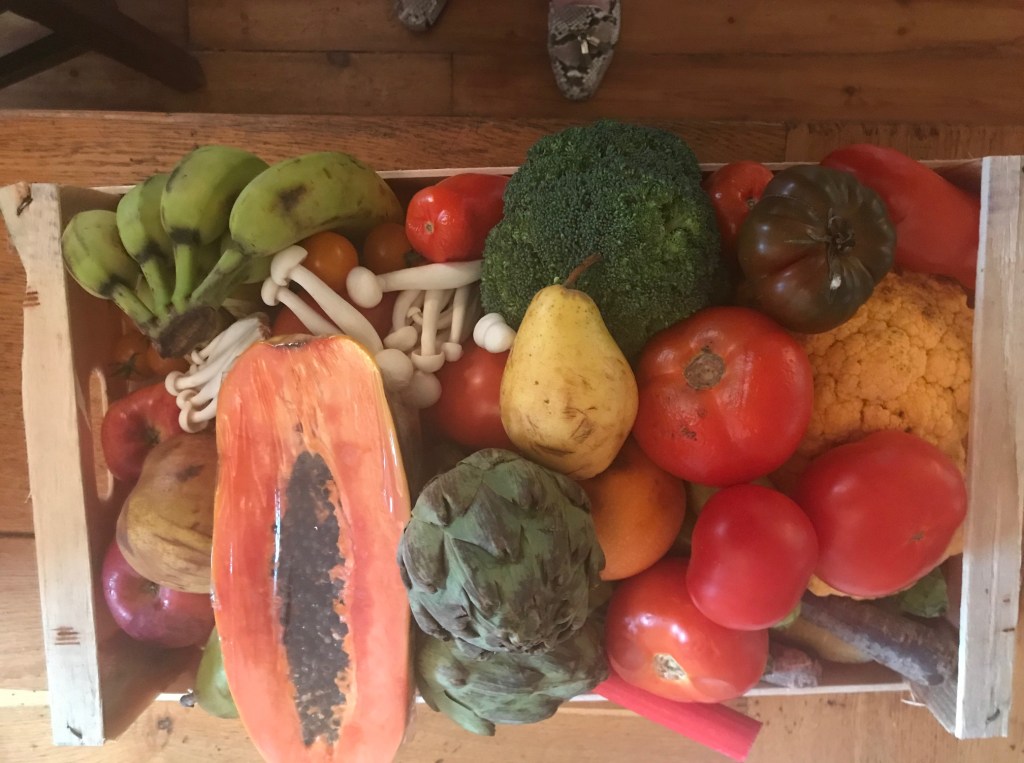
The stillness is beginning to get oppressive. Though there are still clusters of young people milling around the High Street coffee shops, not yet able to give up on the social connection or the metabolic addiction of their cup of Joe. Once again, I write out a grocery list and send it along to Parkway Greens. Later in the day, there is a rat-a-tat-tat on the door, and an overflowing box of fruit and vegetables is laid on the steps.

£ 5 left over special

In Hampshire, where I grew up, the statistics are set out in graphs so color-coordinated I can’t follow them. But next door, Surrey, the homiest of home counties, has begun to build temporary morgues on discrete army grounds. While making room for 800 bodies, the County Council are still concerned that this will not be enough. The small hamlets and villages that surrounded my childhood are dotted with Covid virus cases and death. Old names – Ash Vale, Frimley, Bagshot, Camberley, Farnham, Elstead, Tongham, and Guildford, all a part of my childhood – are now saddened with a startled grief. The home counties suburbs are struggling in their perceived privilege with its lack of discipline as much as the industrial working north is with making a lively-hood.

A friend in London admits to now watching afternoon television. Something she would never have considered even six months ago. We are not there yet except for the momentous events of last Wednesday in Washington DC. But the death this autumn of Dame Barbara Windsor, star of the long-running TV drama East Enders reminded us of the hunger to escape into a fantasy world. And, often I do switch on my Roberts radio, tuned to BBC Radio 4, and catch the fifteen minutes of ‘The Archers’ which this year turned 70. First subtitled ‘The Every Day Story of Country Folk’ with a five-part pilot in 1950, it was created in an effort to educate farmers and improve agricultural production in the early post-war years and had a heavy government influence in the scripting until the 1970s. I can remember it playing on the wireless in my nursery where I would be having supper and someone would be ironing. Our generation listened to it for years, it was as ingrained in our minds as a Catholic catechism. School term times came and went, and whenever we returned ‘The Archers’ would be playing in their 6.45. p.m. slot. You could dip in and out of the village story, for it never lost its charm or its relevance to rural living. Even when television came nipping at radio audiences with their soap operas of Coronation Street and The East Enders that focused on working lives in London and the north of England, The Archers carried on.

Over this summer, the episodes of The Archers continued with a story of three British-born young men kept as slaves in a secret location on the outskirts of Ambridge, each one having a learning or mental health disability. This is the appalling reality that The Archers’ editor, Jeremy Howe, chose to confront as well as to challenge. According to the Global Slavery Index, it is thought there are up to 136,000 victims of modern slavery in the United Kingdom.

“It’s not simply a problem involving immigrant labour,” explains Howe. “It can be a British problem involving British slaves and British gang-masters.”

Reading the Saturday Financial Times paper on Sunday, I found a small article tucked in a lower corner. The South Korean Government knocking on Japan’s door once more for recompense for the Korean Comfort Women kept for the Japanese soldiers during WWII. The Japanese are, naturally, dismissing any further claims of compensation for the now very few women left alive. I first came to this story with Nora Okja Keller’s book “Comfort Woman” published in 1998 when for KPFA and KWMR we had a conversation about her book which was loosely told from her grandmother’s remembrances.

Three hungry young men

Slavery, and enforced indenture-hood, in today’s world, is nothing new, but something we don’t always look to find on our doorstep. Simple dramas like The Archers can do that for us. And so can the three young men of undetermined Slavik European lineage who “worked” for what we now call our Irish Rogue Roofers in 2016. We were taken for a right royal ride and I can only shake my head at our stupidity. And I remember those young men who devoured all the food I fed them and spent the longest time relishing hot water as they cleaned up at the end of the day in our bathroom. Photographs and recordings given to the police yielded nothing more than a night-time stop-over in a local police station for the family patriarch. In the silence of these restricted and cold winter months, with no work available, I pray that those young men are somewhere safe today.

This has been a Letter from A. Broad. 

Written and read for you by Muriel Murch

First aired on Swimming Upstream – KWMR.org.

Web support by murchstudio.com

Classroom Chaos to Lockdown

Recorded and Knit together by WSM

Classed as a vulnerable senior, I was muddled as to where and when I could shop. But all that is clear now. A total lockdown has been announced across the United Kingdom lasting through to March. Thanks in part to pressure from the Teachers’ Unions that weighed in alongside the scientific community and made the government sit down and listen. As another, even more, virulent strain of the COVID-19 virus arrived from South Africa, the health minister Matt Hancock said ‘things are about to get harsh and complicated.’ and I’m almost feeling sorry for him. The view of the bumpy road has now become seriously clear. There are potholes of bankruptcy, illness, and death ahead.

Along with the national lockdown comes the news of the first Astra Zeneca vaccine being administered in Oxford. This, added to the Pfizer vaccine, is being delivered to care-homes, hospitals and doctor’s offices. Now it needs to get out to the public quickly. There is a tier system set in place and the beginning of a plan to administer the vaccine that could see the United Kingdom relatively safe, for the moment.

It was clear, as the Prime Minister began the New Year on Andrew Marr’s Sunday political program, each jousting with the other, that the Prime Minister had not done his homework of reading the June report that all of this – mutations of the virus strain, rising cases, and death tolls – was bound to happen this winter. Figures seem to be difficult for Boris and the absence of preparedness, one suspects, a life-long trait. That darn dog is always eating his homework. The BBC has to be a bit careful, so Andrew had to mind a P and a Q. But the director of the show has, I believe, a strong impulse to buck his traces and more than once showed a full-shot rear-view image of Boris at the round table. For a moment we were spared the frontal head of hair but now we see the look goes from top to tail and there are bare legs under rumpled sagging socks. It is a look that when Boris utters the words, “Believe me,” my response is immediately: ‘No’.

This week also brings up the case of the extradition of Julian Assange to the US. To avoid being sent to Sweden for sexual assault charges, always meaty fodder for the British tabloids, Assange fled to the Ecuadorian Embassy in London in 2012. Sweden eventually dropped their charges but the US still wants him for WikiLeaks’s publication of leaked documents about the Afghanistan and Iraq wars in 2010 and 2011. Assange has been in British custody since April 2019. His lawyers argued that to send Assange to the US would rewrite the rules of what was permissible to publish in Britain.

“Overnight, it would chill free and open debate about abuses by our own government and by many foreign ones, too.” The judge ruled that the risk of ‘suicide’ should Assange be extradited to the US was high and that he should remain a guest of Her Majesty’s Government.

Which is of interest to journalists and filmmakers alike. Early on this program, you will have heard from Taghi Amirani and Walter Murch about the relaunch of the documentary Coup 53, the story of the overthrow of Prime Minister Mohammad Mosaddegh in Iran in 1953. Because of Covid, the film was released in 118 cinemas and digitally in August of 2020. There was – to put it politely – a huge outcry from the makers of Granada Television’s ‘End of Empire’ series which aired in the 1980s. Huge. To their immense credit, the Coup 53 team battled on fighting every false mud-sling that was thrown over the film. And good people have stood up beside them which is always reassuring and has made a serious difference to the film’s outcome. 

Which of course then takes us to Donald Trump and Georgia. Where to start with this one? It was unbelievable, that word again, when on the Ten o’clock BBC news we listened to the tape of Trump speaking with the Georgian Secretary of State. 

Seville Oranges, waiting

So where do we go for lighter news, sunshine and comfort? Why to Spain. As every English housewife knows, the only oranges to use for making marmalade are from Seville in Spain. With their rough skins, bounty of pits and high pectin content, they are the only oranges to use. Making marmalade in January is an ancient tradition and ‘older people’ (the youngsters a mere 75) write into the newspapers to say how much they have made this year. My mother made marmalade and now I do too. It is, though I should not say it, the best marmalade I know and, naturally, requires two piece of toast at breakfast rather than just one. 

In June of this year, Isambard Wilkinson reported for The Times on a delicate task that recently fell to the head gardener at the Alcázar royal palace in the southern Spanish city of Seville: Manuel Hurtado, a senior official from the palace confirmed that this was the first year of reintroducing this ancient custom of choosing the oranges for the Queen’s marmalade. This gift, is harvested from the Poets’ Garden and the Marqués de la Vega’s garden, whose trees bear the most and best oranges.”

From The Times. The Alcázar royal Palace and the Marqués de la Vega.

But now what will happen with Brexit? Well, that small little rock of Gibraltar is coming in very handy now. An ‘agreement’ has been reached whereby Spain and England can have congress in Gibraltar, and with that, Parma Ham and Seville Oranges may reach our shores once more.

This has been a Letter from A. Broad.

Written and read for you by Muriel Murch 

First aired on Swimming Upstream –KWMR.org. Web support by murchstudio.com
A Bumpy Road Ahead

Recorded and Knit together by WSM

So speaks Michael Gove, Minister of the Cabinet. Still not sure what that is  – but not so bumpy for the young masked bandit who whizzed through the cul-de-sac on his mid-morning errand with a delivery on the hill. Dressed completely in black, one could say against the cold, the lad stood on his pedals as he hopped his bike over the curbs and up this street to find his assigned buyer. Another game of cops and robbers plays out but without the cops anywhere in sight. The Primrose Hill park is to be closed from 10 p.m. on New Year’s Eve through to 5 a.m. New Year’s Day. An effort to prevent a bumpy jolt into the New Year. 

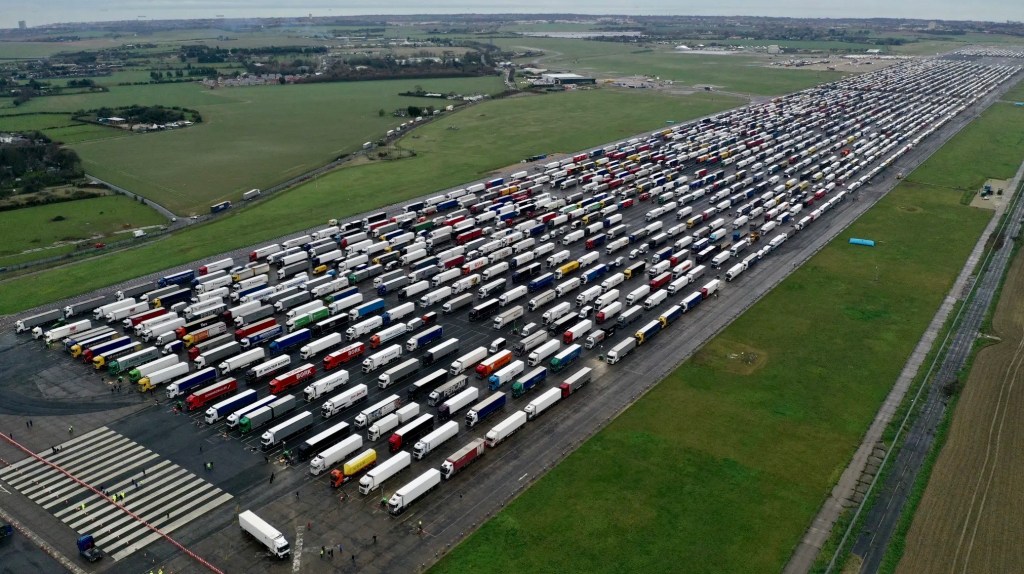
But the continental truckers and haulers have not been so lucky – some managed to get home for Christmas while over 600 were stuck in their lorries on the Kent motorway heading into Dover. Naturally, the army was called in, to calm the frustration and rising rage while conducting tests on drivers for what is now dubbed ‘The English Virus.’ Transport Secretary Grant Shapps, says that “Things are Moving” – though not what you might call ‘up to speed’. Once the tests come back negative, then drivers are allowed to travel on to France. But some will still be waiting as the New Year arrives, along with all the ‘new’ paperwork that comes into effect next Thursday. 

There is much talk of the Astra Zeneca Vaccine from Oxford being ready to roll off the assembly line and into the hospitals and GP offices as early as next week, but why oh why am I not holding my breath on this? 

Like many people who are unable to visit with our families, we have been saved from total isolation by Skype and Zoom. This weekend saw us Zooming with our families from California to Utrecht, Face-timing with friends and then a Skype visit with an older cousin in South Africa. While talking with Ian I sunk into a deeper understanding of the global reach of this pandemic for our generation. 

“What do you do?”

“Well not very much Ann. We go to the market once a week and going out for our Christmas meal was an exception.” He was saying what everyone we know of our age is saying. We are all staying at home, slipping out for the necessary shopping only when we must – and we are among the lucky ones. 

The Brexit deal was finalized on Christmas Eve and the British ministers handed a 1500 page ‘memo’, to read during the holiday break before Parliament reconvenes in January. Prime Minister Johnson suggested reading it after Christmas lunch. ‘Unbelievable’ is the word I have used far too often this year. Here is another off-hand move by Boris Johnson and his cronies to put one over on the government and the people. It is blatant school-house bully-boy tactics, giving an impossible task, and – I am at a loss for words to describe it all. And maybe that is the point – that we fold, in some apathetic despair. 

And the fishermen and women? Ah well, they have been pushed downriver, and out with the tide, a knotty problem to be revisited in five more years. The draft agreement stating that: “Sovereign rights being asserted on both sides for both the purpose of exploring, exploiting, conserving and managing the living resources in their water,” sounds like a load of old herring to me.

But when listening to Ursula von der Leyen give her closing speech at the end of it all, I wanted to weep for the sheer civility of her words. Europe may well be able to leave Brexit behind, but England will be left cleaning out the slops for long time to come.

News from other parts of the world has taken a back seat during this Christmas holiday break. It is hard to learn what is happening in Belarus and Poland. But news did come through that Zhang Zhan, a 37-year-old former lawyer and citizen journalist who was arrested in May while reporting from Wuhan, has been sentenced to four years in jail for “provoking trouble”. She is among a handful of young dissidents – if you like – voices if you prefer – who are being punished for speaking out, sharing the information they have been given with the world. 10 or the 12 young refugees fleeing to Taiwan are also up for trial, with a forgone conclusion as China uses a heavy hand to keep control of information and news leaking from its shores.

The throngs of people, families, friends gathered together, mostly unmasked, all walking up the Broadwalk though the park on Sunday, shocked and stunned us as we swung onto a path less traveled to see the architecture of 200 years ago through the bare branches of the trees lining the outer circle of the park.

But along the Broadwalk is another tale. This autumn there were no shining brown conkers falling from the Horse Chestnut trees for children to pick up and stuff into their pockets. And then, one day, the first tree was felled, its thick branches lying executed on the grass beside the trunk which still stands. A few wood chips told of the machines crushing the smaller branches. First found in the trees in 2002, the little moth, Cameraria Ohridella and its even tinier caterpillars dig and eat into the leaves, slowly starving the trees and turning them brown as if autumn has come too soon. Such slow decay, one death feeding another life, cannot be tolerated in the pristine Royal Parks. In the New Year the machines and men will be back at their work, putting old friends out of their misery, and making way for the new.

This has been a Letter from A. Broad. 

Written and read for you by Muriel Murch 

First aired on Swimming Upstream – KWMR.org

Web support by murchstudio.com

Mutant in Tier Four

Recorded and Knit together by WSM

On our Sunday walk through the park, people were in groups of families and friends, mostly unmasked as if to say, like Scarlett O’Hara, “I’ll think about that tomorrow.” And then in the depth of mid-winter, Monday’s Solstice came, with the dawning of understanding that England is now closed well into the New Year. The clouds are rain-filled and hang low in the sky, dripping like a slipping tap. And there is no way we can see the great conjunction of the planets, Jupiter with his train of moons and Saturn with her large rings.

Trucks in Waiting in Kent

Between Brexit and the new mutant strain of COVID-19, the rest of Europe is firmly closing its doors on trade and travel with England. Albeit ‘closing the barn door after the horse has bolted’. The mutant strain of COVID-19 is now found in six countries while 40 countries more have banned travel to and from England. The blinding vision that Boris Johnson, and all who sail with him, carry – that England would become a hub of commerce – have not just faded but imploded. Great Britain, in the eyes of the world, is now Little England. Who is being served here? Certainly not the European, Scottish and English fishermen, nor the lorry firms’ haulers or container-freight drivers from Europe or the UK. A six-hour queue on the motorways in Kent is now the norm, and the book of Brexit is not yet closed. News broadcasts announce that ‘there will be gaps on the supermarket shelves within days. A shortage of lettuce,’ they say. But who on Earth is choosing a salad over hot winter vegetable soup in these dark, wet, days. But we will join the rest of the country stocking up as best we can for our non-existent Christmas and into the Bleak Midwinter New Year. We go to our familiars: the supermarkets that are close to our feet and bank accounts, and we have now become the old people, moving slowly, peering at this and picking up that. Six crumpets at 30 pence a packet are still the best and cheapest comfort food on the shelf. And the wine, well we could always do with a bottle or two more.

Much of England’s dismay is the understanding that – once again – the UK government has not been telling, ‘The truth, the whole truth and nothing but the truth.’ The mutant strain of the COVID-19 virus was first discovered in Kent in September. Sir Patrick Vallance, the government Chief Scientific Adviser, spoke of it in October, and still, in November the government announced a five-day break of isolation over Christmas. Last week there was a “Oh, sorry about that, our whoopsie,” before a rushed reversal, clamping down to a one day Christmas holiday with no more than six people and no granny or grandpa visits.

In Tom Chivers’ December 21 article in UnHerd, ‘How dangerous is the Covid mutation?’ he writes of his family’s efforts to do the right thing before – thank you – explaining about mutations in a very readable way.

While Health Secretary Matt Hancock repeats: 

“It’s all very difficult.” But is it? Hie Min, the dance choreographer from Taiwan writes that life there is now almost normal. What did they, and other nations like China, Japan, New Zealand, and Vietnam, do? Apart from mask–wearing, social-distancing, super-hygiene, and testing, they closed their borders and contained themselves. And they thought of the collective good over their personal wants and needs.

Murch Mince Pies

Despite the lock-down I cannot help getting twitchy in the kitchen (as an American friend says about his Swiss wife) at this time of year. And so I buy dried fruit, mince-meat, more flour, eggs and butter, and bake for hours. But I’m not the cook I was and one burnt Dundee cake found its way to the compost pile where it will become soil for next spring. There is a little COVID-free cluster in this cul-de-sac bringing neighbors together as we all look out for each other. My husband watches with some concern as another plate of Mince Pies or Biscotti goes out the door into grateful hands and brings a smile to another drawn face. But there are always the crumble bits – which long ago Uncle Harold taught us have no calories.

There are more knocks on the door, as gifts and secrets (can you wrap this for us?) arrive from family and friends. This morning there is the mail from America, our letters from abroad. I open it eagerly, for among the  constant bills, is always a note from our son. This one says that the old Christmas Lights from eons ago are hung on the windows and a wreath of welcome hangs on the door. The gratitude that we feel when Dan the postman knocks on the door and, with a smile, hands us our letters, makes me wonder if this is how it felt to receive mail packages from the ships in past centuries, when families were taking great leaps into far-away countries, and letters from home were a reminder of what they had left behind: their families, the good, and the terrible times. Those leaps are still being taken by families from over the world. News may not come in letters, but phone calls – even emails – will still contain the same messages: of hope, of longing, some truths, some not-quite truths, some requests, some reassurances and news, good or not. 

As of this weekend it was not known if the Queen had written or recorded her Christmas message to the nation and commonwealth. It is hard to imagine what she must be thinking about this government. A good hearty wield of the ceremonial sword would not go amiss in these times. Her unprecedented message in the middle of the first lock-down helped us all see this through but now there is a deeper malaise, a sadder push and pull to us all in the country. We will listen to her carefully-chosen words on Friday, and hope that she can give us all the strength and courage to Carry On.

This has been a Letter from A. Broad. 

Written and read for you by Muriel Murch 

First aired on Swimming Upstream – KWMR.org. Web support by murchstudio.com

Losing

Recorded and Knit together by WSM


Late afternoon becomes early evening with the December drizzle falling softly as I turn from Marylebone High Street onto George Street on Saturday afternoon. Sitting and rocking on the ground outside of the metal railings surrounding St. James’ Roman Catholic Church, sits a woman. I have seen her here before. Reaching into my pocket I check, that yes I do have some coins ready and waiting. As I bend to give into her old paper coffee-cup she beams up at me with such an engaging, albeit tooth-shy, smile that we talk.

“Do you have somewhere to sleep?”
“Ooh yes they are very good to me, I am so grateful. But I do have to buy my own food.” We talk some more about accommodation at this time and then I ask her,
“Where are you from?” and have to ask her to repeat herself.
“Russia. I am from Russia, then I spent several years in Switzerland but they let me come back here and I am (she repeats) so grateful.”

She is smiling all the time, and rocking from side to side and I wonder at her story. So many Eastern European women came to Great Britain, and America, looking for a refuge, a better life an escape from what? I wondered. They were all working women in one way or another. Some got lucky, were successful if you like, such as Melania Trump who started life as Melanija Knavs of Yugoslavia, then Slovenia, and finally, at the moment, the United States of America. While some, like this smiling lady sitting on the pavement outside of a Catholic church in the soft rain and evening light, were not. But she looks like she will make it through the winter, though you never know.

It was only sixteen months ago that David Cornwall, John le Carré, was sitting beside me at the theater for a friends and family screening of Coup 53. It was wonderful that he came to see the film, understood so clearly the behavior and involvement of MI6 and the CIA in the take-down of Mohammad Mosaddegh. His understanding and wholehearted approval of the film led to him giving the team his total support and some wry comments of what to watch out for: “You have no idea how deep they will go.” In the subsequent months his remarks proving remarkably true. But as well as government coups, we talked of grand-children and the new best next love affairs in our lives. The news of his death on Sunday came like the news of a friends death and in the outpouring of tributes to him, so many said the same. His joy in writing was evident on every page. His literary skills were honed like a fine musician playing his instrument: piano, saxophone, violin or words on paper.

Photograph: Rob Judges/Rex/Shutterstock

On Sunday, over a dinner of scallops and turbot, discussions between Boris Johnson and Ursula von der Leyen took place in Brussels. They were described as ‘lively and frank’ in one paper and Johnson as unbelievably arrogant in another report found on Twitter, that did not make it to the papers. But Ursula held her ground against Boris and after his incredible outburst of rudeness the turbot was dispatched quietly and quickly. It doesn’t sound as if desert was on the menu. There were ten minutes of discussion after supper, some separate statements were sent out, “Very large gaps” are said to remain between the two sides, according to a No 10 source. Von der Leyen said the two sides’ positions “remain far apart” and that their teams will reconvene to try to resolve issues: and then it was away and back to their rooms. Was it Saturday that Boris suggested bringing in the Royal navy to patrol the UK Waters, and Ursula had spoken with a subdued but visible smile of the UK’s wish for “Sovereignty, if you like’ and by Sunday, when the discussions were supposed to stop, both sides had agreed to carry on.

Johnson was not happy when blocked from talking with Angela Merkel and Emanuel Macron, as he tried to weasel his way around from meeting with Ursula. Ursula, as head of the European commission, has done a fine job of herding cats, as in twenty-seven nations, to one agreement. After the Sunday phone call exchange, “I’ll call you,” the EU and UK have promised to go the extra mile. Johnson seems at a loss with this strong and immaculately turned-out attractive woman. It is hard to separate the personal man from the political and when he did put forward sending the navy out to protect British waters, the public embarrassment crosses generations and classes. In past interviews Le Carré has spoken of his time as a teacher at Eton School.

“What you have to understand about the Etonian is that he is not taught to govern, he is is taught to win.” And as Malaparte has said, “Everyone would like to win but not everyone is capable of losing.”

Meanwhile the COVID-19 vaccines are beginning to be given in England. The few pictures of seniors in wheelchairs may be cheerful but are not yet reassuring. London and large parts of the North of England are heading back into the Tier 3 restrictions this week and it looks like there are rough waters ahead. Health Secretary Matt Hancock asks for caution when doing what we have all been promised we can do, travel to visit family. Winnie the Pooh’s bouncing Tiger has turned to a sad Eeyore and understandably so.

This has been a Letter from A. Broad.
Written and read for you by Muriel Murch.

First aired on Swimming Upstream – KWMR.org. Web support by murchstudio.com

Arrival

Recorded and Knit together by WSM

As I write, the first of the vaccines for the COVID-19 virus are being administered in 70 hospitals throughout the United Kingdom. Margaret Keenan, who will be 91 next week, received the first of the 800,000 doses that have arrived. 40 million doses of the Pfizer/bioNtech vaccine are on order to be delivered to the United Kingdom in the coming weeks.

The vaccines were made by the husband and wife team of Professors Sahin and Özlem Türeci at their German firm BioNTech. Professor Türeci’s father had come to Germany as a refugee from Turkey and found work as a mechanic at the Ford factory. When Sahin was four years old the family followed and the immigrant refugee family settled in Germany.

Last week England came out of lockdown from the Coronavirus while this week much of California enters it. So the virus wings about through the world. The World Health Organization is scrambling to keep the regional information current. Each country and region looks for different ways to combat the virus and it is clear that countries led by women leaders have fared best thus far in their handling of the COVID-19 outbreak. One could argue that those are ‘small countries with manageable numbers’ or one could say ‘those are women who know how to think of more than one thing at a time.’ Other women, in government, or opposition, are also organizing their worlds, fighting back against right-wing oppressive governments. And mostly they do it in tandem or groups: Marta Lempart, a co-founder of Polish Women Strike has been battling the latest anti-abortion laws in her country laid out by the government and the Catholic Church.

Martha Lempart picture from the Financial Times

The team of three Belarusian ladies work together even as they are physically far apart. Patrisse Cullors a co-founder of Black Lives Matter says the obvious, “No movement has one leader. It never did and it never will.” Maybe this is something women understand clearer than men.

Patrisse Cullors

Due as much to science, and the infection numbers coming down as to the Christmas retail needs, London is buzzing again. Shoppers are out in such force in the West End and Knightsbridge that over the weekend four arrests were made outside of the Harrod’s department store, while the crowds of mostly young people, struggled to shop ’til they drop. And some sadly will. Even in our little corner of town, people are shopping, clustering at coffee shops and spending money. I am too, being careful and almost guilt-free in my efforts to support the local economy. But the empty shop windows in the high streets strip the phrase ‘shutting up shop’ of its humor as workers lose their jobs. What is the key to shops staying alive? Beyond getting savvy with the new online way of buying and selling it has to be related to those who own the real estate underneath the buildings. If the rents and taxes can be managed then the shop has a chance to make it through.

Boris Johnson and Rishi Sunak know all this of course and must look to whose bread is to be buttered.

So again I ask, why are the UK and European fishing rights so important when all the seafaring European countries have been dipping their oars and nets into everyone’s waters for centuries, and who, for goodness sake owns all the boats and fleets? It really is a medieval moment, without the costumes. There is a news outlet ‘Unearthed’ that digs into this to the point of making you despair at anyone with a net and a trawler not being a pirate.

As Boris rushed from congratulating 81 year old Lyn Wheeler for getting her vaccine jab at Guy’s Hospital onto his next stop, Brussels, one had to wonder about the UK’s group of small and wealthy elite. Maybe understanding their concerns is the beginning of the answer to defending ‘Our sovereign rights’ as opposed to ‘workers rights’. It is hard to find anyone writing or talking about Off-Shore banking. Those little Islands close by, of Man, Jersey and Guernsey and further afield like Bermuda, that hold the banks that are happy to take your funds and ignore reports for UK taxes. Even as I pay my UK taxes to Her Majesty’s Government I then pay the tax ladies’ bill into their bank in Guernsey! The small and wealthy elite are rushing to come out of the European Union before those EU rules and regulations come snooping into the Islands.

An Obituary in the weekly local Camden Newspaper said of a lady who had died at 103, ‘She used to be a fine cook in her prime.’ It made me pause and wonder what and when is ‘prime’? Cooking is a part of who I am, it is a joy and often an adventure. Someone else wrote, ‘My Kitchen and I work in harmony’ and I know that, as one ingredient or dish of left-overs leads into an old favorite or a new creation to place on the table. Grandma Murch would cook her oatmeal cookies whenever someone came to visit at her home in 1 Vermont Avenue in Toronto. Those cookies, from the old Quaker oatmeal recipe, are the ones I made for our children and now at least one daughter makes them for hers.

Four generations of Quaker Oatmeal Cookies

The Christmas lights are on and the birds have gone to roost. Maybe it is time to pull out that oatmeal cookie recipe once more and put the kettle on as the light fades before tea-time and all is dark outside.

This has been A letter from A. Broad.
Written and read for you by Muriel Murch First aired on Swimming Upstream – KWMR.org. Web support by murchstudio.com


Striker

Recorded and Knit together by WSM

Scotland is quick off the mark as it takes Footballer Marcus Rashford’s goal of free school meals one step further, proposing giving all primary aged children breakfast and lunch throughout the entire school year. Yesterday the Scottish First Minister, Nicola Sturgeon, announced a one-time thank you gift of £500 for every full-time Health and Care Worker in Scotland. Take that England! Today there is a big vote in Parliament about the tier restrictions, ‘where’ will be classified as ‘what’. Through this country-wide lockdown the number of COVID positive tests continues to rise and fall in waves across the country. But as we come out of the national lockdown and into tier two, the number of cases and deaths in London is down. There is even a suggestion that we might have crested the peak of a second wave.

The Weekend Financial Times newspaper editor, Alic Russell, lays two pink-paged obituary columns side by side.

Leading is the article on Jan Morris, ‘The Greatest Travel writer of her generation’ writes Russell. And more so. From James to Jan she wrote of her travels with eloquence, insight and a dry wit. During the ‘Don’t Ask, Don’t Tell’ Clinton years she published a collection of essays, ‘Conundrum’. One a reflection on the physical beauty of an army officer, as they rode side by side in an army tank, transporting the tank, and the officer, back to that of a Greek chariot.

In ‘Thinking Again’ Morris quotes Arthur Clough writing in 1861, “Thou shalt not kill: but need’s not strive officiously to keep alive.” She is musing on an old clock that hangs in her kitchen in Wales, supplanted in use, but not in beauty, and I smile, for behind me is a similar clock, probably an old golf prize of my father’s. It has always been tricky, needing frequent winding, but after a day or two it slowly winds down to a stop. When it first came into my care I took it to a clock-maker who worked with it for a week, before handing it back, with a bill, and a wry smile. “Not much I can do here unless you want to…” His voice trailed off and I understood that this was a moment that “one need’s not strive officiously to keep alive.”

Beside the reflective Jan Morris is the smiling brash Diego Maradona who many consider the greatest footballer of his generation. His epic scoring second goal in the World Cup quarter-finals against England in 1986 was a moment of triumph, a ‘take that’ kick up the English backside that left two of the English players hard-put not to applaud.

I never really got football, it is my failing and I apologize. When we were first in Buenos Aires I was often alone long into the evenings in the apartment on Calle Estados Unidos. At least once a week, echoing out of the hallways and up the shafts between the apartments, would come what I took to be the sounds of after a drink and pre-dinner sexual activity. It took a while before learning that, no, it was TV football-watching and probably La Boca Juniors were playing.

It was with grim pressed lips that the assassination of Mohsen Fakhrizadeh, reportedly by an Israeli ambush team, was broken last week.

A rare picture of Mohsen Fakhrizadeh

Countries watched and remained silent – for the most part – for there is movement on the chess board. While President – Elect Joe Biden says he intends to rejoin the 2015 nuclear deal, Jared Kushner has taken up the baton from Michael Pompeo and is very busy flying here and there through the Middle East.

The ambush of Fakhrizadeh was planned like an age-old assignation. An assault twelve member team with another fifty personnel in back-up. The area’s electricity was cut half-an-hour before the assassination took place at a road round-about in Absard. The helicopter could not land close-by and so time was lost for those killed and injured as they were all flown back to Tehran.

Somehow it is these details, which lead me back in memory to the gangster killings in New York, and the history of the assassination of the Iranian General Afshartous in 1953. I should be paying more attention to the travel Itinerary of young Jared Kushner. This week he is meeting Saudi Crown Prince MBS in Neom before ‘having a word or two’ with the Emir of Qatar. These could be some interesting tea parties as he tries to gather the Middle Eastern countries into alignment with Israel. I’m not sure he really knows what he is doing – or does he? He is young and must have his own aspirations.

Winter is here. The Thanksgiving Holiday has rolled from the last weekend in November into the first week of December. The family traditions that we built over the years adapt with age. We would prune the wisteria over the barn this weekend and then hang the funky lights over the front windows on the farm. Often we were told that as friends drove around the lagoon, seeing those small unfussy lights, made them know they were coming home. Now here in London we will choose a wreath for the front door and pull out the old Fortnum’s hamper of lights to decorate the little cottage.

Welcome to Number 39 Photo by WSM

Last week saw Chancellor Rishi Sunak lighting an oil lamp on the doorstep of Number 11 Downing Street, for the Hindu festival of Diwali, now the big Christmas tree is up outside of number 10.

Whatever our cultures and religions, coming together in gratitude will bring joy and for that we can all be grateful.

This has been A Letter from A. Broad
Written and read for you by Muriel Murch. First aired on Swimming Upstream – KWMR.org. Web support by murchstudio.com